Lauren Rothery’s Television Examines Hollywood, Luck and the Roles We Play
Lauren Rothery’s Television treats Hollywood success as a force that reshapes private life as much as public image. Its longtime friends Verity and Helen arrive in Los Angeles carrying different pasts and a shared desire to get away. The industry sorts them into sharply different futures: Verity becomes a star, while Helen doesn’t. Rothery’s debut novel asks what that divide can tell us about talent, beauty and the stories successful people tell themselves.
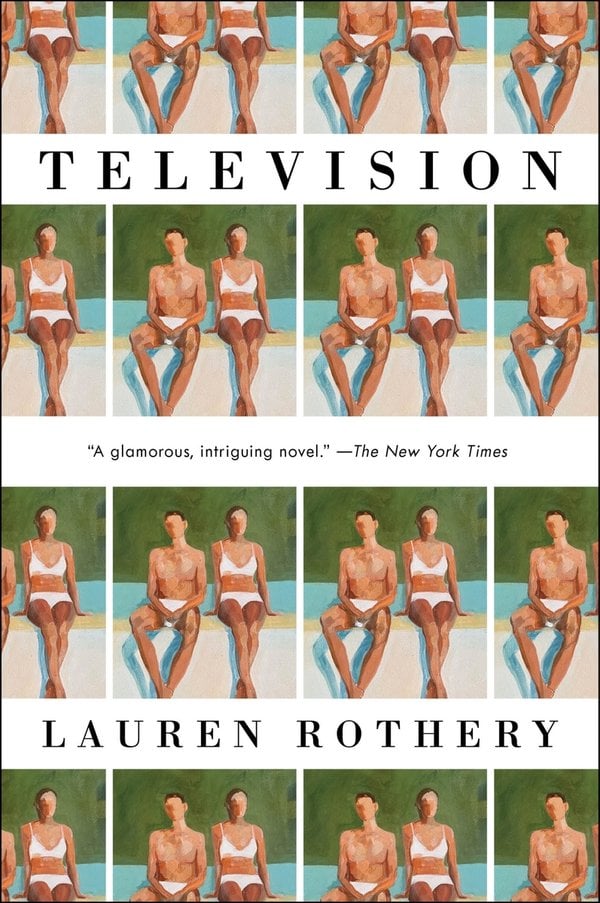
Verity’s appearance may have helped him rise, but he can’t settle the question of whether looks or ability made the difference. His discomfort with his success takes an unusual form: he sets up a lottery to give away the multimillion-dollar salary from his latest blockbuster. The gesture doesn’t rebalance his fortunes. It makes him more famous, and leaves him to confront the gap between wanting to be good and knowing how goodness might be measured.
Helen and Verity share a kind of intimacy that has outlasted the usual labels. They have been friends and, at times, lovers, but neither seems to believe the relationship can really end. Their closeness is built from a familiar way of seeing the world, a quality Rothery connects to the Yiddish word landsman: a recognition between people who feel they come from the same place, even when that place is less geographic than emotional.
Success still changes the terms of that bond. Verity buys the apartment building where Helen lives and moves into the unit beside hers. The arrangement has a romantic charge, but it also raises questions about access, attention and the force of celebrity. Verity can play a part more easily than he can simply be himself. With Helen, the two try out a version of domestic life that feels genuine in the moment and staged at the same time.
That instability is central to Rothery’s approach. The relationship’s repeated patterns can be comforting, even tender, while also obscuring what the characters are reluctant to say. Performance isn’t automatically false in Television; it can be one way people form a shared identity. But a role rehearsed for long enough may begin to feel separate from the person playing it. Rothery’s Hollywood story is strikingly uncinematic: it favors the quiet stretches between big plot turns, and sometimes catches characters only after they have already made a major decision.
Rothery discussed the novel’s structure, celebrity and artistic luck with Evander James Reyes. Television is due in paperback on November 3.
A title about returning to familiar characters
Evander James Reyes: How did you settle on the title Television?
Lauren Rothery: Rothery says the title arrived early and gathered meaning as she wrote. It points to the industry’s movement from film toward television and streaming, but it also reflects a more intimate idea: the pleasure of returning to a familiar group of characters. She describes Verity’s affection for an older kind of television, where viewers kept coming back because they wanted to spend time with the people on screen, rather than simply find out what happened next.
EJR: The book drops into the characters’ lives at different points, almost like episodes from a long-running series. Why give so much room to small, private moments?
LR: Rothery wanted readers to feel included in the relationship. Longtime friends may speak in ways that signal closeness, she says, while also using that familiarity to avoid addressing what’s changing. She was drawn to the texture of ordinary interaction: how people think, move and respond to one another when nothing especially dramatic is happening.
That choice gives the novel its unconventional love story. Rothery says she wanted something “very uncinematic,” without the expected major climaxes. The characters’ long friendship is romantic at its core, even when they aren’t a couple. In her view, they never believe they have fully left one another.
I wanted to write a relationship where the reader felt like they were in on it.
Intimacy as a shared performance
EJR: Verity and Helen seem to recognize something in each other that’s hard to find elsewhere. How do you understand that bond?
LR: Rothery describes them as people who assume they won’t like anyone else as much as they like each other. Their connection brings to mind landsman, a word that can describe meeting someone from your homeland, or finding a person who sees the world as you do. For Verity and Helen, that recognition helps explain why the relationship persists through periods of togetherness and separation.
EJR: The novel keeps testing the boundary between what’s real and what’s performed. What does performance mean within a long relationship?
LR: A person can become a particular version of themselves around someone they’ve known for years, Rothery says. That role may not contain the whole self, but that doesn’t make it untrue. The couple creates a way of being together that can feel loving and familiar, yet also distinct from each person’s life outside it. As Rothery puts it, closeness can involve making “something slightly separate from yourself” and caring for it together.
That tension gives the novel’s Hollywood setting a wider reach. Actors and writers shape stories about themselves, but so do people whose work has nothing to do with a stage or camera. Verity’s talent for acting becomes a lens for examining how identity can be partly made from the roles people repeat.
If you’re making art because you have to, and you’re making what you love, then you just hope for the best.
Goodness, luck and the myth of merit
EJR: Verity is preoccupied with being good. What drives that fixation?
LR: Rothery says Verity is drawn to qualities he associates with innocence and purity, though his ideas about virtue aren’t consistent. He can attach moral value to being unattractive or unsuccessful, for instance. His lottery seems to come from guilt and the suspicion that he hasn’t earned his money. He hopes, perhaps, that the prize will reach someone more deserving. When the winner turns out to be an ordinary person who doesn’t match his ideal of worthiness, Verity finds the result dispiriting.
His charitable impulse doesn’t settle the matter. He wants to see himself as honorable, even while recognizing that some of his choices may look questionable. Rothery leaves that contradiction unresolved, which suits a character who seems unable to separate the desire to do good from the desire to be seen as good.
EJR: Luck also shapes the novel’s account of success. How does it complicate the idea that the best work rises to the top?
LR: Rothery is skeptical of the meritocratic story she encountered in film: the belief that strong work will find an audience and bring in money. She points to the many excellent films, songs and other works made by artists who never became successful. In her view, choice and chance are difficult to disentangle, and artistic careers depend on both.
That perspective offers a counterweight to the pressure artists can place on themselves. Rothery says making work you care about can mean putting it into the world and hoping for the best. She also sees a tension between people who explain their success as fully earned and Verity, who suspects he deserves none of his own. The novel’s lottery gives that argument a comic, uncomfortable form: a wealthy actor tries to correct an imbalance he can’t fully explain.
In film, you need a certain amount of money, the right locations, the right people, the camera . . . With fiction, if I want something to be a certain way, it can just be that way.
Aging under Hollywood’s gaze
EJR: How does aging affect the characters, particularly in a business so focused on appearance?
LR: Rothery is interested in the different messages men and women receive as they grow older. Verity, nearing 50, begins to wonder whether he is losing sexual appeal. Helen has never considered herself beautiful by Hollywood’s standards, and she reflects on the pressure young women face to believe that their best years are tied to being 25 and conventionally attractive. Rothery says Helen tries to approach aging as something she can write about, examine and even find absurd.
Phoebe encounters the subject from another angle. Her grandparents’ deaths make old age feel remote, but she has also begun watching actresses age and measuring herself against them. Rothery doesn’t offer a neat resolution. Instead, she follows the ways appearance shapes how people imagine their futures and how they are treated as their faces change.
Form shaped by each character’s voice
EJR: The novel moves between forms, including screenplay passages, and even changes fonts. What guided those shifts?
LR: Rothery says each character needed a different way to tell the story. Verity sounds as if he’s speaking directly to the reader, often in a long stream of thought. Helen’s narration feels more like writing addressed to someone else and stays relatively consistent. Phoebe thinks intensely about writing and the limits of different mediums, so she sometimes shifts into script form while trying to process an experience. The change lets readers see her working out what has happened, perhaps before she can explain it clearly.
EJR: How did your filmmaking background carry over into writing fiction?
LR: Rothery spent about 10 years on the fringes of film, taking on small jobs to fund her own projects. The work taught her about storytelling and the feelings a writer can create for an audience. Fiction brought a different kind of freedom: a book doesn’t require locations, equipment or a crew for an imagined scene to exist. She also says filmmaking shaped her editing habits. She cuts heavily, and years of finishing projects on her own meant that the novel needed relatively little editing after it sold.
That freedom also supports one of the book’s central questions. If Verity’s appeal rests on his beauty, would he still hold attention if readers couldn’t see him? Rothery uses fiction to test whether celebrity and appearance can carry a character, or whether his words and personality matter more. The question echoes the novel’s larger concern: fame may amplify a role, but the life underneath it remains harder to read.
Rothery’s novel leaves the reader with no tidy formula for separating merit from luck, sincerity from performance, or intimacy from the roles people build together. Its sharper observation is that those distinctions may be impossible to hold still. Hollywood makes that uncertainty visible, but the same question follows Verity and Helen into the private spaces where they keep choosing one another.
The post TELEVISION Walks the Tightrope Between Reality and Performance appeared first on Electric Literature.