Gurdjieff, Joy Williams, and a Search for Spiritual Practice in Berkeley
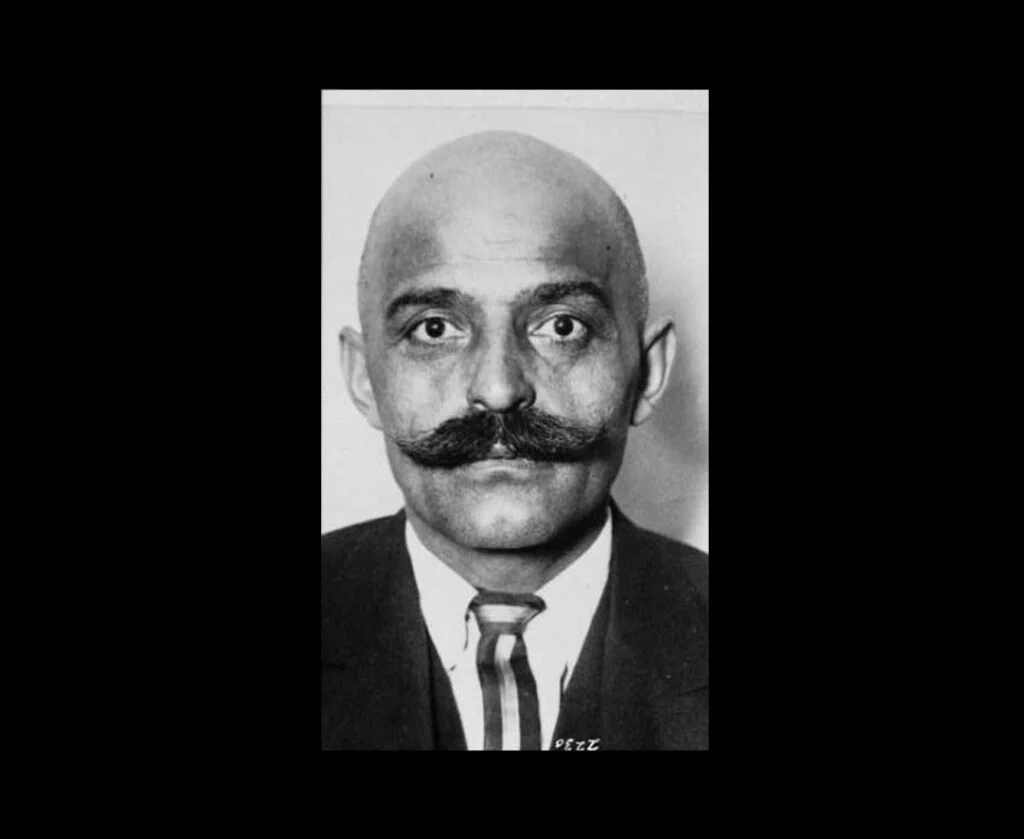
Janet Flanner-Solita Solano papers, Library of Congress. Public domain, via Wikimedia Commons.

A flyer, a forgotten story, and a Berkeley meeting
What began as literary curiosity became a test of whether spiritual practice could offer anything beyond evocative language. I found the first clue on East Bay telephone poles: a sudden crop of flyers advertising “AN INTRODUCTORY DISCUSSION: G. I. GURDJIEFF.” They had tear-off contact strips like a job listing or a notice for something secondhand. The text promised spiritual methods on a cosmic scale, the sort of synthesis that links spirit with matter and the individual with the whole. In practical terms, it was an invitation to public meetings in Berkeley. I made the mistake of writing to say I was interested.
The name took a moment to place. Then I remembered George Ivanovich Gurdjieff, the Russian-born mystic, teacher, sacred choreographer, and occasional composer of piano music. His work had lodged in my mind through a marginal piece of Joy Williams’s short fiction—one of the least explained corners of a writer whose stories often make the ordinary feel charged with hidden meaning. Gurdjieff and Williams seemed an unlikely pairing. That was precisely what made me want to follow the thread.
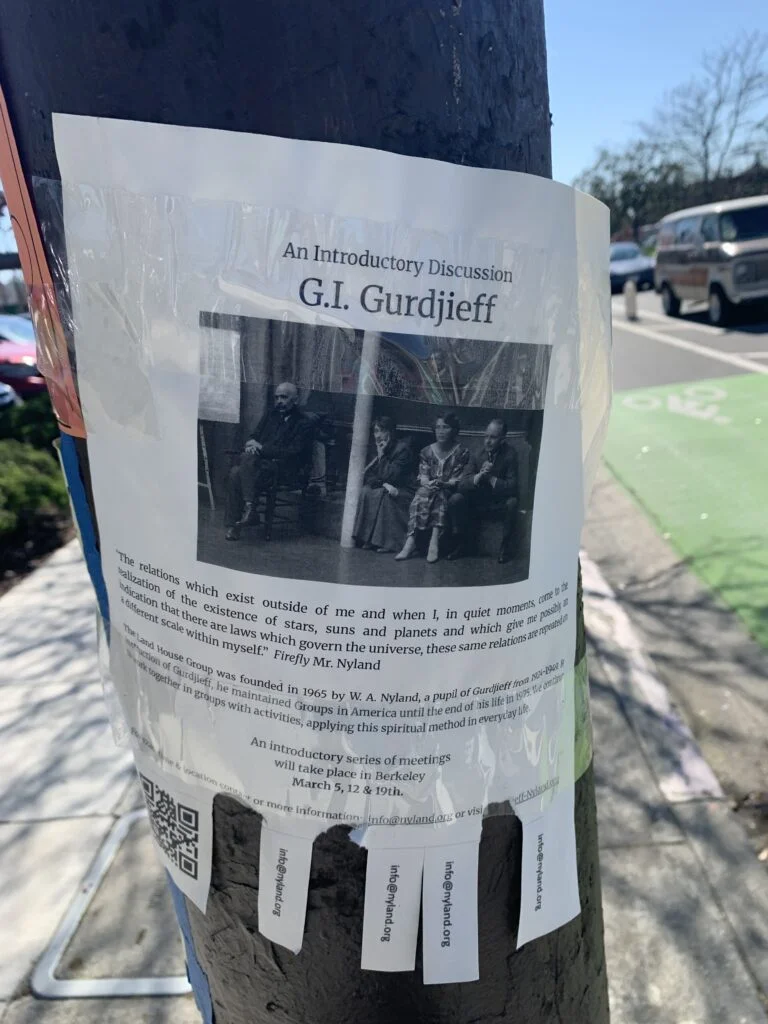
Photograph by Drew Dickerson.
Williams’s 1990 collection Escapes includes “Gurdjieff in the Sunshine State,” a story omitted from The Visiting Privilege, her nearly complete 2015 gathering of short fiction. I can’t say I understand either the exclusion or the story. G. travels astrally to Florida, where his ghost watches a roller rink, drinks Tab, and briefly talks with someone who may be Katherine Mansfield’s ghost. It’s an odd, elusive piece, and its absence from the collected work seems to have made it even more obscure.
Williams herself hinted at a larger plan. In a 2011 note to her editor, the late Gary Fisketjon, she wrote: “There is a Gurdjieff story in Escapes. I was going to write a whole mess of these stories on Gurdjieff but haven’t, you’re probably happy to know.” That unfinished possibility gave my interest a shape. Maybe the Berkeley meetings could help me understand why this figure kept resurfacing in her fiction.
The historical Gurdjieff was a traveler through the Mediterranean and southwest Asia in the late nineteenth and early twentieth centuries. He drew on teachings associated with Sufism, Hinduism, Zen, and Christianity, then developed a system and set of practices later called the Fourth Way. His ideas passed from one generation to the next and helped shape what is now called the New Age Movement. The biography offered a broad outline, but the meetings were where I hoped to find out what the ideas meant in practice.
My first session took place in an auxiliary room at a Unitarian Universalist fellowship hall. The setting could have come from another Williams story, “The Country,” where seekers from different religious backgrounds meet in an Episcopal church room to ask, “Why Are We Here?” I sat in a ring of folding chairs beneath a framed black-and-white portrait of Gurdjieff. It was my first look at him. His eyes were enormous.
The introductions quickly took on the quality of an insider’s vocabulary. One person said they had come through the work of Maurice Nicoll. Another replied that Nicoll had plenty to say, though perhaps not by his fifth book, and recommended Ouspensky instead. A third pushed back: “I’m wary of Ouspensky. Remember what Gurdjieff told him: if you understood half of what you know, you’d be my teacher.”
Newcomers were asked to explain why they had come. I admitted that I was chasing a faint reference in Williams’s fiction. I also said I wanted a closer relationship with God. Both answers were true.
The others brought their own reasons. One woman described a near-death experience from several months earlier that had made her want greater spiritual attunement. Another said that, after growing up being told to be quiet, she now wanted to find her voice. A man recounted a recent LSD experience, then showed us an ornamental knife he said had been forged from meteorite metal. Its blade looked at least six inches long.
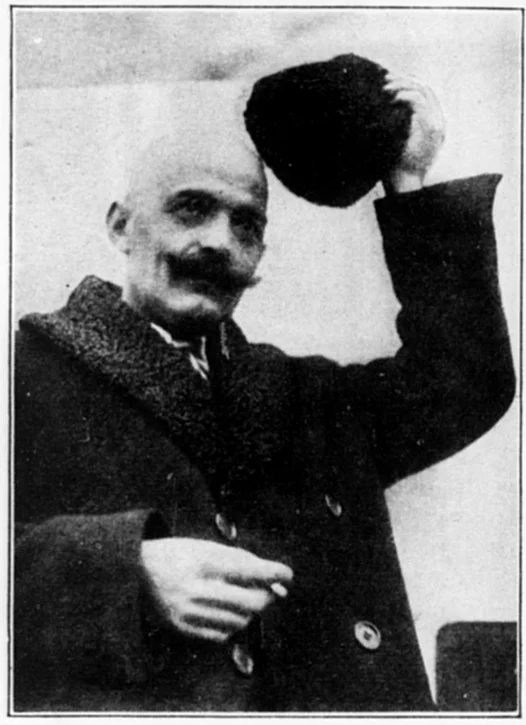
Georges Gurdjieff, 1930. Time, Public domain, via Wikimedia Commons.

People returned often to “experience,” meaning a sudden spiritual insight that leaves you changed. “Vibration,” “self-observation,” “self-knowledge,” and “self-remembering” circulated too. When one first-time visitor happened on the word wish, the room gasped. The wish, apparently, mattered. The lights were low and patchouli hung in the air. I was mostly bored. Still, every so often I felt that anything might be possible.
Not everyone was satisfied with the talk. One attendee, who said he had spent years in human-development workshops at Esalen, pointed out that we’d heard Gurdjieff’s name often enough. What, specifically, did he teach? What did he promise? I shared the frustration: the session had supplied personal stories but little account of the system itself.
“You’re right to ask,” one man said. “Gurdjieff works by allegory. He says of his writing in All and Everything: ‘I bury the bone so deep that the dogs have to scratch for it.’”
Two stories, and a pattern I wanted to see
Williams returned to Gurdjieff in “George and Susan,” published in Tin House in 2014 and later collected in The Pelican Child. Again, he appears as G. The initial may nod to P. D. Ouspensky’s memoir In Search of the Miraculous, which refers to the teacher that way. In the story, G. haunts Susan Sontag’s childhood home in Tucson, where Williams lives, and may witness a car crash.
Two stories seemed too few to explain the fascination, so I began imagining a series: Gurdjieff crossing state lines, one story for every state in the Union. Why did fifty feel more plausible than two? In “George and Susan,” Williams writes: “It is only through effort, through will, through work work work that two becomes extraordinary.” The line sounded like a joke and a challenge at once.
Williams’s fiction has always drawn me toward what’s concealed inside the everyday: prophecy, theological argument, hidden messages, and strange meetings between the higher and lower worlds. In a 1991 appearance on KCRW’s Bookworm, she called the short story “the closest thing we have to a moral form. It’s a method in which to really dwell upon—reflect upon—the things that matter.” Perhaps Gurdjieff appealed to her for the same reason. His project, as I understood it, was to make people notice what habit had caused them to forget, using effort or pain to bring it back into view.
At the group’s second public meeting, I heard the terms shock and work. Shock meant a jolt strong enough to interrupt a person’s unawakened life and bring self-consciousness within reach. Gurdjieff was said to have provoked such moments by putting followers through severe discomfort: contradictory orders, exhausting ditch-digging, and sudden, furious tirades.
One of the group’s prominent members, an electrical engineer, offered a task for the week. Each morning, he proposed, we should pause and feel grateful for the present moment and the day ahead. Several people agreed at once: “I’ll do it.” “Me too.” “I can’t wait to.” Later, someone told me they’d read “George and Susan” and thought it was a trip.
The unanswered question
My own inquiry had stalled. I kept attending, listened carefully, and tried to be candid. What I had gathered was a string of coincidences—personal and literary—that I couldn’t make cohere. In graduate school, two faculty mentors, for unrelated reasons, had pointed me toward the same sentence in Edward Said’s On Late Style. Following that lead took me to Williams’s essay “Hawk,” where she describes spending long hours listening to piano music during an unexplained illness.
She wrote: “I listened to Thomas de Hartmann play the music of Gurdjieff.” That connection was still alive: in an interview with this magazine the previous year, Williams called de Hartmann and Gurdjieff “her old friends.”
I decided to break a familiar rule of literary study and ask the writer what she meant. I had a postcard to send, too: a photograph of Jane Bowles, looking self-assured beneath an unruly mop of hair. Williams’s stories are full of postcards. In “Train,” a character says, “In this world there is a postcard of everything. That’s the kind of world this is.” Choosing the right one felt like its own small puzzle. Was I trying to please Williams, or myself? I hoped the picture would do both.
The question I wanted to ask was delicate. Did Gurdjieff, a minor but mysterious presence in Williams’s fiction, mark the center of some larger body of work that had never appeared? A postcard has no envelope; anyone handling it can read what you wrote. Jacques Derrida, in The Post Card, calls it “half-private, half-public, neither the one nor the other.” I didn’t know how to put my question into that exposed space.
I sent the card. Soon afterward, I decided to stop going to the group. I couldn’t tell whether Gurdjieff’s more speculative ideas were being deliberately kept from newcomers or whether there were no answers to find. Either possibility left me with little to pursue. I emailed an excuse about scheduling. The group had taught me that awakening begins with recognizing how deeply asleep one is. Maybe I didn’t have the nerve for the shock.
A fall, then a reply
On the night of my first missed meeting, I woke on the floor beside my bed. It felt like the familiar jolt of a falling dream, except I really had fallen. My reflex came too late, and I registered the impact as a full-body wince. I made an awful sound. In the dark, my fingers came away sticky when I touched my forehead. A look in the mirror told my partner and me to head to the emergency room early the next morning.
Two apparently drunk attendants admitted me. In the next room, I heard another patient scream as someone reset his shoulder. The nurse checked my answers, shone a penlight into my eyes, and asked me to follow a gloved finger. I explained that I’d fallen out of bed and struck my forehead on the vents of an air purifier; they may have softened the fall. The doctor sealed the wound with a glue solution he described as having an elegant pine scent. I was patched up and sent home before sunrise with a $250 copay and a cut over my left eye. I was told it should be fine as long as I kept it clean.
The next morning, an email arrived from the group member I’d contacted at the start:
You were missed. Thank you for your email. It is much appreciated. Come next week. The meetings continue. I am in Texas this weekend for a movements intensive. I am very interested in how you are responding to the introductory meetings. Perhaps you tried Robert’s task of taking a moment when your feet hit the floor sitting at the edge of your bed being grateful for life and the day ahead.
I started calling the mark my Gurdjieff scar, or sometimes my Joy Williams scar. I joked that Gurdjieff’s spirit had paid me a nighttime visit. On occasion, I half believed it. Mostly, I was embarrassed by how much explanation a small injury seemed to demand. Still, I wondered whether the fall had changed or humbled me—whether it had made me see how much of the world lay beyond what I thought I knew.
Then the postcard came back. Its front showed midcentury vacationers beside a Palm Springs pool. Williams had written:
Thanks for the JB card. I don’t have one! Yes, I wanted to do a G collection but my editor at the time, the infamous Gary Fisketjon thought it was nuts. Still—I think—G at the mule dressage events; G at Walden Pond … You should read MAURICE NICOLL and of course OUSPENSKY. Nice hearing from you,
Joy
There it was: the collection had been an actual plan, and Fisketjon had thought it was nuts. Williams could still imagine Gurdjieff at mule dressage events and at Walden Pond. The reply didn’t resolve the mysteries I’d brought to Berkeley. It did make the two stories feel less like isolated curiosities—and made my weeks of searching, my abrupt departure, and even the scar part of a story I hadn’t known I was writing.
Drew Dickerson is a writer and graduate student in English at UC Berkeley. His writing has appeared in n+1, The Point, The Drift, and The Onion. He is at work on a novel.