How to Blind Bake Pie Crust for a Crisp, Evenly Baked Base
Blind baking is about timing the crust to the filling
A pie crust can be baked through and still fail: the bottom turns soggy, or the edges slump before the filling sets. Blind baking gives pastry a head start by baking it in the pie plate before adding filling. How far you take that head start matters. Some pies need a pale, partly baked shell; others need a fully browned base. The filling is the best guide. Custards such as pumpkin pie may need a partly baked crust because the filling will keep cooking in the oven. A pie with a no-bake filling, such as chocolate pudding pie or cranberry curd pie, needs a shell that’s fully baked before filling. Most fruit pies bake long enough for the pastry and fruit to cook together, so they don’t usually need blind baking. There are exceptions: single-crust pies with crumble toppings can call for a prebaked shell. The Peach-Blueberry Pie, for instance, starts with a thoroughly baked crust. Follow the recipe; the category alone won’t tell you how brown the shell should be.Set up the shell so it holds its shape
Start with well-made pie dough. Roll it out, fit it into the plate, crimp the rim, then chill the shaped shell for at least 15 minutes. Cold pastry is less likely to shrink or slide down the sides in the oven. Line the shell with parchment and fill it with weights. Scrunching the parchment before unfolding it helps it sit snugly against the dough; the weights keep the bottom from puffing and the sides from collapsing. You can buy ceramic pie weights, or use dried beans, rice, or stainless-steel ball bearings. Ball bearings settle into the corners and hold the pastry firmly, though some bakers prefer lighter options. Bon Appétit Test Kitchen editors Jesse Szewczyk and Rebecca Firkser say heavy metal weights can compress dough and limit the expansion of its buttery layers. Szewczyk uses beans or rice; Firkser likes dried chickpeas or granulated sugar, a method popularized by baking expert Stella Parks. The choice is flexible. What matters is filling the parchment to the rim so the sides get support, then leaving the weights in until the crust looks dry and set and the paper lifts away easily.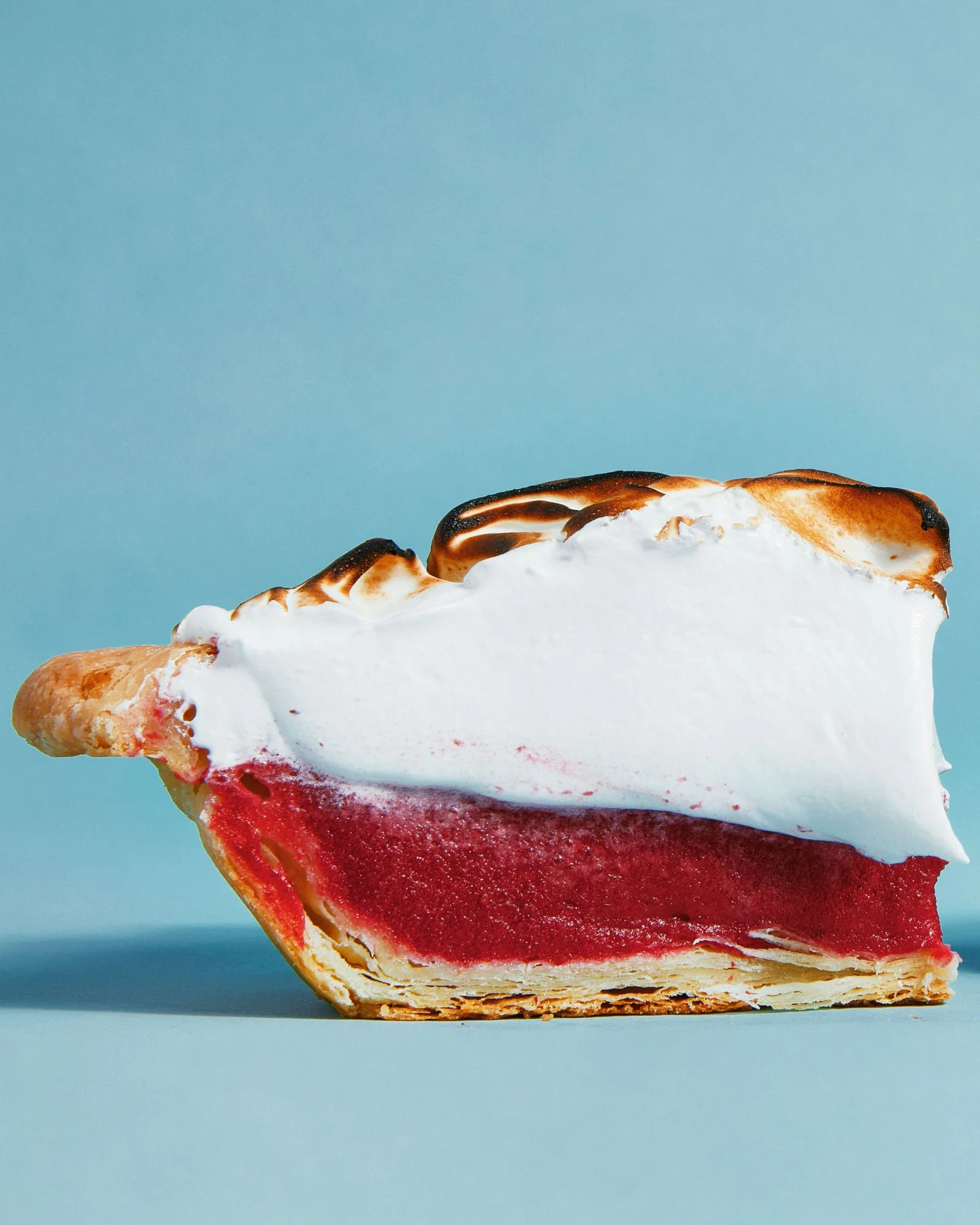
A blind-baking method for a 9-inch shell
This method uses Perfect Pie Crust dough and yields one 9-inch shell with an evenly golden finish. If your pie needs a paler or darker crust, use its recipe’s instructions and judge the color accordingly. Ingredients- 1 disk chilled Perfect Pie Crust dough
- All-purpose flour, for dusting
- Pie weights, dried beans, or rice
- Let the dough sit at room temperature for about 5 minutes, until just pliable. On a lightly floured surface, roll it into a 12-inch round about ⅛ inch thick. Brush off excess flour and transfer it to a 9-inch pie plate, preferably metal. Ease it into the bottom and sides without stretching. Trim to leave about a 1-inch overhang, fold the overhang onto itself, press to seal, and crimp. Chill for 15 minutes.
- Position a rack in the lower third of the oven and heat it to 375°F. Put the pie plate on a rimmed baking sheet lined with parchment. Crumple two sheets of parchment, unfold them, and use them to line the shell. Fill the shell to the edges with weights, beans, or rice.
- Bake for 30–35 minutes, until the edges are golden and the bottom looks set and opaque. Carefully lift the parchment to check. Remove the shell, lower the oven to 325°F, then lift out the parchment and weights.
- Return the shell to the oven for 12–18 minutes, until the bottom and sides are evenly golden. If the pie will bake again with its filling, use that recipe’s doneness instructions. For a no-bake filling, bake the shell fully before filling.
Choose the crust color by how much longer it will bake
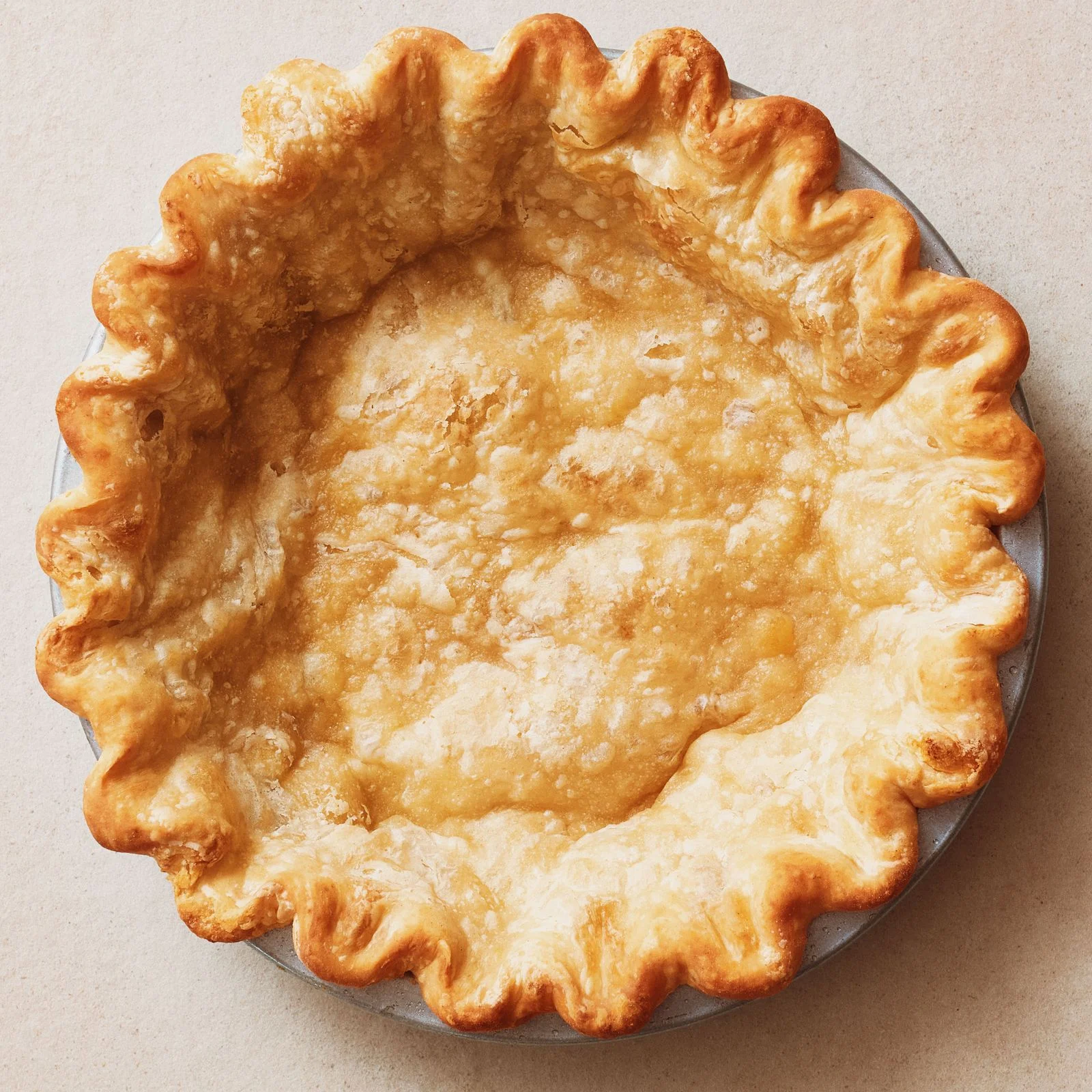
The clock is only a guide. Ovens and pie plates vary, and the filling determines how much more heat the crust will get. Watch what the pastry looks and feels like.Pale: for pies that will keep baking
Golden: for pies that need a head start
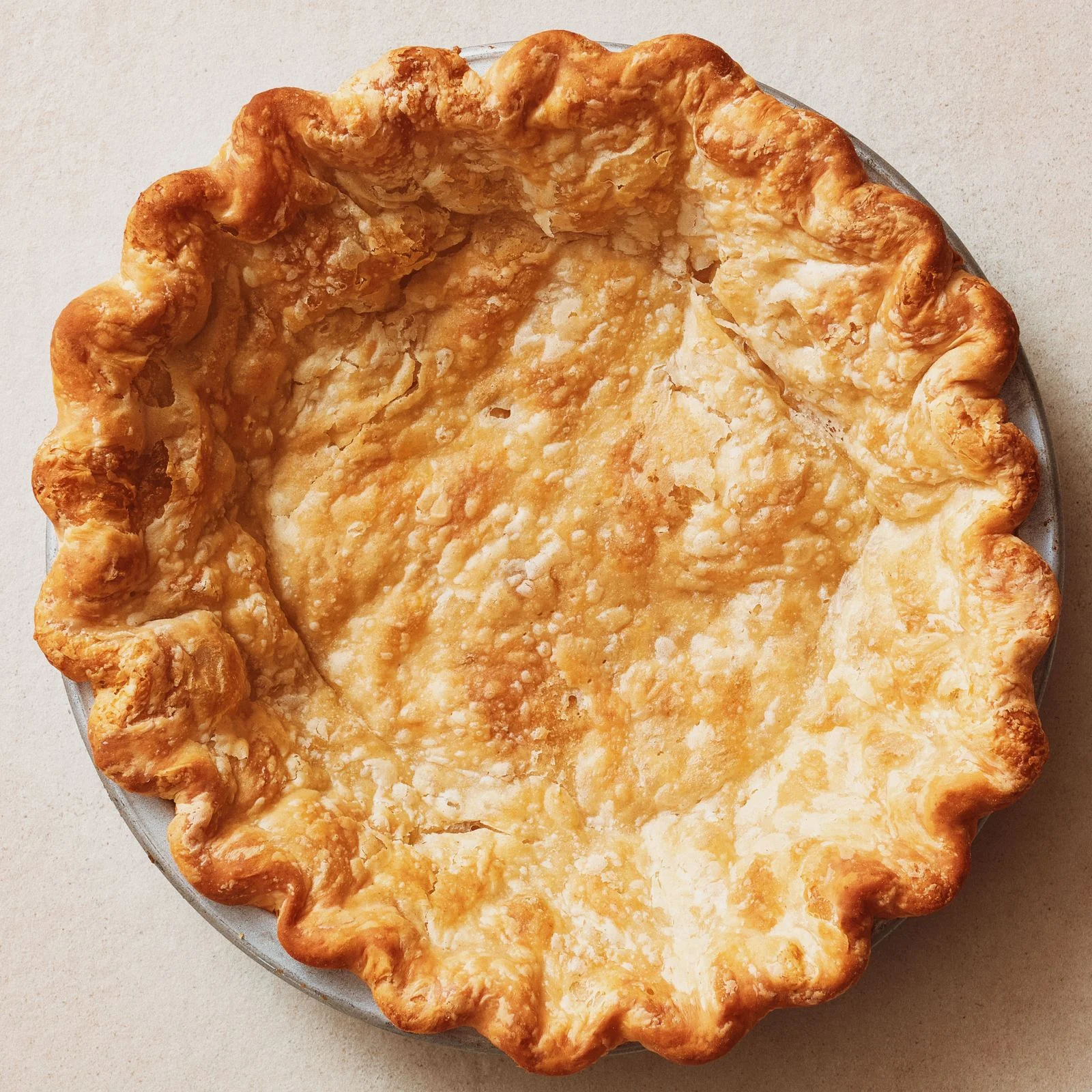
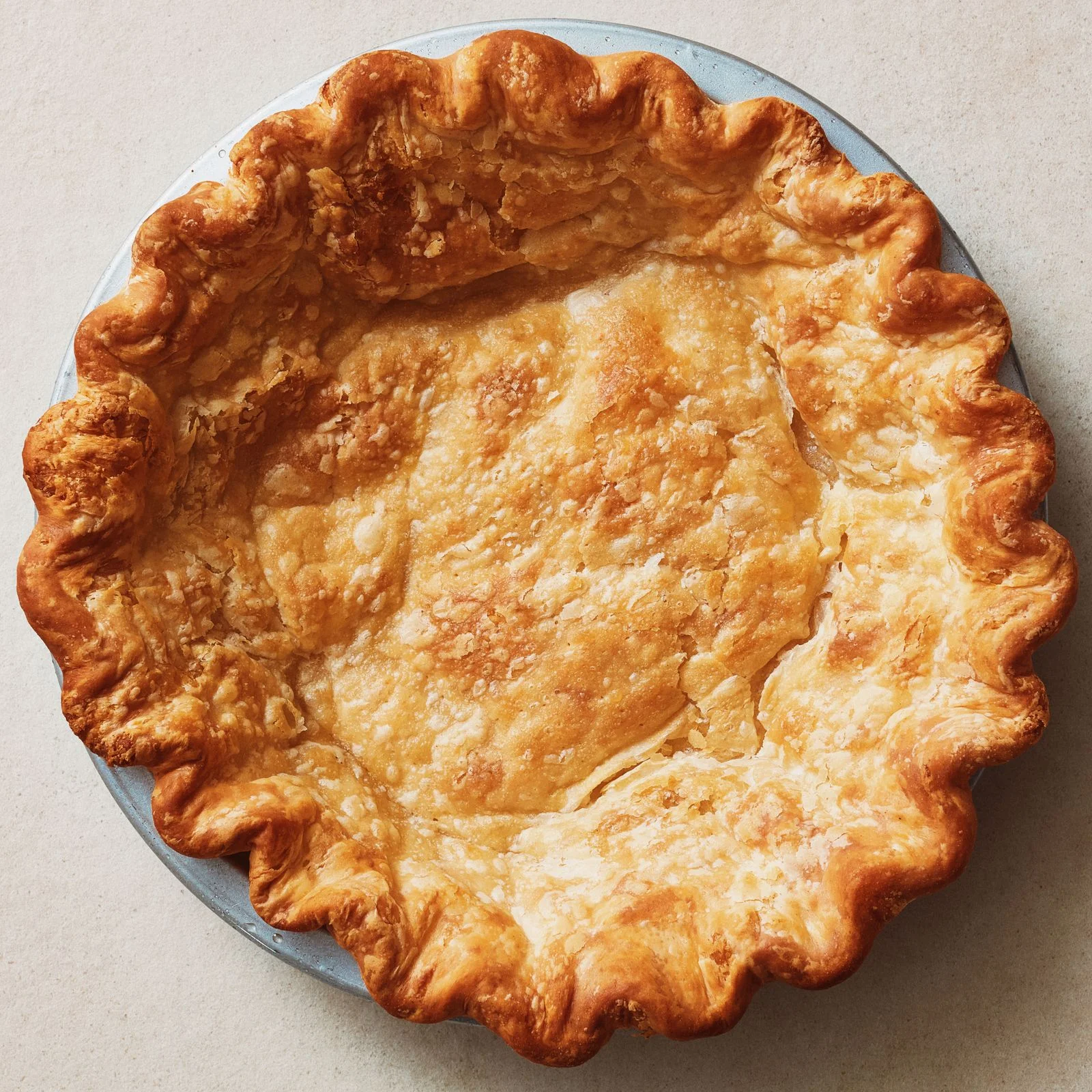
Photo by Travis Rainey, Food Styling by Kaitlin Wayne, Prop Styling by Maggie DiMarco
A no-bake filling leaves the crust with one job: finish baking before the filling goes in. Take it to a deep golden brown across the bottom and sides, with a dry, crisp surface and no pale, translucent patches. A dark edge around an underbaked center doesn’t count. Let it get properly burnished.
Once you remove the pie weights, keep baking and check the shell often as it approaches doneness. It may need another 15–20 minutes, or longer, depending on the dough and oven. Trust what you see, not the timer.
That extra color brings a toastier flavor and helps the crust hold up against a moist filling. The Cranberry Meringue Pie, for example, gets a fully baked shell before the cranberry curd is added. That’s the right instinct when the filling won’t go back in the oven.
Does a blind-baked crust need an egg wash?
Some recipes, including pumpkin pie, have you brush beaten egg over a partially baked crust and return it to the oven briefly. The idea is to form a barrier between pastry and filling. Whether that step makes a meaningful difference in every pie is less certain.
Think of egg wash as an optional precaution, not a rule. If your recipe doesn’t ask for it, you can skip the extra step.
Browse 41 pie recipes for any occasion — there’ll be one ready when you need it.