Best Sparkling Water Makers for Cheaper, Fizzier Drinks at Home
A soda maker earns its counter space in ways you don't notice until you've used one for a few months. Yes, it ends the stockpile of bottles, cans, and cardboard that piles up when you're buying La Croix by the case. The money is the sneakier benefit. A standard-size CO2 canister costs roughly $15 and can carbonate around 60 liters of water. A 2-L bottle of Canada Dry runs about $3. Run that comparison across a year of fizzy-water habits and the gap gets hard to ignore.
The better machines now do far more than plain water. After years of testing, I've found models that make zingy, fizzy drinks with a single button press, and that includes juice, wine, and cocktails. Here are my top picks, followed by the machines that didn't make the cut.
Our top picks
- The best sparkling water maker overall: Drinkmate Omnifizz
- A splurge-worthy upgrade that can carbonate wine: Breville Infizz Fusion
- The best portable sparkling water maker: Drinkmate Spritzer
Drinkmate's lineup has shifted during testing, so it's worth knowing the current state. The Spritzer was discontinued, then brought back. The Lux was discontinued before I finished, and Drinkmate replaced it with the Sparkleup starter kit. I tested both the Spritzer and the Lux before that happened.
The best sparkling water maker overall: Drinkmate Omnifizz
Over years of testing, nothing has beaten the Drinkmate Omnifizz for the mix of versatility and price. It's the cheapest sparkling water maker I'd recommend that also handles wine, cocktails, tea, and pulp-free juice.
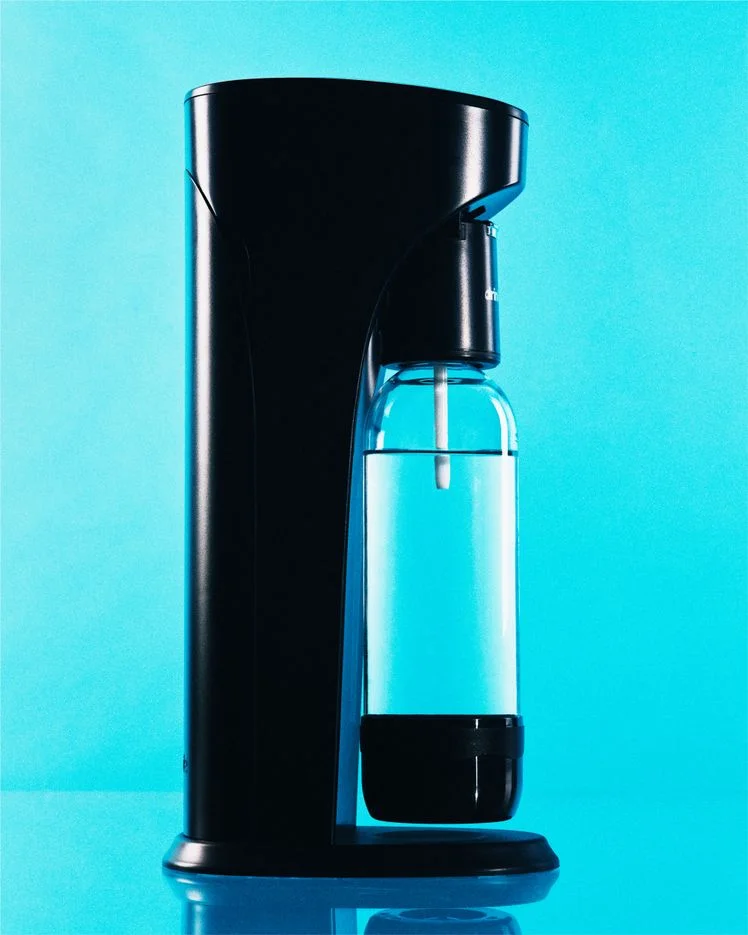
Photo by Travis Rainey, Prop Styling by Erica Lutz
Pricing depends on where you buy. On Amazon, the bundle with a 60-L CO2 tank and an extra bottle lists at $133 and currently sells for $100. Home Depot's version, which includes a 60-L CO2 tank, lists at $140 and is reduced to $113.
Where it shines
The siphon is the real selling point. It detaches cleanly and has separate fast and slow pressure-release tabs, which matter more than they sound. It carbonates quickly, hitting maximum sharp fizz in about two seconds. That speed works in your favor with anything sugary. Wine and cocktails foam up far more than plain water, and the slow-release tab lets you ease off before the drink overflows.
The connection is also more secure than what you get with machines that require you to pop or twist the bottle into the base. That design reduces the odds of an accidental soda explosion in your face, and anyone who's owned one of those knows that happens to the best of us.
Where it falls short
Let's be honest about the downsides. The Omnifizz is pretty forgettable to look at, and that stings more now that so many brands are competing on design. It's also made entirely of plastic, and it doesn't feel as durable as several machines I've tested. And when it finishes carbonating, it lets out a shriek loud enough to make you check whether something broke.
The CO2 situation is inconsistent, too. Whether it ships with a cylinder depends on the retailer, so read the product description before you check out.
Specs at a glance: 16.14" tall; plastic machine and plastic bottle; starter CO2 tank included, though the size varies by retailer; no proprietary CO2 tank required; 2-year warranty.
Pros: Fast. Carbonates more than water.
Cons: Not much to look at. Loud.
Breville's upgrade isn't a gamble
Breville already owns a lot of counter space in serious kitchens. Its countertop oven, induction burner, toaster, and immersion blender all rank among the best in their categories. So when the brand added a sparkling water maker in 2024, it wasn't wandering into unfamiliar territory. The real question is whether the Breville InFizz Fusion earns its price, which runs well above the soda makers that cost $100 to $150.
It carbonates more than water
The InFizz Fusion is a sleek carbonator, and like the Drinkmate Ominifizz, it'll carbonate far more than plain water. The default setting on the cap releases pressure slowly. That's what lets you carbonate fruit juice, wine, and cocktails, and even creamy drinks if you're in an experimental mood. Need fizzy water right now? Release the pressure manually and you're done in seconds.
Stainless steel where it counts
This is where the Fusion separates itself from cheaper machines. Many soda makers in the $100 to $150 range are mostly plastic. The InFizz Fusion uses durable, high-quality stainless steel for its key parts, which feels more solid on the counter and should hold up better over time. It also comes in a variety of finishes, though what you can buy depends on the retailer.
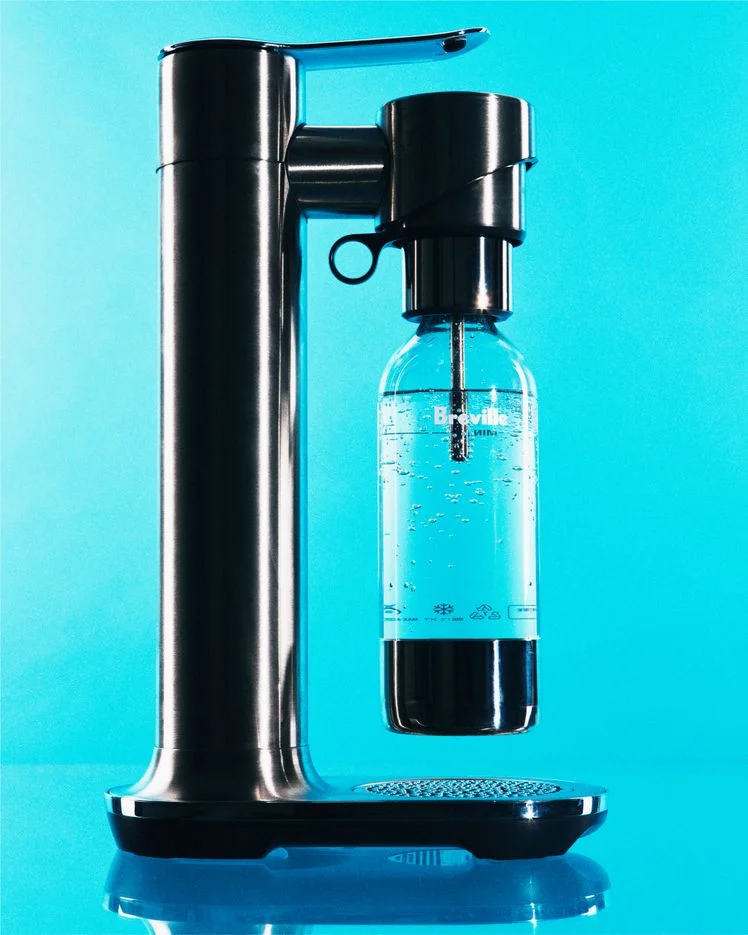
Photo by Travis Rainey, Prop Styling by Erica Lutz
What's in the box, and what isn't
The machine ships with a handful of accessories, including a juice filter and a silicone bottle brush. Those aren't glamorous, but they make both mixing drinks and cleaning up less of a chore. The bottle is plastic, which is the one material choice that doesn't match the steel body.
The gas is where the buying decision gets more complicated. A starter CO2 tank comes only if you buy the bundle. The good news is that the machine doesn't require a proprietary tank. The less good news is that it uses an uncommon canister size, and that's the main knock on the product. If you're hoping to pick up refills at any corner store, check first.
Specs and pricing
The machine stands 16.9 inches tall and carries a two-year warranty. Pricing is where shopping around pays off. Breville sells the InFizz Fusion for $250 without CO2, and Bloomingdale's matches that price. Amazon lists the same configuration at $200, the lowest price in the set. The bundles that include CO2 come in at $280 at both Williams Sonoma and Crate & Barrel. If you already have a canister, the Amazon listing is the one to watch.
Compared with the Drinkmate, the Breville is slightly fussier to operate. The gap isn't big, but it's there. I prefer the Drinkmate's quick click to the Breville's twist-and-lock design, which feels like one more step every time you refill.
That's the trade-off in miniature. Countertop soda makers are simple gadgets, and this is one of the priciest you can buy. If you're paying for quality materials, a good-looking appliance, and the ability to turn a bottle of bad rosé into something bubbly enough to serve to guests, you'll probably be very happy with it. For what it's worth, the Drinkmate can also rescue bad rosé. It just won't look as nice doing it.
What the Breville's price doesn't include
Here's the catch people miss: the base model costs $249 at the time of publishing, and it doesn't ship with a CO2 tank. That's a real omission at that price. You'll either buy a tank separately or pay about $30 more for the version that includes one. Budget for the tank from the start, because the sticker price alone understates what you'll spend to get the machine running.
The portable alternative: Drinkmate Spritzer
If the Breville feels like more machine than you need, the Drinkmate Spritzer is the case for going smaller. It's a portable sparkling water maker, and at $80 list it's far cheaper than the Breville. Amazon has it at $60 at the time of writing, which makes it easier to justify as a casual buy.
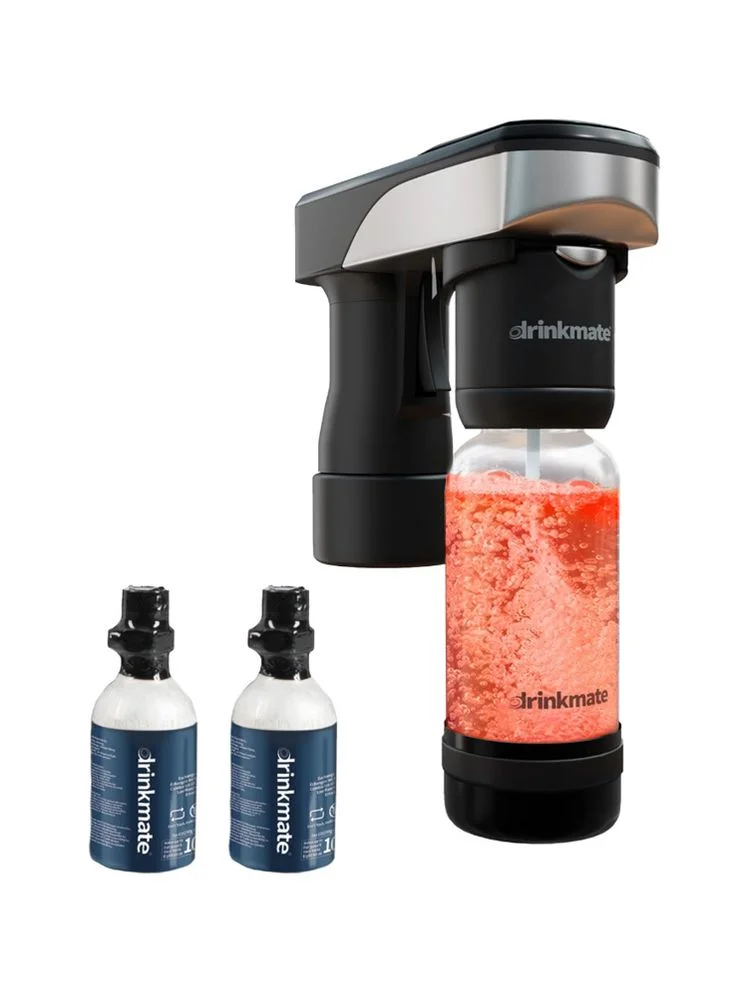
It's not perfect. The Spritzer carbonates more aggressively than plain water, which is the main reason to buy it. But the drawbacks are real. At full price it's not cheap for a gadget this simple, and it's a touch more finicky to handle than the Drinkmate Omnifizz. Neither point is a dealbreaker, but if you're already comparing machines, you'll notice both.
Pros:
- Carbonates more than water
Cons:
- Expensive
- Slightly more fidgety than the Drinkmate Omnifizz
Which one to buy
The Breville is the better object. It's better built, it looks better on a counter, and it makes a better gift for someone who already has a dozen kitchen gadgets. The Drinkmate Spritzer is the better purchase for most people. It's cheaper, easier to use, and does the core job well enough.
If you're working through this decision, start with the total cost. Add the CO2 tank to the Breville's price before you compare, and factor in how often you'll actually use the machine. A soda maker you use every day justifies a premium. One that sits in a cabinet after the first month doesn't, no matter how good it looks on the counter.