Japanese knives have moved well past professional kitchens. Plenty of home cooks own one now, and the reason is fairly blunt: in kitchen tests, many of them outcut their Western counterparts. That's the appeal. The catch is that they're specialists, and a specialist is harder to shop for.
Western knives are the all-purpose tools. Chefs once used the heavy bolster near the heel of the blade to crack open a can of tomatoes during service, and nobody thought twice about it. Japanese knives, including Japanese-style models from makers outside Japan, are built for precision and usually for one kind of task. That's great once you know what you need. Until then, you're guessing at what you'll actually use.
## What sets them apart
Start with the blade. Many Japanese knives are made for push cuts or pull-through slicing, not the rocking chop a heavy Western chef's knife depends on. Their edges run straighter. That makes them slightly slower at mincing herbs but more exact everywhere else. Most also have a sheep's-foot tip that curves down to the point, which gives you finer control when the work gets delicate.
Steel is the next difference. Japanese knives are often made from harder steel, and hardness lets an edge stay sharp longer. That allows makers to sharpen at steeper angles, producing a finer edge that slices more delicately. The trade-off is real, though. Hard steel can chip on material like ice or bone, so don't use these knives as pry tools or bone splitters.
Bevel is where things get interesting. Traditional Japanese knives are sharpened on one side only, which gives them a far finer edge than the 50/50 bevel on most Western knives, which are sharpened on both sides. Some modern makers have switched to 50/50 because it's easier to sharpen. You'll still find plenty of 70/30 knives, though, with the inside edge (the left edge on a right-handed knife) ground at a steeper angle. That's the compromise: easier to maintain than a single bevel, sharper than a 50/50.
Then there's the handle. Many traditional Japanese kitchen knives use a wa-style handle, an octagonal wooden grip that wraps around a hidden tang. The result is a lighter, more nimble knife. Many Western knives use full-tang construction, which adds weight and heft. Here's the thing: plenty of modern Japanese makers now pair full-tang handles with Japanese blade shapes. If you want durability and slicing ability in one knife, that hybrid is the one to look for.
## The types of Japanese knives
The lineup is where most shoppers stall, because the names don't map neatly onto Western categories. The styles below cover the main options, and each leans toward a different job. We've tested all of them, so the notes that follow are based on hands-on use rather than spec sheets.
- [Gyuto](https://cna.st/affiliate-link/B3TtCQX4Kz5G8cqU1KBbkzmjAPdcu86X9YE9hfwGjmP3mqGV2NXgUnjSoWyPTCd6USnLqE6DSSAV67c9zKeGsf76zW6S7mZsr2YYsstz5e1WS4YabNJFudXTPXAdA5T9CJ9qfubA7PamoW3p1EpJ3hnfRqBVHxKeURiUyp3AF9CEctXgKdycZa6CtbfmvZNBza7oCuwifxMYr523nbVksdj15448smu4uT9htWpXczdrH8icR9b7dFqfXYHfatekFDxHdSNNHW1Zrnbq1GEmfQJ7PaZdb1pMPStNY77jbvvxhsiHVFZKMhVffoAbouZeiA4jV6YNM8SyQYZPQB6wFzvHsUxt8S6)
- [Santoku](https://cna.st/affiliate-link/2gRdHG7pk8rK3NN6ahFJdsr2QorFdtnc2q1SuMJmVHRpL5abvNyu1bY8gEijJxhuDxjbfgJ1tj4yuwVGTKoJmRfZfJGEj3hR8Xdnp3scUune5rFgjiQ1qHmbSRBTSd2o1SYT75nsC5YhsfdiiKXoX8Hht4kdH58BuDN4HP4GTK6gdr5CdfFNR18URJyPhHV9WyzKsqkrEJguSDBm5kgUxX9a7uxs8Wkrs7FG6W3oER9yj4tmXoMnTbPhAeuL8MLRLRYfcmDTqAqtNkSJ8PRNWkF6rk8J68KQUskxfMerCQJctqYvsKcLayJQ9evg6uK3yLzSTQ89z4RVu4QRLkbbRHsowdo8ghNNMCc7HTFnz)
- [Nakiri](https://cna.st/affiliate-link/3GxwCCDhdURyu2KgegTsUBpk5r5fwre3kd5LeJtGM7Rw6dK1TbLBkuW6r4AbzbMQtz3a3KNaBJ2hMC1iTagFvcpbu4mumHJSvVtAoFWPEVyvhhKcdyC8WgMnQPCUVLpXQPd3Wip2zeq2QQ47PQfdh9ki7M1V5cqCmWev6S5Au2KmtsDpUbJJBYm6TApZZbxPG9DJfgZSK7drEN3UFezLpLhKBMXZbiB3FHg3v4hTp9RTKYrgcxGff4JxEYMqthE8GGfKGB3yP47fL7KtbiE4rVFMXX82gmkEMTTHMD5qaivTV9hCLztsFoVZMWtnTy4E1xCiwTeyWLQtWHDHhqJR9dkuiA9LkS)
- [Deba](https://www.amazon.com/dp/B0026L5MNG)
- [Petty](https://cna.st/affiliate-link/45kUUMgYoCRNsewsqFdEcjo3zvU7wdaiMnNoTV7xzfCkWAoGxTcb7dKdZDeeG7H7u1UZyhdnoh8i5qA2cEL92MaRFRP9TzyZPAeP8Df23TR2TYQC1MiTt1rmBvqY4vLqhYdUqEDbqXvdsfxmaTunA8CBvxGNwMSx9sRSWDPNDTG4PpQ1yY6xLjQHTcALYHz2fs6xmySzu6pJZF37AHu25jc25m6FHGUPZpXkYqUWpVFrw6dQhu8qGsCKJUPqtwiGzUFxzCU9MbVudJkv8RYEdgHr2MzTxqBjp769tWZvUZgeFT5tupgqZCMALw9o1sBfYeRNp6kH3qchsKnCsva)
- [Funayuki](https://cna.st/affiliate-link/FtXebJ4xqVaieteZij7oUq9SrTT35a9pY7NiEYy2AY89ipAT4TyARQoRj1PpdMRHjZiFCZgebT6wCPj7JpFrH4f7jhTXXwAHbXWkeYB58DnfnnKsrzYYaCnYZvPjnNc9DpZMzUJRFrk3txUiJz4bmFzCFDHdNcbYgagvCcUZDLuNZWXFhwUr9zEB3pDonU6KGhf8PPVgjDsBnALpusf66odPmH1kcdQV3vSNxbLoHjvdjzkoGWYgXZx12peYYUHhFLzogTGX6VYhCUh6kYhfxxGHsCRmYGq9XuEpCkePqRGvDMrGDmd6DVnxtrMxVo2q9Gh1wB1sZ7n2C6zRco1MgkXSJ6mebfduQci)
- [Kiritsuke](https://cna.st/affiliate-link/Wu6UuqeJKuLEbjkRPzHsZp4sVLdvD9r7FyGKsiyVaBBSk7oKiJwYhSdDUTC6oJK6tSWEfbo2sz2SRFD7UZumx4c6ixf1njkzg8Pqpufysse129VgGcDqt5mADBa8r6mrHtjY58KKhYoubaTND7m7gaGGptYNht2Q2yQA2y5CE4UDZU4ZADA9wr3gpNptVegj96xU6mi4r5Y8GKQaGtombVR5rU8qpZqYN8YyerbWzkcww8DXxK3vNrMczfwNqwBorohJwDfeeNdpnkNnJmxppEy4vxeuVCJrHxSPyHUkx4EB5SZ6FcGchGwL8WbYvHjoNvUFbxiKM3KxpfMLDb13KCUfS8aN)
- [Honesuki](https://cna.st/affiliate-link/mKseyLofgnuondAvCPFnRBzR6StdT4KN4gq3QWrYTktKEt3Lh42RFerLtKHt6eJKA8o8Xrn1uG4ryaAAg1HX4bBwctLbbybsboYeQbufY12B4FwKNbyA4JVQDN6jWNrEqddyzVKG4zRCriYVm1T92vf4qBzBBpcbWSxymtNheDxnGAJ5tAFnV34b7nzvFtRb6ZTTX6ouagyJkUtVHWTVQR2Gs7q8kQZ5FVBLKUyBKhX1VA24AsNYhAQ7SAjt7Jc8CpxG9hxBiDMw1vsBu7bkRp2aPQkZDfcZzZLSwXnDx6i3HucjAkgKBqAL2d3my2zkC5NTHWypPsjBvFcV3Td51T7nEvXzEkUr)
### Gyuto
Where the gyuto came from
The gyuto, or Japanese chef's knife, took shape in the early 1900s, when Japan was modernizing fast and French cooking was catching on. Japanese makers took the French chef's knife as a template and combined it with traditional Japanese knife making. The result was built mainly for slicing meat, with a gentle curve that still handles a pile of herbs.
Next to a Western chef's knife, the gyuto looks flatter. Its blade runs straighter, and its drop-point tip sits lower. That shape is deliberate. You set the tip on the board and draw the blade through the food, letting a thin, sharp edge do the cutting. It's a precision tool, and if you're used to rocking a heavier Western blade, the first few cuts feel different.
Here's the thing: meat slicing is where the gyuto started, not where it stops. Its overall shape is versatile enough that plenty of home cooks use one as their everyday knife instead of a traditional chef's knife. That's a bigger shift than it sounds. You're picking a main blade for how you cook, not for tradition.
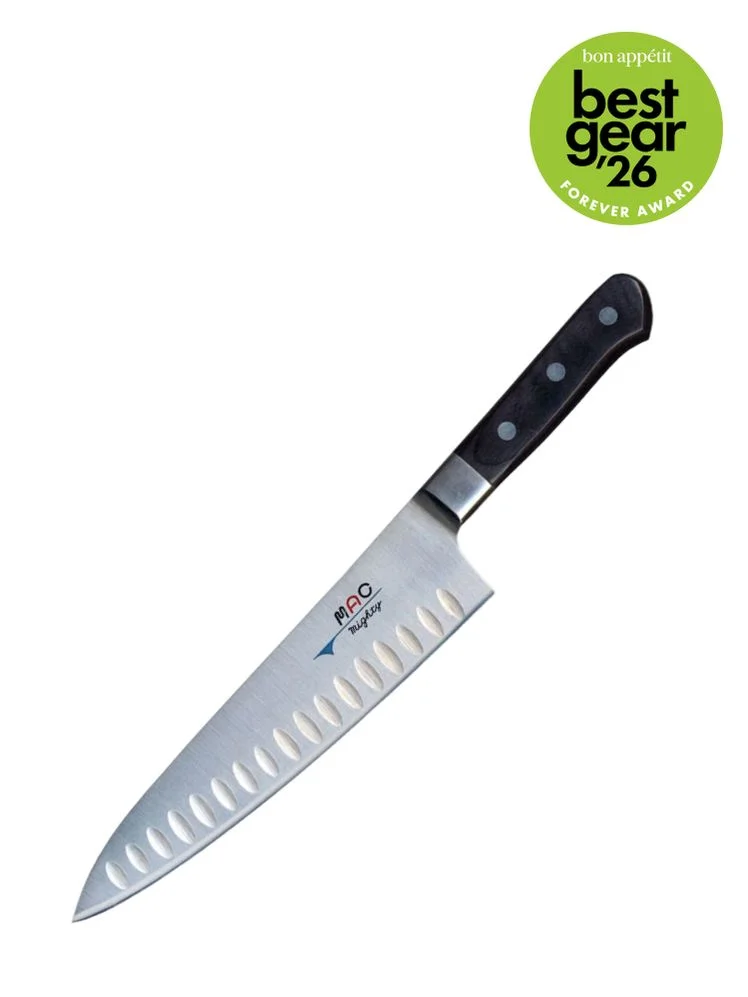
Two gyutos worth your money
If you want a dependable starting point, MAC's Professional Hollow Ground Chef's Knife is hard to argue with. It has sat near the top of chef's knife rankings for years, which says more about its consistency than any single spec sheet. The Mac Professional Series Chef's Knife is listed at $195, with a reduced price of $175 on the offer we're tracking.
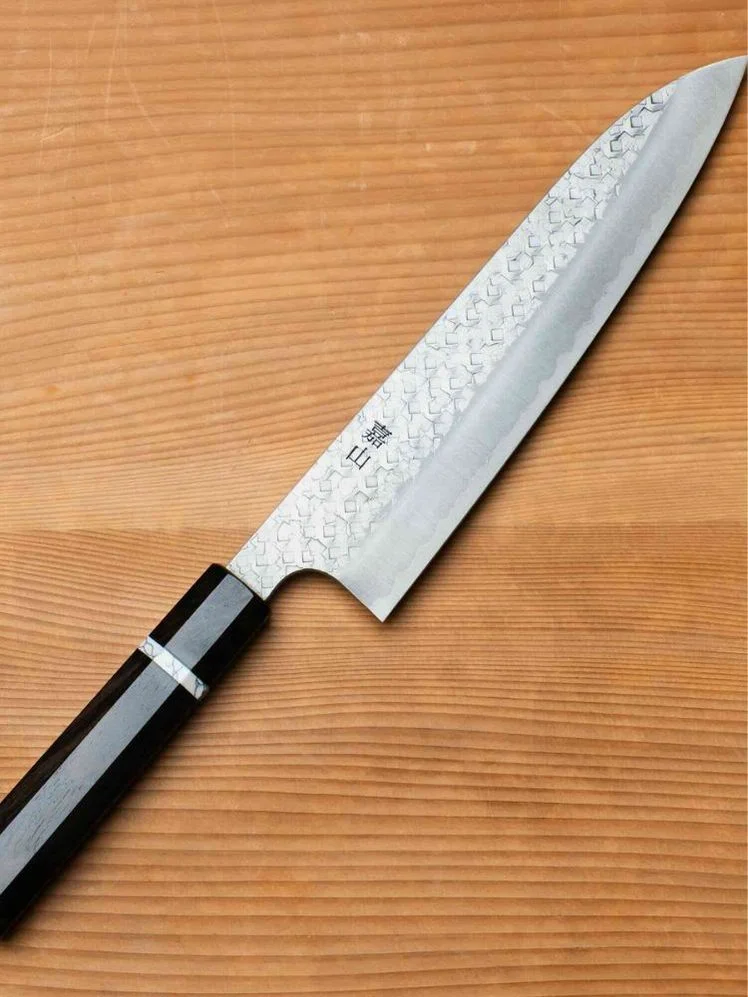
For something sharper and more traditional, the
Kazan Arare by Shibata gyuto is the one we keep coming back to. It impressed us enough to earn its own
full review. It's priced at $240 from Shop and from Chubo, so you can compare sellers before you buy. An edge that aggressive rewards careful handling, though, and it isn't the knife for someone who wants to ignore their blade.
If you're still deciding between a gyuto and a Western chef's knife, our
chef's knife buying guide and our
roundup of Japanese knives lay out the trade-offs in more detail.
Santoku
Santoku knives now turn up in almost every brand's knife set, which is odd for a shape that only dates to the 1940s or so. The nickname, "three virtues knife," gives the pitch away. It borrows from the gyuto, nakiri, and deba and aims to be good at meat, fish, and vegetables without specializing in any one of them.
The geometry explains the range. You get a fairly steep sheep's-foot tip for precision work, a tall heel for push cuts, and just enough curve to pull through a slice or rock the blade over an onion. That's a lot of jobs for one blade. In practice it means cheese and an apple for a snack, leftover roast chicken for a sandwich, or a diced onion for a curry. Nothing exotic. That's the appeal: it's a weeknight knife, not a showpiece.
Why the length matters
Size gets less attention than it deserves. We like a santoku between six and seven inches, which keeps it deliberately shorter than a gyuto so the two don't overlap in your drawer or your hand. A longer blade looks more impressive on the shelf. A shorter one is easier to control for the small, repetitive cuts a santoku is built for.
Two picks, two different bets
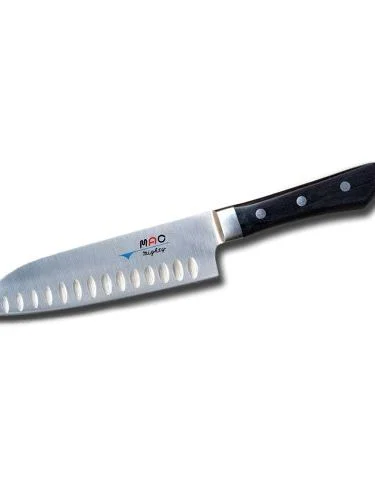
Our overall favorite is the MAC Professional Santoku Knife. It's sharp, well made, and at $140 on Amazon it's hard to argue with the value. The one real complaint is a handle that feels slightly clunky.
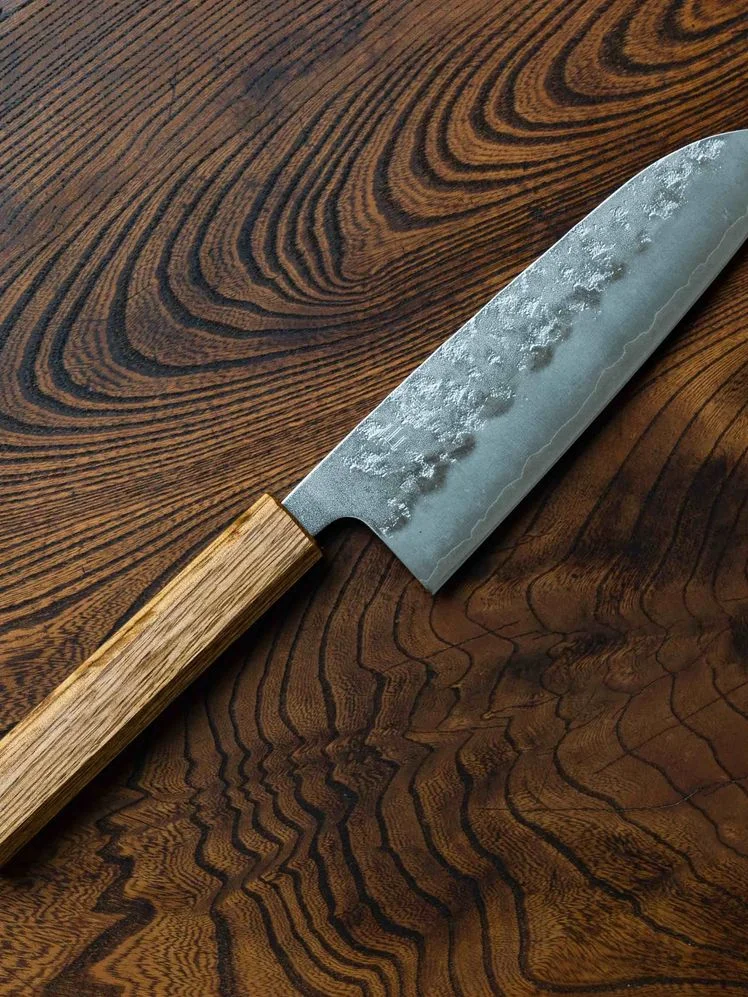
If you want something more ornamental, look at the Kazan Ginsan Nashiji Santoku. It's razor sharp, nimble yet sturdy, and built around a traditional wa-style handle with hand-finished details. The trade-off is price: $180 from Chubo Knives, and that's the one knock reviewers in our tests kept returning to.
If you're buying one knife to handle everything, the MAC is the rational choice. The Kazan asks you to pay for the feel of the handle and the finish, and that's a fair purchase only if you'll notice the difference every time you pick it up.