Critics Rally Around Proulx, Gleick and a Darkly Funny Novel This Week

The books critics liked most this week didn't play it safe. Annie Proulx's new and selected stories, Siân Hughes's darkly funny novel and Nick Paumgarten's account of a hockey team and a family are all drawing strong notices, but the best reviews praise how these writers bend their forms rather than simply hitting their marks.
Fiction
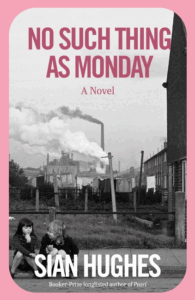
Siân Hughes's No Such Thing As Monday (Henry Holt) earned five raves, two positive notices and one mixed. Leah Greenblatt, writing in The New York Times, called it "fractious and darkly funny." Her point about the protagonist, Steffie, is the one that sticks: she's someone you'd probably run from in real life, but on the page she's a great hang. The novel piles up misfortune without tipping into bleakness, and Hughes's ear for misfits keeps the story from collapsing under its own weight.
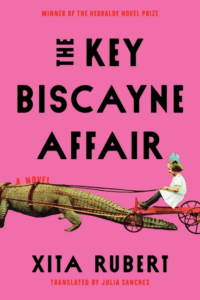
Xita Rubert's The Key Biscayne Affair (Ecco) picked up three raves and two positive reviews. Michael Shorris of The Brooklyn Rail called it "sly, rewarding," and singled out the prose. In a period when so much contemporary fiction runs on minimalism, Rubert's sentences are audacious and reaching, and the novel is slender enough that every line has to earn its place.
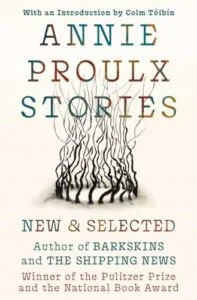
The strongest notice of the week goes to Annie Proulx Stories: New & Selected (Scribner), which received four raves. Dwight Garner's New York Times review argues that Proulx's short fiction is her thorniest and most essential work. He describes reading it as opening a hall closet and watching an antique junk shop, "laced with spiky and rusted farm implements," spill out. That sounds like a complaint, and Garner means it as praise. He sees the abundance as deliberate, and he credits Proulx with coaxing "wild, wind-chapped poetries" out of a style that looks chaotic on first contact.
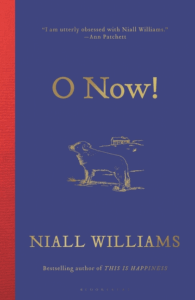
Niall Williams's O Now! (Bloomsbury) earned three raves and one positive notice. Booklist's Carol Haggas calls it a "shimmering jewel of a novella," a quiet, lyrical meditation on life's deepest riddles. Novellas that try for that kind of scope often wobble, so the praise here reads as a sign the form is doing its job.
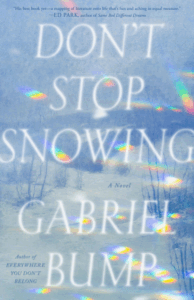
Gabriel Bump's Don't Stop Snowing (Algonquin) is the week's most divided critical case, with one rave and four positive reviews. Rob Franklin's review in The New York Times Book Review is the highlight. He describes the novel's melancholy as something like a blizzard, desolate and romantic at once. David's narration, he says, carries real insight into identity, family and the tragedies everyone inherits. The book sneaks up on readers, and Franklin admits it made him cry more than once.
Nonfiction
James Gleick's The Telephone: A New History (Farrar, Straus and Giroux) drew four raves and three positive reviews, and it's the nonfiction book with the most to say about the present. Alexandra Jacobs of The New York Times says Gleick restores the instrument to its rightful place in history and gives a mundane tool a dignity it rarely gets. Gleick is a science writer who prefers the street to the lab, and Jacobs thinks the book should be required reading for digital natives. Her case is persuasive. If you carry a device that's mostly a telephone in name, this history puts it in context.

Nick Paumgarten's The Intangibles: Friendship, Fatherhood, and the Love of the Game (Penguin) collected five raves and one positive review, the most lopsided enthusiasm of the batch. Publishers Weekly calls it "inventive" and "vivid," and says hockey fans will adore it. The more interesting claim is that casual readers will be charmed by Paumgarten's thinking about manhood. The verdict is blunt: "It's a winner."

Lauren Elkin's Vocal Break: On Women, Music, and Power (Farrar, Straus, and Giroux) received three raves and two positive reviews. Fiona Sturges, writing in The Guardian, notes that Elkin doesn't offer a grand thesis about the female voice. She argues instead that women's vocal styles are rich and varied, and that they get manipulated, criticized and underserved by the music business. Sturges says the book's sharp analysis rests on real appreciation for singing as expression and freedom, which is what keeps it from reading like a lecture.

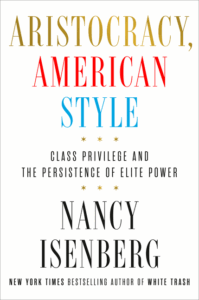
Nancy Isenberg's Aristocracy, American Style: Class Privilege and the Persistence of Elite Power (Viking) earned three raves and two positive notices. Kirkus credits Isenberg with showing how the pursuit of status-driven power, as opposed to wealth alone, has shaped American life. The reviewer's closing point is the sharpest: the analysis is as relevant now as it was at the nation's founding. That's a strong claim, and the book's historical evidence is what gives it weight.
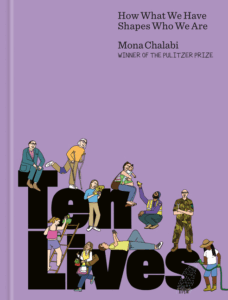
Mona Chalabi's Ten Lives: How What We Have Shapes Who We Are (Random House) got one rave and three positive reviews, and it's the most unusual book on the list. Rachel Clarke of The Guardian describes it as a mix of journalism, data visualization and memoir that is both a joy to read and a serious provocation. Its foundation is hard numbers, but the stories are what land. Clarke points to how problems like the lack of affordable healthcare or childcare can overturn a life. Here's the thing: a book built on spreadsheets that still produces tears is a rare achievement.
My read is that the strongest books this week share one habit: they trust the reader to follow a form that doesn't hold still. Proulx's sprawling stories, Rubert's reaching sentences and Chalabi's blend of data and memoir all ask for a little patience and reward it. If you want one place to start, Proulx has the most consensus behind her. If you want a book that rewires how you think about everyday technology, Gleick is the pick.