Seven Books Where Mothers Keep Their Inner Lives
The political movement that has narrowed reproductive rights in the United States runs on a particular picture of motherhood: instinctive, total, self-sacrificing, and asking for nothing. In that picture, a mother needs no wages, no consent, and no inner life of her own. Silvia Federici made the economic version of this argument in "Wages Against Housework" half a century ago. Care gets recast as a natural trait of the female body so that it can go unpaid. "They say it is love," she wrote. "We say it is unwaged work." Adrienne Rich drew a similar line when she separated the institution of motherhood from the experience of mothering. The institution has never stopped being useful to someone.
Every book on this list follows a mother who is also something else. She is restless, hungry, and fixated on a dead poet, a diary, a theology, or the capacity of her own body to cause harm. Sometimes she is in psychosis. Sometimes her mind wanders far from the baby. That fixation is evidence of a life that continues past childbirth, whatever it costs her.
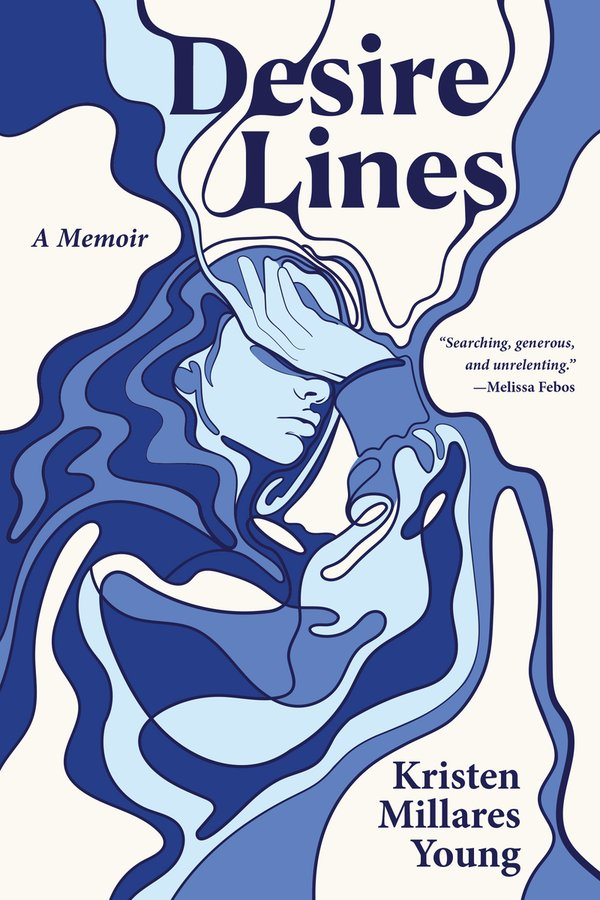
I know that fixation from the inside. Sleepless with an infant, I got absorbed in Cybele, an ancient mother goddess, and followed her from Galicia to the archives of the Louvre while I examined my own Cuban matrilineage. That obsession became my memoir, Desire Lines. Whether a book is memoir, essay, confession, autotheory, or some hybrid of essay and autofiction, the core is the same: a mother's account of a life that did not end when her child arrived.
These are literature first, and their political force comes from their craft. Propaganda simplifies to persuade. These books do the opposite. They complicate. A woman rendered in full doesn't fit neatly into a society that wants her to be a function, and that friction is where the politics live.
Forgetting as a Kind of Freedom
Ongoingness by Sarah Manguso
Sarah Manguso kept a diary for 25 years, and it grew to 800,000 words. Her reason is blunt: she "couldn't face the end of a day without a record of everything that had ever happened." She was less driven by ambition than by fear that anything unwritten would vanish, and she with it. Ongoingness is the book she wrote instead, built from white space and aphorism, as though the compulsion had been pressed flat. Pregnancy and birth did what the diary was designed to prevent. They made her forget. A being arrived who consumed the hours the record demanded and changed faster than she could write. Manguso doesn't frame this as a cure or a loss. She calls it ongoingness, the present tense she had spent her adult life refusing. The book shows what forgetting costs a woman built to remember everything, and what it gives her back.
Haunted by a Lament
A Ghost in the Throat by Doireann Ní Ghríofa
First published in Dublin by Tramp Press in 2020, A Ghost in the Throat opens on a line that becomes its refrain: "THIS IS A FEMALE TEXT." Doireann Ní Ghríofa had already made her name as a poet in Irish, or Gaeilge, and had borne four children in six years when she became absorbed in Eibhlín Dubh Ní Chonaill. In 1773, Ní Chonaill found her husband shot dead, drank his blood, and composed the Caoineadh Airt Uí Laoghaire, a lament Peter Levi judged the greatest poem of its century in Ireland or Britain. The historical record barely holds her. She appears as a wife and an aunt in men's papers, and her own son is the one who wrote her out.
Ní Ghríofa follows her through the archives in the scraps of time a household never admits it has, while nursing, pumping milk for a donor bank, and translating the poem herself. What does a mind do while it is "folding someone else's clothes"? The book, which won the Irish Book of the Year and the James Tait Black Prize, is a hybrid of essay and autofiction that refuses to stay in the domestic frame. It treats an interior life as a historical argument. She went on to publish Said the Dead, a work of speculative nonfiction, and her approach remains hard to categorize.
A Household Under Revision
The Argonauts by Maggie Nelson
Two bodies change in one house. Maggie Nelson is pregnant with her son, while her partner, the artist Harry Dodge, is on testosterone and, four months into Nelson's pregnancy, recovering from top surgery. Nelson writes, "On the surface, it may have seemed as though your body was becoming more and more 'male,' mine more and more 'female.'" The book's argument is that neither reading captures what's happening. Nelson, a poet and critic who later became a MacArthur fellow, braids the story with theory, with Winnicott and Sedgwick working in the margins. The braid is the argument. Thinking is also a form of mothering.
What makes The Argonauts worth rereading is its refusals. Nelson rejects the idea that family is a natural form with fixed roles, and she rejects the notion that domestic life is an unserious subject for scholarship. She wants the stepson, the marriage, and the marginalia all on the page. The book won the National Book Critics Circle Award in Criticism, and it runs on an appetite for living and knowing that the official picture of motherhood rarely allows.
When the Body Turns Against Its Owner
Inferno by Catherine Cho
Catherine Cho, a Korean American literary agent living in London, flew with her husband and newborn son to the United States to meet his family. The trip ended in New Jersey with the hundred-day celebration, a Korean milestone that marks the baby's survival. Eight days short of it, Cho "started to see devils in his eyes." She spent 12 days in the hospital, eight of them on a psychiatric ward. Inferno renders postpartum psychosis from the inside. Cho could no longer recognize the faces in her husband's family photographs, and she came home feeling like a stranger who had taken the place of her son's mother.
The cultural script says maternal love is automatic. Cho documents something else: a mind coming apart three months after birth, in a country where most pregnancy-related deaths are preventable and the people in charge of her care were strangers to her. She threads her parents' immigration story and her own past through the ward, so the illness arrives with a lineage attached. The question the book leaves open is how a woman becomes a mother again. Cho survived long enough to write it down, and that is the answer she offers.
The Body as Its Own Argument
Brutalities by Margo Steines
Margo Steines is 37, pregnant, and locked down in Tucson in 2020 when she starts taking inventory of her body. The list is long. It includes a decade as a dominatrix beginning at 17, a private dungeon, a violent man on an isolated farm, the self-harm and eating disorder beneath those years, and ten years as a union ironworker, with its "collection of small second-degree burns and knife slices." It also includes manganese poisoning. Violence, she writes, was not done to her. She "set out to find it."
Organized by association and by two timelines running past and present, each essay asks what a body can be driven to absorb. Pregnancy makes the accounting urgent, because another body now lives inside the one she spent her life testing. Her partner, a mixed martial artist, is also a gentle man, which complicates any easy story about risk and care. When control over the reproductive body is contested, a memoir about bodily risk chosen on purpose reads as a claim to sovereignty. Steines doesn't ask permission for what she did to herself. She asks what it was for.
Arguing With a Saint
Motherhood by Natalie Carnes
Augustine wrote his Confessions to God in 13 books. His mother, Monica, weeps, prays, and steers her son toward conversion. Natalie Carnes, a theologian at Duke Divinity School, answers him in 13 chapters. The first nine are addressed not to God but to her daughter, and only at the end does she turn to God. As the child who was once inside her grows more separate each year, Carnes argues with Augustine across 16 centuries about bodies, desire, and what a mother is for. "I am called to a twoness that never dissolves," she writes, "and desires that frequently do."
Is it theology or a diary? Carnes insists it's both. The body is where the work happens, and motherhood is its most demanding curriculum. The political movement narrowing women's rights draws much of its authority from Christian tradition, and Carnes contests that tradition from inside its own forms, using one of its own saints to do it. That approach is harder to dismiss than any outside critique.
A Letter the Child Cannot Read Yet
The Breaks by Julietta Singh
Julietta Singh writes to her six-year-old daughter in a letter the child can't read yet, about inheritance, race, and a future the writer won't live to see. The household is already an argument. Singh, who teaches gender and sexuality studies at the University of Richmond, and the girl's father are, in their own phrase, "friends-in-love." They raise their daughter in adjacent households in Richmond, Virginia, where she learns to be American through "a manicured version of history" and a country that collapses race into two colors.
Singh writes about her own mother, an activist, with a mix of gratitude and pressure. If she has followed her mother's path by puncturing the liberal sheen of social harmony and ecological sustainability, she writes, she does it "in the spirit of survival. Yours and mine and everyone else's." Here's the thing: the daughter has to remake her mother's world, but breaking with the past is different from leaving her mother behind. Drawing on Saidiya Hartman's Lose Your Mother, Singh says her "most intimate desire" is for her daughter to "find a way to break with me rather than to break from me." The book closes on its sharpest line: "I desire never to lose you, but for the sake of life itself, I need you to lose me."
What These Books Ask of the Reader
Read together, the seven books make the same demand. A mother's interior life is not a threat to her children or a private indulgence. It's a condition of her being a full person, and a society that wants her reduced to function will have to reckon with that. The writing itself is the evidence. Each of these authors shows what happens when a woman's obsessions, memories, and desires are given room on the page.
My read is that this is where the next serious work on motherhood will come from: books that treat maternity as one part of a mind rather than its whole. Expect more hybrid forms, more archives, and more writers who refuse the choice between the child and the self.