How Photographs Change the Way We Read Fiction
 I’ve spent a decade teaching and writing fiction with images, and the possibilities still feel open. Students often find that photographs free them from having to make every part of a story with words. But images also create practical and artistic questions: Where should a photograph sit? Should a novel caption it? And what happens when the image seems to say something different from the prose beside it?
Those tensions are part of the appeal. Words and images don’t share a language, so their meanings can pull against each other. For a writer, that friction can sharpen the question of what prose can express—and where it reaches its limits.
My own multivolume novel, *[Five Strange Languages](https://www.unnamedpress.com/authors/mfzs86ntrlrnywk-wtwgn-ga86h-crdgw-znhby-j63m9-24tc5-2znmm-ebxcc-fz7jh)*, grew out of that interest. Its first published volume was *[Weak in Comparison to Dreams](https://bookshop.org/a/269/9781951213725)*. Chapters alternate between day and night: in the daytime, Samuel tours zoos in different countries to study the welfare of confined animals; at night, he returns to a dream of endless mountains and forest fires. The daytime chapters include photographs of cages without animals, along with photographs of essays he reads for his research. The book puts waking images and dream images beside one another.
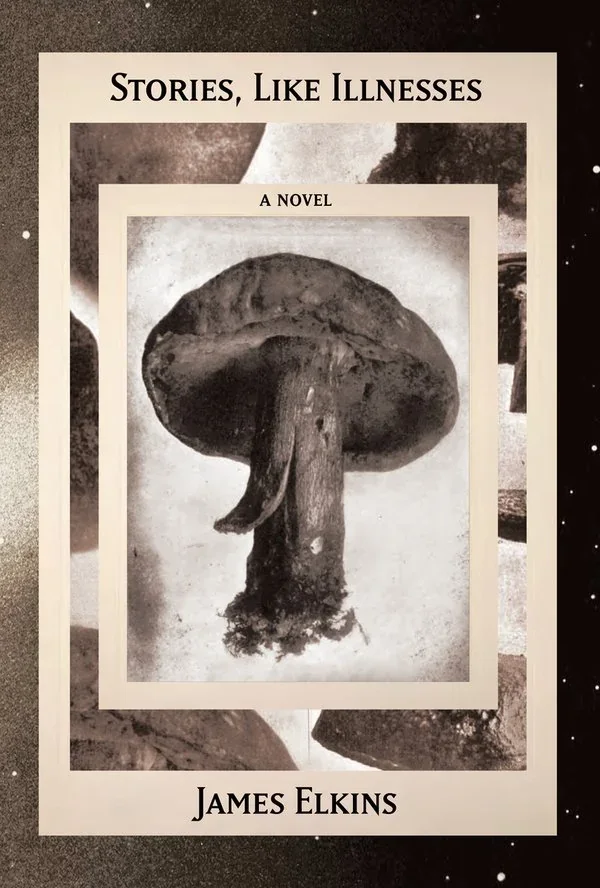
The project’s opening volume, and its most recent to appear, is *[Stories, Like Illnesses](https://bookshop.org/a/269/9781961884915)*. Its pictures include bats, bacteria, crystals, drills, engines, and comets—the kinds of things that crowd Samuel’s thoughts. The book’s multiple columns let these images surface in margins, mid-page, or across both sides. The crowded layout is meant to make the reader feel his difficulty concentrating.
These are only a few possibilities. More examples are gathered [online](https://writingwithimages.com/) and in a [nonfiction companion volume](https://www.unnamedpress.com/all-books/p/ideasandmaterials) to *Five Strange Languages*. The ten books that follow show why the form deserves attention: in each, images do more than decorate the prose. They answer it, complicate it, or redirect the reader’s eye. You move between text and image, checking one against the other. The page begins to hold your attention in a way neither could manage alone.
These three books show how images can shape a reading experience in very different ways. The strongest examples don’t treat pictures as decoration: they make readers ask what a photograph can tell us, what it leaves unsaid, and how its meaning changes beside text.
Travel, memory, and the photographed past
Teju Cole’s Blind Spot brings photography into the tradition of the wandering narrator. Cole, a Nigerian-American novelist, photographer, and theorist, became known to many readers through Every Day Is for the Thief and to another audience through his photography column for The New York Times. He is now the Gore Vidal Professor of the Practice of Creative Writing at Harvard.
Like W. G. Sebald, Cole moves through places while attending to histories of violence. His range is broader: Blind Spot touches on Balinese, First Nation, German, Syrian, and Swiss genocides. The photographs are full color, without the nostalgic grayscale cast associated with Sebald’s work. That difference matters. Cole’s images meet the present directly, even as the accompanying text turns toward the past.
Cole also makes his process part of the book. He points out details in his photographs, explains what he notices on his travels, and discusses how he made the pictures. Sebald left his camera and lens choices largely outside his books; later researchers have investigated them, and a Sebald archive now holds photographs he didn’t use. Cole’s more guided approach feels like a distinct form of image based autofiction: the reader is shown both the scene and the act of interpreting it.
When the image says what the text leaves out
Claudia Rankine’s Citizen examines the daily experience of racism in America through the perspective of a Black woman. Published in 2014, it uses images more deliberately than Rankine’s earlier Don’t Let Me Be Lonely (2004), where photographs could feel like optional additions.
In Citizen, accounts of prejudice, bullying, and casual thoughtlessness sit alongside work by Black American artists including Carrie Mae Weems, Nick Cave, and Glenn Ligon. The juxtaposition can be jarring: a scene of racism at a grocery checkout may give way to art that has been reviewed internationally, acquired by museums, or sold to collectors. Rankine doesn’t spell out the tension. The reader has to sit with it.
Other images shift the frame again: Caroline Wozniacki imitating Serena Williams, Hennessy Youngman, and ordinary outdoor scenes. Their relationship to the surrounding prose is left unexplained. That silence is pointed. A book attuned to people’s failure to recognize their own assumptions can make the reader do some of that recognition alone.
A novel that crosses between paper and video
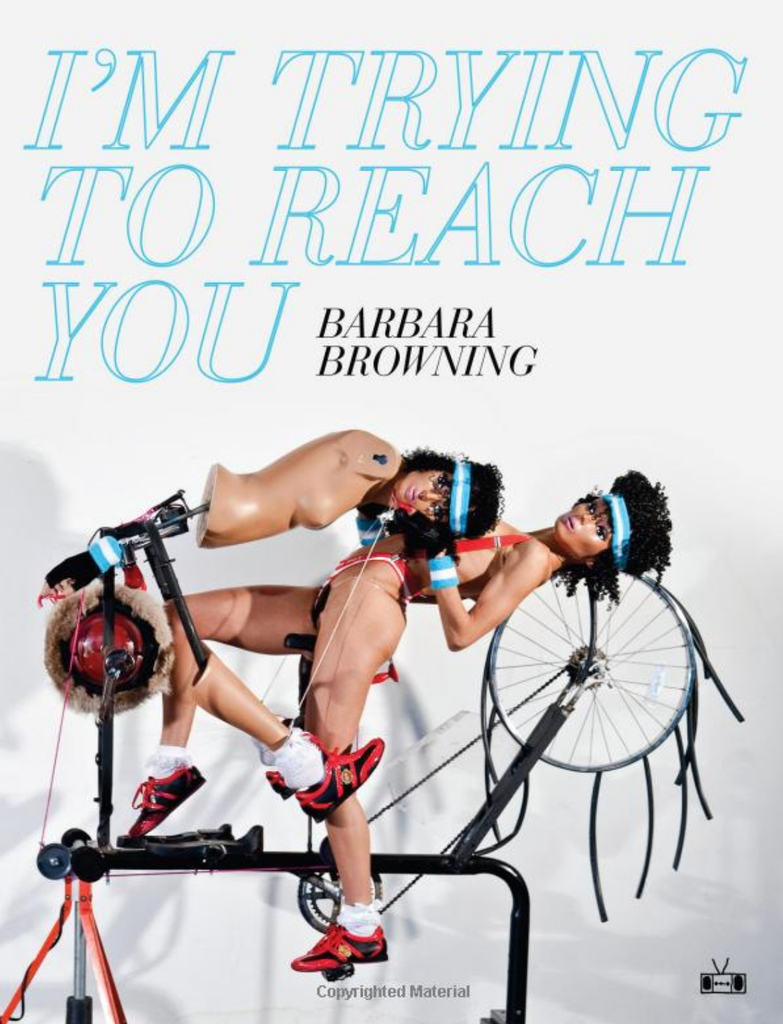
Barbara Browning’s I’m Trying to Reach You asks readers to move between a printed novel and online video. Its pages mix ordinary photographs, mostly taken on phones, with YouTube screenshots. A QR code on the dedication page points to the videos of “the moth” at www.youtube.com/AhNethermostFun/.
The videos and their comment threads become part of the plot; some comments appear in the book itself. You can follow the novel without watching anything, but then you’re left with grayscale stills and descriptions of scenes whose motion exists elsewhere. Watching as you read adds another layer to the story.
The view counts offer an unusually visible trace of how readers move through the book. The first of its 12 videos had 1,011 views in April 2014, 1,500 in 2019, and nearly 1,900 more recently. The remaining videos drew fewer views, with the numbers dropping quickly. That pattern suggests some readers may not have reached the end, though the counts can’t tell us why. Browning further blurs fiction and life with a double author photograph that strongly resembles the dancer called “the moth” in the videos.
Here’s the thing: this book may work best because it refuses to settle into one format. A Kindle version might feel like a linked digital text, but the paperback makes the reader switch between physical pages and online clips. That friction is part of the experience—and likely part of what makes the novel stick.