Best Reviewed Books This Week: Louise Kennedy, Judi Dench and More

Louise Kennedy’s Stations stands out among this week’s strongest fiction reviews, with critics praising its emotional restraint and placing Kennedy in the company of contemporary Irish writers Eimear McBride and Sally Rooney. The nonfiction selections range widely, from D. J. Taylor’s account of J. R. R. Tolkien to Simon Garfield’s history of the pen.
Fiction: Irish lives, familiar detectives and fresh perspectives
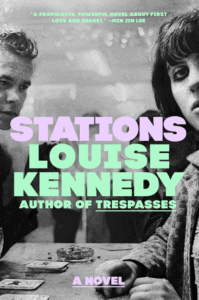
1. Stations by Louise Kennedy
(Riverhead)
9 Rave
Kennedy’s novel earned nine rave reviews. Cory Oldweiler of The Boston Globe calls it “extraordinary—and indeed bittersweet,” praising the lived-in perspective of Kennedy’s writing and saying she belongs alongside McBride and Rooney.
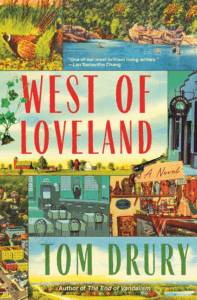
2. West of Loveland by Tom Drury
(Grove Press)
5 Rave • 1 Positive
Tom Drury’s West of Loveland drew five rave reviews and one positive notice. Booklist’s Bill Kelly highlights the novel’s deliberate pacing and growing emotional force, describing a humane reflection on fate, belonging and the ties between ordinary lives.
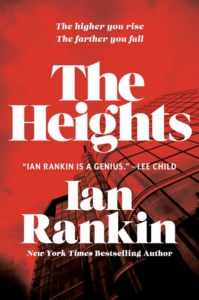
3. The Heights by Ian Rankin
(Cardinal)
3 Rave • 3 Positive • 1 Mixed
Ian Rankin’s The Heights received a more divided, though mostly favorable, reception. Writing for Crime Fiction Lover, Chris Connor argues that a new setting hasn’t erased the qualities readers value in Rankin’s Rebus books; after four decades, the novelist still has plenty to offer.
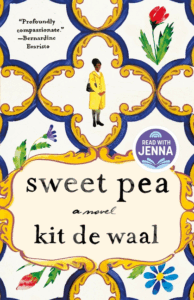
4. Sweet Pea by Kit de Waal
(St. Martin’s)
4 Rave • 1 Positive
Kit de Waal’s Sweet Pea pairs quiet humor with a story of forgiveness. Booklist reviewer Enobong Tommelleo points to the voice of Paulette, whose Caribbean phrases surface when she grumbles about friends, and praises the novel’s unsentimental emotional depth.
5. Gloria Don’t Speak by Lucy Apps
(Mariner)
2 Rave • 1 Positive
Lucy Apps’s Gloria Don’t Speak is a character study built around the gap between Gloria’s view of the world and what readers can infer. Laura Chanoux of Booklist praises Apps’s close attention to language and the story’s lingering effect.
Nonfiction: Tolkien, Dench and the stories behind familiar objects
1. The King Under the Mountain: In Search of J. R. R. Tolkien by D. J. Taylor
(Pegasus)
5 Rave • 1 Positive • 3 Mixed
Read an excerpt from The King Under the Mountain here
D. J. Taylor’s book takes a less conventional route through Tolkien’s life, dispensing with the obligations of full biography to examine the writer’s character, contradictions and work. Marcel Theroux, in The Financial Times, calls it witty and irreverent as well as deeply researched, attentive to Tolkien’s eccentricities while recognizing his gifts.
2. Is It Too Late to Make a Run for It? by Judi Dench
(St. Martin’s)
5 Rave
Judi Dench’s Is It Too Late to Make a Run for It? won five rave reviews. Fiona Sturges writes in The Guardian that its loose structure and show-business anecdotes are carried by Dench’s warmth and humor.
3. Castles: A Fortified History of the World by Dan Jones
(Viking)
4 Rave • 1 Positive
Dan Jones’s Castles received four rave reviews and one positive. Spencer Strub of The New York Times Book Review sees its appeal in the way it connects myth, scholarship and the physical record of castles.
4. The Pen: A Human History by Simon Garfield
(Crown)
3 Rave • 2 Positive
Simon Garfield’s history treats the pen as a cultural object as much as a writing instrument. Lillian Liao’s Booklist review frames the book around the values people attach to writing by hand in a digital age.
5. Just a Shot Away: Martin Scorsese’s Life in Film by Mark Binelli
(Metropolitan)
4 Rave
Mark Binelli’s portrait of Martin Scorsese shifts attention from the director’s familiar public persona to his habits as a dedicated artist. David Pitt, reviewing for Booklist, describes a sharper, more private view of the filmmaker, focused on the care and intelligence he brings to each project.
Together, the week’s top reviewed books favor close attention to character: in Kennedy’s Irish fiction, Taylor’s portrait of Tolkien, or Binelli’s account of Scorsese. The strongest nonfiction also finds larger questions in familiar subjects, whether the object in hand is a pen or a castle.