Black Bag Reframes the “Crisis of Masculinity” as a Crisis of Work
The most revealing detail in Luke Kennard’s Black Bag isn’t that its protagonist is a lonely man. It’s that a job so absurd it requires him to sit inside a leather bag gives him a measure of security he’s never had before. That shift points to a more material explanation for male distress than the usual talk of masculinity: the shortage of dependable, meaningful work.
The novel has often been presented as a study of modern manhood. Its jacket calls it “an investigation into the crisis of masculinity,” The Sunday Times described it as a meditation on how hard it is to be a man right now, and Booker judges expected it to prompt discussion about men. But Kennard’s story turns on a simpler problem: its narrator can’t make rent.
The unnamed 37-year-old London actor hasn’t had paid work for months. He’s behind on rent and utility bills, measuring his life, as he puts it, “in coffees I cannot technically afford.” Then he answers an advertisement from university professor Dr. Blend, who needs an actor to spend a term sitting silently at the back of his lectures inside a zipped black leather bag.
It’s demeaning, ridiculous work. It also provides a few months of “a level of fiscal security I have never experienced in adult life.” The narrator is so relieved to have it that he keeps wearing the bag outside work, shuffling through London and eventually taking it onto buses and into cafés. “What am I without black bag?” he asks. “Without black bag I am some pitiful and unremarkable man going around, doing things. Shameful.”
His private fantasies are just as telling. While zipped into the bag during lectures, he doesn’t picture fame or wealth. Instead, he imagines moving to an isolated Swedish town and learning to work at a sawmill under supervisors who are “supportive and gently amused.” His unlikely dream is a decent boss. The book’s comedy rests on that mismatch: a job that sounds like a humiliation gives him a sense of purpose, while the future he longs for is defined by patient instruction and ordinary stability.
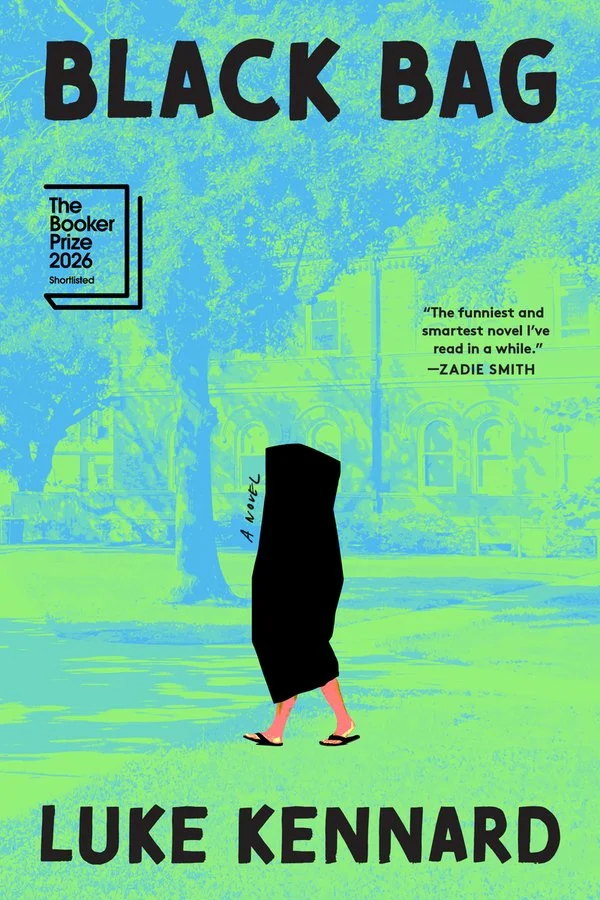
That makes Black Bag, in my read, a novel about the dignity of work as much as it is about loneliness. Kennard’s narrator struggles to communicate with other people, including his parents. He reflects on a culture so suspicious of insincerity that people can go their entire lives without expressing gratitude. His isolation is real. But the book ties his collapse of self-worth to a lack of income and a viable career, then shows how even an absurd job can ease that crisis.
That distinction matters because “the crisis of masculinity” is a far more fashionable label than “the crisis of rent.” It turns economic insecurity into a story about men’s identity, and invites remedies aimed at individual behavior or gender hierarchy. The political prescriptions in the United States make the pattern plain: JD Vance has proposed $9,000 per child, limited to married couples. The Heritage Foundation has urged RFK Jr. to target the birth control pill, linking its concerns to claims about estrogen in water and male fish. In his book Manhood, Josh Hawley prescribes Bible study, early marriage, and abstinence from porn and video games. Secretary of War Pete Hegseth has framed the same project as a rejection of “wokeness and weakness,” including “pronouns” and “dudes in dresses.”
The shared premise is that masculinity is a fixed resource being taken away from men by women, Democrats, feminists, trans people, immigrants, or other targets. That story sidesteps a more basic question: what do people need in order to build stable lives? Food, health care, housing, and reliable child care aren’t needs unique to women or men. People may face different barriers, but sorting economic needs by demographic identity can obscure the common pressures underneath.
Very few of my needs are specific to my gender.
It also shifts responsibility away from powerful institutions. Instead of asking why wages are low, housing is unaffordable, or jobs disappear, the conversation tells men to marry younger, pray more, have children, keep their wives at home, quit porn, or check their testosterone. Those may be personal choices, but they don’t give a person a secure income or protect a job from disappearing.
Kennard’s narrator isn’t short on manhood, and the novel doesn’t suggest that feminism has left him stranded. He’s broke. At one point, among the reasons he gives for not seeing himself as a man, he lists having no money. That association deserves scrutiny: why does unemployment become evidence about masculinity, instead of evidence about an economy that has made steady work harder to find?
The broader labor figures in the source point to a long decline in security for workers. In 1983, one in four working men belonged to a union; today, the figure is one in ten. The Economic Policy Institute estimated that NAFTA had cost the United States nearly 700,000 jobs by 2010, most in manufacturing, an industry that is 71 percent male. Trump’s replacement agreement and tariffs haven’t been expected to restore those factories. Now, automation adds another source of anxiety: Anthropic CEO Dario Amodei told Axios that AI could push unemployment as high as 20 percent, even as his company continues building AI systems.
These pressures affect workers broadly; men aren’t uniquely vulnerable to a weak economy. But when paid work has long been treated as proof of masculine worth, losing a job can become an identity crisis as well as a financial one. The narrator’s line about being “flat broke” sits alongside his doubts about whether he counts as a man. The two ideas have become entangled, even though the cause of his hardship is not a shortage of testosterone.
Why is joblessness related to testosterone, rather than a late-stage capitalist world order?
What the protagonist needs is what the job in the bag briefly provides: income, a reason to get up, and the feeling that someone expects him to show up. Workers also need wages that reflect their labor, protection from arbitrary dismissal, and benefits that aren’t lost with a job. That’s the case for unions and stronger job protections. People don’t reject work as such; they reject dead-end, underpaid jobs that can vanish at any moment while their health insurance depends on keeping them.
The source of men’s distress, then, may be less mysterious than the public debate suggests. Kennard’s narrator is in crisis, but an absurd job helps restore his sense of self. The book’s central insight is that stable work can provide dignity and connection without asking anyone to retreat into rigid gender roles.
Calling this a masculinity crisis is appealing because it asks less of the people with economic power. It doesn’t require higher wages, stronger worker protections, or limits on companies that may automate jobs. And the proposed cultural fixes—restricting reproductive freedom, keeping women at home, and policing gender expression—often align with political goals that predate the current debate about lonely men.
Black Bag offers a more grounded answer: men don’t need to reclaim a mythical store of masculinity. They need work that pays, lasts, and gives them a reason to feel valued. That would help everyone who depends on a job to make a life.
Black Bag is also a lively, sharply observed read. Its strongest argument may be that once a decent job becomes an improbable fantasy, the debate should turn toward who controls work and who gets to live from it. A union and a higher minimum wage are less theatrical answers than a return to old gender rules, but they address the problem the novel actually puts on the page.
The post The Crisis of Masculinity Is Actually a Crisis of Capitalism appeared first on Electric Literature.