This Week’s Best-Reviewed Books: Walter Mosley, Lawrence Wright and More
Walter Mosley’s latest King Oliver mystery drew the strongest fiction verdict in this week’s review roundup, while Lawrence Wright’s reporting, Lisa Hanawalt’s graphic memoir and a new account of Larry David’s career stood out in nonfiction. Across both lists, reviewers favored sharply observed people and relationships: crime and family, friendship and exile, comedy and the private loyalties behind public work. That pattern gives the week’s selection a human scale, even when the books take on larger subjects such as culture, justice or displacement. The review counts are a useful guide to the critical response, though they don’t settle whether a book will work for every reader.
Fiction: crime, culture and close bonds
1. Hanging & Burning by Walter Mosley
(Little Brown and Company)
5 Rave
The fourth King Oliver novel earned five rave reviews, the strongest consensus among this week’s fiction picks. Donna Seaman of Booklist praises Mosley’s “witty and incisive” writing, calling out the character work, sharp exchanges, high-pressure confrontations and the story’s interplay of jazz, family and crime. That combination suggests a mystery whose appeal rests on more than the mechanics of a case: its social and personal tensions are part of the draw. For readers, a familiar series hero can provide an entry point, while the blend of music and family gives this installment its own texture.
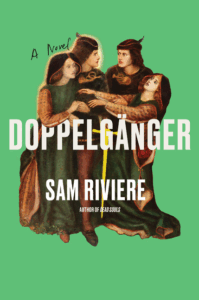
2. Doppelgänger by Sam Riviere
(Catapult)
2 Rave • 2 Positive
Sam Riviere’s novel takes aim at capital-C “Culture” and draws broader observations about society. Matthew Janney of The Financial Times says the book avoids reproducing the habits it critiques, emerging as “undeniably singular.” That distinction matters for a novel working with a subject it also questions: satire can easily inherit the poses it wants to expose. The reviewers’ split between rave and positive responses points to a book with a strong, particular approach, rather than a consensus pick for every taste.
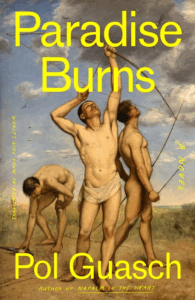
3. Paradise Burns by Pol Guasch
(FSG Originals)
2 Rave • 1 Positive
Read an excerpt from Paradise Burns here
Reviewers singled out the tenderness between Líton and Rita, whose steadfast friendship offers a buffer against despair. Kirkus calls the novel a “heartbreaking and true” achievement, with the potential to join recent fiction’s most perceptive portraits of friendship. The praise centers on an intimate bond, giving the novel’s bleakness a counterweight without suggesting that friendship erases hardship. That balance is often what makes a story of difficult circumstances linger: the relationship becomes part of how readers understand the pressure around the characters.
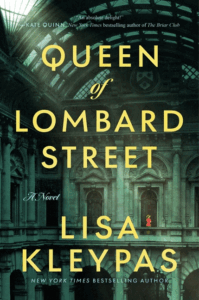
4. Queen of Lombard Street by Lisa Kleypas
(Avon Books)
1 Rave • 2 Positive
Lisa Kleypas’s historical novel brings romance and economics together. Kirkus describes it as clever, well researched and a delight. The pairing gives the book a frame that can widen the stakes of a romance: money and economic conditions shape the choices available to characters, as well as the relationships they form. The reviews point to research as a strength, though the roundup offers only a brief view of how that material works within the story.
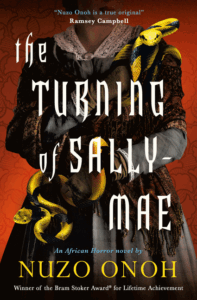
5. The Turning of Sally-Mae by Nuzo Onoh
(Titan Books)
1 Positive • 2 Mixed
Nuzo Onoh’s novel received one positive and two mixed reviews. Lila Dening of Library Journal recommends it to readers of V. Castro’s The Queen of the Cicadas and LaTanya McQueen’s When The Reckoning Comes. That comparison gives prospective readers a clearer signal about the book’s company than a general genre label would. The mixed verdicts also make this a more qualified recommendation than the fiction list’s top-ranked novel.
Nonfiction: history, justice and creative lives
1. Sleuth-Hound: The Case of the Real Sherlock Holmes by Lindsey Fitzharris
(Farrar, Straus and Giroux)
2 Rave • 4 Positive
Lindsey Fitzharris’s book re-centers Bell as the real-life inspiration and model for Sherlock Holmes. David Pitt of Booklist says Fitzharris restores Bell to his proper place in the detective’s story. The subject connects a real figure to a fictional character whose reputation has long overshadowed the question of where the detective took shape. Six favorable reviews make this nonfiction list’s most broadly supported selection, while the book’s central appeal is the act of recovering the person behind the familiar literary association.
2. Redemption: Faith, Justice, and Sisterhood on Death Row by Lawrence Wright
(Knopf)
3 Rave • 1 Positive • 1 Mixed
Wright’s reporting profiles people on death row and the nuns connected to them, inviting readers to reconsider guilt, justice and personal change. Kate Tuttle of The Boston Globe calls it a moving, thoughtful work, with portraits that can be read individually. That structure gives readers a way to approach a subject with many competing moral dimensions through distinct lives rather than a single abstract argument. The mix of rave, positive and mixed reviews signals strong interest alongside some reservations; the roundup doesn’t specify what those reservations were.
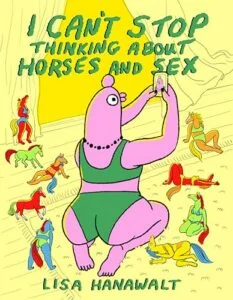
3. I Can’t Stop Thinking about Horses and Sex by Lisa Hanawalt
(Drawn and Quarterly)
3 Rave • 1 Positive
Lisa Hanawalt pairs colorful animal drawings and comic vignettes with exacting personal storytelling. Sam Thielman of The New York Times Book Review highlights the memoir’s candid treatment of difficult subjects, without turning them into a sweeping philosophical argument. The form matters here: drawings and brief comic scenes can carry tone and personality alongside the memoir’s more direct disclosures. It’s a specific balance, and the favorable reviews suggest readers are responding to that combination rather than expecting a conventional life story.
4. Our Arab: On Longing, Belonging, and Hope by Zaina Arafat
(Little Brown and Company)
2 Rave • 1 Positive
Zaina Arafat’s book examines longing and belonging among Palestinians in exile. Publishers Weekly describes it as a powerful account that probes the wounds of displacement. The themes named in the title point to a tension between attachment and distance, with exile shaping how belonging is experienced. The brief review summary leaves the book’s approach open, but the praise suggests it treats displacement as a deeply personal subject as well as a shared condition.
5. Emperor of Nothing: The Making of Larry David by Blake J. Harris
(Dey Street Books)
3 Positive • 1 Mixed
Blake J. Harris traces the development of Larry David’s two signature television comedies in a lively, intimate account. Julia M. Klein of The Wall Street Journal finds David’s comic talent and personal loyalties prominent in the portrait, while noting that his romantic history receives little attention. That caveat offers a useful reminder that a biography’s omissions can shape its portrait as much as the material it foregrounds. The week’s nonfiction picks point to a recurring strength: specific lives, rendered with enough detail to complicate the familiar story.
What this week’s picks suggest
Here’s the thing: the strongest common thread isn’t a single genre or subject, but attention to the pressures that shape people’s relationships. Crime sits alongside family in Mosley’s novel; friendship counters despair in Guasch’s; Wright’s reporting puts justice in the context of individual lives. Even the books about culture, exile and comedy gain much of their force from the people at their center. This is more significant than it looks. A roundup built around review verdicts can still show what critics are responding to: not just big themes, but the detail and judgment with which authors make those themes legible.
And yet, the review counts tell only part of the story. Five rave reviews for Hanging & Burning make its consensus unusually clear in this selection, while the mixed responses for The Turning of Sally-Mae leave more room for readers to decide whether its approach suits them. (And this is the part most people overlook.) A critical roundup is most useful as a map of the conversation, not a substitute for your own taste. If you’re working in this space, the week’s list also offers a reminder that formal choices—comic vignettes, linked portraits, a series mystery—help determine how readers encounter difficult or familiar subjects. Specific lives. Strong critical attention. That’s the week’s clearest signal.