Assault on Precinct 13 at 50: John Carpenter’s Western-Inspired Siege Thriller
John Carpenter’s Assault on Precinct 13 turns a familiar Western setup into a lean siege thriller: a small group of strangers, trapped together, facing a threat that has no interest in negotiation. Released in 1976, the film arrived before Halloween made Carpenter synonymous with horror. Its mix of action, exploitation and uneasy restraint still shows the filmmaker testing the limits of what a modest production could do.
A Western standoff in modern Los Angeles
Carpenter grew up on cowboy movies and once hoped to direct Westerns. By the time he enrolled at the University of Southern California film school in 1968, the genre had lost its place at the center of Hollywood. He never made a conventional Western, but Assault on Precinct 13 carries its outline: a lawman holds his ground against a hostile force, only the frontier has become a Los Angeles police station. Carpenter has discussed his early ambition to make Westerns, and the film makes that influence visible without dressing it up as nostalgia.
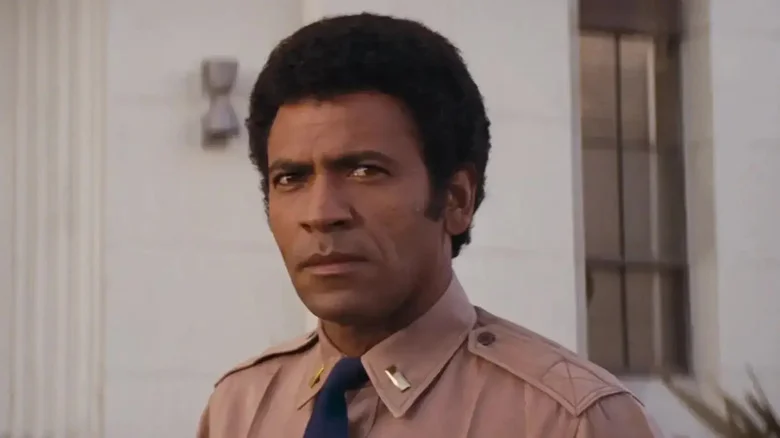
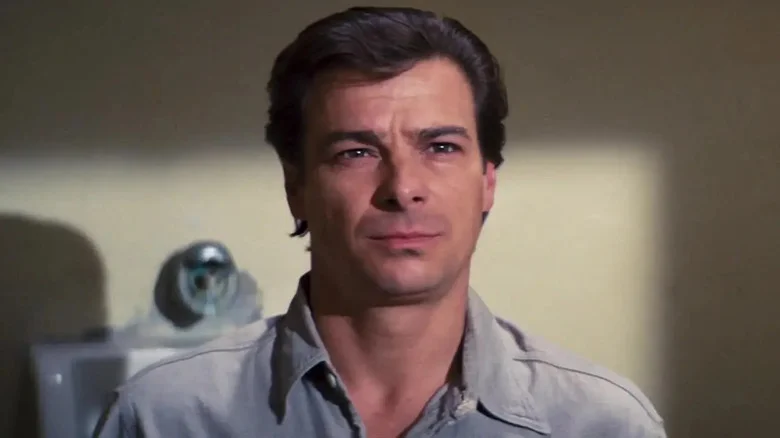
Lieutenant Ethan Bishop, played by Austin Stoker, is supervising the closure of Precinct 13 when a prison bus stops there for a break. Among its passengers is convicted murderer Napoleon Wilson, played by Darwin Joston. Then armed gang members surround the building. Bishop, Wilson and secretary Leigh (Laurie Zimmer) are left to defend themselves, with their survival depending on an alliance none of them would have chosen.
The premise strips the story down to pressure and character. Carpenter gives the siege no elaborate motive: the gang’s violence seems to exist for its own sake. That makes the threat less like a conventional crime plot and more like an approaching force that the people inside can only endure. The film’s tension comes from the cramped setting and the uneasy trust forming between its defenders.
From Rio Bravo to Night of the Living Dead
Carpenter cited Howard Hawks’ Rio Bravo as an influence. That 1959 Western follows a sheriff and his deputies as they try to keep a prisoner in custody while hired gunmen gather outside. Hawks lets the characters spend time together between bursts of violence; Carpenter compresses that setup into a more urgent siege, where the danger keeps pressing in.
George Romero’s Night of the Living Dead offers another clear point of reference. Both films trap people in a building while a hostile crowd tries to break through. Carpenter once answered a question about Romero’s influence with a dry joke: “Everybody who made a low-budget film was inspired by ['Night of the Living Dead'].” The resemblance is more than a practical choice for a filmmaker working with limited resources; both movies turn confinement into the engine of their suspense.
They also place Black men at the center of their stories. Stoker’s Bishop and Duane Jones’ Ben in Night of the Living Dead carry authority in films released during the 1960s and ’70s, when that kind of casting was less common. The endings take sharply different paths. Romero’s film concludes with Ben killed by white men who mistake him for a threat. Carpenter gives Bishop and Wilson a quieter resolution: after reaching mutual respect, they leave the basement together as equals.
Violence that made an impression
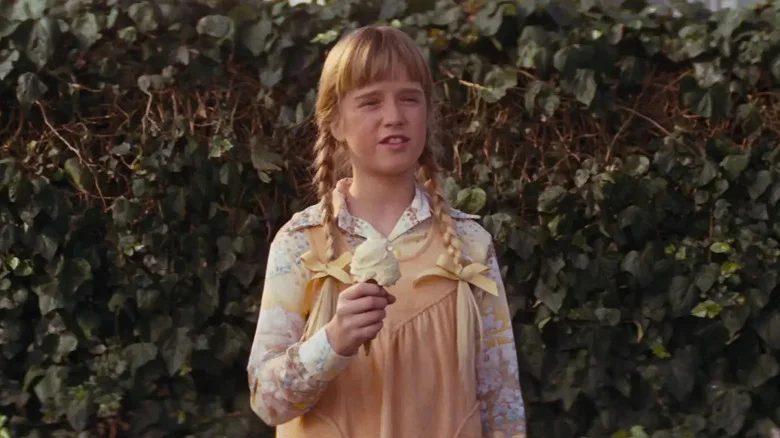
The film’s harshest moment arrives when Kathy, a young girl played by Kim Richards, is shot after buying an ice cream cone. Carpenter makes the killing abrupt and shocking, using the contrast between an ordinary errand and sudden violence to unsettle the audience. The scene pushes the film’s exploitation edge into the open; its impact comes partly from how little warning it gives.
Romero saw the film at Cannes and praised the scene’s force. In Jason Zinoman’s Shock Value: How a Few Eccentric Outsiders Gave Us Nightmares, Conquered Hollywood, and Invented Modern Horror, Romero recalled: “John Carpenter at Cannes wiped us off the face of the earth with 'Precinct 13.' Right from the scene when the little girl gets blown away, I was blown away.” The film’s festival screenings also included the London Film Festival, where The Guardian’s Derek Malcolm reported “deafening applause.”
Carpenter made the picture for $100,000, and its first reception was mixed. Variety critic Whitney Williams credited the second half with “some exciting action” that could hold the attention of “the violence market.” Ellen Edwards of The Miami Herald, by contrast, condemned what she called its “hideous, unmotivated violence.” The split response didn’t stop the film from finding a following; it later inspired a 2005 remake starring Laurence Fishburne and Ethan Hawke.
The film’s influence carries into Carpenter’s later work, especially Escape from New York, where gangs have taken over a future version of Manhattan. And Precinct 13 already has one of the director’s signatures: a score he composed himself. Its title theme, built around a droning synthesizer pulse, gives the story a sense of dread before the siege fully takes shape. Fifty years on, that sound and the film’s stripped-down conflict remain its clearest calling cards.