Mary Beth Keane on Family Memory and Irish Migration in Whale Harbor
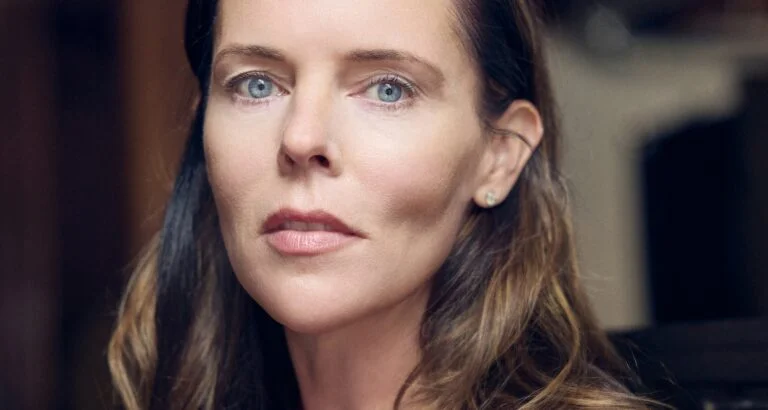 Mary Beth Keane’s fifth novel, Whale Harbor, follows an Irish family through decades of separation and relocation, from Connemara to England, Montana and New York. Its eleven brothers carry different versions of loss and belonging as the family changes around them. The book draws on Keane’s own family stories, though she says the fictional characters soon took lives of their own.
The novel’s emotional starting point was personal. Keane began thinking about the story after her father died in 2022. In his final days, as dementia deepened, he sometimes spoke Irish, the language of his childhood, which Keane and her sisters didn’t understand. Her uncles translated his repeated recollections of a decision made in 1963, after his mother died: at nineteen, he left for America, while a younger brother pleaded to come with him. Too young to emigrate, the boy was told to wait until his brother had work and a stable home. A year or so later, he ran away.
“I didn’t know how guilty my father still felt about that until he was in his last days and kept talking about it,” Keane said. That unresolved memory became one of the novel’s central pressures.
Family history, transformed into fiction
Keane’s family supplied two key events: her grandmother died a few weeks after giving birth to her eleventh child, and one of her uncles ran away at thirteen. The stories surfaced over many years at family gatherings, often without anyone formally explaining them to the next generation. Keane and her sisters learned by listening.
Other details changed. No one in the family settled in Montana, though an uncle moved to Alaska and spent three decades working on the pipeline. His annual visits to New York informed some of Mac’s impressions of Montana. Keane chose that state partly because her father had a lifelong interest in it; she regrets never arranging a trip there with him.
Those real events gave Keane a point of entry, but she didn’t want to reproduce her relatives on the page. “Once I began writing this family they quickly moved away from their real-life inspirations and became entirely themselves,” she said. She needed authority over the characters and their choices, and a close match to real life would have left her feeling constrained.
The eleven siblings posed a separate craft problem. Their number came naturally from the family history, but keeping a large cast legible was difficult in early drafts. Keane organized the brothers around Coleman, the sixth child, who stays close to home because developmental support would have been unavailable at the time. She sees him as kind and innocent, the family’s emotional center.
From there, the other boys took shape as older or younger than Coleman. Keane wanted readers to sense the crowded household and the different ways the children grieve without requiring them to memorize every brother. Some scenes hinge on the group’s shared response, she explained, rather than on which boy speaks a particular line.
What migration leaves behind
Mac, the second eldest brother, anchors the novel in close third person. Keane says this perspective lets her see things about him that he can’t recognize in himself. Writing in first person, by comparison, has felt “a little insincere” to her, even though she enjoys reading novels that use it.
Mac’s point of view also gives Keane room to explore the mixed emotions of leaving and being left behind: loneliness, anger, sadness and the sense of a connection stretched thin. She has spent much of her life imagining what her parents’ generation experienced. Her parents loved America and saw it as a place where people could start with little and build a life. They also understood its flaws, and Ireland remained home.
“To be a first-generation American is to live in contradiction,” Keane said. Had work and opportunity been available in western Ireland in the 1960s, her parents would have stayed. The immigrants she knew carried a persistent grief: the question of whether life might have worked out if they had remained, endured the lean years and raised their families there. Returning to visit could bring another kind of sorrow, as the Ireland they had left changed into a place they barely recognized.
Keane approaches grief through ordinary behavior rather than naming the emotion outright. Early in a draft, she focuses on what a character does, worries about or hopes for on a given day. If the reader knows the character well, the small actions carry the larger feeling. “All the things we say and do mean themselves but also something else,” she said.
A village remembered, a landscape imagined
The story opens in Cuan, a fictionalized village in Connemara, in 1963. Keane relied little on formal research because the place is based on the village where her father grew up. Stories about Ireland in that period filled family gatherings throughout her childhood, giving her an accumulated sense of the setting.
She built the Montana chapters through sensory contrast. Mac’s Irish surroundings are shaped by the nearby ocean, familiar smells and sounds, and neighbors close enough to hear a bicycle rattle or a conversation on the road. Montana changes those conditions. The ocean is absent, the distances are wider, and the air and physical feel of the place differ. Keane’s approach begins with what Mac knows and asks what he would notice when those everyday cues disappear.
The family’s migration routes to New York also came from lived knowledge. Keane’s father was one of eleven siblings, all of whom emigrated to New York; her mother was one of nine, several of whom also moved. Their friends followed different paths depending on when they arrived. In the novel, the youngest brother, Vincent, reaches the Bronx in 1982 after flying to Canada, waiting a week and crossing the border in a car trunk.
A whale connects the novel’s sections across time. Keane knew early on that the animal would bring the village together, but its wider role emerged during drafting. It became a recurring thread linking scenes and generations.
Keane is now writing something at an early stage, with characters and scattered scenes but no outline. She says she often doesn’t understand how those scenes relate until much later. That open-ended process echoes the way Whale Harbor grew: family memories provided the first shape, while the novel’s connections emerged through the writing.
*
Jane Ciabattari: Your author’s note says the novel shares some plot points with your father’s life. How closely does the Joyce family’s story follow your family’s migration history?
Mary Beth Keane: The grandmother’s death and the uncle running away came from my family. The Montana connection is fictional, though my uncle’s life in Alaska helped shape some of Mac’s impressions. I also drew on my father’s interest in Montana. But the characters became their own people as I wrote them. I needed room to make their story work as fiction.
JC: How did you keep eleven brothers distinct without making the reader track every detail?
MBK: Coleman became the heart of the family, and the other boys fell into groups older or younger than him. I wanted readers to feel the number of children and the variety of their grief without worrying about every name. In some scenes, what the boys express matters more than exactly who says it.
JC: Why tell the story through Mac in close third person?
MBK: It lets me get close to him and see things he can’t see about himself. Writing first person has tended to feel insincere to me.
JC: How did you approach the feelings around leaving Ireland and staying behind?
MBK: I’ve thought about those feelings all my life. My parents believed America offered a real chance to build a prosperous life, but Ireland remained home. The people I knew carried a baseline grief and wondered what might have happened if they had stayed. Then visits brought the shock of seeing how much the place they remembered had changed.
JC: How did you write grief as a force within the family?
MBK: I focus on what people do and think about in daily life. I don’t try to label the emotion. When the reader knows the character well, a small action can show the grief underneath.
JC: What research helped you build Cuan and its Irish-speaking community?
MBK: The village is based on the place where my father grew up. My family told stories set in Ireland in the 1960s throughout my childhood, so I already had a strong picture of it.
JC: How did the whale become such a central image?
MBK: I knew it would bring the village together at the start. As I drafted, I saw how it could recur and connect the sections and jumps in time.
JC: How did you imagine the Irish community in Montana?
MBK: I began with Mac’s familiar sounds, smells and textures in Ireland, then imagined how Montana would change them. There’s no ocean nearby, and neighbors are farther apart. The difference becomes clear when the daily sensory details change.
JC: What informed the migration stories set in New York?
MBK: My parents’ families and their social circle had gone through different routes to New York. I grew up listening to their stories and learned that the options changed depending on the year someone arrived.
JC: What are you working on now?
MBK: It’s too early to describe. I have characters and scenes, but I don’t outline. I often don’t see how the scenes fit together until much later.
_______________________________
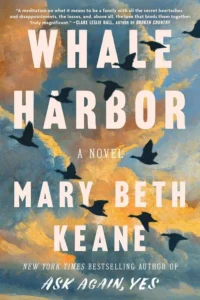
Whale Harbor by Mary Beth Keane is available from Scribner, an imprint of Simon & Schuster.