Jenny Kee’s Australian Prints Appeared in Chanel’s 1982 Paris Collection
|5 min read
Australia’s first Chanel moment came in Paris
The story behind Chanel’s Sydney resort show this November goes back 44 years. When Matthieu Blazy presents his collection in Australia, it will be the house’s first show there—but Australia had already made its mark on Chanel’s runway in Paris.
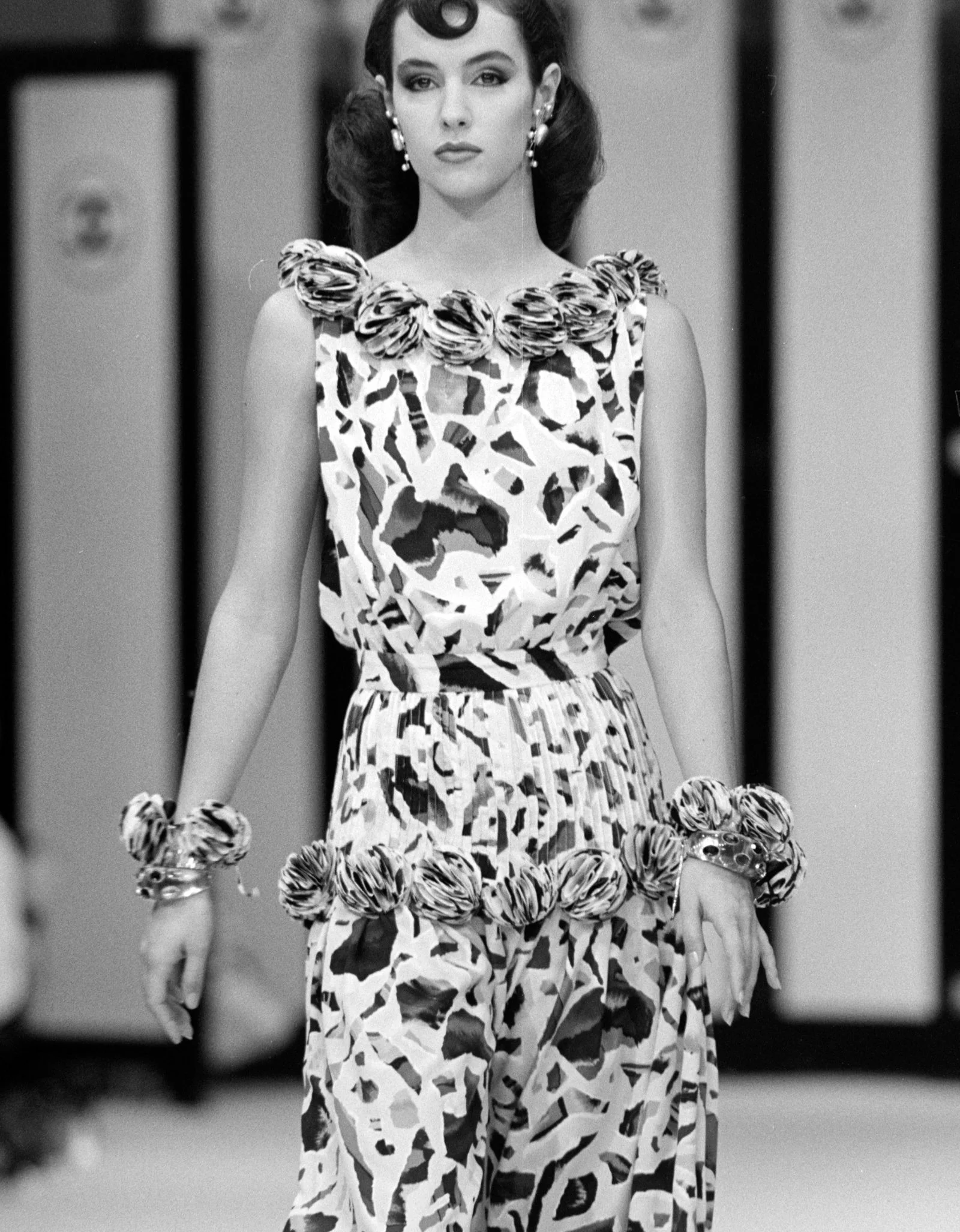
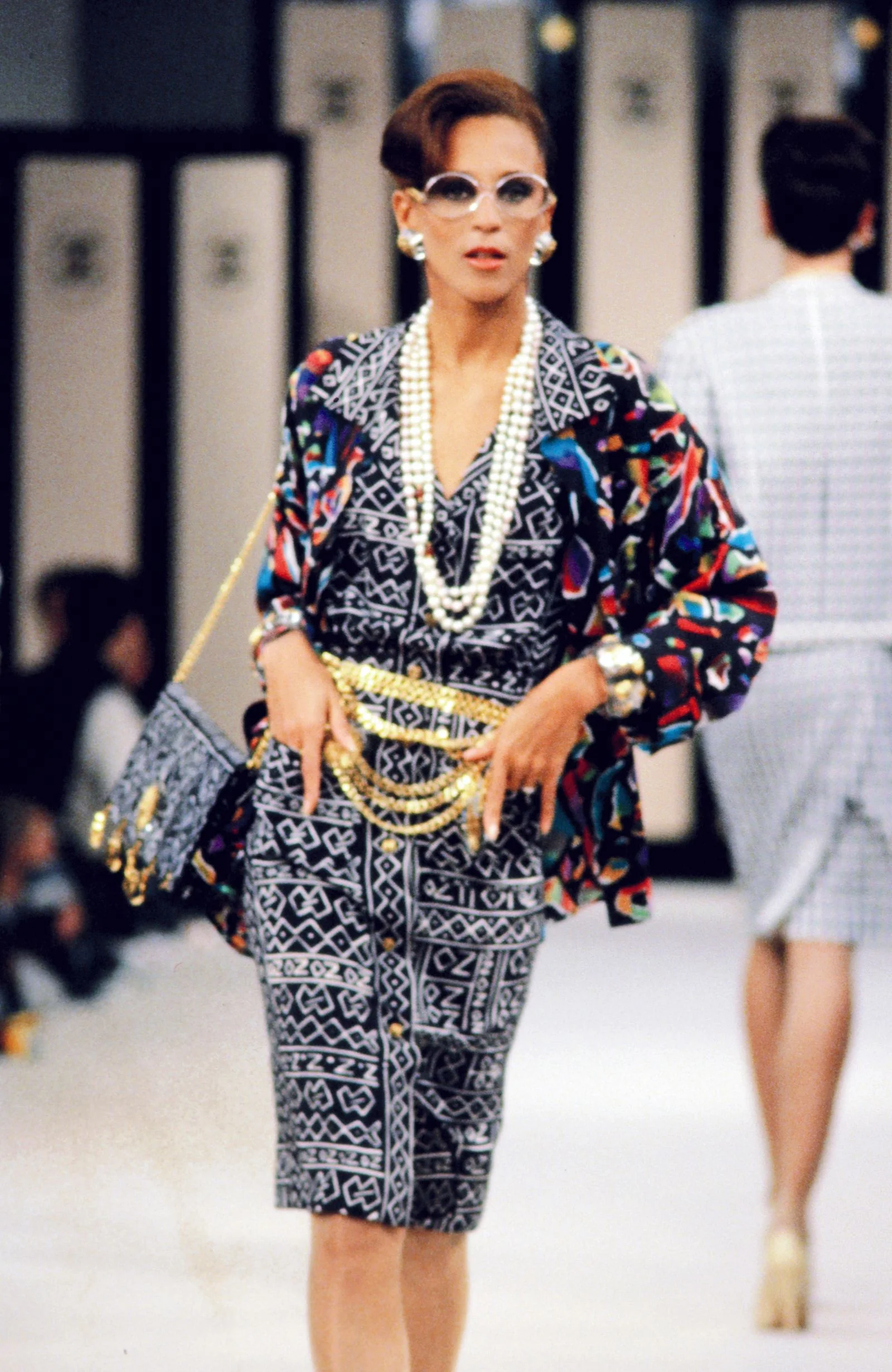
At the Chanel show on October 18, 1982, at the Louvre, models first wore the house’s familiar pastel bouclé suits, cut with high hemlines. Then came a print unlike anything else in the collection: irregular shapes filled with vivid veins and pools of color, scattered across white and black fabric. It spread from brief accents to dresses, jackets, bags, and shoes. On one ruffled white dress, the shapes formed the outline of Australia.
Chanel spring/summer ’83 with a Kee print showing an outline of Australia. Image credit: Getty Images. WWD/Getty Images
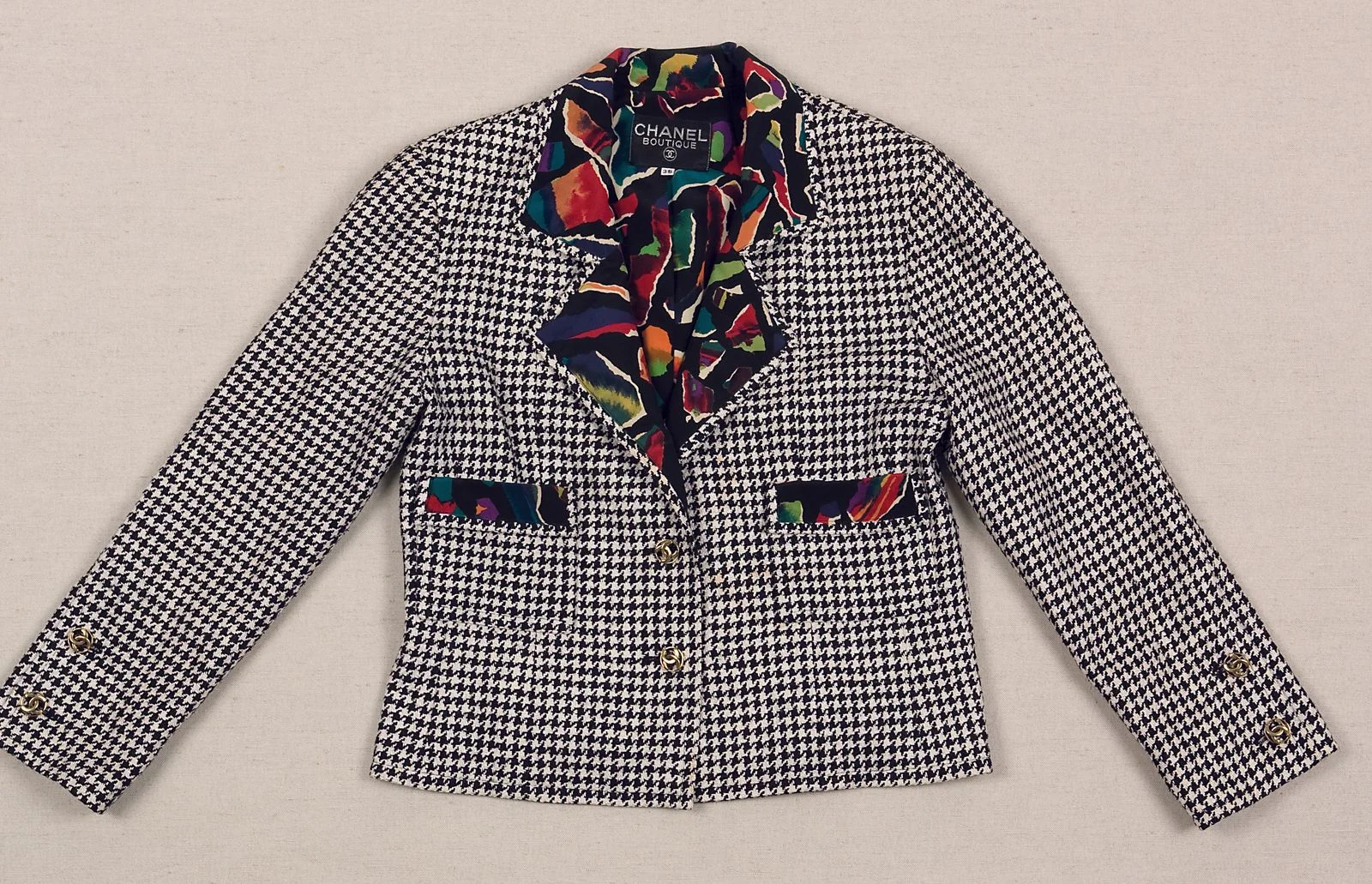
The print came from Jenny Kee, then 35, a Bondi-born designer of Chinese, Italian, and English heritage whose work drew deeply on Australian subjects. She has previously been credited—including by herself—with creating the prints Chanel used that season. The house’s acknowledgment is also recorded in a concrete form: in 1983, for Coco Chanel’s centenary, Chanel presented a suit through Vogue Australia to the National Gallery of Victoria. Kee’s Opal print appeared in its lining and lapels, and the museum’s online listing gives her full credit.
That history is more than a footnote to the Sydney show. The 1982 collection is often forgotten, and the story of how Kee’s work reached Chanel has never been fully told. Fashion’s attention moves on quickly; unless someone preserves the details, even a striking contribution can slip from view.
I was living with my mother in the Blue Mountains in 1982, where Kee was our neighbour and a close family friend. Her connection to Chanel was one of the first fashion stories I encountered. For Blazy’s Sydney visit, I went back to reconstruct it—and found details Kee herself hadn’t known. When I called her at home in the mountains this October, she said: “Darl, I had no bloody idea!”
From London to Sydney
The route to Chanel began in London. Kee was living there by 1968, and that December appeared naked on the cover of Oz, the magazine edited by my late uncle, Richard Neville. She was working with fellow Australian Vernon Lambert, a vintage dealer whose Chelsea Antique Market stall on King’s Road was helping reshape fashion. Lambert became her mentor. When Kee returned to Australia in 1972, she was ready to build something of her own.
She opened the Flamingo Park Frock Salon in Sydney’s Strand Arcade with Linda Jackson. Their work made Australia its subject: opals, native flowers and animals, bushfires, rainforests, and the Great Barrier Reef. “We were doing a completely Australian beauty,” Kee says. “We were so fresh and so completely pure and so in love with Australia. We were devoted to our country and making beauty of it.”
Chanel spring/summer ’83. Image credit: Getty Images. Penske Media/Getty Images
When Kee and Jackson brought their designs to Milan in 1977, they made an immediate impression. At a party hosted by Italian stylist and publicist Nally Bellati, Kee recalls, “Linda and I walked in and, honestly and truly, they all started jumping on the tables and clapping us, because they’d never seen anything like it.”
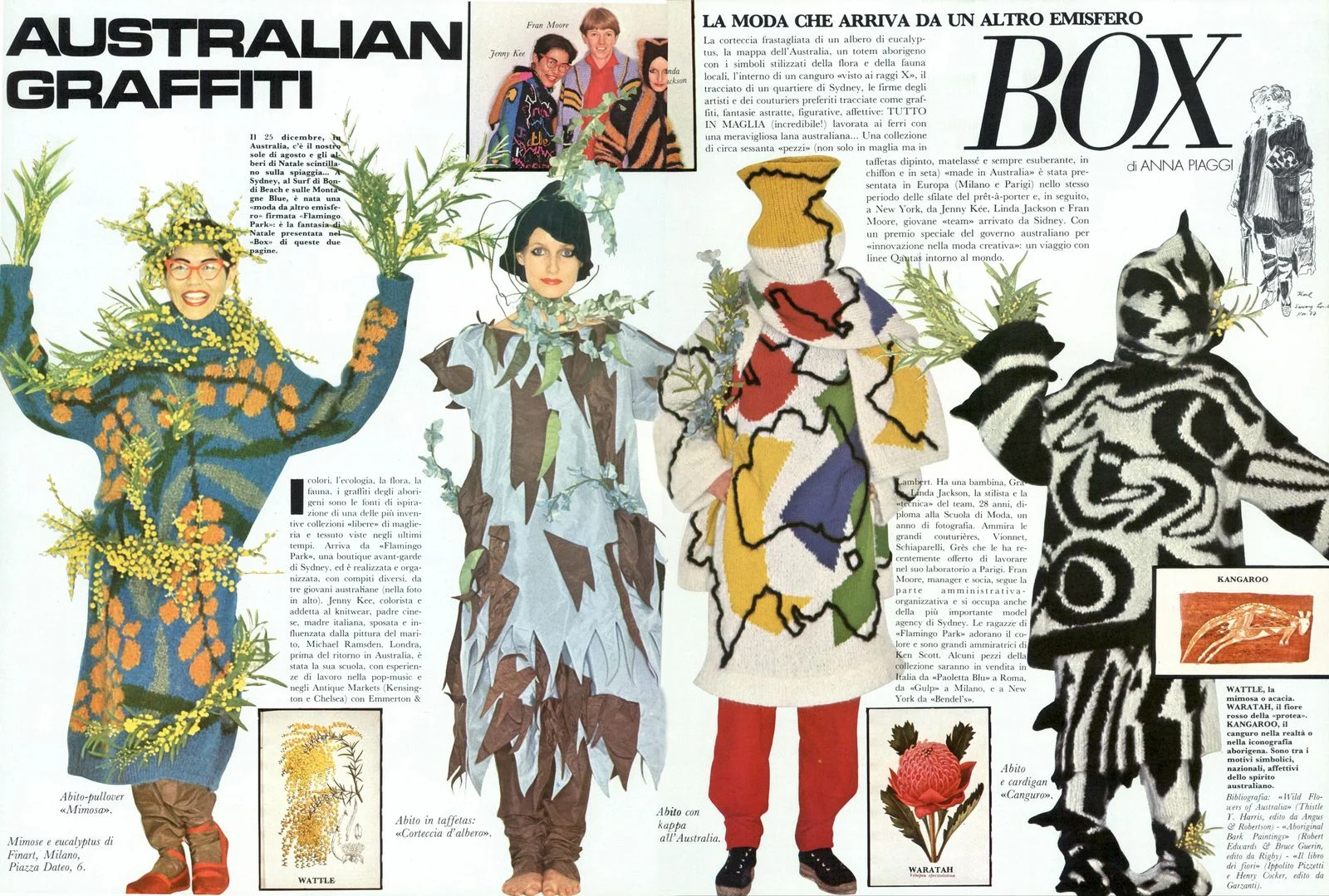
Among the people watching was Anna Piaggi, a Vogue Italia editor and another Lambert protégé. That year, Piaggi devoted two pages to Kee and Jackson under the headline “Fashion arrived from another hemisphere.” “Anna was bedazzled by what Linda and I were doing back in Australia,” Kee says. Karl Lagerfeld drew the accompanying sketch of Piaggi wearing Kee’s wool designs.
Vogue Italia featured Kee in her own designs, along with Linda Jackson, in 1977. Image credit: courtesy Vogue Italia.
Piaggi and Lambert were close to Lagerfeld. He admired Lambert’s habit of carrying a vintage fan and often sketched the elaborate outfits Piaggi put together each day. Kee was entering a small, interconnected creative circle whose members traded ideas, clothes, and discoveries.
That same year brought a catastrophe. Kee and her 22-month-old daughter, Grace—my oldest friend—were aboard a train travelling between Sydney and the Blue Mountains when it crashed. Eighty-three other passengers died. During their recovery, Kee began sketching Opal and several of her best-known designs.
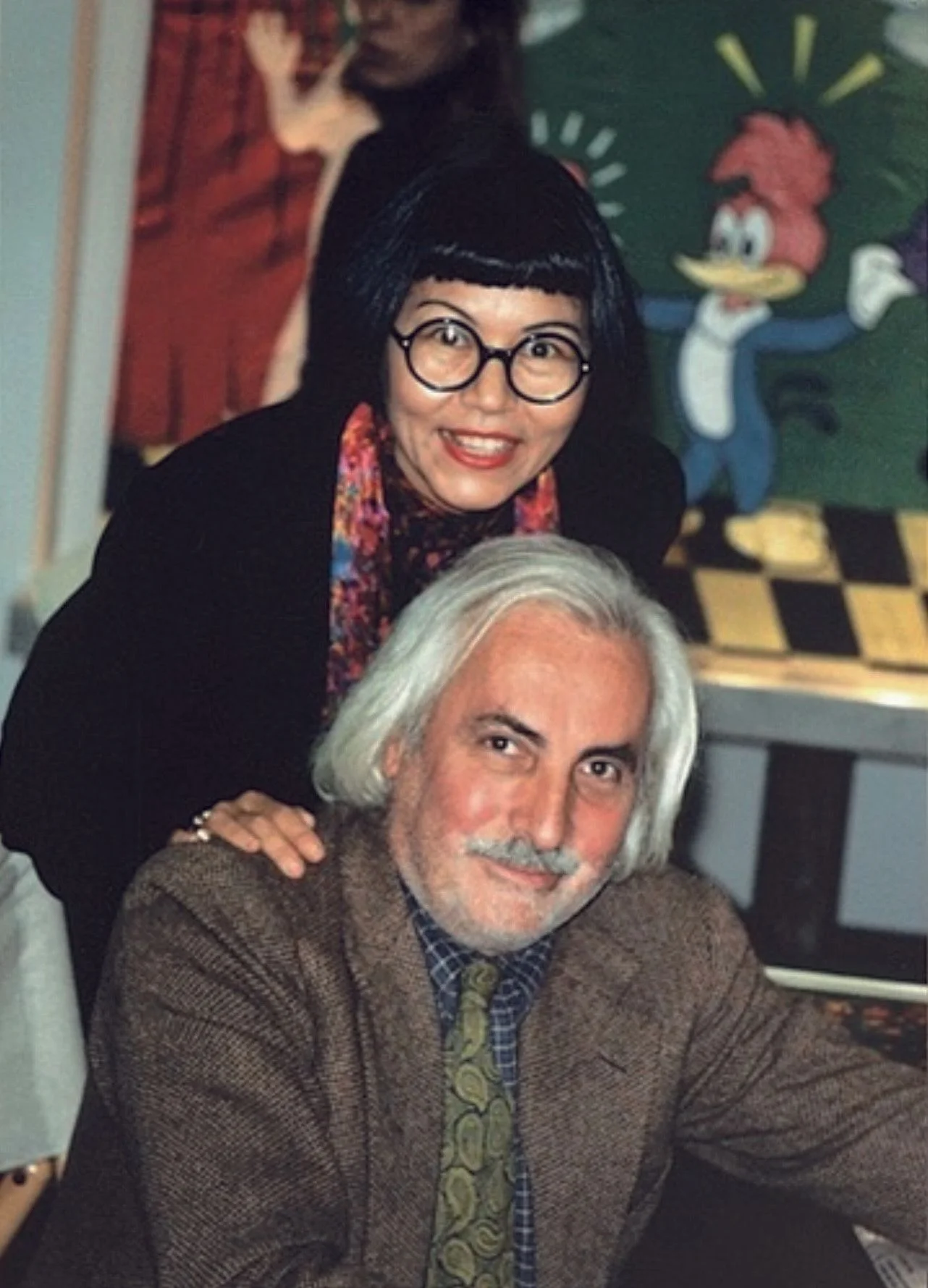
The Chanel connection began with a fabric problem. Jenny Kee’s graphics had grown too intricate for knitwear, so in Milan in 1980, Anna Piaggi and Vernon Lambert introduced her to Fabio Bellotti of Rainbow Fabrics. Bellotti had worked with Giorgio Armani and Karl Lagerfeld; he could turn Kee’s elaborate designs into prints.
Jenny Kee with Fabio Bellotti of Rainbow Fabrics in the 1980s. Image credit: courtesy Jenny Kee.
One print, Opal, drew on the Australian gemstone’s shifting colours and fractured forms. It became a centrepiece of Kee and Linda Jackson’s 1981 Flaming Opal collection. Daniela Morera, Bellotti’s wife, recalls Lagerfeld seeing Kee’s samples at Rainbow Fabrics and falling for Opal. Piaggi and Lambert may have helped bring the print to his attention, though the precise chain of events is uncertain.
Kee remembers Bellotti calling from Milan to say Lagerfeld wanted the print for Chanel. “Apparently, when Karl saw Opal, that’s when he went, ‘Bingo, I want that,’” she says. “And then he proceeded to do it in 65 different ways.”
Lagerfeld’s hidden first Chanel collection
The timing gave the commission a significance Kee couldn’t have known then. Chanel had introduced ready-to-wear under Philippe Guibourgé in 1978, but Alain Wertheimer wanted to revive a house whose image had grown stale after Coco Chanel’s death in 1971. With Japanese designers reshaping fashion and Jean Paul Gaultier among the rising French names, Wertheimer turned to Lagerfeld. Chanel announced his appointment as couture designer in September 1982, effective January 1983.
Yet the October 1982 collection was already, in practice, a Lagerfeld creation, according to MarieLouise de Clermont-Tonnerre, then a senior Chanel communications executive. Hervé Léger and Eva Campocasso—Lagerfeld’s former assistants at Fendi and Chloé—were presented as the designers while his Chloé contract wound down.
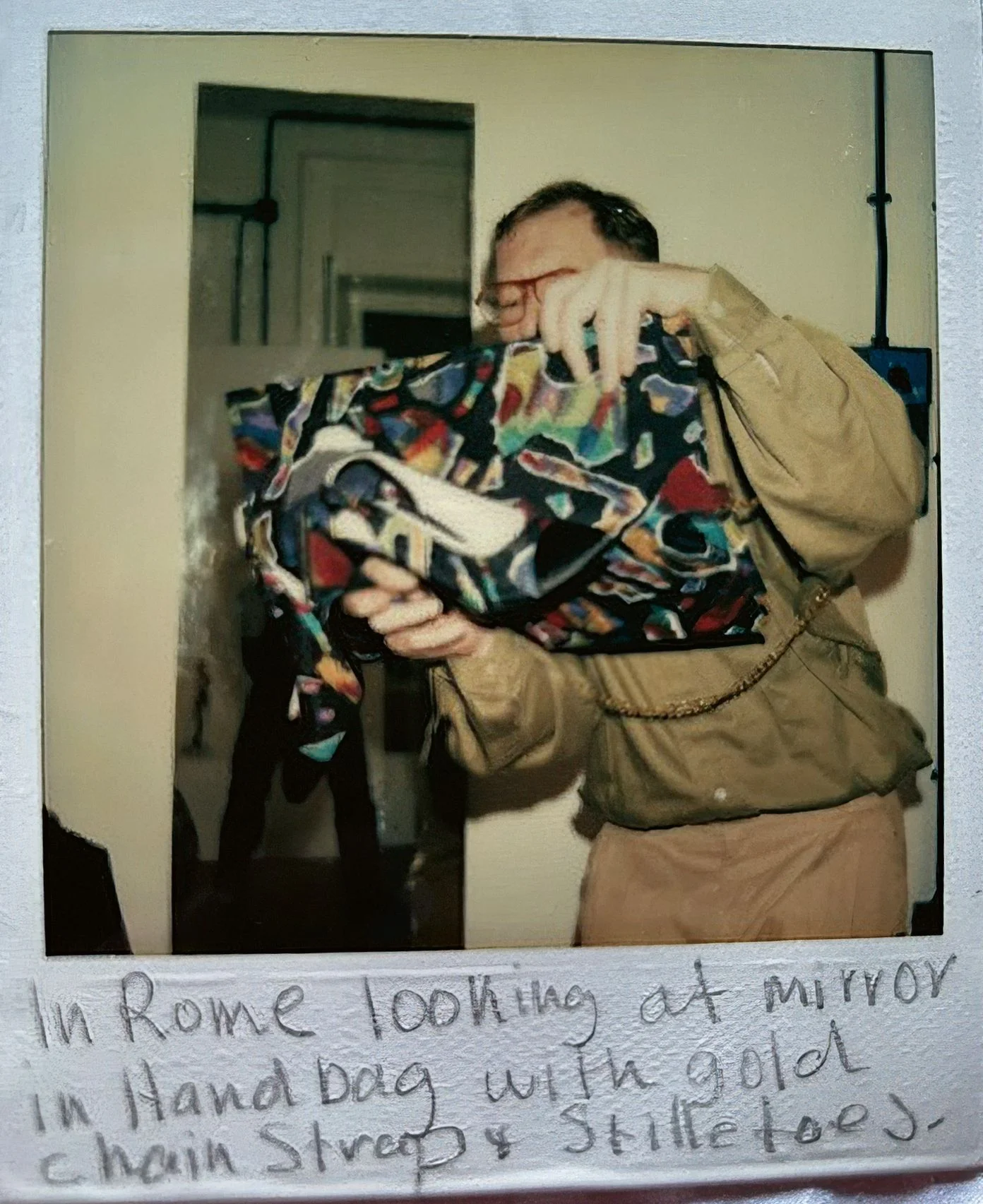
Vernon Lambert in Rome in the early 1980s with Chanel bag and shoes using Kee’s prints from spring/summer ’83. Image credit: courtesy Jenny Kee.
The secrecy was thin. On the day of the show, *The New York Times*’s Bernadine Morris wrote that even a whisper of Lagerfeld’s involvement had brought crowds and tension. Rumours linked him to the ready-to-wear presentation; the pearl earrings shaped like Chanel perfume numbers 5 and 19 seemed to bear his mark. His friends would say only that he was a “consultant.”
Kee, back in Blackheath, knew none of this. When told her Opal print had appeared in Lagerfeld’s first covert work for Chanel, she laughed: “Darl, I had no bloody idea!” Then she added that the ghost authorship made the story more interesting—and meant her print had a place in his Chanel debut.
There may have been another Kee print on the runway, too. Shown a photograph from a misdated archive, apparently depicting Mali Oz on a dress and handbag alongside an Opal jacket, Kee said she had never seen it. The National Gallery of Australia records that Chanel also used Mali Oz. Kee saw the pairing as a collision between her vivid designs and “that pale pink, old-fashioned Chanel”—the kind of jolt that could preserve the house’s familiar codes while pushing them somewhere new.
A credit that travelled further later
The Chanel work helped change Kee’s career. In 1982, she was showing at Chanel; a few months earlier, Princess Diana had worn her koala jumper. Kee says both moments helped set her on her path, and credits Chanel, Lagerfeld, Bellotti, Morera, Piaggi and Lambert for supporting her.
In Australia, the connection was widely reported and later reinforced by a *Vogue* Australia-facilitated donation of Chanel pieces featuring Kee’s prints to the NGV. International recognition was less direct. In August 1984, photographer Bill Cunningham devoted a page in *The New York Times* to Kee’s Chanel designs, naming her prominently. One photograph showed Kitty D’Alessio, then Chanel’s American president, in a spring/summer ’83 jacket combining Kee, Lagerfeld and Chanel. The page included both Opal and Mali Oz.
A Chanel jacket lined with Kee’s Opal print from Chanel spring/summer ’83. Image credit: Courtesy Jenny Kee. Powerhouse Collection. Purchased 1999. Photograph Nitsa Yioupros. Nitsa Yioupros
Nearly half a century later, Chanel is touching down in Australia, the country whose colours and forms informed those prints. Kee admires Blazy’s work and says he is standing up to Lagerfeld while making his own choices. That’s high praise from an artist whose own career has been built on doing things her way.
This story appears in Vogue Australia’s November 2026 issue, on sale from November 2.