Lone Mountain Ranch Offers a Polished Taste of Cowboy Life in Montana
A cowboy fantasy with a real address
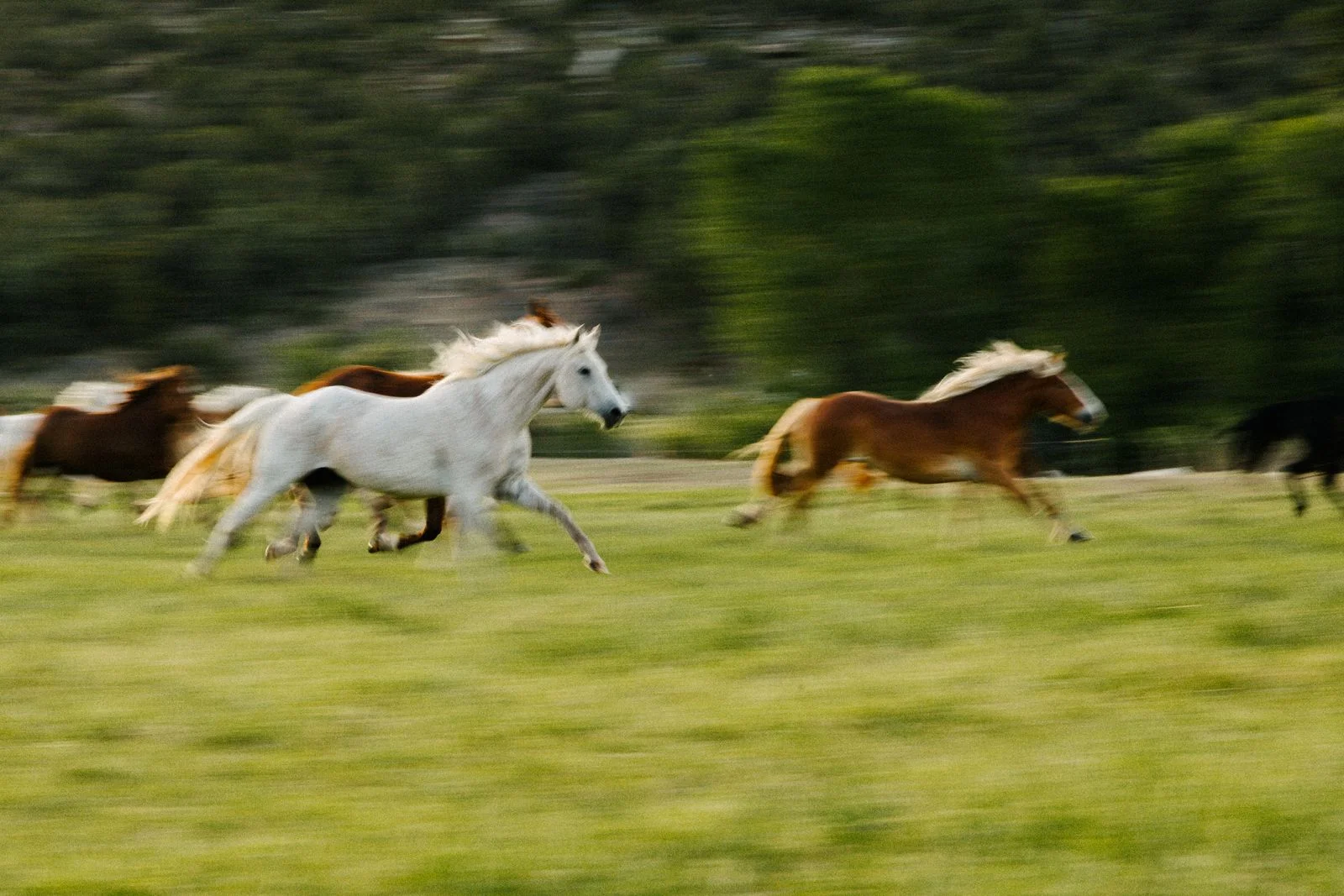
The appeal of the modern cowboy is easy to spot in fashion and pop culture. What’s harder to explain is the pull of the quieter life behind the costume: open land, long days outdoors, and fewer reasons to check your phone. That question sends Olivia Singer, a Londoner, on a month-long trip through the American West in August 2026. Her first stop is Lone Mountain Ranch in Montana, where the picture-book scenery comes with a distinctly polished welcome. At dusk, Singer watches the sun drop behind the [Big Sky mountains](https://www.vogue.com/article/big-sky-ski-resort-guide), lemonade in hand. Horses graze nearby; children throw footballs and roast marshmallows while bluegrass carries across the meadow. It sounds like a scene built for a Ralph Lauren campaign. Singer finds it’s real—and that it has an address: [Lone Mountain Ranch](https://lonemountainranch.com/).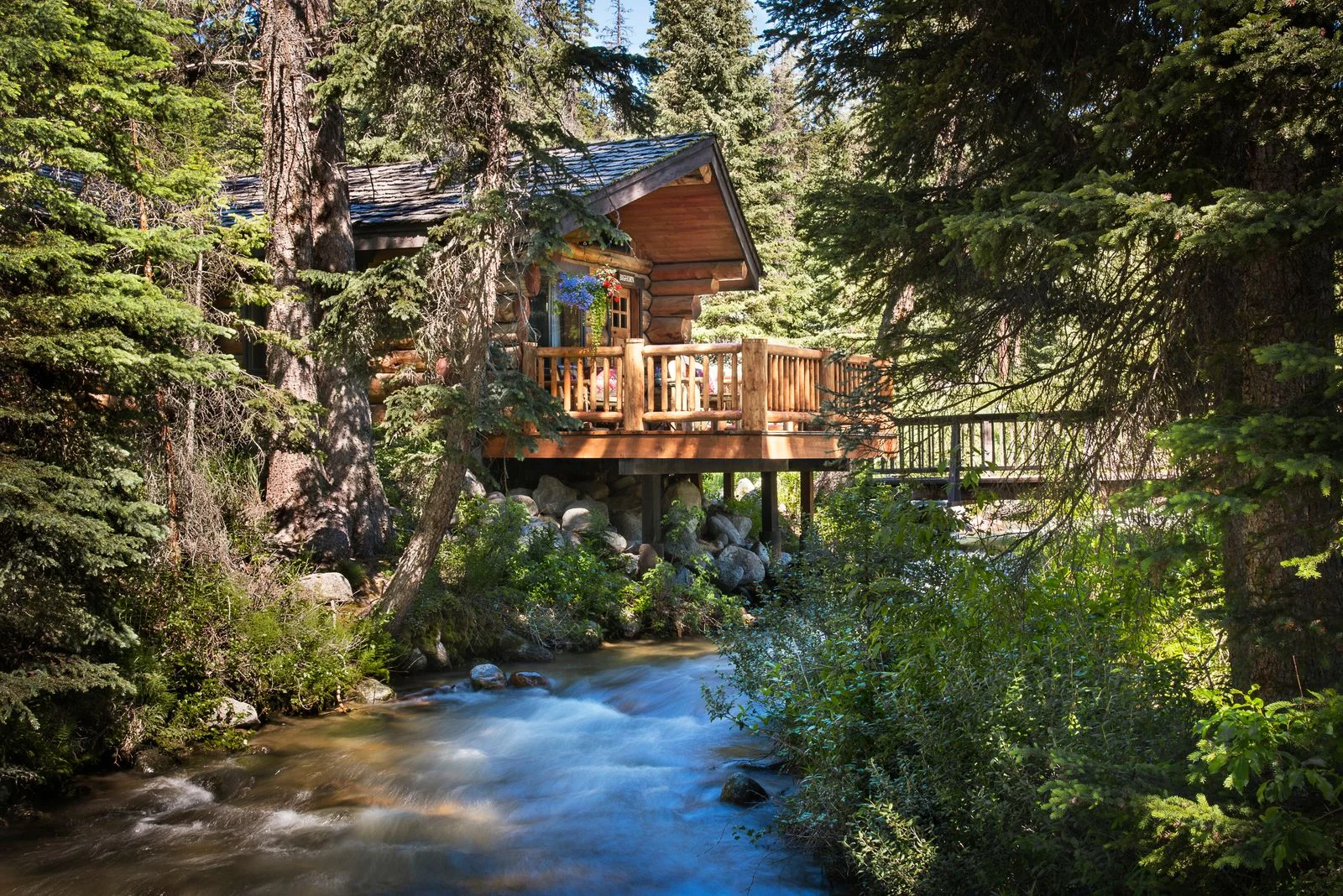
Photo: Heidi A Long / Courtesy of Lone Mountain Ranch
The ranch is a useful place to test what people mean when they say they want the cowboy life. The style has spread well beyond ranch country, turning up in [street style](https://www.vogue.com/article/street-style-fashion-week-equestrian-cowboy-fashion), Taylor Sheridan’s *Yellowstone* universe, the coastal cowgirl crowd at Ethel Cain and Chappell Roan shows, the continuing fandom for *Cowboy Carter*, and the fascination with Bella Hadid’s former boyfriend. The obvious read is that cowboy culture has become another fashion mood. Singer’s trip asks a more interesting question: why does the promise of being offline still resonate?Roughing it, with excellent towels
Singer flies from London to Bozeman, whose airport resembles a giant log cabin, then drives a little over an hour to the ranch. Lone Mountain was established in 1915 as a place to experience cowboy life; today, its spread of individual cabins makes a softer introduction. Her cabin has a freestanding tub, locally sourced bath salts in three varieties, Frette robes, and a Dyson hairdryer. That’s a generous distance from roughing it.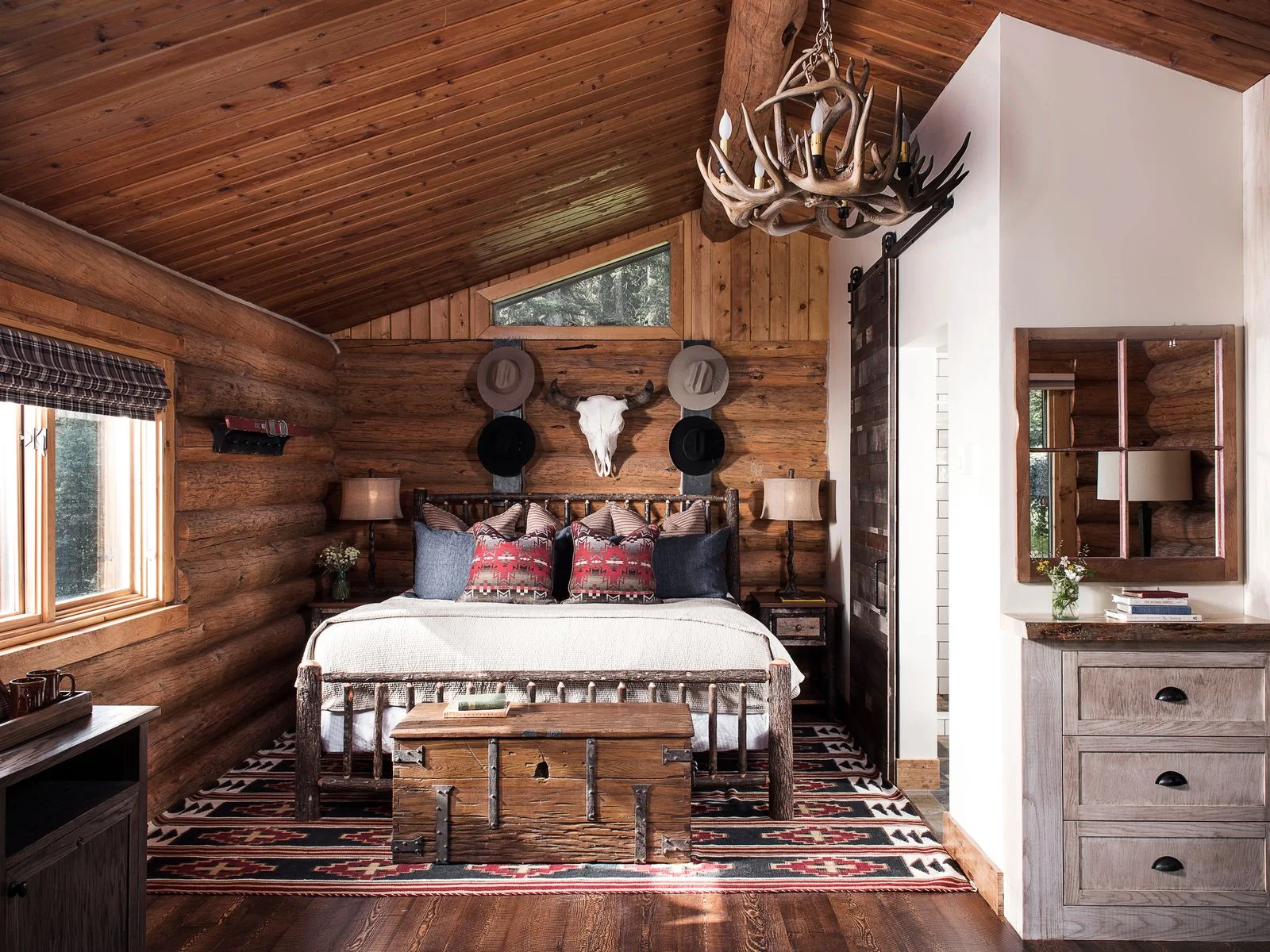
Photo: Heidi A Long / Courtesy of Lone Mountain Ranch
The activity list is expansive: trail rides across 148 acres, a weekly rodeo, archery in the forest, and fly-fishing in the creeks. Guests who arrive without the right gear can buy Lucchese boots, Schaefer jackets, and Stetson hats at the ranch’s shop. The setup makes the transformation almost frictionless. You can arrive as a city visitor and assemble the look before you’ve learned to ride.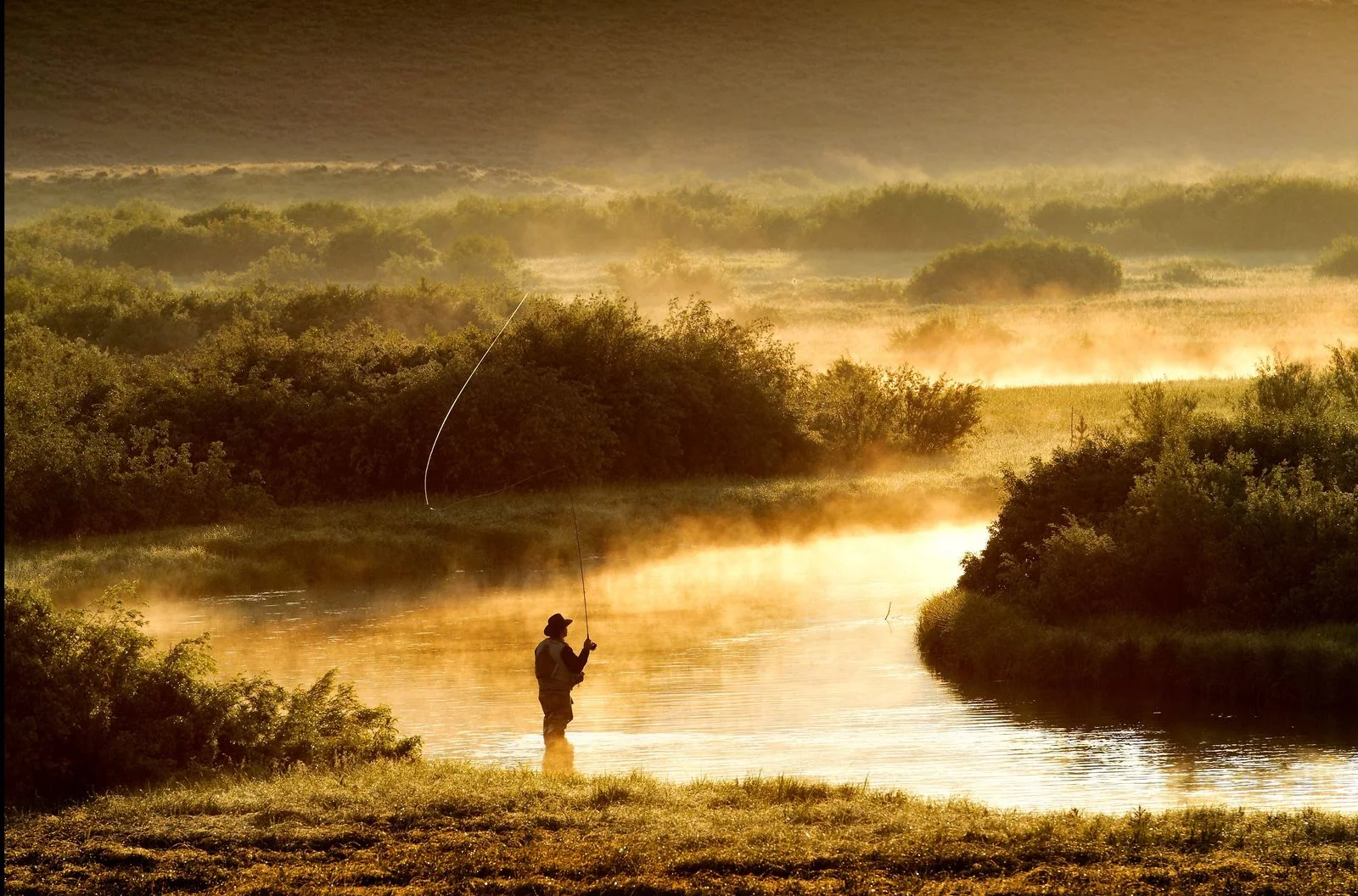
Photo: Eric Martin / Courtesy of Lone Mountain Ranch
Dinner makes the ranch’s range clearer. At Horn and Cantle, Singer eats bison short rib and baseball-sized elk meatballs—“cowboy portions”—beneath a mountain lion mounted on the rafters. The Auric Room offers a different register: a leather-lined members’ club for Big Sky’s affluent rancher set, where Taylor and Travis are said to spend time. There, caviar and dressed-up Big Macs arrive alongside the sight of Birkins paired with cowboy boots.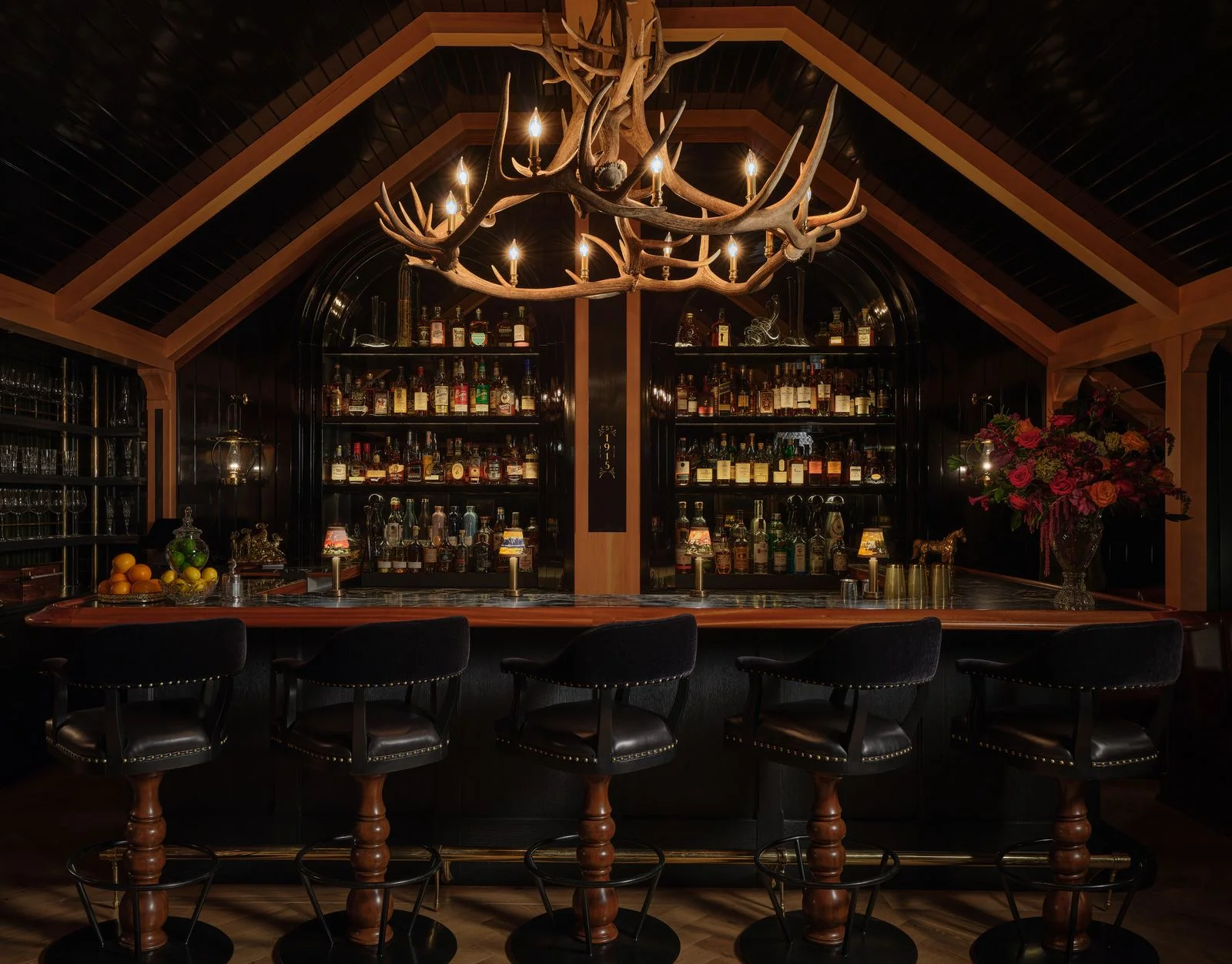
Photo: Courtesy of Lone Mountain Ranch
Here’s the thing: the ranch’s comforts don’t cancel out its appeal, but they do complicate the idea of escape. Coffee and cream appear on the porch before guests wake; chocolate cowboy hats turn up on pillows at night. This is a carefully arranged version of unplugging, with plenty of service behind the scenery.Beyond the ranch gates
The stronger case for the trip lies nearby. Lone Mountain offers guided tours of Yellowstone National Park, where Singer’s guide, Randy, is a Montana native and former wildfire fighter. He tells the group, “everybody wants to be a cowboy now… but Yellowstone is the last wild place in America.” As they drive through the park, Randy explains its geothermal history—Yellowstone contains more than half of the world’s active geysers—and how wolf reintroduction changed the ecosystem’s biodiversity. He also talks about land ownership politics around Big Sky after Bill Gates and Oprah moved in, helping give the area its “Hamptons of Montana” reputation. Across the plains, the group watches hundreds of bison during rutting season. The ranch can supply the clothes, the cabin, and the cowboy portions. Yellowstone brings a harder-to-package scale: wildlife, geological forces, and land politics that don’t fit neatly into a weekend aesthetic. Whether that’s enough to teach anyone to disconnect is still an open question.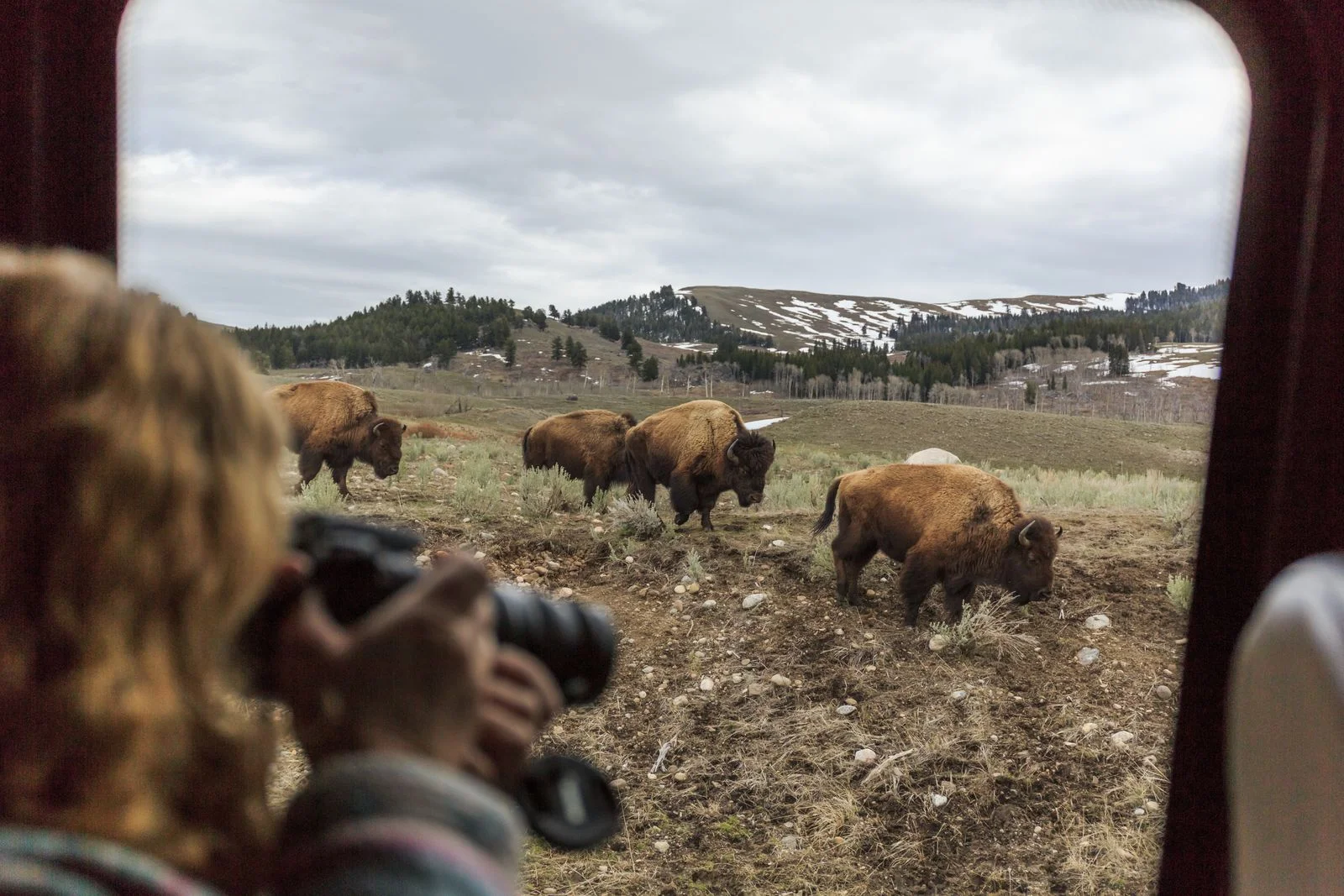 Photo: Ronan Donovan / Courtesy of Lone Mountain Ranch
The trip’s most striking turn is how quickly Yellowstone stops feeling like a checklist. After three days at Lone Mountain Ranch, my companion and I—two city fashion editors with little claim to outdoor expertise—change our plans and head back to see the park’s other loop. A friend recommends Chico Hot Springs, a looser, less polished stay built around two naturally heated pools. They stay open until 11 p.m.; beside the bar, men keep their cowboy hats on in the water and read Bibles from loungers. They’re just as ready to explain shuffleboard as they are to talk through their tangled views on church and state. We’re charmed enough to add another night.
Our return to Yellowstone begins with a flat tire and a long wait at a remote repair shop. A scenic detour to replace the rental car puts us in the park at sunset, but the delay has an unlikely payoff: Grand Prismatic Spring, the largest hot spring in the United States and the world’s third largest, glows like a planet against the dimming sky. Its rainbow-colored basin is so beautiful I start crying. We stay until the park is nearly empty and completely dark, then watch Old Faithful send steam and boiling water into the night, lit by our torches. Less than a week into this new life, I’m already taken with the West. Back at Chico, I give the wall-mounted hairdryer a cursory try. I miss my Dyson, but figure it can fit beneath my Stetson.
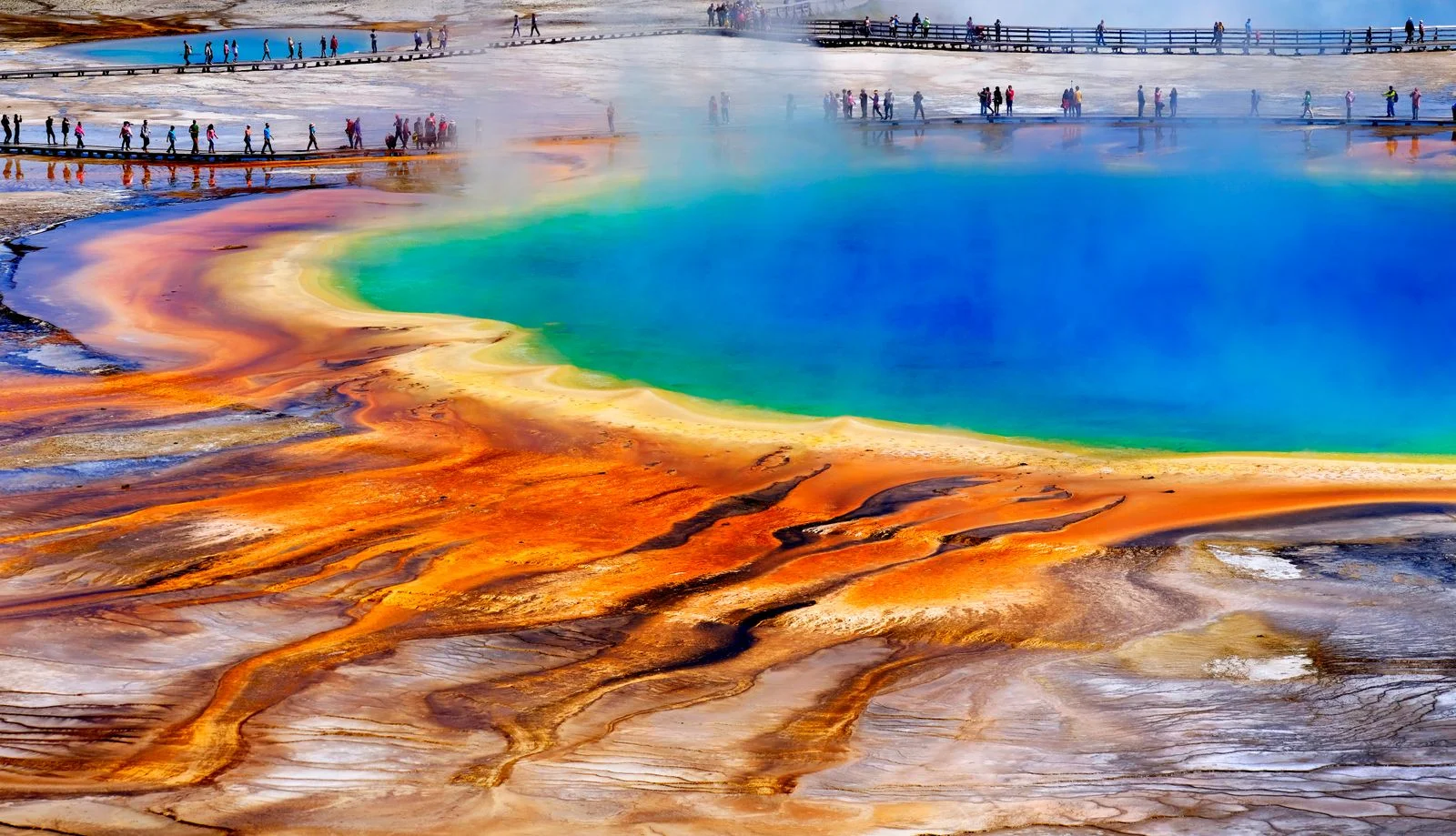 Photo: Getty Images
Learning the local rhythm
After Yellowstone, we lean into the kind of Americana we’d once have treated as a novelty. I download Tinder; a cowboy match takes us rafting on the Gallatin River, which turns out to be a genuine highlight. In Cody, Wyoming, we check into the Irma, the hotel founded by Buffalo Bill, then try firing a Civil War-era Gatling gun at a local range. Restaurants and bars come by word of mouth: Follow Yer Nose BBQ and The Old Saloon in Emigrant both earn recommendations, and the latter cycles between live rodeo footage and old episodes of The Price Is Right. In bars decorated with America 250 flags, strangers point us toward whatever’s happening nearby. One night, the world’s best cattle auctioneer—named in North Dakota the previous year—invites us to an auction, where we learn how to tell a steer from a heifer.
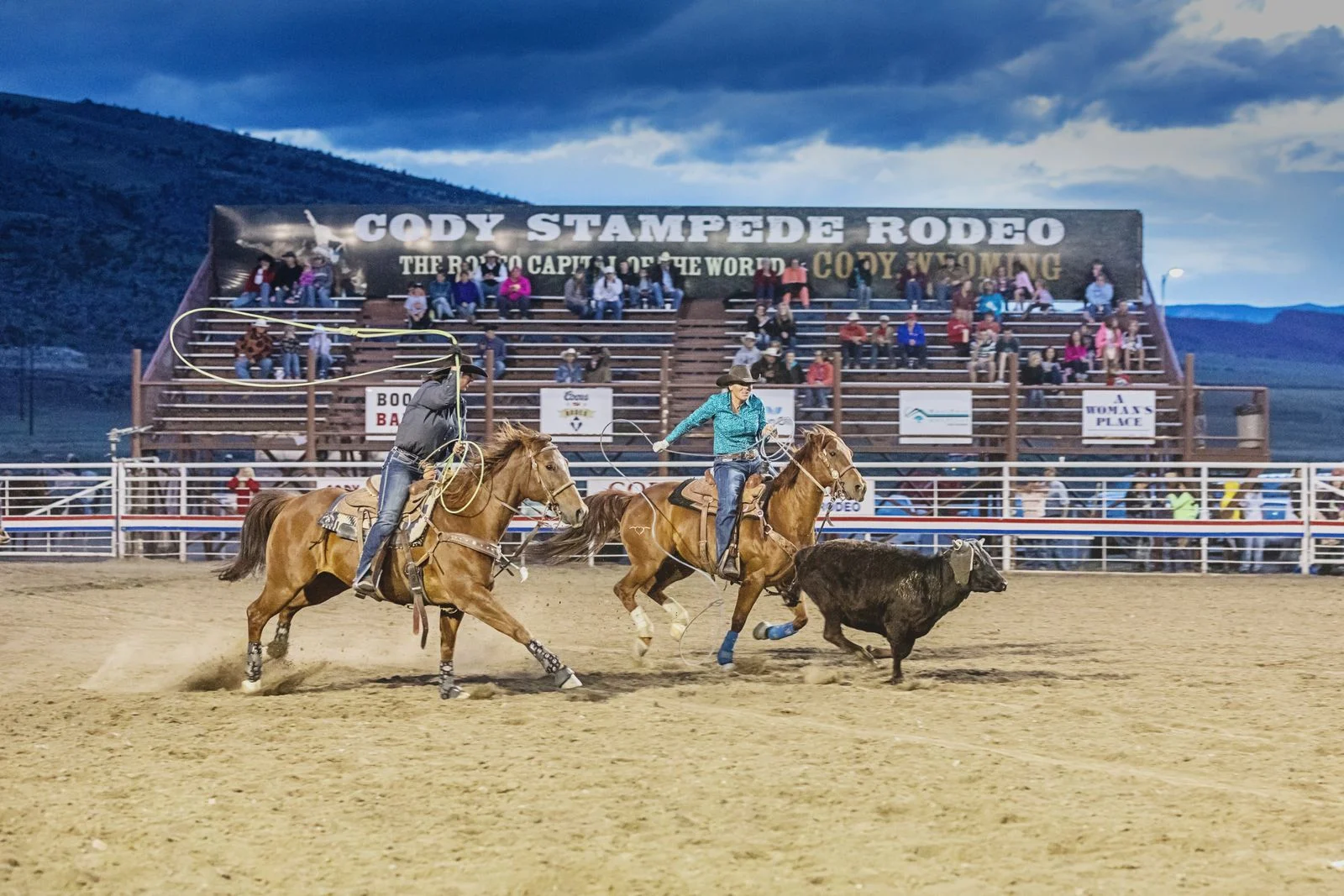 Photo: Getty Images
We take in Cody’s nightly rodeo and its museums, many devoted to Buffalo Bill or stocked with a remarkable amount of artillery. After scouring thrift stores, we leave the Irma for a room above a barn on a llama farm in Pinedale, whose slogan promises “all the civilization you need.” Llamas carry elk carcasses during hunts; I can spend ages watching them trot toward the horizon. My phone rarely has a signal, but the days fill with new pastimes and new friends. When I ask a man in a bar what he thinks of tourists arriving in his corner of the world, he gives me a simple answer: people here want to talk, and don’t care what you do for work. It lands. Nobody has asked about my job in weeks, and the constant buzz in my nervous system is finally quieting.
A week without a signal
Our last stop is Hyattville, population 75, and Paintrock Canyon Ranch, where we’ll camp for a week across 80,000 acres without electricity or phone service. Horses are the draw. This is only my second camping trip; the first, with Haider Ackermann, involved such luxurious comforts that it barely counts. I’m wary of the missing amenities until I see our tent in a meadow beside a running creek. Inside: a wooden dresser and a king-size bed dressed in linen so soft that everyone mentions it over breakfast the next day. I could get used to this.
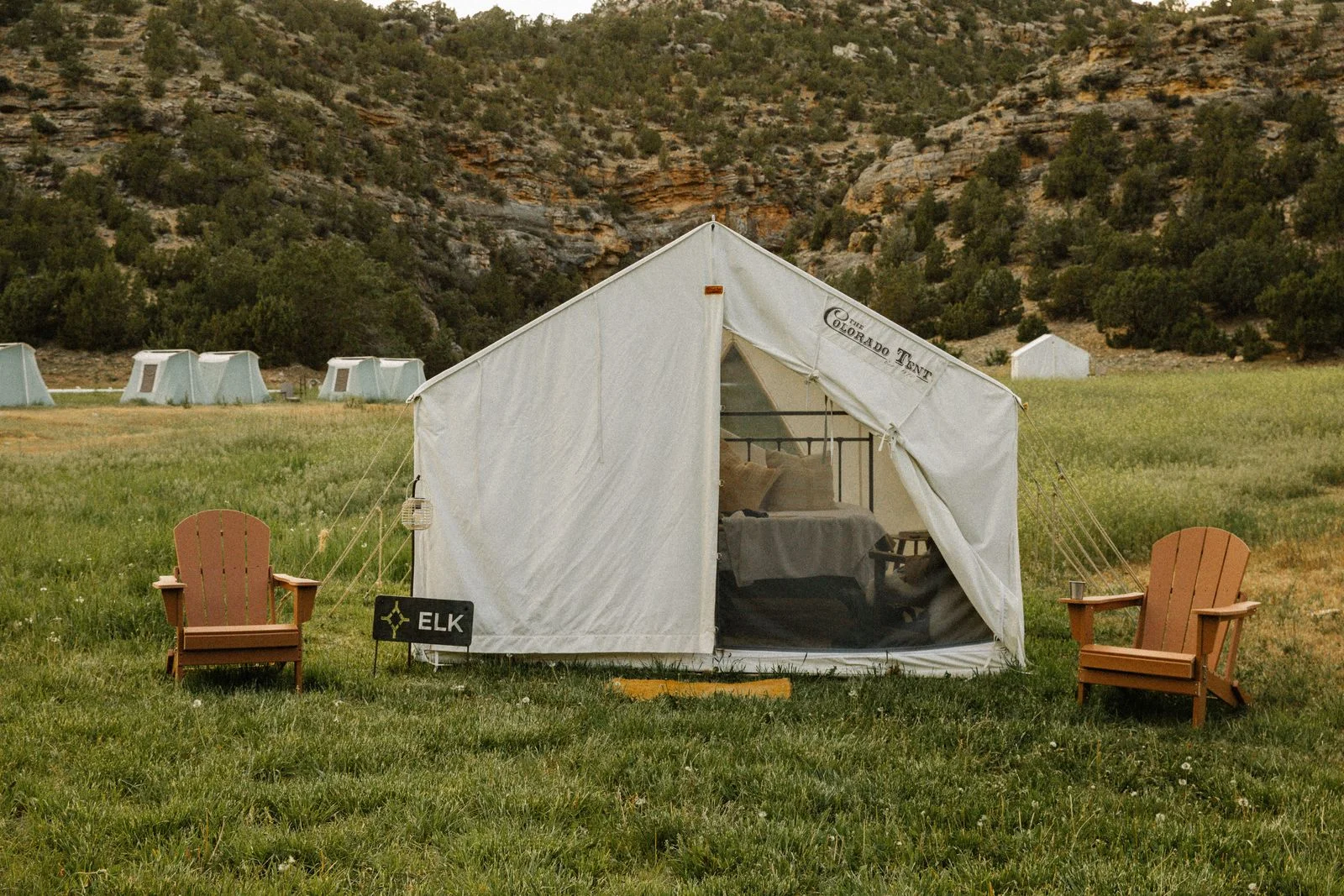 Photo: Julie Pointer Adams / Courtesy of Ranchlands
At dinner, fire-cooked steak and vegetables arrive on platters around a long picnic table. We meet the nine other guests who’ll share the week with us: some have never ridden, while one woman keeps ten horses across the valley. Later, we take blueberry pie and thick cream to the fire and trade stories about our lives and what brought us to Wyoming. With no screens waiting back in our tents, the conversation stretches late into the night, like a school trip.
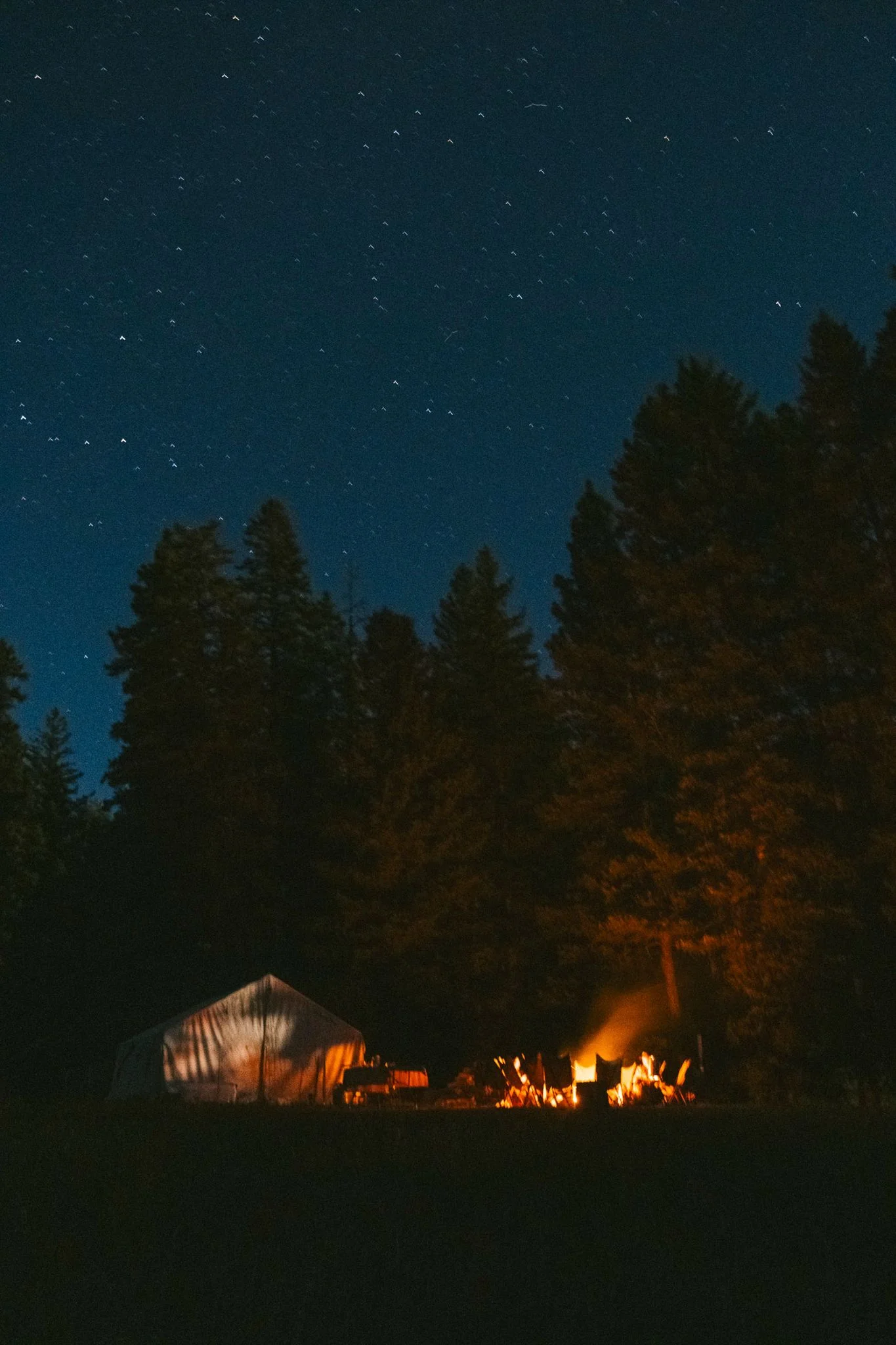 Photo: Courtesy of Ranchlands
Mornings start with coffee, fruit, and yogurt in the shared lounge tent, followed by breakfast and a walk to the stables. We soon give the week a name: adult summer camp. In pairs and trios, we ride for hours over red sandstone hills brushed with gray sage, then between limestone cliffs. I learn to canter across open country under a huge sky, with cattle and roaming horses as the only signs of life.
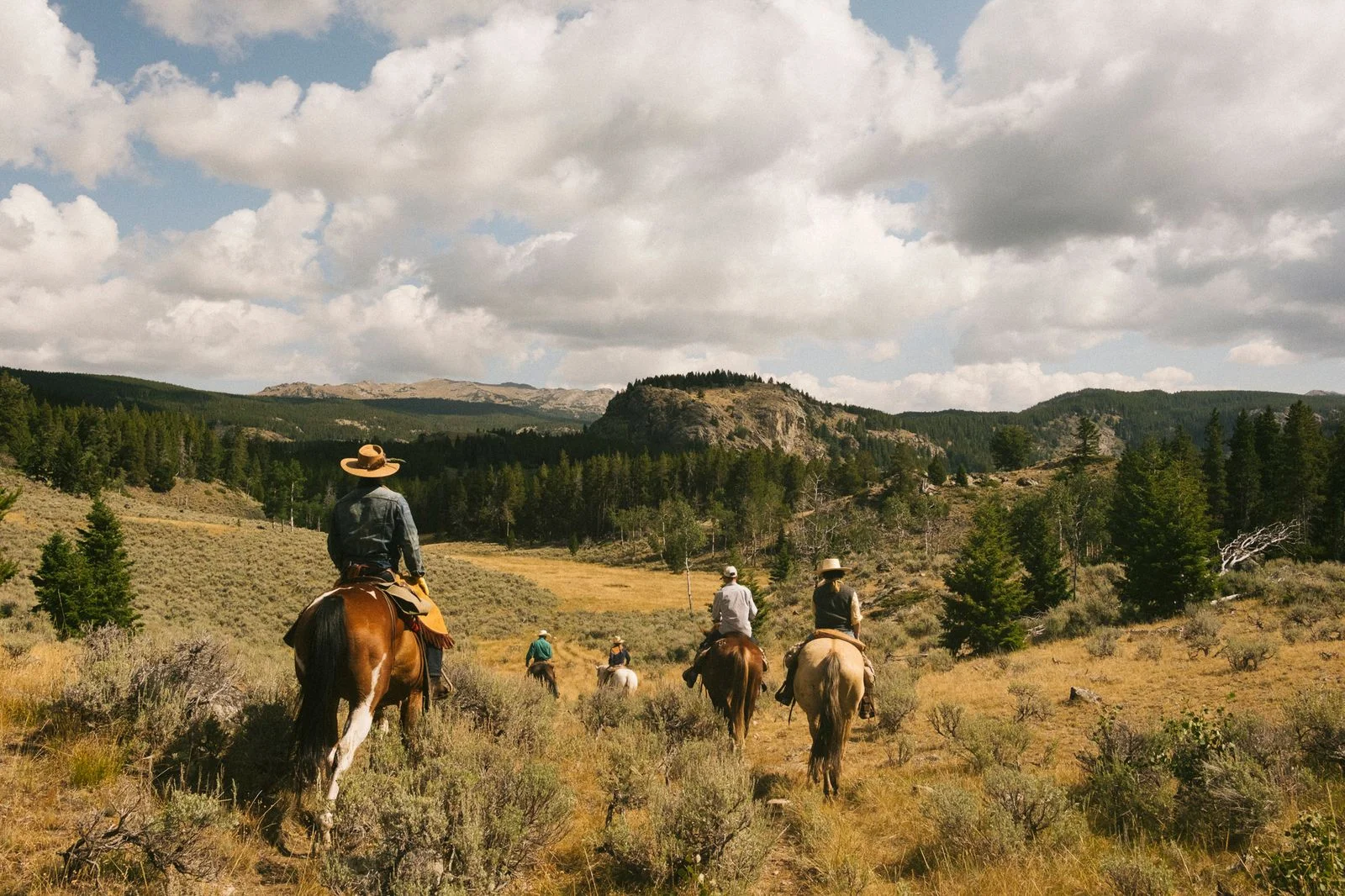 Photo: Courtesy of Ranchlands
Back at camp, wranglers teach us to rope and work leather. I’m bad at both; my coaster is no better than my roping. By the third day, we’ve formed a small, cheerful society. We carry beer and fresh iced tea to the swimming hole, skim stones, and debate who should lead us if an avalanche trapped us there indefinitely. Sarah, a divorce lawyer from Utah, wins the vote for president. There are no clocks and no phones. It feels like paradise.
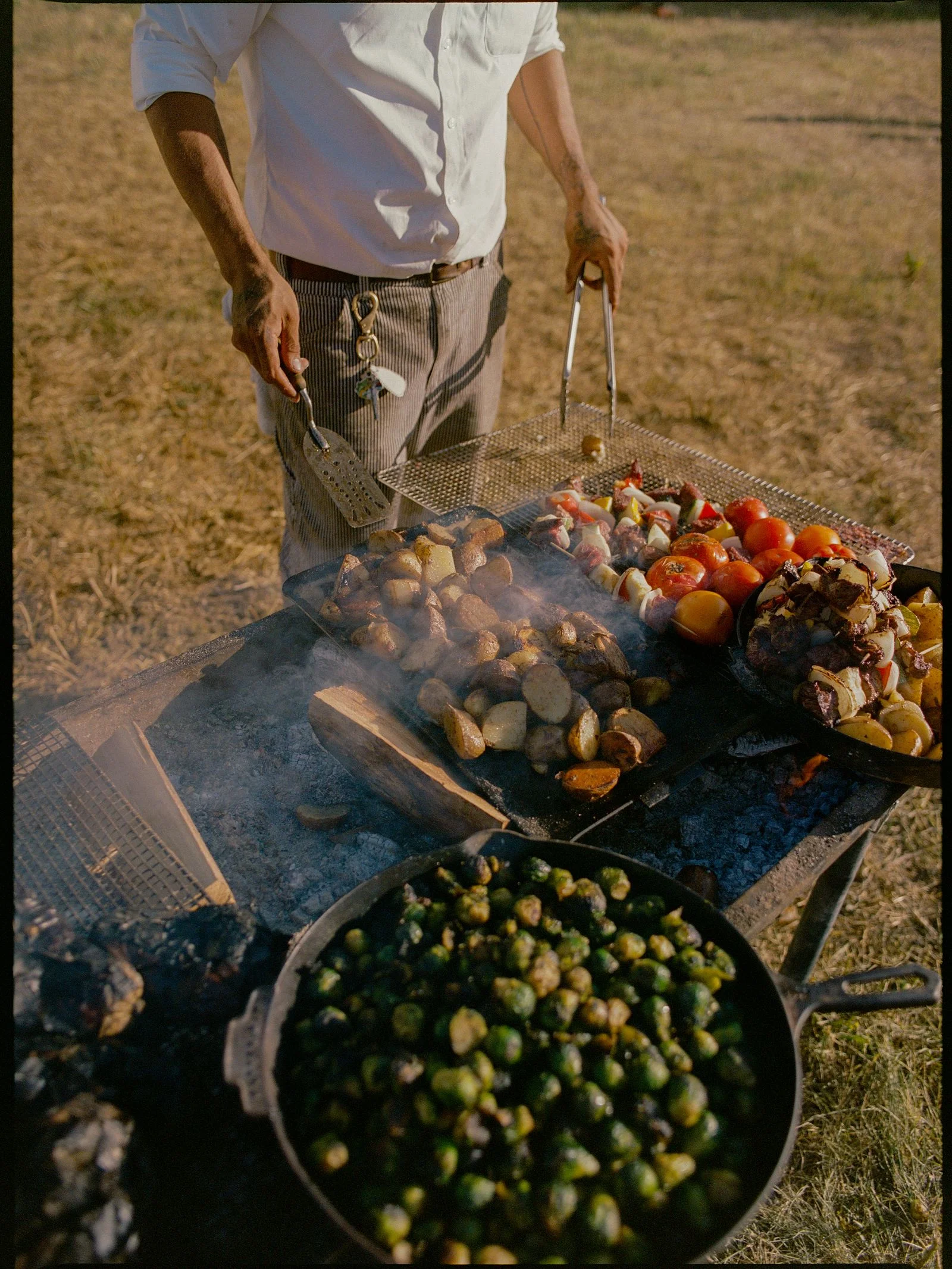 Photo: Courtesy of Ranchlands