2026 CFDA Awards Red Carpet: Designer Looks From Zoë Kravitz to PinkPantheress
CFDA Awards 2026: The Red Carpet Looks
Fashion’s industry celebration meets the carpet
The 2026 CFDA Awards had two stories unfolding at once: American fashion’s leading names gathered for an industry celebration, while designers and their guests turned the cream-colored carpet into its own show. The latter is the focus here. That split is familiar at awards ceremonies: the stage recognizes work and careers, while the arrivals offer a public view of how people choose to represent fashion in the moment.
Held Monday evening at New York’s American Museum of Natural History, the ceremony was hosted by Keke Palmer. Among the honorees were Peter Marino, who received the Fashion Icon Award; Tory Burch, awarded for Positive Change; and photographers Inez van Lamsweerde and Vinoodh Matadin, recipients of the Geoffrey Beene Lifetime Achievement Award. Those honors set a broad frame for the evening, spanning design, public influence, and fashion photography.
Anthony Vaccarello took home International Designer of the Year as he marked a decade at Saint Laurent. That recognition gives the evening a wider industry frame, but the carpet offers a more immediate read on how its designers and muses chose to show up. Red-carpet dressing is both personal expression and a form of public association: the clothes put a designer’s name in front of an audience, while the wearer gives the look its own context. Here are the looks from the 2026 CFDA Awards.
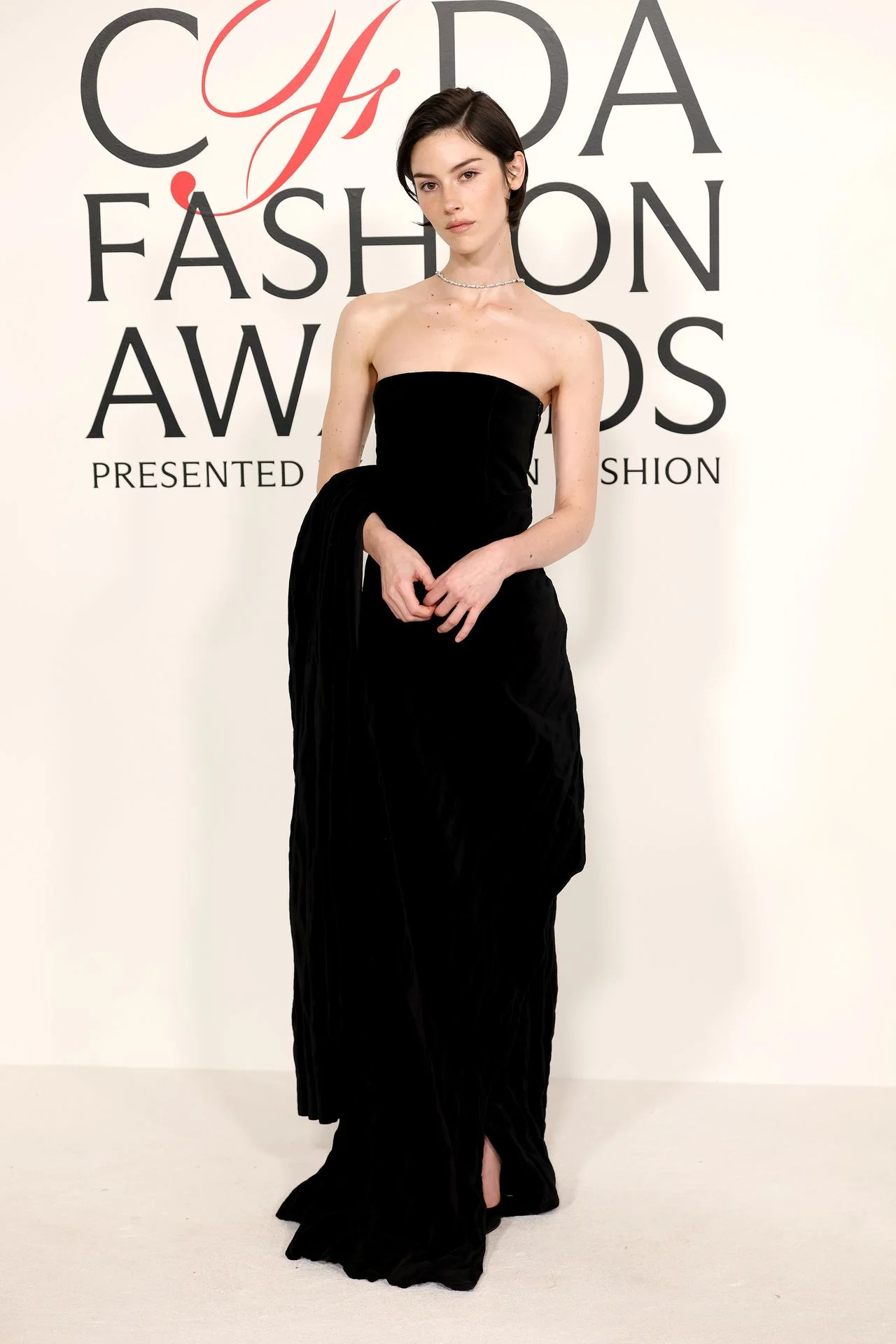
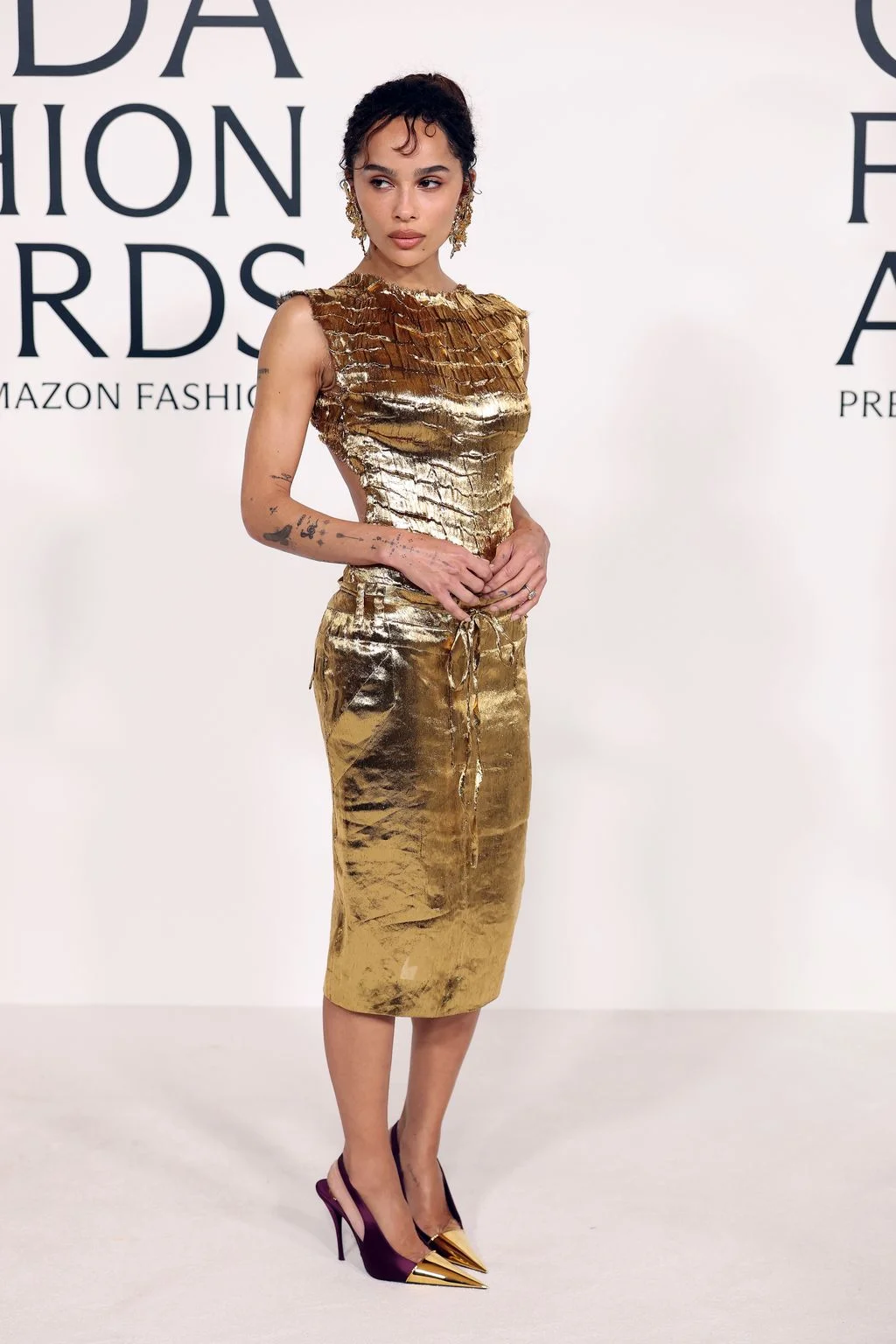
Zoë Kravitz in Saint Laurent. Photo: Getty Images
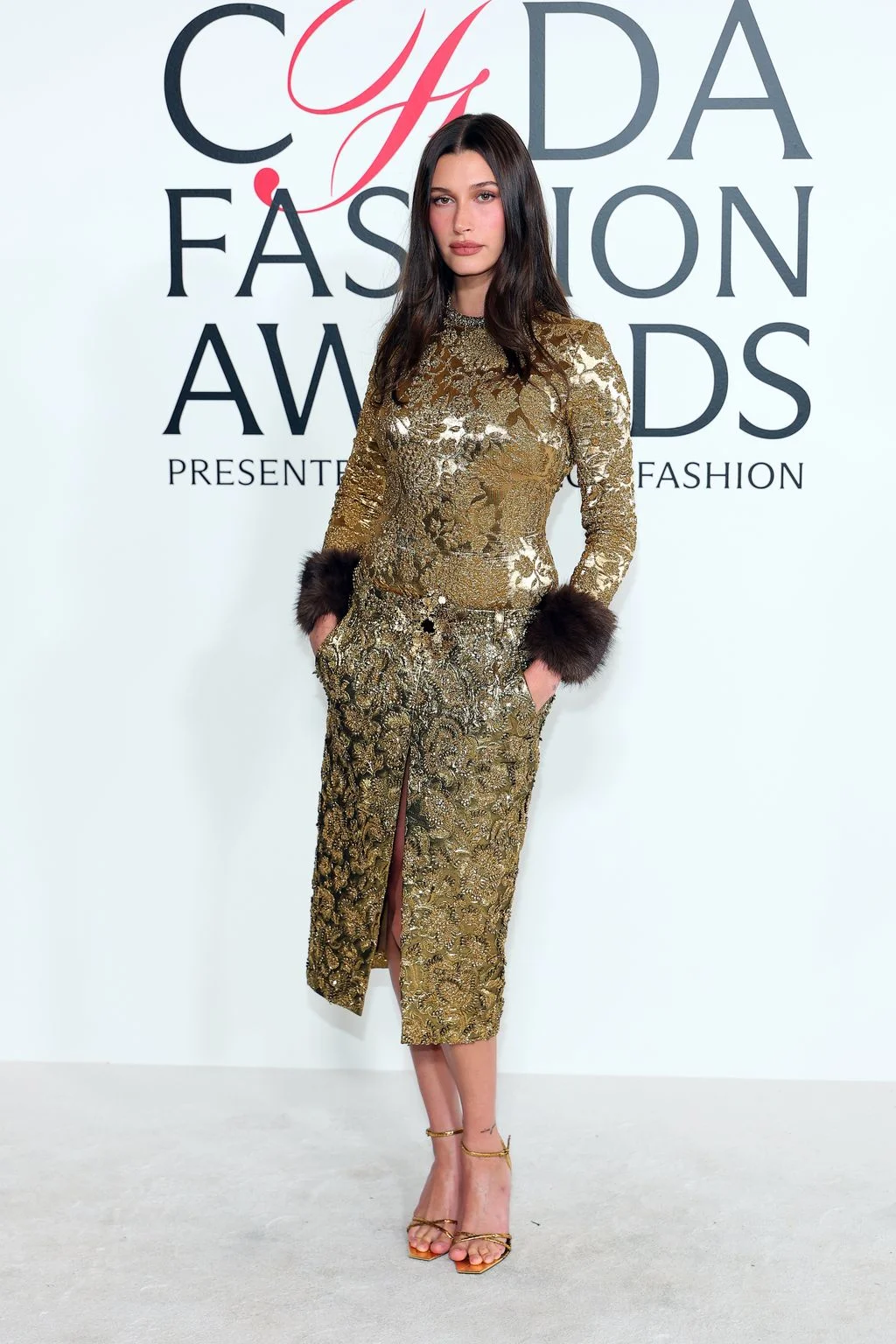
Hailey Bieber in Saint Laurent. Photo: Getty Images
Three distinct designer statements
The labels here do much of the storytelling: Demi Moore wears GapStudio, Gracie Abrams is in Colleen Allen, and Rosé appears in Saint Laurent. The range is the point. These looks move between a brand’s own design language and the work of individual designers, rather than settling into one shared red-carpet formula. It’s a useful reminder that an awards carpet can serve as a meeting point for different kinds of fashion visibility, from established labels to a designer whose name may be less familiar to a casual viewer.
The captions identify the clothes’ makers, but they leave the viewer to read the photographs for the rest. That makes the gallery less like a written critique and more like a set of brief introductions: the designer attribution gives each image a starting point, while the cut, finish, and styling remain open to interpretation. A name alone can’t explain why a look works. The image has to do that work.


Then the gallery shifts to Megan Thee Stallion in Kim Shui. That pairing adds another designer’s name to the mix and keeps the sequence focused on the clothes and who made them. The captions identify the looks; they don’t offer enough detail to judge silhouette, fabric, or styling choices beyond what the photographs show. That restraint is useful: reading more into a caption than it says would turn a straightforward image record into speculation.

Travis Scott and PinkPantheress
The gallery’s next looks feature Travis Scott and PinkPantheress in Coach. The captions offer no details about the outfits, so the images have to carry the story—and two portraits can only hint at the range across a 98-slide gallery. The Coach credit gives readers a clear label connection, but the photographs remain the main evidence for any judgment about how the pieces were styled or presented.
And this is the part most people overlook: a gallery’s order and captions shape the impression as much as any single outfit. A handful of images can suggest a thread, but they can’t stand in for every look in a long sequence. If you’re working in this space, that distinction matters; a designer credit is useful context, while a claim about a collection’s broader direction needs more than a few portraits.


What the carpet can—and can’t—tell us
This is more significant than it looks. The carpet turns a formal industry ceremony into a public display of relationships between designers, labels, and the people wearing their work. But the available captions here mostly name those relationships; they don’t provide enough detail for a confident account of each outfit’s construction or intent. The images invite interpretation, and the limits of the accompanying text should keep that interpretation measured.
That said, the names alone give the gallery a clear range of participants and houses, from GapStudio and Colleen Allen to Saint Laurent, Kim Shui, and Coach. The evening’s honors add another layer, connecting individual appearances to a ceremony that also recognizes achievement across fashion and photography. What this means for you as a reader is simple: treat the carpet as a snapshot of who was present and which designers were represented, then let the photographs—not assumptions—shape any closer reading. A snapshot, not a verdict.