Keke Palmer Celebrates Fashion History in Four Vintage CFDA Awards Looks
Keke Palmer turned the CFDA red carpet into a tour through fashion history
For Keke Palmer, hosting the 2026 CFDA Awards in New York City also meant celebrating the designers behind American fashion. Her clothes made that idea tangible: across four vintage looks, she connected different eras of design to the performers who first wore them. The choices gave the evening a thread viewers could follow, rather than leaving the dresses as separate red-carpet moments. Palmer sees fashion as part of how she tells stories, and these references are central to her artistic identity.
“I love how a look can connect different eras, and bring a memory or a feeling into the present,” she told Vogue after the ceremony. Working with stylist Molly Dickson, Palmer wanted each outfit to have its own moment. “Everything with me is somehow a throwback or referential,” she said. “Fashion becomes another way to tell that pop culture story.” That approach asks the audience to recognize the past while seeing Palmer make the clothes her own.
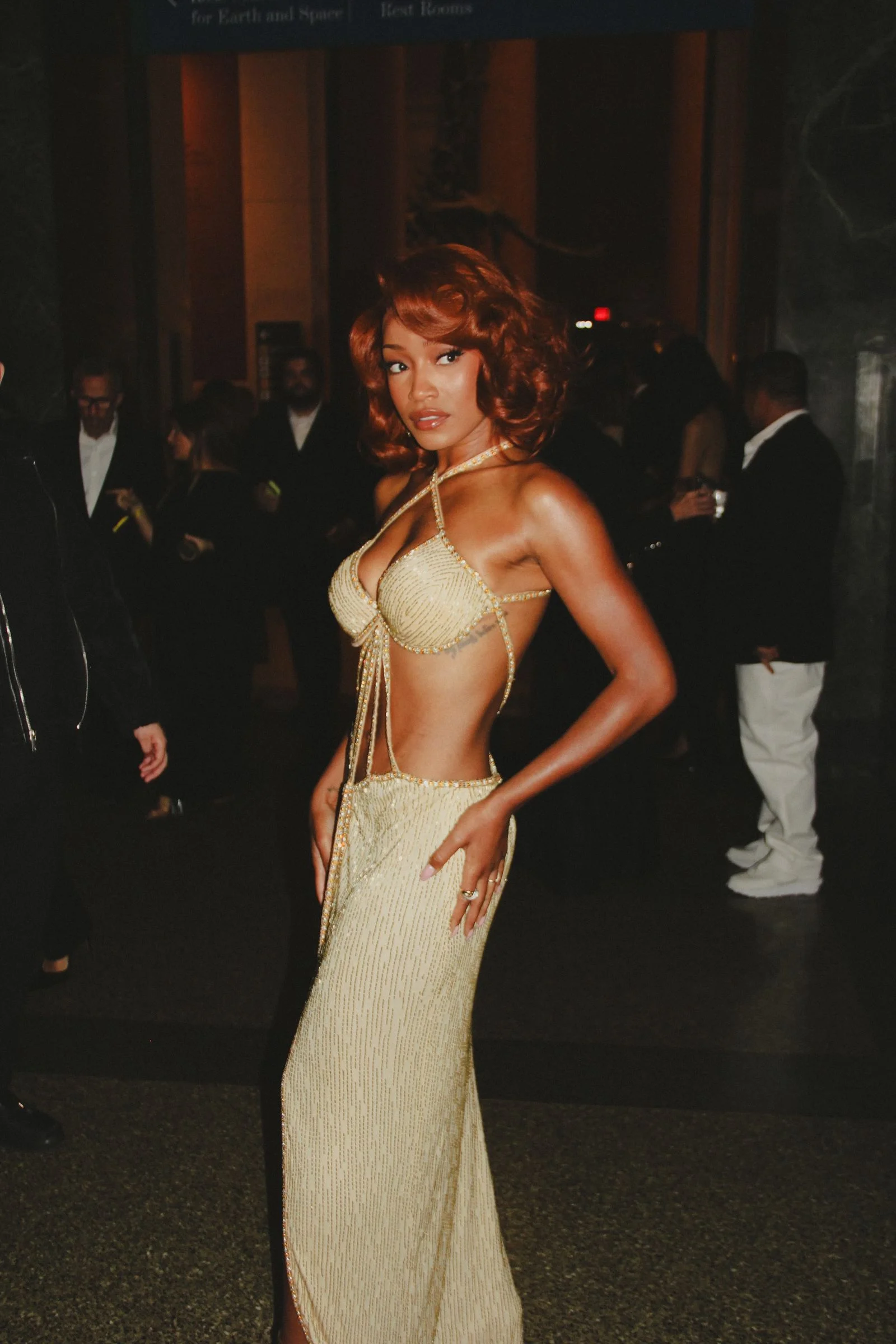
Her opening look set the terms. Palmer wore a rare 1970s Bob Mackie gown, originally made for Raquel Welch. Welch wore it while performing “I’m a Woman” with Cher on The Cher Show in 1975. Palmer said wearing Mackie was one of her first ideas for the evening: his work carries entertainment history, and the gown felt like the right way to begin the night. It established the red carpet as a sequence with a point of view.
The dress came from Timeless Vixen, a vintage dealer whose celebrity clients include Sabrina Carpenter and Kylie Jenner. Owner Lauren Lepire said the gown came to mind as soon as Palmer’s styling team asked for a special Mackie piece. She also described its return to the spotlight as especially meaningful following Mackie’s recent passing. An archival garment can carry more than a designer’s signature; here, its earlier life onstage gave the tribute a specific performance history.
Four designers, four chapters
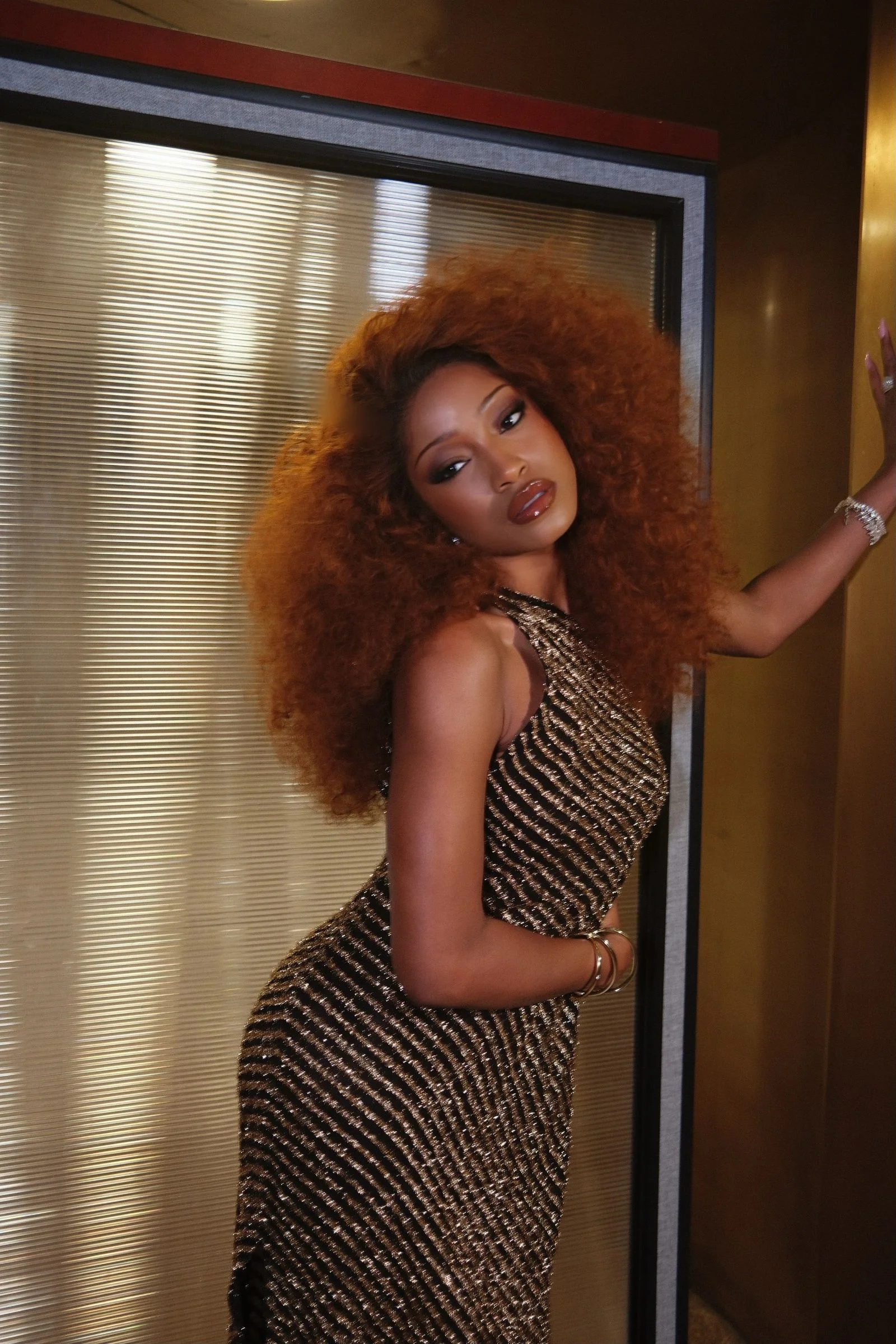
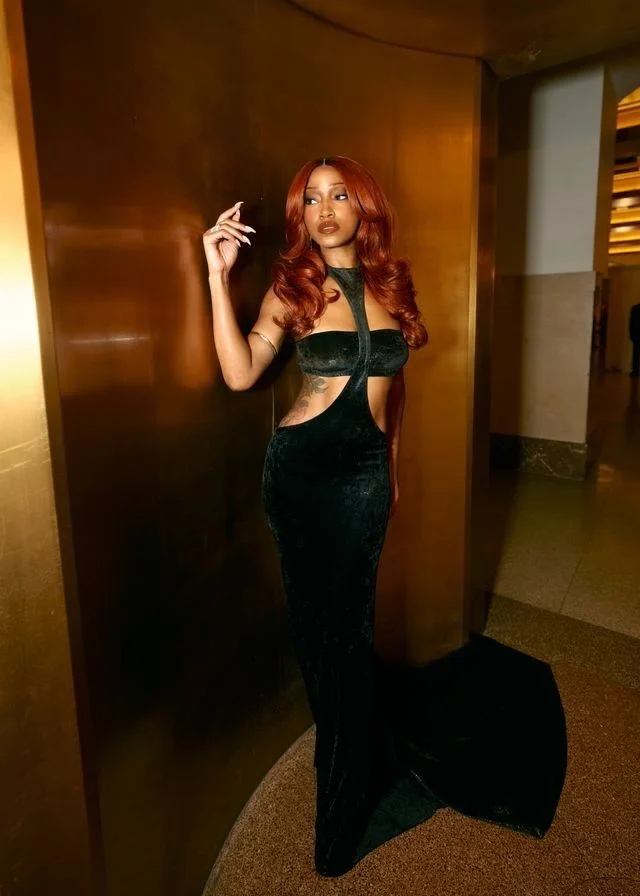
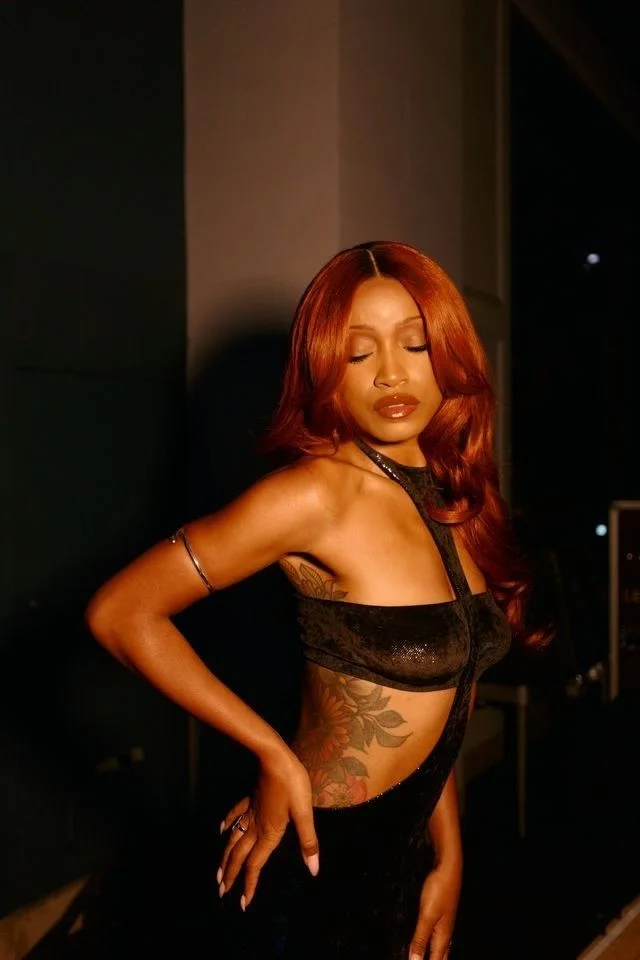
Palmer changed into three more vintage dresses over the course of the evening: a black Marc Bouwer gown previously worn by Toni Braxton, a striped, one-shouldered 1980s Halston dress, and a slinky black Stephen Burrows design from the 1970s. The sequence gave her stated “story through the ages” a clear shape, while a black-and-gold palette tied the looks together. Each dress carried a different association, so the changes read as chapters in a larger idea rather than a succession of unrelated outfits.
That structure also made the references legible without requiring a long explanation on the carpet. The original wearers and designers supplied the history; Palmer’s styling supplied the present-tense connection. This is more significant than it looks: vintage dressing can turn a familiar event format into a small act of cultural memory, provided the clothes have a story and the wearer makes that story visible.
Her final outfit brought those colors into one look, a choice Palmer connected to her own creative work: gathering different references and parts of herself into a single expression. The clothes, in other words, were doing more than nodding to fashion history. They reflected how Palmer thinks about performance and identity, where several influences can coexist without settling into a single period or persona. (And this is the part most people overlook.) The outfit changes were also a form of sequencing, much like arranging songs or scenes to shape how an audience reads what comes next.
Palmer’s favorite parts of the night weren’t all onstage or on the red carpet. She enjoyed seeing Demi Moore backstage, spending time with Law Roach and Prabal Gurung, and catching up with Brandy. For her, those informal encounters were part of the pleasure of hosting a show: sharing a room with people whose work she admires. The observation gives the evening a less polished dimension. An awards event is also a gathering of peers, and those conversations can matter to a host as much as the public-facing ceremony.
After the awards, back to work
Once the evening was over, Palmer’s plan was simple: “Bed! I’m a homebody.” Her next projects include filming season two of The ’Burbs and making new music. She recently released the video “Keke Frankenstein” over Halloween weekend, and says she’s building the world around her album, with the music, visuals, fashion, and characters speaking to one another. That description suggests a creative process in which styling isn’t an afterthought; it’s one of the ways a project acquires a recognizable voice.
There’s plenty else in the mix, too: motherhood, acting, music, and Practice by Palmer. Palmer says she’s also been making space this fall for experiences that feed her as a person, even when play turns into something productive. “#Virgo!” she added. That balancing act is familiar for performers with several public roles, though the details of how she manages it remain her own.
If you’re working in this space, Palmer’s CFDA appearance offers a useful reminder: a reference can do more than signal taste when it’s tied to a clear idea. The evening’s strongest looks connected designer, original wearer, and current performer in a way an audience could grasp. The longer-term question is whether her album’s visual world will carry that same sense of deliberate connection across music, fashion, and character. For now, the red carpet offered a compact preview of how she likes to build a story. A wardrobe with a point of view.
Related: The 2026 CFDA Awards · Keke Palmer’s vintage collection · Bob Mackie’s work · The Cher Show performance clip · Timeless Vixen · “Keke Frankenstein”