What JFK Jr.’s Personal Style Teaches About Dressing with Confidence
What a Year Studying JFK Jr.’s Clothes Taught Me About Personal Style
John F. Kennedy Jr. didn’t invent the backward cap, the pinstriped suit, or the waistcoat worn with jeans. He made those pieces feel like his own. That distinction matters: copying the clothes can get you close to the reference, but it won’t give you the ease that made him compelling. His style still fills menswear moodboards nearly 30 years after his death, and the gap between influence and imitation is the more useful lesson.
JFK Jr. was photographed constantly in the 1990s, and his appeal went beyond what the pictures captured. People who met him in Manhattan often recall his charm and magnetism—and say he looked even better in person. I’ve spent much of the past year researching his wardrobe for a book about JFK Jr.’s style, reading biographies, studying photographs, and talking with people who knew him. You probably won’t look as cool as he did on rollerblades. But you can take ideas from his wardrobe without dressing up as a Kennedy.
There’s a reason the familiar image of him in jeans, a button-up shirt, and a blazer feels so persuasive: it captures the mix-and-match spirit people associate with his clothes. Yet I’ve found no evidence that he wore that combination, and he rarely wore jeans at all. Some people suggest his mother considered them shabby; others point to his active life. The outfit was worn by other ’90s style figures, including Ralph Lauren and Jerry Seinfeld. It’s an easy formula to try, but the deeper point is how contrasting pieces can work together.
Mix pieces from different worlds
JFK Jr.’s wardrobe drew on tailoring, preppy staples, workwear, and sportswear. His best-known looks came from crossing those lines: a baseball cap worn backward with a suit, a polo-neck sweater beneath a tweed blazer, hiking boots with tailored trousers. The clothes weren’t remarkable in isolation. The combinations were.
That’s more useful than treating his wardrobe as a shopping list. A suit and a casual hat can work because each changes how you read the other; the trick is finding a balance that feels deliberate. Plenty of men have tried to reproduce the look—and wound up closer to a Washington Square Park impersonator than the original. The lesson is in the contrast, not the costume.
Choose one accessory with a story
Flat caps, a wallet chain, and Oakley Eye Jacket sunglasses all appeared in JFK Jr.’s rotation. Some accessories had a practical purpose: he often misplaced his wallet and keys, so he attached them to his pants. Others spoke to his interests, from skiing headbands and colorful knit caps to hats he’d picked up in India and Thailand.
Here’s the thing: an accessory works best when it connects to something about you. Pick one standout piece for an outfit and let it carry the personality. Stack too many, and the point gets lost.
Wear a scarf like a layer
JFK Jr. wore scarves with everything from joggers and sneakers to a navy suit. He often tied them in an overhand or Parisian knot, which gives a scarf a neater, more formal shape than simply looping it around your neck.
On colder days, he sometimes used a thick scarf as outerwear, draped over a sweatshirt and paired with a knit cap instead of a coat. Don’t match the scarf too precisely to the rest of your outfit. A little disagreement between the pieces is part of the appeal.
Keep an open mind about watches
JFK Jr.’s watch box makes a better case for his personal style than any single luxury piece could. I found no evidence that he wore the Rolex Daytona Aristotle Onassis gave him—a missing watch that, if it ever turns up, could rival the one associated with Paul Newman. What I did find was a far less predictable mix: a Victorinox Swiss Army field watch, a Swatch chronograph, a vintage Rolex Oyster Perpetual, and even a cheap quartz watch. The range says something more revealing than a shelf full of expensive watches would: he seemed to enjoy the watch itself, whatever its price or status.
Be interesting
His wardrobe drew on several parts of his life at once. Upper East Side upbringing meant blazers, chinos, and polos; his love of sports and the gym brought sweats, tees, and sneakers. As a downtown socialite, he also had plenty of suits and tuxes. But the graphic tees may be the more telling pieces: shirts from the Russian & Turkish Baths in the East Village and the New York Athletic Club, alongside one marking the 1984 NYC Fresh Festival, a seminal moment in hip-hop history.
Here’s the thing: those clothes work as a record of what he did and cared about, not just where he came from. That’s the lesson worth taking from JFK Jr.’s style. If you’re trying to dress with more character, the aim isn’t to assemble the right labels; it’s to wear things that make sense for your own life.
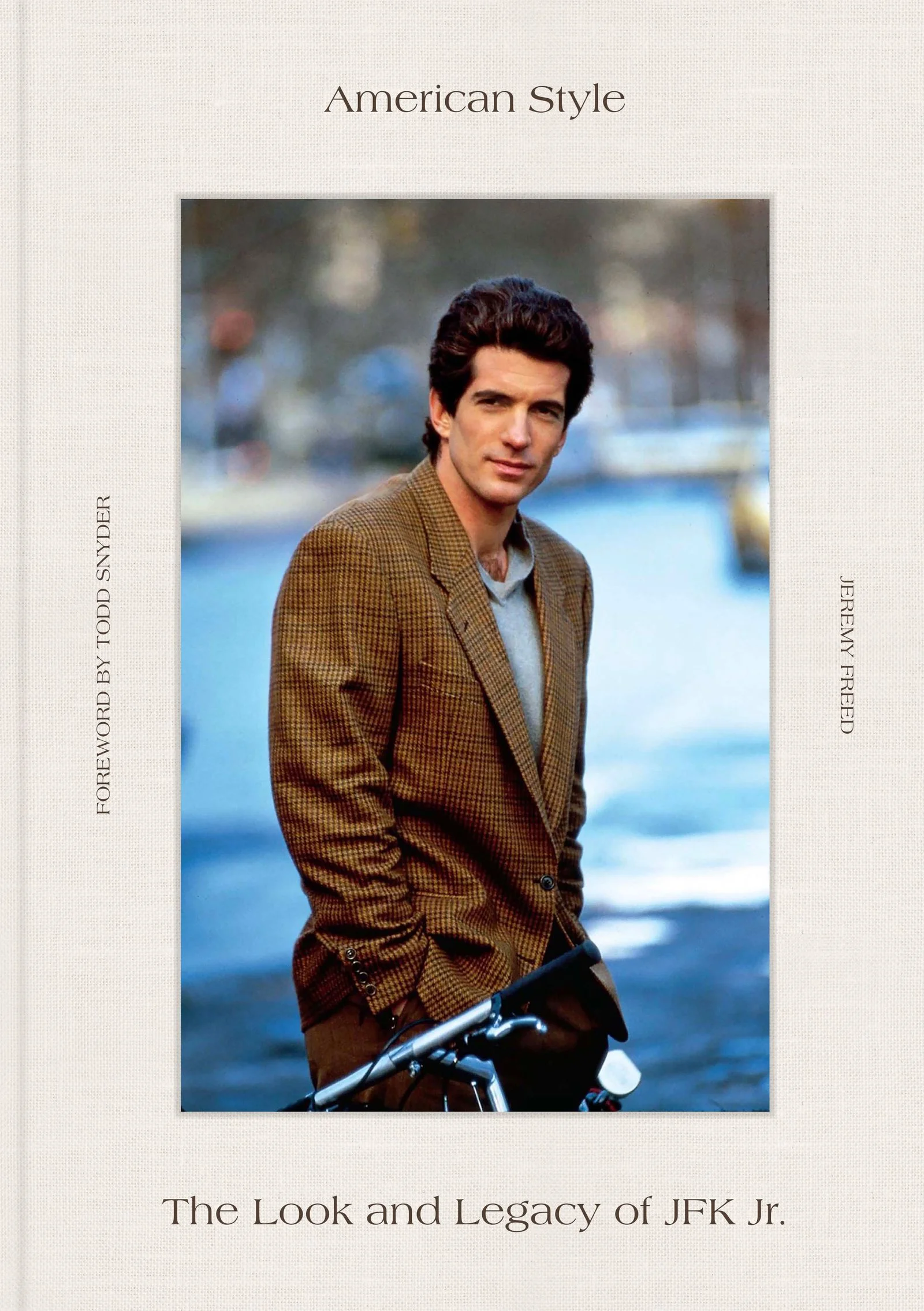
American Style: The Look and Legacy of JFK Jr. is now available for pre-order.