Why House-Made Syrups Are Becoming a Specialty Coffee Shop Staple
For independent coffee shops, a syrup bottle has become more than a flavor option. It can signal whether a shop’s idea of craft extends beyond its beans—and whether its menu offers something customers can’t get from a chain. That shift is putting house-made syrups at the center of a debate over quality, labor, and what specialty coffee should taste like.

Social media has helped turn commercial brands such as Torani into shorthand for a coffee shop that cuts corners. One TikTok video, with more than 82,000 likes, zooms in on shelves of Torani bottles at a Pennsylvania café; its caption says, “I just know my latte isn’t going to be good.” A widely echoed post on X declares, “If I see these at a cafe, I’m walking out immediately.” Another creator recorded a series about replacing Torani with products from small businesses, while the food newsletter Unsnackable published a “Torani tirade.”
Torani takes much of the heat because it’s so familiar, but the suspicion reaches beyond one brand. Monin also faces complaints, including claims that its syrups taste “like chemicals.” For some customers, the objection is to premade syrup itself. A bottle of commercial flavoring can make a café charging $8 or more for a latte seem out of step with the care and quality its “specialty” label implies.
Customers redraw the menu
The expectation that a specialty shop should make its own syrups can be a difficult fit for owners who set out to focus on coffee. Carrie and Dennis Medina envisioned Room Service, their Ventura, California, shop, as a purist operation much like Sightglass Coffee, where they both began their careers. They planned to skip syrups and elaborate drinks in favor of eight pour-over coffees and single-origin beans. Their first-week customers had other ideas: they kept asking for flavored drinks and cream tops.
Room Service now rotates 10 to 12 house-made syrups and six cream tops. The menu includes a cinnamon roll latte topped with a cinnamon roll and a honey cornbread latte finished with ube cream. Dennis Medina says customers regularly ask whether the syrups are made in-house. He sees making at least the basics, such as vanilla, as part of keeping pace with what customers expect.
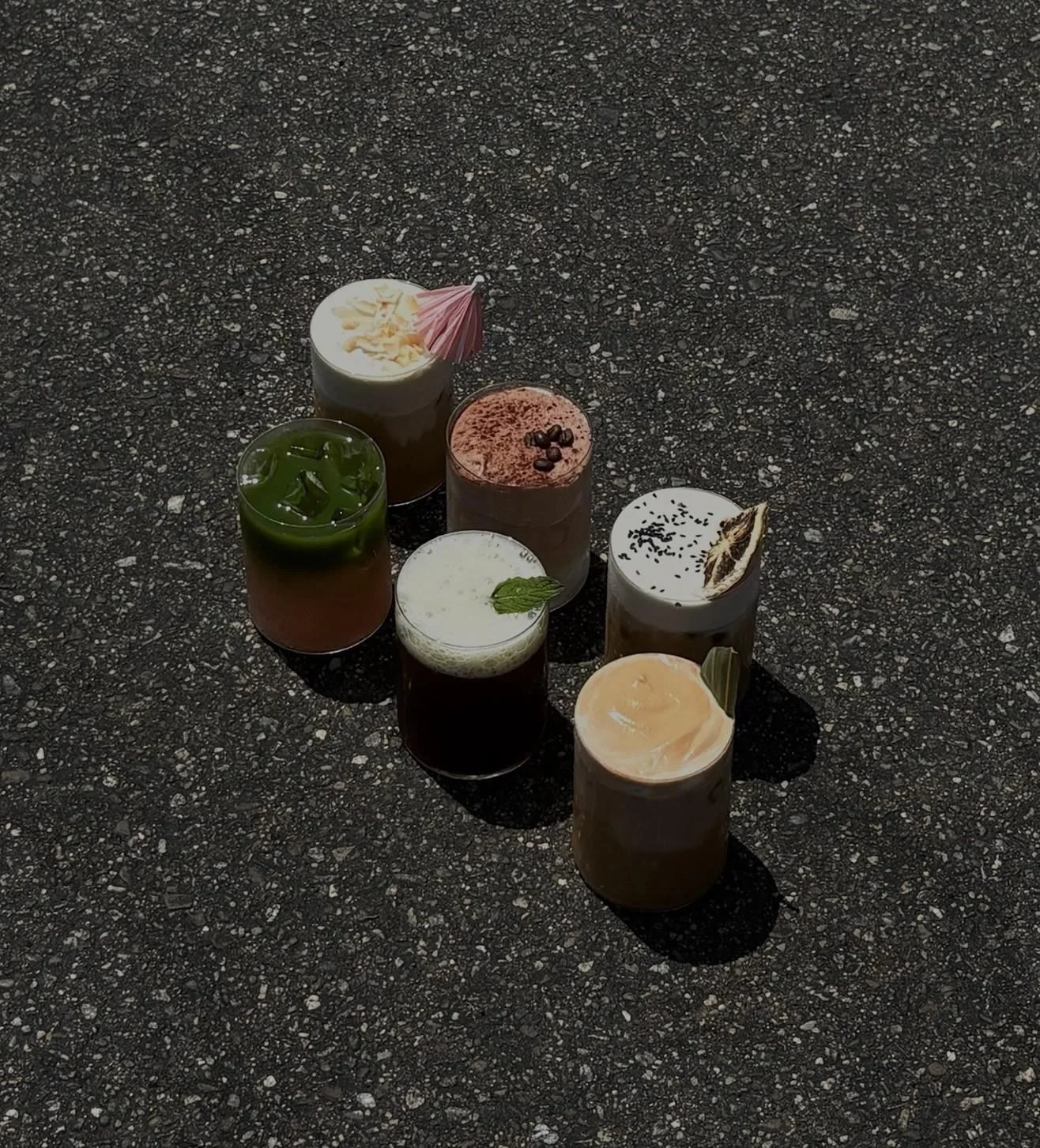
Meeting that demand takes more than a few extra bottles on a counter. Room Service hired a full-time prep worker whose job is devoted to in-house ingredients and drink components. Its pumpkin spice latte begins with kabocha squash, roasted and blended with cloves and cinnamon, then cooked into syrup over a process that takes two days. Carrie Medina describes a gap between the shop the couple originally planned and the one customers now want. Their response has been to apply the same attention to ingredients and preparation to sweet drinks that they bring to coffee.
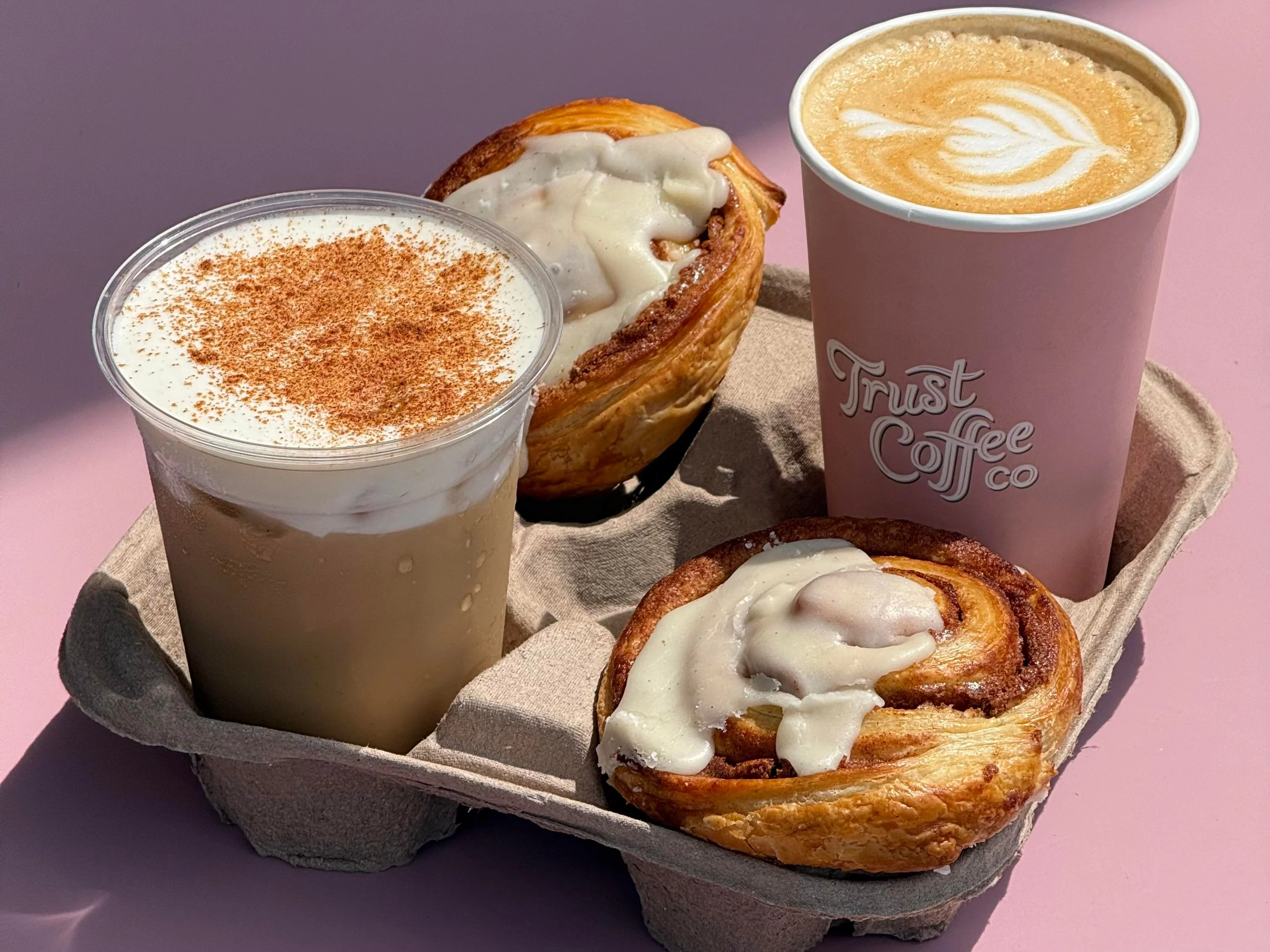
Michael Smith reached a similar conclusion after opening Trust Coffee Co. in Bay Village, Ohio, in 2025. He took over an existing café and pictured a pour-over-focused, third-wave shop. Instead, customers wanted seasonal flavors such as maple rosemary, caramelized banana, and strawberry rhubarb. Smith, who also runs a restaurant and catering business, says that owners learn what a business is by paying attention to what customers ask for—not simply by sticking to the concept they imagined.
The purist is no longer coffee’s north star; the maximalist is.
More than a flavor trend
This change fits a wider appetite for what the New York Times has called “hyperflavor”: familiar foods made more distinctive through layered, unexpected combinations. Miso in a cookie no longer feels like a novelty. Coffee has followed a similar path. The precision once associated most strongly with black pour-over now shows up in sweet drinks, where owners build flavors and textures with the care of pastry chefs or cocktail makers.
At Trust, two full-time pastry chefs from Smith’s other businesses oversee the syrups. He says the recipes give the shop more control over its menu than the Monin products used by the café’s previous operator. When Trust’s social media manager posts a new flavor, Smith says, customers can line up for a week. For the business, a seasonal drink becomes both a reason to visit and a way to be remembered.
Independent cafés are also changing their approach as customers ask more about where flavors come from. Sabrina Kaylor opened the first Bizarre Coffee in Canton, Georgia, in 2020, using bottled syrups. She had no previous coffee experience and says that approach felt standard at the time. In the years after the pandemic, she saw more interest in making things from scratch and more pride in doing so. As Bizarre became known for blueberry, banana, and guava lattes, Kaylor began making more syrups in-house. Now, customers regularly ask about the ingredients and their source.
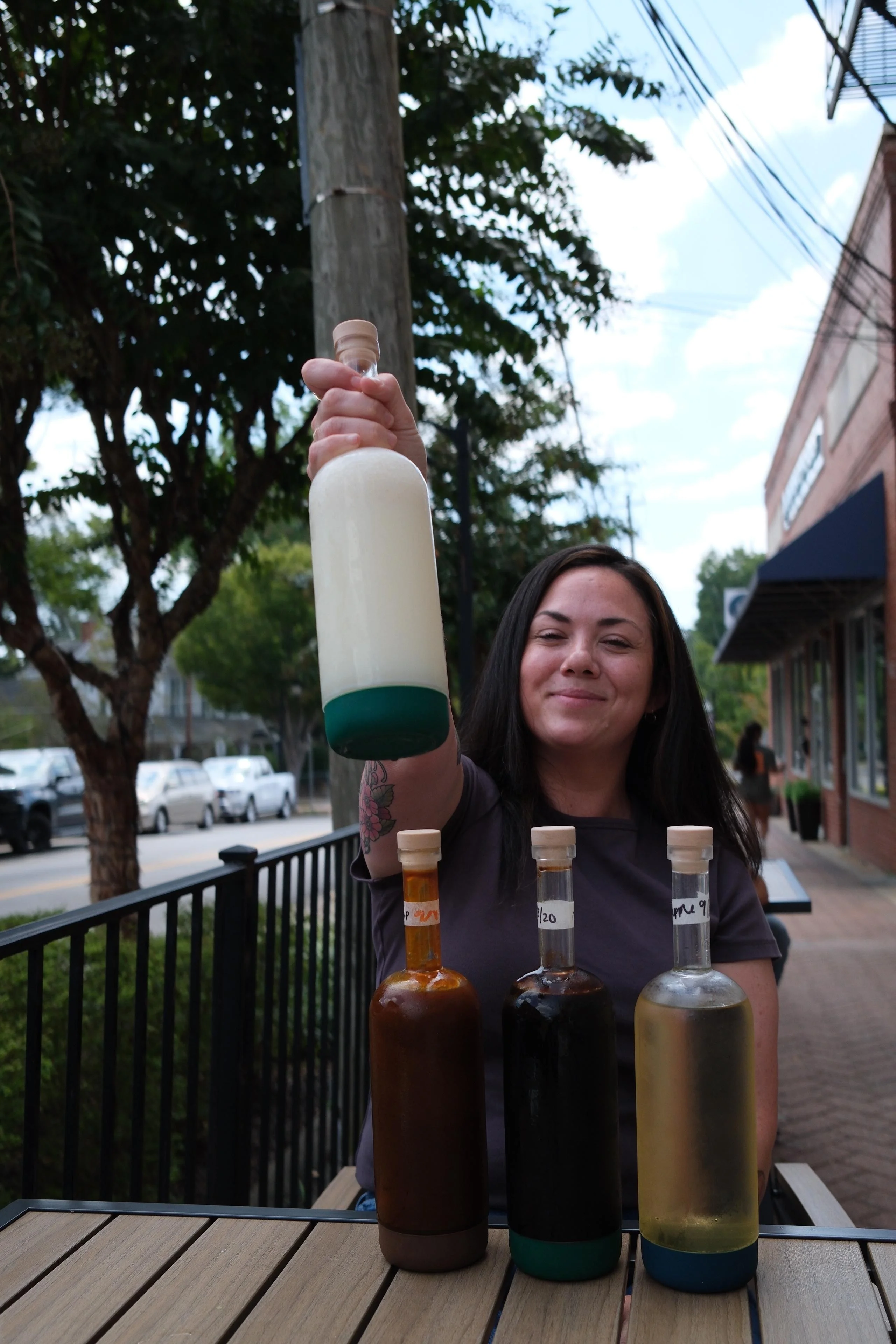
Kaylor says about 90 percent of Bizarre’s drinks use house-made syrup, but one of its best sellers still uses a bottled product. Its menu is broad, and making every component from scratch would add a substantial labor burden. She also questions how much of the current enthusiasm for in-house syrup reflects genuine craft and how much is marketing. The wave of anti-Torani posts, she says, can be discouraging for small operators who have to balance customer expectations with the time and cost of preparation.
Independent shops seek an edge
The argument over bottled and house-made syrup carries a larger question about what customers want from a local business. Some people are increasingly wary of large corporations and private equity’s presence in food and drink, a topic explored in recent coverage. Against that backdrop, a recipe made in the café can stand for local ownership and a closer connection between the people behind the counter and the people ordering.
Some shops are making that connection shareable. Minnesota café Little Joy has attracted attention with DIY videos showing its signature drink recipes. It later created a membership program where coffee shop owners can buy recipes adapted for commercial use and access training videos. Participating cafés can serve the drinks without crediting Little Joy; those that choose to can appear on its Drink Finder map.
In an interview with Eater’s Pre Shift newsletter, Little Joy owner Cody Larson described the system as a way for independent operators to support one another. “The big coffee chains, they’re never gonna do house-made syrups, so I think that’s where independent shops can get a leg up,” he said. He added, “If independent shops can, in any way possible, raise the bar across the board, that’s good for all independent shops, including us.”
And yet, the elaborate drinks on independent menus have something in common with the customized orders popularized by Starbucks. The Frappuccino, app ordering, and social media “hack” culture helped make highly customized beverages familiar to a broad audience. Drinks built around flavors such as princess cake or tiramisu draw on that appetite, while small cafés try to distinguish their versions through local ingredients and more deliberate preparation.
Smith suspects that some customers who once relied on Starbucks are now seeking a more local version of the customized drink experience. He says independent cafés can deliver familiar kinds of indulgence with more attention to quality and a stronger connection to place.
That distinction matters when a latte has become an expensive treat. Customers want to feel that the ingredients and effort justify the price, and that a visit to an independent shop offers something they can’t find on every corner. House-made syrup won’t answer every question about a café’s craft, and the work can demand serious staff time. But as customers look for flavor, care, and a reason to choose local, the syrup station is becoming part of the shop’s identity—and a telling measure of how it responds to the people it serves.