Dry-Brined Turkey With Tangy Honey Glaze for Crisp, Golden Skin
A turkey technique built around dry skin and patient seasoning
This recipe’s real selling point is control: salt the turkey ahead, give its skin time to dry, then glaze it as it roasts. Andy Baraghani’s dry-brined turkey uses only kosher salt and brown sugar, applied 12 hours to two days before cooking. The salt helps the meat hold moisture; the uncovered refrigerator rest helps the skin brown. No brining bucket required.
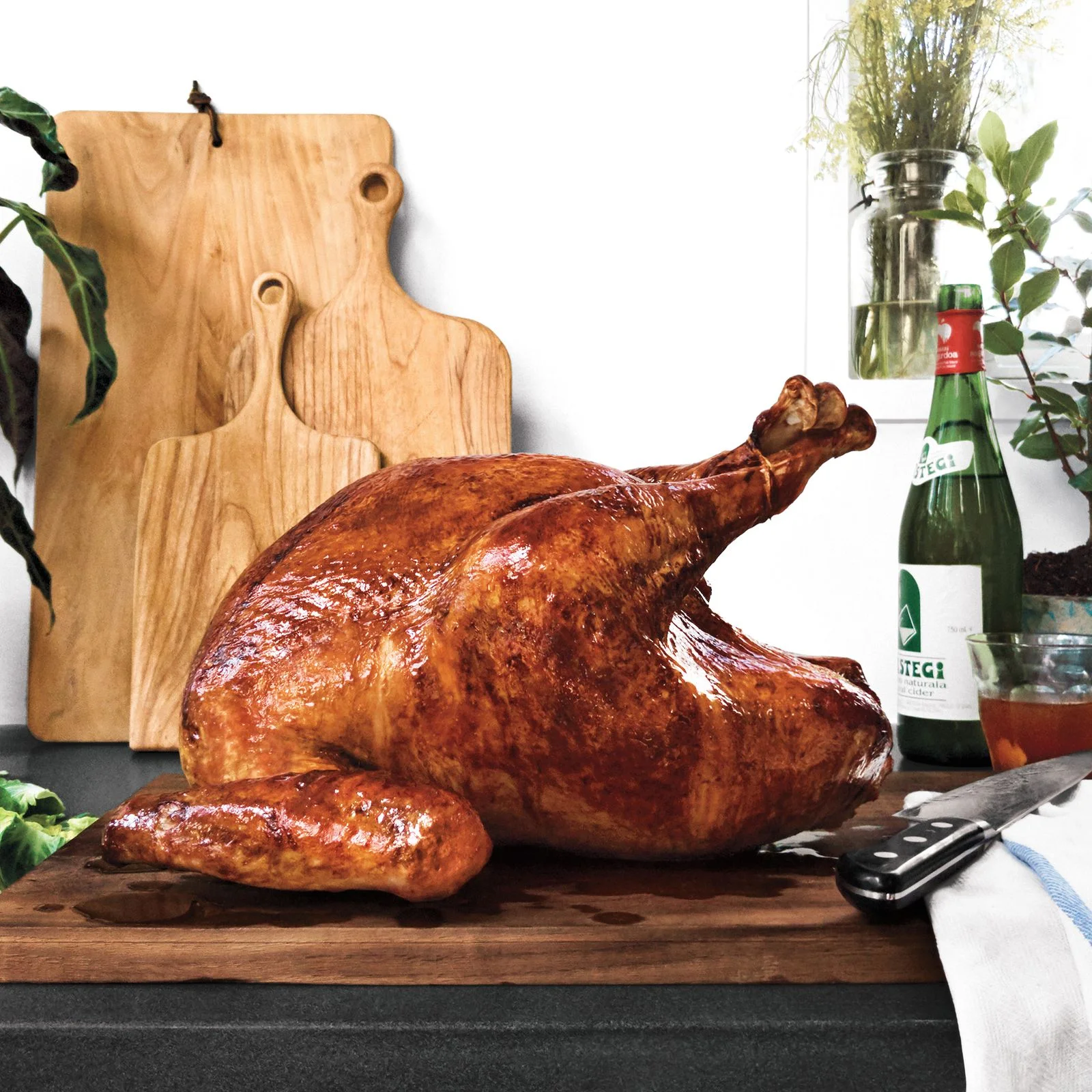
It’s a November 2018 recipe listed with a November 3, 2026 publication date, and it carries a 4.6 rating from 135 reviews. The lead image shows a deeply browned turkey on a carving board. Those numbers suggest readers like the result, though they don’t tell us what makes the recipe work for them.
Roast the bird on a wire rack inside a rimmed baking sheet, where air can reach more of its surface than it would in a high-sided pan. Instead of basting, brush on a buttery honey and vinegar glaze as it cooks. Rosemary, garlic, orange zest, and Worcestershire bring fragrance and savory depth; repeated coats build a glossy finish. That’s a more deliberate approach than reaching for a turkey baster.
After roasting, let the turkey rest uncovered for 30 minutes to an hour before carving. Foil traps steam and can soften the crisp skin, so use the wait to finish your Thanksgiving side dishes.
Dry-brining questions to settle before you start
Choose an unseasoned turkey. Kosher, self-basting, and enhanced birds may already contain salt, and adding more can leave the meat too salty; check the label for an added salt solution. Frozen turkey works, too, but thaw it in the refrigerator for at least 24 hours before brining.
Don’t rinse the turkey after brining. The recipe’s instruction to rinse applies to the baking sheet and rack, to keep salty drippings from affecting the pan juices. Follow the amount recommended for your brand of kosher salt, and don’t worry if some of the deliberately extra brine mixture remains unused.
One detail the recipe makes clear: the brine stays on the bird. Another practical tip is to watch the salt label closely. The technique is simple, but a pre-salted turkey changes the calculation.
Recipe details
Dry-Brined Turkey With Tangy Honey Glaze by Andy Baraghani. Filed under Recipes and the November 2018 issue. Rated 4.6 out of 5 from 135 reviews.

Photo by Michael Graydon + Nikole Herriott; food styling by Rebecca Jurkevich; prop styling by Kalen Kaminski.
Don’t let the drippings overpower the gravy
The turkey’s pan juices can make excellent gravy, but the dry brine and glaze leave them especially flavorful—and potentially very salty. Skim off the excess fat, use it to make a roux, then whisk in the drippings gradually. Round things out with low-sodium chicken broth or homemade unseasoned turkey stock. Taste before seasoning. For a head start, Make-Ahead Gravy works without pan juices. You can add some while reheating, but check the salt first.Keep the roasting schedule in its lane
This recipe is calibrated for a whole turkey weighing 12–14 pounds. A larger bird or a spatchcocked one won’t follow the same timing, so don’t carry over the roasting and glazing schedule. For a flattened turkey, use the instructions for Spatchcock Turkey With Anise and Orange. For the reasoning behind each stage, see our guide to cooking Thanksgiving turkey →Recipe at a glance
Total time is 4 hours 45 minutes, plus at least 12 hours for brining. The recipe serves 8–10.Ingredients
- ½ cup Diamond Crystal kosher salt, or ¼ cup plus 1½ tsp. Morton kosher salt - 1 Tbsp. light brown sugar - 1 turkey, 12–14 lb., patted dry, with the neck reserved for gravy and giblets discarded - 12 Tbsp. (1½ sticks) unsalted butter, room temperature, divided - ¼ cup sherry vinegar or red wine vinegar - 2 Tbsp. honey - 4 tsp. Worcestershire sauce - 3 rosemary sprigs - 3 garlic cloves, crushed - 2 strips orange zest, each 2 x 1 in.Dry-brine, then roast hot and slow
The key to this turkey is the long, uncovered rest in the refrigerator: it seasons the meat while drying the skin for better browning. Combine ½ cup Diamond Crystal kosher salt—or ¼ cup plus 1½ tsp. Morton kosher salt—with 1 Tbsp. light brown sugar. Pat a 12–14-lb. turkey dry, with its neck reserved for gravy and giblets discarded. Set it on a rack over a rimmed baking sheet, or use a V-shaped rack in a large roasting pan. Season the outside and cavity, pressing the mixture into creases; excess is expected. Refrigerate uncovered for at least 12 hours and up to 2 days. Before roasting, move the turkey off the rack and rinse the pan and rack if liquid has collected. Line the baking sheet with three layers of foil, replace the rack, and set the bird breast side up. Tuck the wings underneath, then let the turkey stand at room temperature for 2–3 hours. Heat the oven to 450°F with a rack in the center. Loosen the breast skin with your fingers and spread 4 Tbsp. room-temperature unsalted butter beneath it, over both breasts. Rub another 4 Tbsp. over the skin. Tie the legs with kitchen twine and pour 1 cup water into the baking sheet. Roast, turning the pan halfway through, until the skin is mostly golden, about 30 minutes. While the bird roasts, make the glaze: simmer ¼ cup sherry vinegar or red wine vinegar, 2 Tbsp. honey, 4 tsp. Worcestershire sauce, 3 rosemary sprigs, 3 crushed garlic cloves, two 2-by-1-inch strips of orange zest, and the remaining 4 Tbsp. room-temperature unsalted butter in a small saucepan over medium heat. After about 5 minutes, when bubbling and slightly thickened, turn the heat to its lowest setting to keep the glaze warm. Lower the oven to 300°F. Brush the turkey with glaze every 30 minutes, adding water to the pan in ½-cup portions as needed to keep some liquid there. Roast until a thermometer inserted into the thickest part of the breast near the neck reads 155°F, about 65–85 minutes more. The temperature will rise as the turkey rests. Look for deep golden, glossy, crisp skin, then transfer the bird to a cutting board and rest it for at least 30 minutes, or up to an hour, before carving.