Five Book Reviews Explore Resistance, Reinvention and the Lives Shaped by Systems
Stories of resistance and reinvention
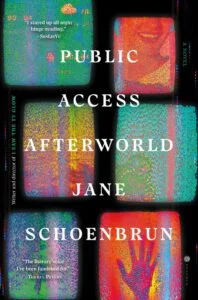 Junot Díaz sees Jane Schoenbrun’s debut novel, Public Access Afterworld, as an Orpheus story for a media-saturated age. Schoenbrun, whose films include I Saw the TV Glow, blends political conspiracy, urban fantasy and a neo-slave narrative, with echoes of Videodrome, The Matrix and Neal Stephenson’s Snow Crash. The genre mix is ambitious. What keeps it grounded, Díaz argues, is Schoenbrun’s attention to the ordinary lives of marginalized characters.
The book’s uncanny figures and fractured plots don’t offer an escape from those lives. They make their pressures visible. Díaz singles out characters including Jules, whose self-hatred is tangled with substance use; David, blind to the harm he causes; and Willa, living in 1940s Los Alamos with her scientist husband and drawn to a newcomer, Rachel. Even a creature caught between dimensions carries emotional weight.
Díaz reads Bethany, a tormented survivor in a world where young women are stalked and killed, as a “final girl” in Carol Clover’s terms—and as part of a community perpetually threatened with destruction. The novel’s insistence on creativity, solidarity, laughter and the possibility of love gives its bleakness a purpose. Its call to “Find the receiver. Make it real” becomes, in Díaz’s reading, a way of making the dreams and struggles of people long erased and brutalized impossible to ignore.
–Junot Díaz on Jane Schoenbrun’s Public Access Afterworld (The New York Times Book Review)
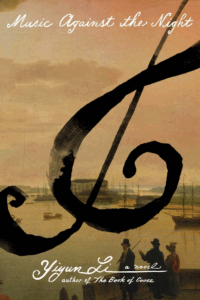 Kevin Power’s review of Yiyun Li’s Music Against the Night begins with a provocation about historical fiction. Philip Hensher argues in A History of the Novel in Britain that historical novels rarely endure: even celebrated examples can lose out to fiction about contemporary life. Walter Scott’s standing beside Jane Austen is one pointed illustration. But Hensher’s claim doesn’t mean readers should distrust their present pleasures. Posterity, as Gore Vidal put it, is “a permanent darkness where no whistle sounds.”
Li makes that uncertainty about literary survival part of her novel’s subject. Power says the book resists the familiar costume-drama version of historical fiction; Li’s attention is directed instead toward art, history and the lives people make within them. The review also touches on Li’s own writing about the suicides of her sons, Vincent and James. The novel’s brief reflection on a child’s death feeds into a broader meditation on the tension between life’s passions and art’s cool demands. Its narrator observes that death rewards minor artists, while conveying life takes major talent. Power’s verdict is concise: Li has it.
–Kevin Power on Yiyun Li’s Music Against the Night (The Guardian)
What a life can—and can’t—explain
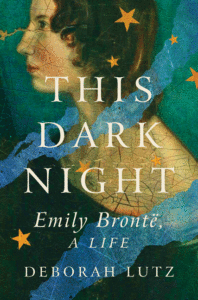 Sarah Chihaya was wary of another attempt to make Emily Brontë legible. Elizabeth Gaskell described Brontë as happiest on the moors and hostile to strangers; Charlotte’s account helped shape the image of her sister as a wild, almost otherworldly genius. Brontë herself seemed to guard her privacy, even withholding her real name from readers.
Deborah Lutz’s biography, This Dark Night, earns Chihaya’s approval by resisting the urge to solve that mystery. It asks questions rather than filling gaps with confident explanations. Some readers may want more new facts; Chihaya finds the book’s restraint a strength. Lutz doesn’t turn Brontë into a modern figure with familiar feelings and motives. She places her in the particular world that shaped her, while accepting that a person remains partly unknowable. Chihaya finishes without feeling she knows Brontë better, but with a clearer sense of Brontë’s surroundings and the terrain beneath her writing.
–Sarah Chihaya on Deborah Lutz’s This Dark Night: Emily Brontë, A Life (The Nation)
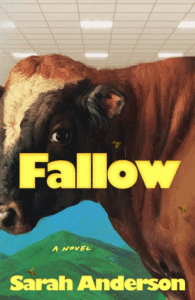 Sarah Anderson’s Fallow operates in the uneasy territory between science fiction and the near future: a recognizable present shaped by surveillance capitalism, where a premise can feel plausible enough to make you hope nobody powerful gets ideas. Anna Louie Sussman sees this kind of speculative fiction as especially suited to feminist concerns. The worst-case scenario doesn’t need much invention when real political proposals can already set the imagination running.
Anderson’s novel puts surrogacy inside the broader machinery of American work. Rather than treating it as a single, inherently exploitative arrangement, the story asks who holds power and how that balance changes. Natalie’s experience shifts as her relationships develop: a job that begins under unequal conditions can become a relationship shaped by respect and consent. Her changing view of work follows the same arc, from labor as extraction toward work grounded in interdependence.
That’s a more complicated argument than the usual dystopian warning about forced pregnancy. Sussman connects it to feminist calls for wages for housework and other forms of “life-making”—care, cooking, cleaning and raising children, work still done overwhelmingly by women and often treated as a private act of love rather than labor. Fallow points its sharpest criticism at employers and an economy that disregards workers, rather than at Natalie’s choice of work.
–Anna Louie Sussman on Sarah Anderson’s Fallow (The New Republic)
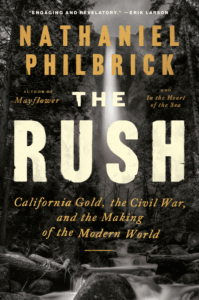 Kathryn Schulz describes Nathaniel Philbrick’s The Rush: California Gold, the Civil War, and the Making of the Modern World as a crowded history, full of people and claims. Two ideas organize it. California’s gold discovery triggered a struggle over wealth, land, labor and power that helped bring on the Civil War and shape its outcome. But Philbrick’s deeper point, Schulz argues, is that the rush itself mattered more than the metal.
The speed of the westward flight—Nantucket whalers among those who abandoned their lives to head for California—signals a distinctly American hunger for novelty and transformation. Philbrick traces that appetite from the forty-niners to the planned Anthropic IPO. The comparison makes the book’s reach clear: its subject is not only a nineteenth-century gold rush, but the national impulse to chase what comes next.
The most persuasive case for Nathaniel Philbrick’s The Rush may be that it doesn’t need to prove the Gold Rush invented the modern world. Its account of what people do when extraordinary wealth seems within reach is compelling enough on its own.
When history doesn’t need to explain the present
Philbrick tries to connect the California Gold Rush to the world we inhabit now: a society racing toward the next big thing, built, he writes, in 1849. The parallels with today’s A.I. boom are easy to spot. Early arrivals can reap huge rewards; infrastructure promises riches; political disorder, environmental damage, and inequality follow. But parallels don’t establish that one era caused the other. The book offers little to show that the Gold Rush drove today’s breakneck pursuit of technology, or that the impulse is uniquely American. Australians, French, Chinese, and Chileans also abandoned their lives to seek California gold.
Here’s the more convincing explanation: when people see a chance at immense wealth, they tend to move toward it, compete, cheat, boast, devise new ways to extract value, impose rules, break them, and use whatever means they can to gain an advantage. Philbrick’s book is strongest when it follows that scramble through the particular people who encouraged it, resisted it, recorded it, or sometimes prevented it.
The gaps in the record
Those people make The Rush a pleasure to read, though some feel more essential than others. Historical documents also distort the picture: what survives can magnify some lives and leave others barely visible. Philbrick recognizes that problem. More than 10,000 Chinese workers helped build the transcontinental railroad, yet no diary or letter from any of them has ever been found. Their own account of California is missing from the record.
Even so, the book is limited more by the material it includes than by those absences. Its two central ambitions—tracing a historical cause and explaining a modern cultural impulse—don’t sit easily together. Philbrick keeps widening the story into something less tidy and more absorbing: California from 1848 to 1878. Those decades were thrilling, brutal, and consequential. They don’t need to serve as a neat origin story for the present to deserve our attention.
The past can illuminate current events, but it doesn’t have to justify itself by doing so. Sometimes its value lies in the people and upheavals it lets us see. History, like gold, can be abundant and hard to reach. Sometimes that’s reason enough to look.
–Kathryn Schulz on Nathaniel Philbrick’s The Rush: California Gold, the Civil War, and the Making of the Modern World (The New Yorker)