Mike Flanagan’s Netflix Horror Run Set a Halloween Standard No One Has Replaced
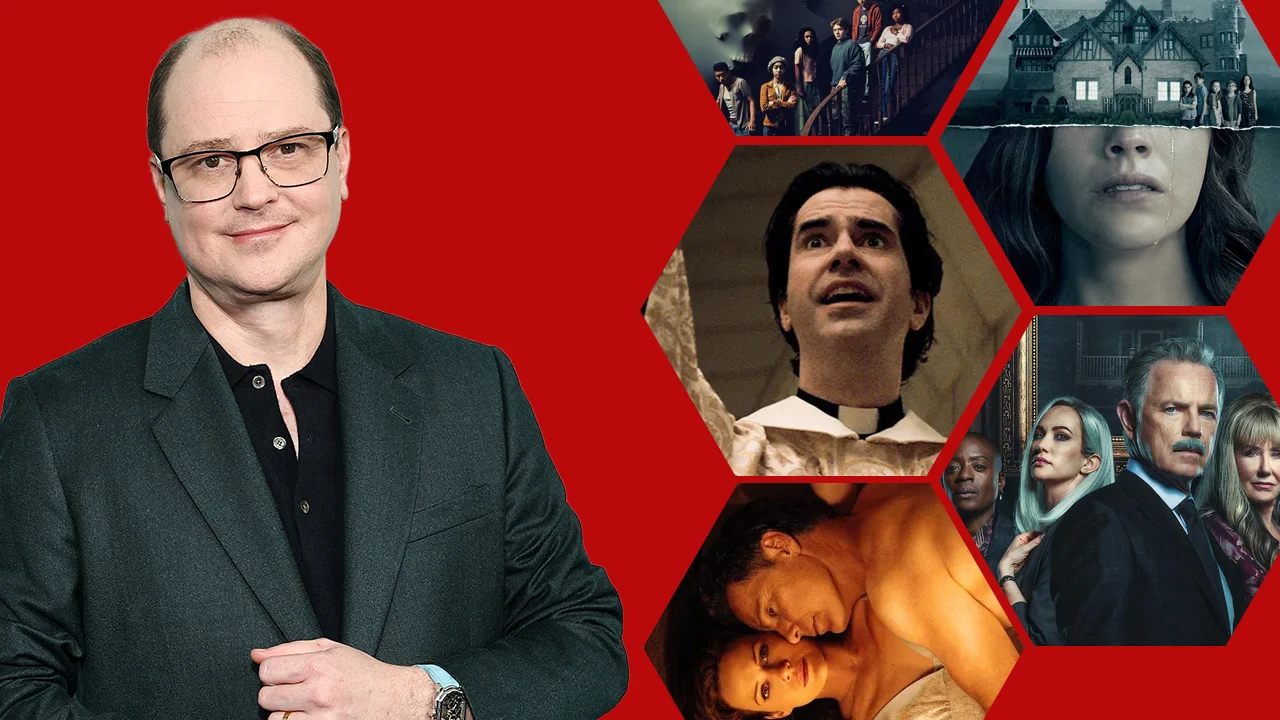
Picture Credits: Getty Images / Netflix
Netflix didn’t just lose a horror director when Mike Flanagan’s deal ended. It lost a dependable autumn event: a new, distinctly authored story arriving around Halloween, with family pain and moral unease at its center. Three years after The Fall of the House of Usher, the service has yet to establish a series that fills that same place in its seasonal slate.
That absence stands out because Flanagan’s Netflix work was varied. His films included a home invasion thriller, a Stephen King adaptation, and a family story built around a child’s dreams. His series shifted between haunted-house drama, a vampire tragedy, young adult horror, and an exuberant Poe remix. The connective tissue wasn’t a single monster or formula. It was his interest in how people carry grief, guilt, faith, and old wounds.
Flanagan has since moved to Amazon Prime Video, where he adapted Carrie and co-wrote Clayface. His Netflix deal expired after a run that produced a substantial body of work. The question isn’t whether every title reached the same heights. It’s why no other filmmaker has matched the combination of regular releases, a recognizable point of view, and stories built to linger beyond their scares. For context on his move between streamers, see the history of Netflix output and first-look deals.
A run built on range
Hush, released in 2016, established a leaner side of Flanagan’s work. The 81-minute film, co-written by and starring Kate Siegel, follows a deaf writer facing a masked intruder at her secluded home. Its compact setup leaves little room for detours, and the tension comes from the practical problem at the story’s core: how can someone who can’t hear protect herself from an attacker who knows the house? The result is closer to a stripped-down thriller than the more expansive, grief-haunted stories that would define his later Netflix series.
The film left Netflix in 2023 and later returned as part of the service’s Halloween programming alongside titles including Oculus. That kind of movement can make a library harder to navigate, but it also shows how useful these films remain when the calendar turns to October. Hush works as a quick, taut counterpoint to Flanagan’s longer projects, and it pairs well with the home-invasion tension of Audrey Hepburn’s Wait Until Dark. A broader look at the filmmaker’s work is available in this ranking of Flanagan’s films and series.
His 2017 adaptation of Stephen King’s Gerald’s Game took an even more confined premise and made it psychologically expansive. Carla Gugino plays a woman left handcuffed to a bed after her husband dies during an attempt to rekindle their relationship. The setup could easily have become a mechanical survival exercise. Instead, Gugino’s performance and Flanagan’s close attention to character turn the room into a place where memory and fear press in as forcefully as physical danger. It also signaled a productive partnership with King’s work: the terror matters, but the people trapped inside it matter more.
Before I Wake, filmed before its 2018 U.S. release, arrived after a prolonged delay tied to Relativity Media’s bankruptcy. Netflix distributed it in the United States four years after production. Thomas Jane and Kate Bosworth play a couple who foster a child whose dreams bring a threatening presence into their home. The movie didn’t attract the attention of Flanagan’s better-known work, but its focus on a fractured family anticipates themes he would later develop at greater length. Its PG-13 approach also gives younger horror viewers a gentler entry point into his filmography.
October became Flanagan season
The Haunting of Hill House changed the scale of his Netflix work. The 10-episode 2018 series takes only a loose starting point from Shirley Jackson’s novel, then builds its own portrait of the Crain family. Ghosts and death pull the estranged siblings back toward one another, while the series treats their ordinary regrets and relationships as the real source of dread. Its formal set pieces—including an audacious extended take in a funeral home—are memorable, but the emotional architecture is what gives them weight. The series can make viewers mourn as readily as it makes them scan a dark room for something hiding in the frame.
That combination made Hill House the clearest expression of what a Flanagan Halloween release could be: polished genre storytelling with enough human detail to work as drama even if the supernatural elements were stripped away. Its reception helped turn October into an informal appointment for the director’s fans.
The follow-up, The Haunting of Bly Manor, arrived in 2020 as a nine-episode adaptation drawing on Henry James’s The Turn of the Screw and other stories. It wisely avoided trying to reproduce Hill House beat for beat. Instead, the series moves at a quieter, more existential pace, with careful craft and a different emotional emphasis. For some viewers, its scares and character drama don’t hit as hard as its predecessor. That uneven response is part of the point: Flanagan’s seasons weren’t interchangeable installments in a fixed franchise. More on the show’s stories and ending appears in this look at Bly Manor and the future of The Haunting.
With Midnight Mass in 2021, Flanagan delivered one of his strongest works. The seven-episode story centers on a small seaside town where a new religious fervor accompanies a wave of vampirism. Its echoes of King’s ’Salem’s Lot and Revival are clear, but the series develops its own tragic shape. Faith, community, and the desire to believe collide with fear and violence. Long conversations give the characters room to reveal themselves; the supernatural threat gives those conversations terrible stakes. It’s an intimate story with the sweep of a biblical warning.
The Midnight Club shifted toward a younger audience in 2022. Co-created with Leah Fong and based on Christopher Pike’s novels, the 10-episode series follows terminally ill teenagers at a hospice who meet at night to tell scary stories. Its sincerity and premise set it apart from Flanagan’s adult-focused work, though it proved divisive and Netflix didn’t renew it. The unresolved mysteries prompted Flanagan to publish answers online, a sign of how much story he had planned beyond the first season. The cancellation left that work outside the series itself.
His final Netflix series, The Fall of the House of Usher, arrived in 2023. Across eight episodes, Flanagan uses Edgar Allan Poe’s stories to build a lavish family saga around the Ushers. It’s darker and more openly playful than Hill House or Midnight Mass, with grand speeches and gothic spectacle sharing the frame. Bruce Greenwood’s lemon-squeezing monologue captures the show’s appetite for theatrical excess. The series made a fitting finale: less a return to one established style than a demonstration of how much room Flanagan could find inside horror.
What Netflix lost with the final season
From 2018 through 2023, with one year off, Netflix released a new Flanagan series each fall: Hill House in October, Bly Manor in October, Midnight Mass in September, then The Midnight Club and Usher in October. That cadence gave viewers a reason to associate the service with a particular kind of seasonal horror. It wasn’t a promise that every show would be a hit. It was a reliable creative signature, and that can matter as much as a single breakout title.
Netflix has offered other kinds of October horror. Fear Street: Prom Queen, for instance, caters to teen slasher fans rather than viewers looking for Flanagan’s gothic family dramas. Guillermo del Toro looks like a natural fit for the streamer’s horror slate: his work shares a fondness for classic monsters and creatures with emotional lives. Cabinet of Curiosities arrived in October 2022 as an anthology, and Frankenstein became one of Netflix’s most lavish horror films. But the latter played in theaters first and reached Netflix in November, while del Toro’s film schedule and the uncertain future of a second Cabinet season don’t provide the same annual rhythm. See Netflix’s announced del Toro projects, the Cabinet of Curiosities season update, and this review of Frankenstein. The film drew 29.1 million views in its first week, but its November arrival missed the Halloween window.
Netflix’s challenge is less about finding a director who resembles Flanagan than finding a body of work that creates its own seasonal appointment. His output combined distinct stories with recurring performers, recognizable themes, and a steady release pattern. Not every title was a major audience hit, but the work was widely acclaimed, and each new season gave October a point of view. Until another creator builds that kind of connection with the month, Flanagan’s Netflix catalog remains the service’s closest thing to a Halloween tradition.
For a look at what Netflix has scheduled for the season, see its Halloween release list. The slate may keep growing, but a calendar full of horror titles isn’t the same as a creator whose return becomes an event.