Netflix’s Engagement Problem May Come Down to Fewer Releases
Photo by Samuel Boivin/NurPhoto via Getty Images
Netflix’s engagement challenge may have less to do with how it releases shows than with how often it gives subscribers a reason to open the app. The familiar prescriptions—more prestige projects, wide theatrical runs and weekly episodes—address the shape of the slate, but the available viewing data points toward a simpler issue: Netflix has sharply reduced its output.
That argument has sharpened after the departures of Chief Content Officer Bela Bajaria and film head Dan Lin, which prompted a wave of commentary about how the company should reinvent itself. Yet the metric hanging over those debates is engagement. Netflix’s semiannual reports showed viewing hours growing just 2%, according to figures tallied by Bloomberg’s Lucas Shaw. Other data has also suggested subscribers open the service less often and spend less time there.
Those signals make the size and rhythm of Netflix’s release slate a strategic question, not just a programming preference. The evidence presented here challenges three popular fixes and makes the case that restoring more frequent releases could do more to lift viewing than changing format or chasing prestige.
Prestige scores don’t explain what people watch
The call for Netflix to trade volume for “quality” treats those goals as opposites. But the service has already cut back on original production, particularly in the United States, over the past two years. In U.S. feature films, the reduction has been steep: Netflix released 63 in 2021 and had released 23 so far in 2026 at the time of the analysis. The slate was expected to rise to just above 30 after the holiday releases.
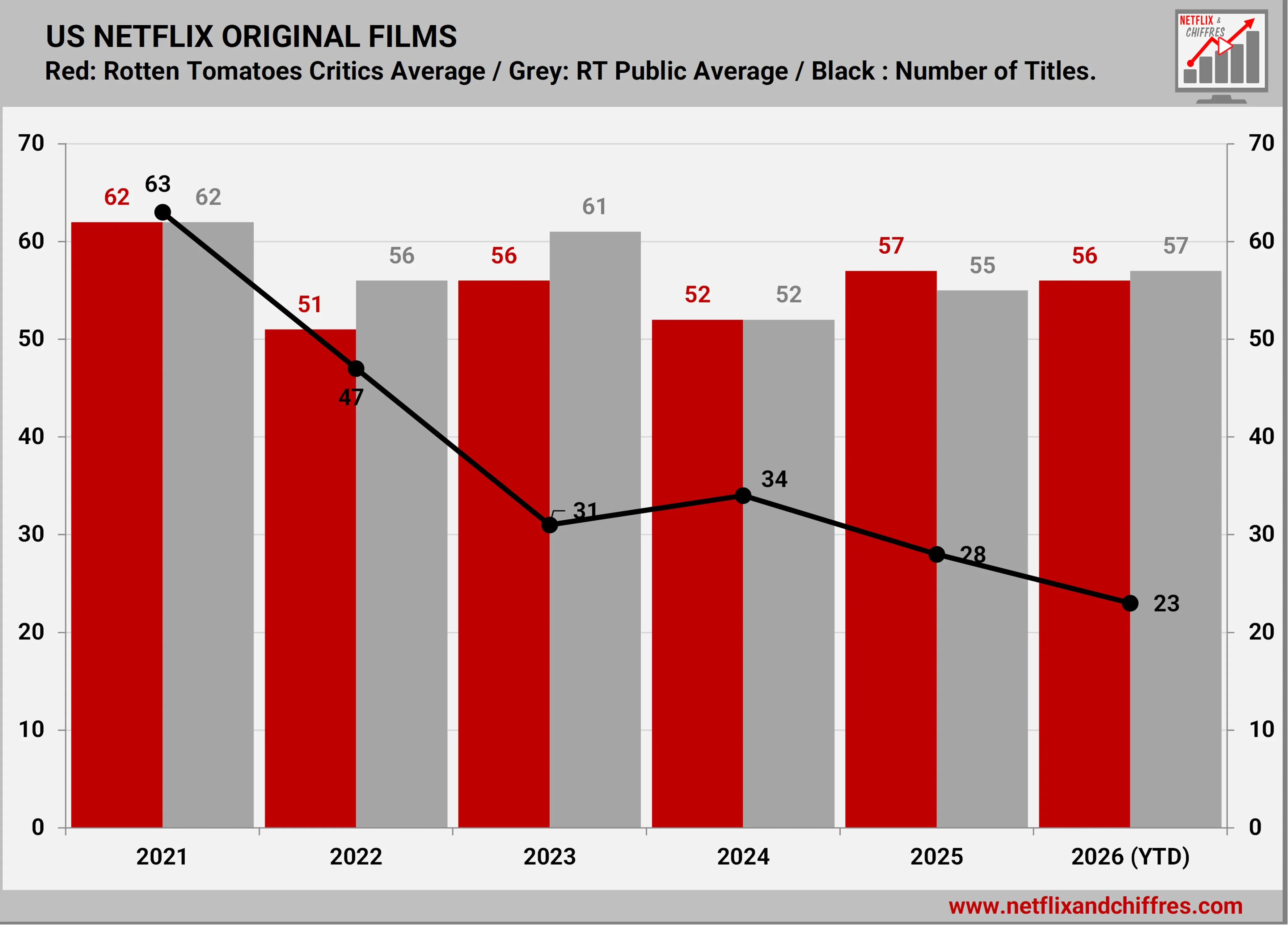
Rotten Tomatoes scores offer one way to compare critical and audience responses, though neither rating captures the full picture of a film’s performance. The article’s comparison finds no meaningful rise in those scores to match the decline in output. Even modest improvement over the past two years has left the slate below its 2021 peak.
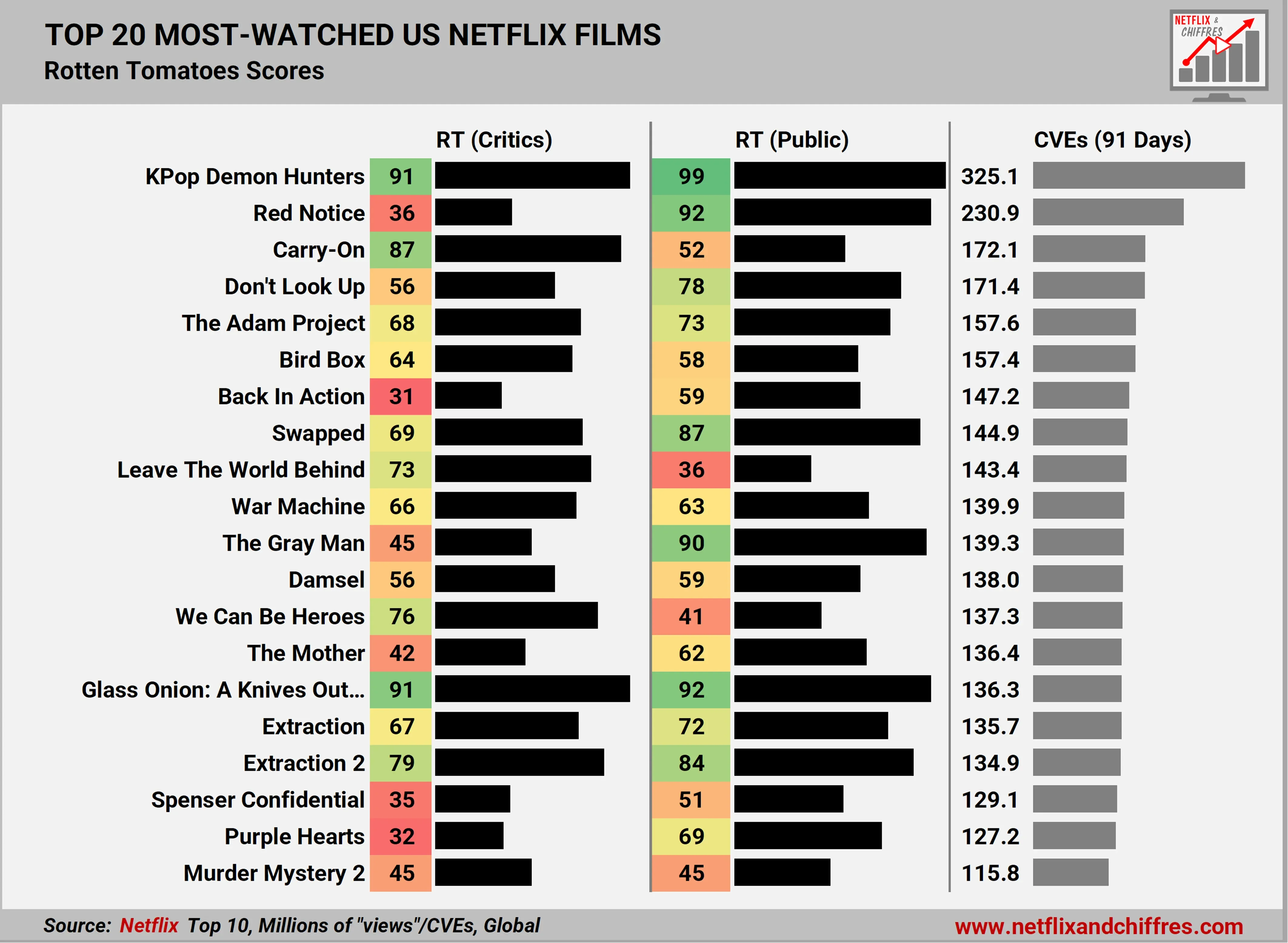
The most-watched titles make the disconnect clearer. Among Netflix’s all-time top 20 films, ranked by views in their first 91 days, critic scores don’t appear to dictate viewing. KPop Demon Hunters appealed to both critics and audiences. But Red Notice, ranked second, earned a 92% audience score despite a much lower critics’ rating. Across the list, the average Tomatometer score was 60%, compared with 68% from audiences.
That doesn’t make critical acclaim irrelevant. It does suggest that prestige alone won’t reliably produce the viewing hours Netflix needs. The article’s example from this year is Color Book, described as the slate’s critical standout, yet one of its least-watched films during its first 14 days on the service.
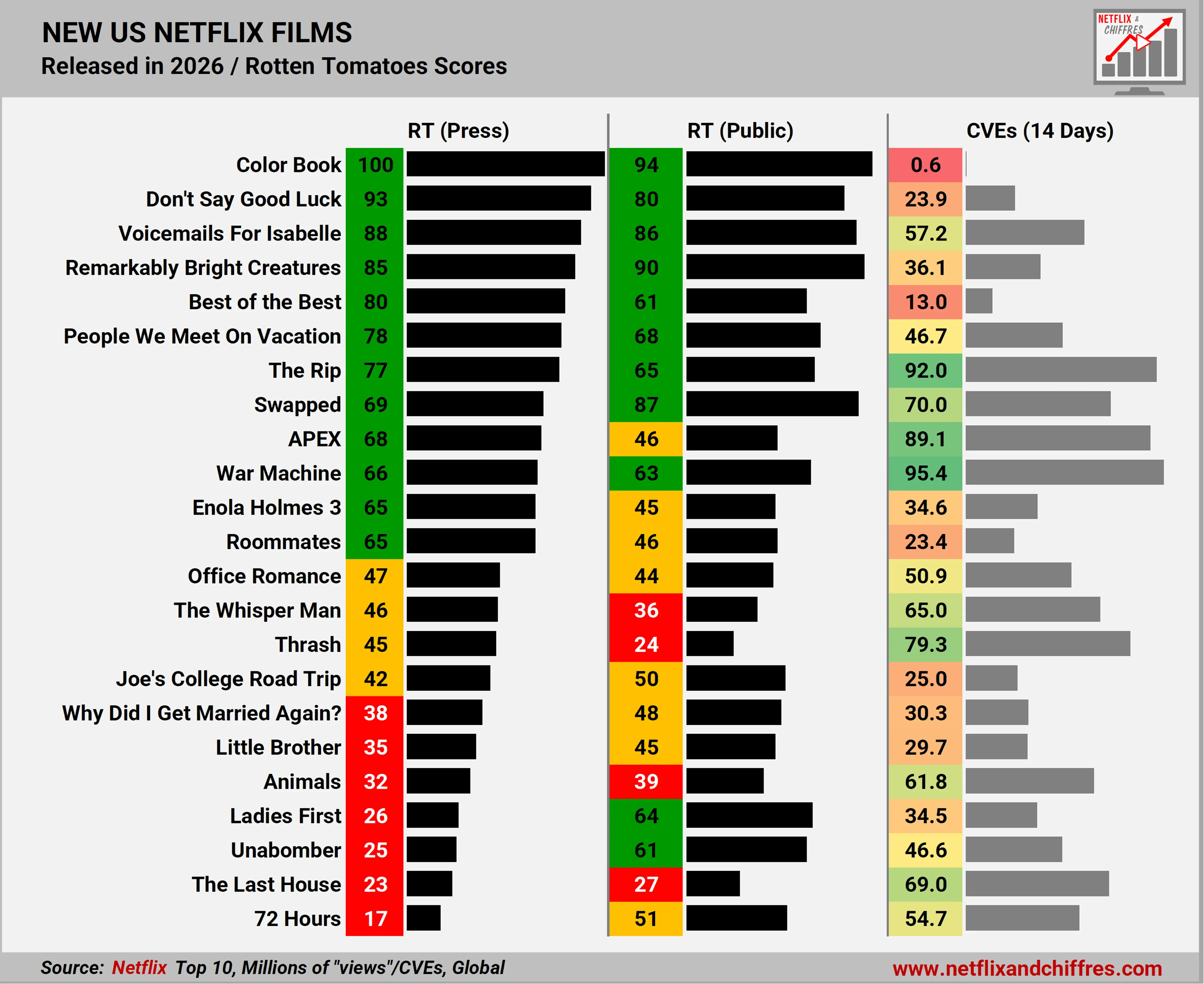
The practical takeaway is that Netflix needs to distinguish among critical response, audience sentiment and actual viewing. They can overlap, but the cited examples show they don’t always. For an engagement problem, the number of people who press play matters more than a high review score by itself.
Theatrical releases offer limited help on streaming
Calls for Netflix to send films to cinemas usually rest on two claims: theaters represent a meaningful source of revenue, and theatrical exposure improves a film’s later streaming performance. The viewing comparisons in the article weaken the second claim, especially for films whose appeal depends on being new to the service.
Netflix co-CEO Ted Sarandos has said originals perform particularly well on the platform, with family and animated films standing out for views and repeat viewing. That helps explain the planned theatrical releases of the next Narnia film and an animated Charlie and the Chocolate Factory film at the end of 2027, with KPop Demon Hunters 2 also a likely candidate.
Among the 20 most-watched new streaming films in the U.S. this year, eight had theatrical releases; five were animated. The three live-action theatrical titles drew fewer views than originals released on Netflix or Amazon Prime, according to the article’s comparison.
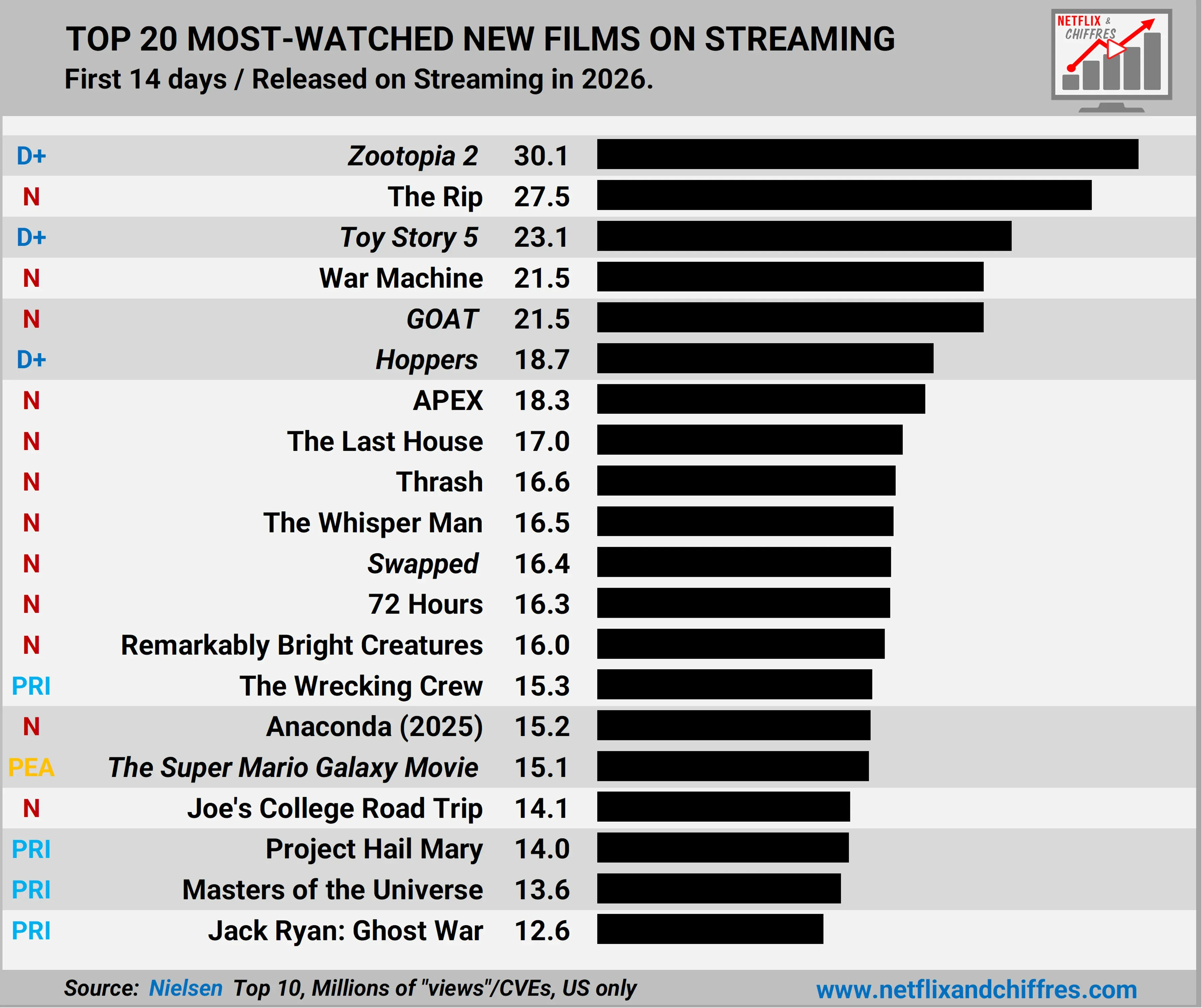
The argument is that a theatrical window can drain some of the freshness that drives an initial streaming launch. On that basis, a film such as KPop Demon Hunters 2 might generate more streaming views with a direct debut than after a 45-day cinema run, even if its theatrical performance were strong. That’s a forecast, rather than a measured result, but it highlights the tradeoff Netflix would need to weigh.
Theatrical exposure may make sense for certain kinds of films. Animated features can draw repeat viewing, while prestige titles often get limited runs. But the article argues those releases aren’t a general engagement fix: prestige films tend to produce comparatively few streams, and the data cited doesn’t show that theatrical titles consistently outperform streaming originals once they reach a platform.
The revenue case also looks modest beside Netflix’s scale. The article estimates that even if Netflix captured every U.S. movie ticket sale in a year when the box office reached $10 billion, the result would increase its annual revenue by 10%. In the first half of the year covered, Universal reported $1.089 billion in worldwide theatrical revenue, Paramount $290 million and Sony $180 million. Netflix reported $24.8 billion in revenue and $8.6 billion in profit over the same period.
The box office can add revenue, but the figures suggest it wouldn’t transform Netflix’s financial profile. It also carries unpredictable outcomes. The article cites a Page Six report that Warner Bros. Discovery’s 2026 theatrical slate was projected to lose $800 million after a record year in 2025. A theatrical strategy could therefore add exposure to results Netflix can’t control as closely as its subscription releases.
Weekly episodes extend attention; they don’t create it
Weekly release schedules are another recurring answer to engagement slumps, particularly when a show’s second season draws fewer viewers. The theory is that weekly episodes sustain conversation for longer. But duration of attention and total attention aren’t the same thing: a schedule can spread existing interest across more weeks without adding new viewers.
Netflix and Peacock continue to use all-at-once releases for major scripted series. Prime Video often combines approaches, releasing a first season at once before using weekly episodes for established properties. Disney+ has also tested both binge releases, including Wonder Man, and shorter weekly bundles. Paramount+ has experimented with binge drops as well.
That shifting mix matters because it shows that the industry hasn’t settled on weekly releases as a universal answer. The article’s comparison also points out that HBO Max and Apple TV+, which rely more heavily on weekly schedules, don’t dominate monthly Nielsen Gauge viewing share. Episode timing can shape how long a show stays in the conversation, but it can’t manufacture interest in a title viewers don’t choose.
There’s a separate question about gaps between seasons. A shorter wait might help keep viewers attached to a middling show, while a binge release may reduce drop-off within a season by making the next episode immediately available. Neither point, however, establishes weekly scheduling as a broad solution to Netflix’s overall viewing slowdown.
More releases could restore reasons to return
Former Netflix CEO Reed Hastings offered a compact description of the company’s task in a podcast conversation with Kara Swisher: “I think the strategy is doing more and better television shows, more and better movies. The core brand property is about being thrilling. We realized, it took a long time, that we could be distrusted, we could be disliked, but we can never be boring, OK? That the essence of an entertainment brand is to be thrilling.”
The emphasis on “more” points to what the article sees as Netflix’s central problem. In 2021, the company was announcing an American film each week. Now, its pace is closer to one or two a month. A larger slate wouldn’t guarantee better work or a hit every time. It would give Netflix more chances to find successful titles, test unusual formats and offer subscribers more reasons to return throughout the week.
The examples of experimentation include Kaleidoscope, which allowed viewers to watch episodes in different orders, and Choose Love, which let viewers select the ending. Those releases also show why volume matters beyond filling a calendar: a broader slate gives the company more room to try ideas with uncertain appeal.
Netflix isn’t alone in facing the consequences of fewer originals. The article draws a parallel with Disney+, which has also cut production. For a service with 325 million subscribers and ambitions to approach a billion users, a handful of major U.S. releases each month may not provide enough weekly prompts to watch. Fewer titles mean fewer chances for a breakout and, in straightforward terms, fewer opportunities to accumulate viewing hours.
The pullback followed a period of market pressure. Netflix lost 200,000 subscribers in the first quarter of 2022, its first net subscriber decline, largely tied to its withdrawal from Russia. The article says investor concern about content spending relative to revenue growth had already been building. Netflix then cut its slate sharply, embracing “less but better.” The argument now is that this response may have gone too far.
Producing more costs money, and the hard question is what level of spending investors will accept if growth slows. But holding production down carries its own cost if engagement remains near 2% growth and subscribers have fewer reasons to open the service. Netflix’s next content decision is therefore less about choosing prestige, theaters or weekly episodes as a universal strategy. It’s about finding a release volume that can keep the service lively without losing financial discipline.
For Netflix, the next test is whether a fuller slate can produce more viewing and more hits at a sustainable cost. The data cited here doesn’t promise that outcome. It does suggest that reducing the number of releases has narrowed Netflix’s opportunities to earn attention.