Beat Luke Littler Tops Netflix Charts as Fallon Sherrock’s Win Fuels Sequel Talk
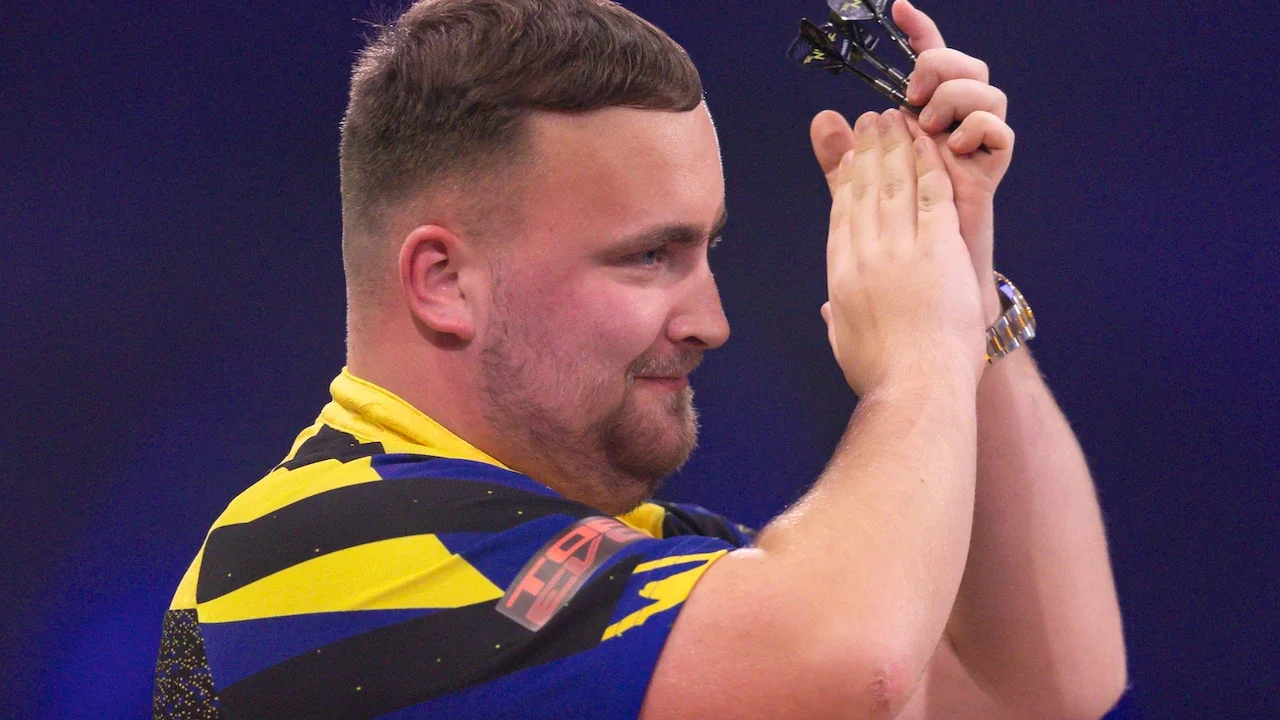
Picture Credit: Netflix
Netflix’s first live darts show found its clearest hook in the result that also exposed its biggest format problem. Fallon Sherrock beat Luke Littler in one leg to claim £501,000, turning a long run of one-sided matches into a finish people were still arguing about two days later. Early viewing data points to a strong UK launch, and Littler has already floated the idea of doing it again in 2027.
The event, Beat Luke Littler, was billed around the prospect of an ordinary player taking down one of darts’ biggest names. But the eventual winner was a highly accomplished competitor, and the gap between that marketing premise and the field’s actual experience drove much of the post-show debate. Here’s the tension for Netflix: the format generated attention, but the same uncertainty about who counted as a credible challenger made its prize and rules feel contentious to some viewers.
Netflix first announced the special in July, covered in our announcement report, and the contestants had already attracted criticism before the broadcast, as detailed in our coverage of the line-up backlash.
A quick format, then a sudden finish
Gary Lineker hosted from Manchester Central. Richard Osman, Lee Mack and Laura Turner joined the panel, while Angry Ginge moved through the crowd. The rules were simple: each challenger had one leg of 501 to beat Littler, with a £501,000 prize for anyone who managed it. That compact setup kept the show moving and gave each attempt a clear, high-stakes endpoint.
Littler won the first 14 legs. Among those challengers was Jayden Walker, a 14-year-old who had beaten Luke Humphries in an exhibition at 12. Littler finished Walker in 12 darts with a 158 checkout. “I couldn’t give him a chance,” Littler said afterward.
Several other challengers had little room to build momentum. The field included a bin man, a Nando’s manager and an Australian jockey. The Telegraph described them as “lambs to the slaughter,” a sharp summary of how the run of matches looked once Littler began dispatching opponents without much trouble.
Pearse Mackle came closest before Sherrock. The 21-year-old student from Cavan had a dart at the bull for the prize, but missed by a few inches. “You’re a bit sickened,” he said. Five challengers, among them WDF world number one Mitchell Lawrie, didn’t get to play.
Sherrock changed the evening in one leg. She won the bull, scored a 180 and watched Littler leave himself 142 after a 140. She missed her first dart at double 20, then landed the second. The 15-dart finish made her the only challenger to beat Littler and secured the full £501,000.
Sherrock’s win put the casting question back in focus
Sherrock’s result intensified the criticism around the field because some viewers expected the show to feature amateurs, while she is an established player. She addressed the response directly in comments to Sky Sports: “I do see the backlash and I do see all the negative comments.” She said she was “just so happy to overcome all the hate and win.”
Barry Hearn also defended the result after a viewer called the show “an absolute con.” Hearn replied: “Fallon is not a PDC professional. Worthy winner of a life-changing amount of money.” His response drew a wave of negative reactions on the platform.
The criticism doesn’t erase what worked on screen. The Telegraph called the production well made and unusual, even as it argued that the premise undermined the show. The broadcast was brisk and didn’t take itself too seriously; Osman’s dry response to one of Lineker’s many dad jokes supplied a welcome moment of levity.
But the promotional pitch raised expectations that the contest didn’t quite meet. The idea of a “pub player” taking on a champion suggested a field of casual players. What viewers saw was a mix of challengers with varying levels of skill, followed by a win from a familiar, accomplished darts player. The format left enough ambiguity to make Sherrock’s victory both a compelling television moment and a source of dispute.
If Netflix brings the special back, the entry rules will shape how the next edition is received. A wider open field with recognizable players would make the range of ability part of the proposition. A strict amateur-only approach would deliver a different kind of contest. This first version sat between those choices, and the unclear boundary became part of the story.
Early chart data shows a strong UK debut
Netflix’s global weekly top 10 for October 27 to November 2 was due on Tuesday, so a full viewership picture wasn’t yet available. The early figures here come from FlixPatrol’s daily country rankings for October 31, the show’s first full day.
| Country | Oct 31 Rank |
|---|---|
| United Kingdom | 1 |
| Ireland | 2 |
| Belgium | 4 |
| Netherlands | 4 |
| Croatia | 6 |
| Finland | 6 |
| Germany | 6 |
| Iceland | 6 |
| Austria | 7 |
| Hungary | 7 |
| Malta | 8 |
| Czech Republic | 9 |
| Denmark | 9 |
| Cyprus | 10 |
| Luxembourg | 10 |
The special charted in 15 countries that day, leading in the UK and reaching second place in Ireland. Belgium and the Netherlands also placed it fourth. On October 31, the show made the top 10 in a cluster of European markets; on the following day it remained third in Netflix UK’s daily ranking. That continued presence suggests the conversation around the result may have helped keep people watching or returning to the show.
How it stacks up against Netflix’s other live experiments
The early reach puts Beat Luke Littler ahead of two earlier one-night sports events from Netflix, though the comparisons have limits. The Netflix Cup, a Formula 1 and PGA Tour crossover held in November 2023, charted in four countries and never ranked above ninth.
| Country | Points | Days | Best |
|---|---|---|---|
| Latvia | 2 | 1 | 9 |
| Iceland | 1 | 1 | 10 |
| Norway | 1 | 1 | 10 |
| Sweden | 1 | 1 | 10 |
The Netflix Slam, a March 2024 exhibition between Rafael Nadal and Carlos Alcaraz in Las Vegas, appeared in 18 countries. Most of those chart appearances lasted a day; Spain was the exception, reaching number one and remaining in the rankings for three days.
| Country | Points | Days | Best |
|---|---|---|---|
| Spain | 20 | 3 | 1 |
| Bulgaria | 6 | 2 | 7 |
| Egypt | 6 | 1 | 5 |
| Venezuela | 6 | 1 | 5 |
| Paraguay | 4 | 1 | 7 |
| Portugal | 4 | 1 | 7 |
| United States | 4 | 1 | 7 |
| Argentina | 3 | 1 | 8 |
| Canada | 3 | 1 | 8 |
| Mexico | 3 | 1 | 8 |
| Bolivia, Costa Rica, Ecuador, France, Israel, Morocco, Panama, Slovenia | 1 | 1 | 10 |
Neither the Cup nor the Slam made Netflix’s global weekly top 10. Netflix’s engagement figures for their respective reporting periods were 1.7 million hours and 700,000 views for the Cup, and 2.6 million hours and 1 million views for the Slam.
On the available daily rankings, Beat Luke Littler has had a stronger launch than either event. Its 15-country footprint matches the Slam’s broad reach, while its top placements in the UK and Ireland give it more depth in its core market. That makes it one of Netflix’s strongest live sports experiments so far. The clear outlier remains Jake Paul vs. Mike Tyson, which ranked first in 78 countries and entered the top 10 in all 91 markets, with 46.6 million views in its opening window.
Those figures set a different scale from a UK-focused darts show. The immediate measure of success is its first-place UK ranking over Halloween weekend; the weekly chart, due Tuesday, will show whether that translated into broader sustained interest. A place on Netflix’s global English-language TV list would mark a notable result for this kind of one-off event.
Littler’s 2027 comment puts a sequel in play
Netflix hasn’t announced another edition, but Littler’s post-show comments have already put a potential return into the conversation. He said he enjoyed “every bit of it,” then added: “Yeah, maybe Netflix; we can do it again next year.”
There are reasons the idea could appeal to both Netflix and the PDC, which co-produced the show. Netflix has several major sports properties, including NFL Christmas games, boxing, and the 2027 Women’s World Cup, but the source article describes a gap for a recurring live sports event made in the UK. The PDC has a global expansion agenda and a young star in Littler whose profile continues to rise.
The first special also generated sustained discussion, helped by Sherrock’s upset and the debate over whether she belonged in the field. That attention is part of the event’s value as entertainment, even if the rules and casting need a clearer explanation next time. For now, the numbers are promising in the UK, the final global weekly data is still pending, and Littler has offered Netflix an easy opening for a sequel. The next edition’s format may matter as much as its headline matchup.