Patrick Stewart’s Final Film Roles Reflect a Career Without Bounds
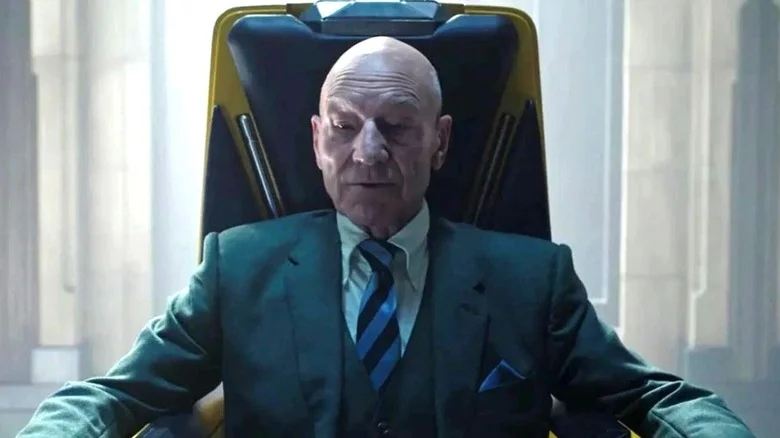
Patrick Stewart’s final film roles put two very different parts of his career side by side. In “The Sheep Detectives,” now available to watch at home, he voices Sir Ritchfield, a conservative elder among a flock of sheep investigating a murder. His final movie role is set to be Professor Charles Xavier in “Avengers: Doomsday,” scheduled for release on December 18, 2026. One part is whimsical and eccentric; the other returns him to a character he played across 26 years of “X-Men” films. That span, and the distance between the roles, captures what made Stewart’s career so distinctive: He could make authority feel natural, then turn that same quality into comedy.
Stewart died on Wednesday, October 28. The contrast between these last two performances is a fitting frame for an actor whose best-known characters carried authority, but whose work ranged far beyond that image. Xavier, whom many regard as one of the great comic-book castings, drew on Stewart’s command and quiet intensity. Sir Ritchfield asks for a different touch, as part of an ensemble voice cast that includes Julia Louis-Dreyfus, Bryan Cranston, Chris O’Dowd and Regina Hall. Hugh Jackman, Stewart’s “X-Men” co-star, plays the flock’s shepherd and the murder victim. The pairing gives audiences a compact reminder of his range, even if the two films ask very different things of him.
A career built on range
Long before audiences knew him as Xavier or Captain Jean-Luc Picard, Stewart established himself on stage and screen. From the 1960s through the 1980s, he was a leading performer with the Royal Shakespeare Company. He also appeared in BBC miniseries, including “Fall of Eagles” in 1974, where he played Vladimir Lenin, and the 1976 adaptation of “I, Claudius,” in which he portrayed the Roman soldier Sejanus. Those roles put him in material where language, control and presence matter; they also make clear that his career didn’t begin with science fiction or superhero stories.
“Star Trek: The Next Generation” made him a household name after he took on Picard in 1987. He returned to the role for the final time in the third season of “Star Trek: Picard” in 2023. The character’s composure and moral seriousness helped define Stewart’s screen presence, but they never limited the kinds of performances he could give. Picard’s restraint could read as thoughtful leadership, while in other contexts Stewart’s formal delivery could become a source of absurdity. That flexibility is easy to overlook when one character becomes so closely associated with an actor.
Comedy behind the gravitas
Stewart often put his dignified voice to comic use. Seth MacFarlane, a devoted “Star Trek” fan who went on to create the Trek-inspired series “The Orville,” cast him repeatedly as Avery Bullock on “American Dad.” (MacFarlane’s affection for “Star Trek” also helped inspire that show.) Bullock is the CIA’s deputy director, but he’s also obscene, unstable and often ridiculous—a role that turns Stewart’s authority into the joke. The humor depends on the gap between the character’s title and behavior, and Stewart doesn’t have to abandon his familiar gravitas to make the gag land.
That comic tension is especially clear in “G-String Circus,” a Season 5 episode where Bullock spends the CIA’s leftover budget on a trip to a strip club. Handing out cash, he launches into a nursery-rhyme-style speech. Its singsong structure makes the character sound almost ceremonious, while the words steadily undercut that polish. It’s an example of how Stewart could make a ridiculous line feel deliberate rather than tossed off:
“Oh, the things you can buy with a handful of bills. It makes me excited. It gives me the chills. There'll be filch-arounds, breeders, hambones and tweeners. Zobows and debows and blobs that go "eener." For a one-dollar bill, you can pull down their zippers. I am the Snorax. I speak for the strippers!”
Stewart could make a Shakespearean stage role, a starship captain, a mutant leader and a deranged animated bureaucrat feel equally grounded. His closing films echo that range: one returns to a defining dramatic character, while the other finds room for his comic side. The lasting takeaway is how comfortably he moved between them. No single mode contains the career.

What the final roles leave behind
There’s a temptation to treat a final role as a neat summary of an actor’s life in the business. That can flatten a career into a symbolic ending, especially when one performance is attached to a familiar franchise character. Stewart’s two closing parts resist that neatness. Xavier carries the weight of a long-running screen legacy, while Sir Ritchfield points toward the comic timing and vocal control that were present throughout his work.
This is more significant than it looks. The choice to remember Stewart only as a dignified captain or mentor misses the craft that made those parts work: precision, timing and an ability to shift the temperature of a scene without changing his basic presence. (And this is the part most people overlook.) His comedy didn’t erase his authority; it gave that authority another use. Just as effective in a flock of sheep.
If you're working in film or television, Stewart’s career offers a plain lesson in how a recognizable screen persona can be a tool rather than a boundary. The voice and bearing audiences knew could support solemn drama, franchise spectacle or a joke about a strip club. And yet, those performances never felt interchangeable. His final roles leave viewers with both sides in view, and with a reminder that range isn’t always about becoming unrecognizable. Sometimes it’s about making the same qualities mean something entirely different.