Patrick Stewart’s Unusual Turn in Lifeforce, the Space Vampire Film
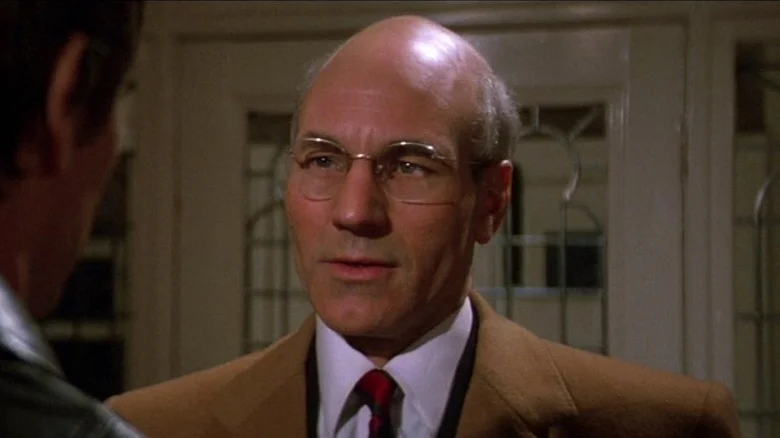
Patrick Stewart’s brief turn in Lifeforce shows what can happen when a classically trained actor meets material that refuses to stay in one genre. In Tobe Hooper’s 1985 science fiction horror film, Stewart plays a Yorkshire psychiatric hospital director caught up in a story of alien vampires, psychic links and draining life force. His performance gives one of the film’s strangest scenes an unexpected intensity.
Stewart built a varied career across stage and screen, taking on Shakespeare as well as science fiction and horror. Audiences came to know him through Star Trek: The Next Generation and the X-Men films, but his genre work also included David Lynch’s Dune, Freddie Francis’ gothic horror The Doctor and the Devils and Jeremy Saulnier’s Green Room. He rarely seemed to treat genre roles as lesser work. Stewart passed away this week, according to the source article.
Lifeforce is an especially odd entry in that filmography. Dan O’Bannon, known for Alien, adapted the script from Colin Wilson’s 1976 novel The Space Vampires. Hooper, whose credits included The Texas Chain Saw Massacre and Poltergeist, directed. The score came from Henry Mancini, while the cast included British actors Peter Firth, Frank Finlay and Michael Gothard.
Then there’s the Cannon Films factor. Producers Yoram Globus and Menahem Golan backed a film that pairs grand science fiction with practical gore and nudity. The mix can feel unruly, but that’s part of its appeal: the cast plays the premise with enough conviction to keep the spectacle from collapsing into parody. Stewart’s small role is one of the clearest examples.
A vampire story with an extraterrestrial source
The film starts with a British-American space shuttle crew investigating humanoid figures sealed in pods aboard a spacecraft inside Halley’s Comet. After the shuttle returns to Earth, commander Tom Carlsen, played by Steve Railsback, is its only survivor. The beings from the comet turn out to be space vampires, and once loose, they feed on people around London.
The lead vampire, played by Mathilda May, can take on the appearance of her victims. She also forms a psychic connection with Carlsen, giving their relationship an echo of Dracula and Mina Harker. That familiar vampire dynamic becomes something stranger when Carlsen and the authorities trace the creature to Dr. Armstrong, the hospital director in Yorkshire.
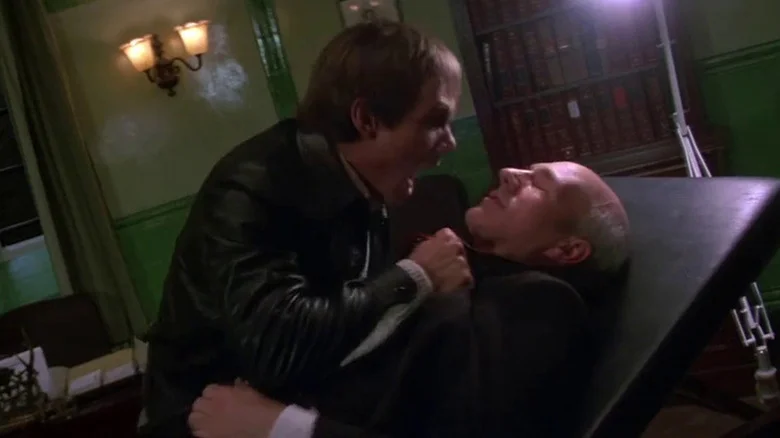
Carlsen uses his link to the vampire to force her presence into the open. What follows combines hypnosis, confrontation and seduction. Hooper makes the scene even more unsettling by blending Stewart’s voice with May’s, turning Armstrong’s speech into a sound that belongs to both characters.
Stewart and Railsback meet the scene’s shifting tone head-on. Neither actor plays it as a joke, even as the dialogue and premise push into the bizarre. Their conviction lets the scene work as tense psychodrama rather than mere camp. It’s an unusual performance challenge, and Stewart gives it the weight to hold the audience’s attention.
Stewart makes the excess feel earned
Lifeforce has had a mixed reception since its release, but its most devoted fans often point to the cast’s full commitment as a reason it endures. Hooper and Cannon appear to have aimed high, treating the film as a major science fiction spectacle. Stewart’s performance supports that ambition even when the material veers into delirium.
As Armstrong becomes a vessel for the female alien, Stewart commits to the character’s transformation without softening its awkwardness. The scene carries both homoerotic and heteroerotic tension, an uneasy blend that could easily tip into farce. Hooper keeps Stewart in frame for much of it, letting the actor’s presence anchor the encounter.
That groundwork matters when the vampire finally escapes Armstrong’s body through the blood draining from him. The effect, including an animatronic head and slow motion, risks looking silly on its own. Stewart’s performance gives the sequence a strange emotional charge, making the grotesque image feel more like part of the film’s fever dream than a stunt for shock value.
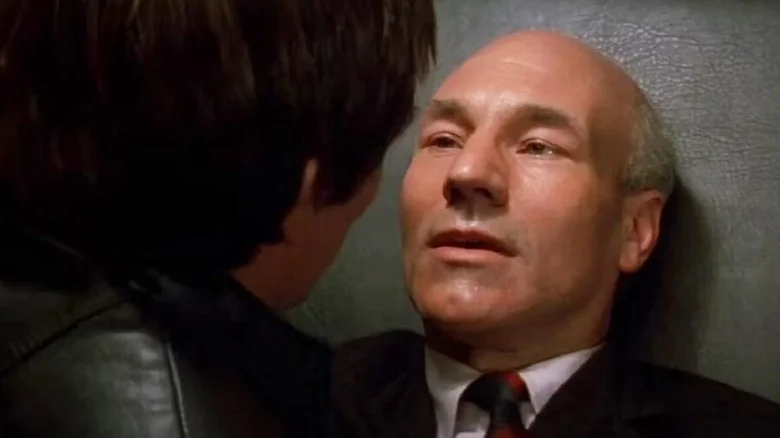
That’s the peculiar achievement of Stewart’s role: a few scenes become the hinge between Lifeforce’s serious ambitions and its outrageous imagery. His gravitas doesn’t tame the film. It makes its excess easier to believe, and gives this space vampire oddity a performance that still stands out in his genre career. Stewart’s work as Jean-Luc Picard may be more familiar, but Armstrong remains a vivid reminder of how much range he brought to genre storytelling.