Salvador Dalí’s AI Double Raises Questions About Digital Labor
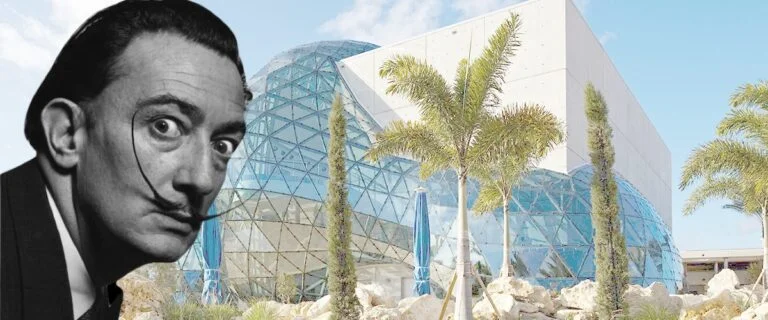
At the Salvador Dalí Museum in St. Petersburg, Florida, the artist appears on screen to greet visitors, answer questions and recount stories in a digital likeness modeled on his face and voice. Dalí died in 1989. The museum’s attraction, Dalí Lives (via Artificial Intelligence), asks visitors to treat that distinction as less decisive than it sounds: the archive of a person, it suggests, can be made to perform as the person again.
That proposition carries more weight than a clever museum gimmick. The digital Dalí is built from traces left by a living artist, then set to generate scenes and conversations that never happened. Its presence invites a question that runs through the experience: when a machine can reproduce someone’s recognizable mannerisms, what exactly has returned—and who benefits from keeping that likeness at work?
An archive made to perform
The museum’s system was trained for more than 1,000 hours using roughly 6,000 images, film frames and other media. Machine learning and digital animation reproduce details such as Dalí’s expressions, movements, speech patterns and gestures. The resulting figure is more than a projection of existing footage. It can appear in newly generated scenes, performing actions that the historical Dalí never performed.
The museum opened Dalí Lives in 2019, presenting the experience as a chance to learn about the artist from “the person who knew him best: the artist himself.” The wording gives the screen a kind of authority, though Dalí’s own writing complicates the idea that he could serve as a definitive guide to his art. He once wrote that he did not understand his pictures as he painted them, adding that their meaning was “so profound, complex, coherent and involuntary” that ordinary logical analysis could not contain it.
That tension makes the digital docent especially revealing. The system can speak with Dalí’s face and gestures, but resemblance does not grant it access to the artist’s full interior life. What it has instead is a corpus: photographs, recordings, interviews and appearances from which algorithms can infer a workable version of him. The distinction matters. The machine doesn’t recover a complete person; it assembles a performance from what survived.
The museum’s first version offered 45 minutes of newly created footage across 125 interactive videos. The possible combinations of speech and action reportedly totaled about 190,512. In April 2024, the museum expanded the idea with Ask Dalí. Visitors can lift a replica of the artist’s lobster telephone and ask questions of a version voiced by GPT-4 and ElevenLabs, drawing on his writings and archival audio.
Goodby Silverstein & Partners, the advertising firm whose in-house production team made both versions, calls the design “mass intimacy.” The phrase captures the product’s unusual balance: each visitor can receive a personal-seeming encounter, while the same system serves a broad audience. The response feels directed at one person, yet it is generated from a shared archive and a repeatable technical setup.
From likeness to labor
Digital recreations of deceased performers have appeared in other forms. Tupac Shakur’s appearance with Snoop Dogg and Dr. Dre at Coachella in 2012 used a projected likeness. In Rogue One (2016), Peter Cushing appeared as Grand Moff Tarkin, and Carrie Fisher appeared in The Rise of Skywalker (2019); living actors performed while digital effects recreated the deceased actors’ faces. In those cases, a living body stood in for the missing one. The digital Dalí has no performer beneath the image. The system draws on the archive to create new footage directly.
That difference shifts the question from whether an image looks convincing to what the system does with a person’s recorded presence. The screen Dalí can answer, greet, pose and carry out a museum’s needs without tiring or refusing a task. The person has not come back in a biological sense, but his public identity has become a resource that can be recombined and put to work.
Calling this figure a zombie points to that work. The zombie has a history tied to forced labor in Haiti, where it became a way to understand the reduction of a person to a body compelled to serve someone else. Its defining feature is not simply a vacant stare or lack of intelligence; it is labor without consent.
Karl Marx described capital as “dead labor that acts like a vampire,” reviving itself by drawing on living labor. The AI recreation suggests a related but distinct image: a dead person’s recorded presence remains productive after the person can no longer act. The archive becomes the material for an endlessly available worker, shaped to meet the expectations of the institution presenting it.
Dalí’s digital double is charming, articulate and physically limited to a screen. Still, its capacity to perform without interruption is part of its appeal. It offers the museum a recognizable celebrity who can repeatedly greet visitors and explain the exhibition. The likeness is pliable: it can be given new lines and placed in situations that the original artist never encountered. The system’s apparent personality helps sell the encounter, while the archive supplies the material that makes it recognizable.
The issue extends beyond famous artists. People leave behind photographs, messages, emails, voice recordings and videos stored on company servers. In 2022, Amazon demonstrated an Alexa feature that could imitate a deceased relative’s voice using less than a minute of recorded audio. Its promotional video showed a child asking “Grandma” to finish a bedtime story. In 2024, researchers at Google DeepMind and the University of Colorado described the possibility that people might create AI agents to interact with loved ones or the broader public after death. They called them “generative ghosts.”
The Dalí example adds a sharper question to that prospect: what happens when these reconstructions are designed to serve an institution, audience or product? A familiar voice may offer comfort or novelty, but the same technology can turn a person’s recorded life into a service that operates on someone else’s terms. The word “ghost” evokes memory and presence. “Zombie” draws attention to who controls the work.
The selfie breaks the spell
When I visited in spring 2023, the final life-sized screen stood in the museum gift shop. Dalí offered to take a selfie. He raised a smartphone, mimed the picture, inspected it and announced, “Oh là là!” The resulting image could be sent to a visitor’s phone. The exchange was staged from beginning to end: the phone was computer-generated, and the photograph combined layers of images to place the visitor beside Dalí.
The interaction compresses the artist’s public afterlife into a few seconds. In a promotional video, the digital figure begins at an easel, then notices the viewer and walks over to speak. Across the exhibition, he serves as an animated guide. The journey ends with a selfie—a familiar social-media gesture that recasts the revered painter as a shareable celebrity.
Yet the photo also makes the construction harder to ignore. Dalí’s likeness is convincing, but the meeting of eras unsettles it. His hands move with a speed and smoothness that feel wrong; the light on his knuckles doesn’t match the modern phone layered into the scene. Shadows that seem to come from another decade fall across a smartphone case with no historical home.
That awkwardness gives the image its force. The visitor is not simply receiving a portrait with a famous artist. They are watching archival traces, generated movement and present-day technology collide. The machine can make Dalí appear to take a selfie, but it cannot make the moment belong to the man who died in 1989.
As a museum attraction, the digital Dalí turns an archive into an interactive companion. As a model for what AI can do with people’s remains, it points toward a future in which recorded identities keep producing value after their owners are gone. The selfie is a souvenir, but it also leaves the practical question hanging: as these systems become more capable, who gets to decide what a person’s digital likeness is made to do?
_______________________________
Adapted from Undead Labor: Capitalism’s Zombie Worker by David Bering-Porter. Published by the University of Minnesota Press. Copyright © 2026 by the Regents of the University of Minnesota. All rights reserved; used by permission.