How to Wear Corduroy This Fall: Bold Colors and Modern Tailoring
Corduroy’s fall return has a runway twist
Corduroy trousers are a familiar early-fall fixture, valued for a texture that makes an outfit feel more substantial as the weather cools. The more interesting shift this season is how designers are treating them: as a starting point for sharper tailoring and bolder color, rather than simply a cold-weather staple. That change matters because corduroy can easily look predictable when it’s paired with the same muted shades and casual shapes year after year.
The runway styling suggests a broader wardrobe role. A corduroy trouser can anchor a tailored outfit, add texture to a simple combination, or carry a strong color without requiring much else. The fabric still brings a sense of familiarity, but the cut and styling determine whether it reads as traditional or current.
The Row showed the range, styling white corduroy with a small black jacket and pairing light brown trousers with crisp tailoring. Tory Burch went for low-slung, wide-wale mustard trousers, balanced with a pale blue shirt and wool sweater. At Isabel Marant, the fabric took on a brighter edge in cobalt blue. The message is practical: color and shape can do as much work as the texture itself.
These looks also make clear that “corduroy” doesn’t describe one fixed effect. Fine wale can look relatively restrained, while wider ribs make the fabric more visible and casual. A low-slung or wide-leg cut adds another layer of attitude; a cleaner, more tailored shape can bring the same ridged surface closer to workwear or suiting. This is more significant than it looks: the styling gives shoppers ways to wear corduroy beyond the familiar weekend trouser.

Photo: Courtesy of Fujio Emura
Vogue’s favorite corduroys
If you’re looking for an easy entry point, brown keeps the fabric grounded; a darker shade gives it a more polished feel. That’s a useful distinction when corduroy already brings plenty of visual texture. A neutral color can make the trousers easier to combine with pieces you own, while a darker brown may sit more comfortably alongside tailored layers.
The two options below offer a simple way to compare that familiar palette. Their names and prices provide a starting point, though the listings alone don’t establish how they’ll fit or feel in person. Pay attention to the cut and the wale as well as the shade: those details will shape whether a pair feels relaxed, neat, or somewhere between the two.
- Banana Republic The Everyday pants — $148 — A Classic Brown
- J.Crew Essential trousers — $178 — A Dark Brown
By Andrea Zendejas · October 30, 2026
Three Takes on Corduroy
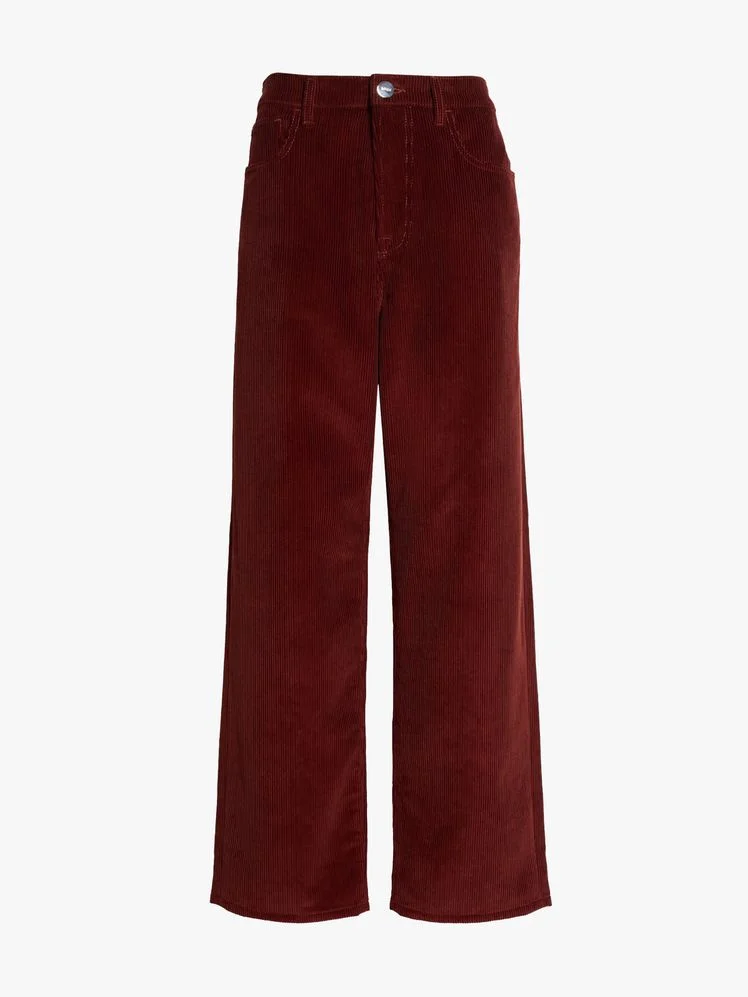
Róhe’s Bruun pants make the case for color: the deep maroon pair is listed at $620 through Nordstrom. The price puts them firmly in designer territory, so the appeal has to come from the combination of a baggy cut and a shade that’s more distinctive than standard brown or black. Maroon changes the role of the trousers: instead of blending into an autumn palette, they become the piece that sets it.
That color choice does come with a styling tradeoff. A distinctive shade can make an outfit feel considered, but it may ask more of the rest of the wardrobe than a neutral pair would. Keep the other pieces quiet and the color has room to carry the look. For anyone already reaching for brown or black trousers by habit, that’s the more interesting proposition here.
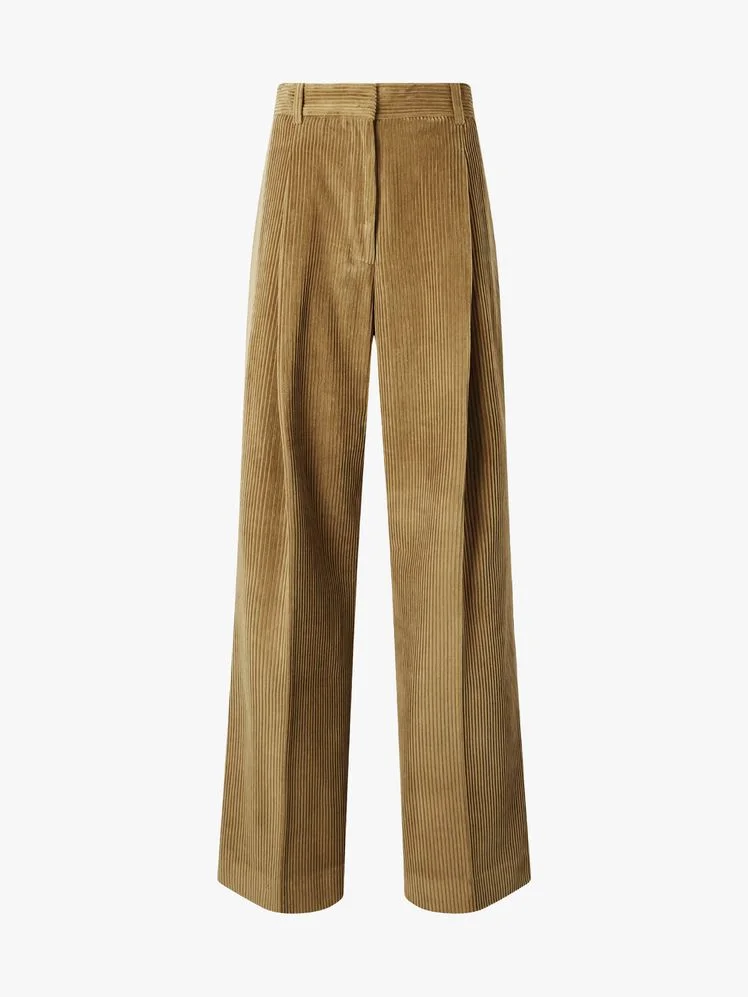
For a more tailored silhouette, Róhe’s Ted wide-leg cotton corduroy pants cost $760 at NET-A-PORTER. That’s a substantial step up from the Bruun. If you’re weighing the two, the distinction is clear: the Ted offers a dressier, more structured direction, while the Bruun leans relaxed. The difference in shape is useful to consider because wide-leg trousers can read quite differently depending on how much structure the rest of the outfit brings.
There’s a practical question behind the higher price, too. A more tailored cut may suit a different set of occasions, but the product listing doesn’t tell us how the pants feel or how well they hold their shape. Those are the details that matter once the initial appeal of fabric, color, and silhouette has done its work.
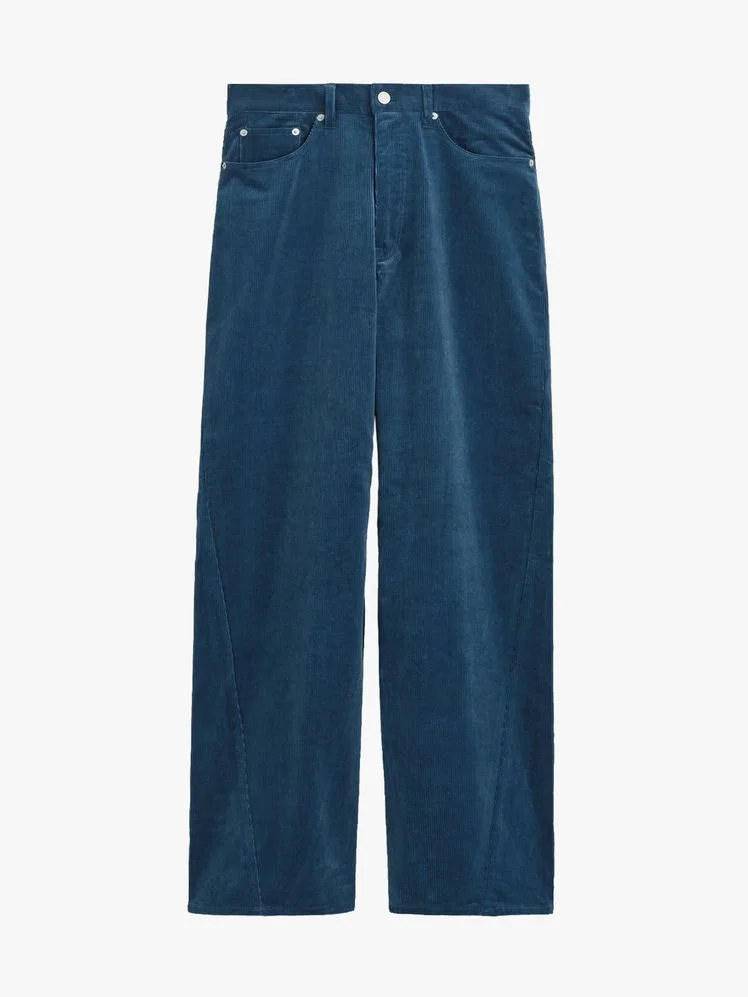
The less expensive option here is COS’s Facade corduroy straight-leg jeans in teal, priced at $139 at COS. Calling them a denim alternative captures the point: they bring a familiar straight-leg shape into corduroy, with a color that stands apart from classic denim. The price gap is striking, though the product listings alone don’t tell us how the fabrics or construction compare. In other words, the lower price makes the pair easier to consider, but it can’t settle the question of value by itself.
That contrast gives shoppers three distinct routes into the trend: color and a relaxed cut, a dressier wide leg, or a straight-leg shape with a denim-like feel. The prices vary widely. And this is the part most people overlook: the most wearable choice may depend less on which pair looks most dramatic and more on what already hangs in your closet.
The minimalist look
Corduroy’s appeal is its range: the fabric can feel polished or relaxed, classic or current, depending on how you wear it. Fashion month brought it out as both standalone trousers and coordinated sets. For your own pair, choose an earthy shade for a restrained autumn look or a bolder color for something more playful. The texture already adds interest, so a minimalist outfit can give it room to show without making the whole look feel busy.
The Row’s Kenton pants in off-white cost $1,250. For a pared-back outfit inspired by the brand’s runway, pair white corduroy trousers with a cropped black jacket, white ankle boots, and minimal jewelry. The cropped COS blazer shown here costs $249. That pairing relies on contrast: pale trousers against a dark jacket, with clean accessories that keep attention on the shape and fabric.
White corduroy may sound less forgiving than brown, but the styling makes a case for treating it as a deliberate choice rather than a novelty. A cropped jacket helps define the proportions, while ankle boots keep the line of the outfit neat. Simple. If you’re working in this space, think of color and cut as the two decisions that most clearly steer corduroy away from its default casual associations.
What the trend suggests
This season’s styling points to a modest but useful shift: corduroy is being presented as a material with range, rather than as a seasonal uniform. That could make it easier to pair with tailoring, knitwear, or sharper accessories, depending on the cut. The runway examples show possibilities, not guarantees; how a particular pair works will still depend on its proportions and construction.
For shoppers, the clearest takeaway is to start with the role the trousers need to play. Brown offers an easy entry point, while teal, maroon, mustard, or cobalt make the color itself part of the decision. A baggier shape reads more relaxed; a structured wide leg points toward dressier outfits. And yet, texture can do enough on its own that there’s no need to build an elaborate look around it. The best case for corduroy this fall is its flexibility—provided the cut and color suit the way you actually dress.