How Manager Mark Pitts Helped Shape J. Cole’s Career
A manager’s most consequential work often happens out of sight
J. Cole’s career offers a useful case study in how a manager can shape an artist without taking over the artist’s identity. That’s the thread running through his conversation with longtime manager Mark Pitts: judgment about when to push, whom to bring into the room, and how to translate an artist’s instincts for an industry with its own demands. The two met with GQ’s Frazier Tharpe in Las Vegas over Labor Day weekend. Cole was midway through the U.S. leg of his *Fall-Off* tour, supporting the album he released earlier that year, with European dates ahead. He was taking a night off to see Chris Brown and Usher’s joint stadium tour, *R&B*—before a surprise appearance at Zouk nightclub and his own show at T-Mobile Arena the following night. Pitts connects all three artists: he has worked with Cole, Brown, and Usher.
Learning to play along without losing the point
Cole says he arrived at Roc Nation with a deal but little interest in industry politics. He had come up producing his own music and resisted being pushed too quickly toward conventional hit-making. Pitts, Cole recalls, understood both the climb ahead and the need to introduce him to collaborators in a way that wouldn’t feel forced. He put Cole with producers such as Salaam Remi and, earlier, No I.D.—artists Cole describes as “Jedis” who could challenge him through musical fundamentals rather than a standard hit formula. That approach became clearer when Roc Nation executive Rich Kleiman asked Cole about singles and hit records. Cole told him he cared more about the music he already had and thought he could establish himself with a classic album before pursuing hits. Looking back, Cole recognizes how that answer could have sounded to Jay-Z and the people investing in his career. Pitts helped smooth things over, then gave Cole the advice that became the conversation’s title: “You got to play the game to change the game. You got to give some. It’s a give and take.” Cole says the line shifted his thinking. He wanted to succeed for the people who believed in him, not only for himself. The goal, he says, was eventually to earn enough freedom to move on his own terms. “I had to put a chain on and a watch on just to know that I don’t need it.” The same balance came up in their discussion of Cole’s early image. Pitts remembers trying to make him “Hype Williams-ready” and points to [Cole’s Source cover](https://slangrap.wordpress.com/2010/03/04/j-cole-covers-the-source-magazine/) as a lesson: the look didn’t feel like Cole. They also tried adjusting the links on his gold watch. Cole jokes that he was a country kid who’d never owned serious jewelry, but says he doesn’t blame Pitts for any career choice. Looking back, he sees those decisions as his own—and says knowing who you are is what keeps you from being pushed too far from it. *The conversation was lightly edited and condensed from a video interview with GQ’s Frazier Tharpe. Watch above or on [YouTube](https://www.youtube.com/watch?v=JiyXAm3yoLc).*Artist development means knowing when to step back
J. Cole’s story about posing for a *Source* cover in a leather jacket gets at the risk of letting other people define an artist before he’s figured out his own image. At the time, he had no record deal and welcomed the stylist’s suggestion. Looking back, he says he wasn’t yet confident enough to reject a look that didn’t feel like him. Mark Pitts says a label’s job is to help an artist’s own identity come through. “Labels don't make stars,” he says. “Stars are already shining, we just move the clouds out the way.” Miguel made that lesson personal: when Pitts questioned the singer’s eyeliner, Miguel’s explanation left Pitts wondering why he’d asked him to justify it. But giving artists room to experiment doesn’t mean every idea should arrive fully formed. Pitts points to OutKast: they couldn’t have opened their career with “Hey Ya.” The job, as he sees it, is to help artists build toward what they want to make. That balance matters more than it might seem. An artist needs room to find a voice, and a trusted adviser can help them reach an audience without sanding it away. Cole remembers a more practical kind of support: the blue polo he borrowed from his manager, Ibrahim Hamad, for his first meeting with Pitts. When a last-minute meeting with Jay-Z came up, Cole was at work and still wearing everyday clothes. He asked Hamad for the same shirt again. That’s how the “Mark Pitts Polo” became his meeting uniform.A trusted intermediary
Cole describes Pitts as a lead blocker: someone who clears a path, offers direction, and gives an artist room to discover who he is. Cole believes the pressure of the music business would have been far worse without Pitts protecting that space during his development. He also sees Pitts’s conduct as a model for staying decent in an industry that can reward the opposite. Cole says Pitts could have pushed him to sign with his company, ByStorm, at their first meeting. Instead, Pitts focused on what would serve Cole best. Cole says that choice, and what he’s heard about Pitts’s dealings with others, taught him that a person can keep their principles intact over a long career. For Pitts, the foundation goes back to his parents and the lessons learned around the Sunday dinner table. He says the moment he most clearly saw the value of that approach came when Nas and Jay-Z reconciled. L.A. Reid told him the meeting happened because both artists trusted his intentions. Pitts’s view: it may take longer to get there, but the result feels better. Cole calls Pitts the unsung intermediary behind [Jay and Nas’s reunion](https://www.youtube.com/watch?v=gKeZCoyjTz0). Each artist had reason to worry the other might use the encounter against him. A trusted person in the middle could tell them the other side was ready to move on. That confidence helped make the meeting possible. Pitts admits he was scared before bringing them together. He’d rehearsed what to say to Jay, then asked him to let him finish his prepared speech when Jay understood the point immediately. The meeting took place on a Saturday at Jay’s Baseline studio. Riding up in the elevator with Nas, Pitts felt the tension build at every floor. Then Jay and Nas greeted each other, traded lines from their songs, and talked through what had hurt and what they respected. Jay soon proposed that they work on each other’s albums. As they left, Pitts urged them to drop the cool act and hug. He and Nas went for a drink afterward; Nas was energized. Cole says stories like this help explain how collaborations that look spontaneous from the outside often depend on a trusted person behind the scenes. He points to the Chris Brown and Usher tour as another example: artists with full careers and competing demands rarely find their way to a joint project by chance.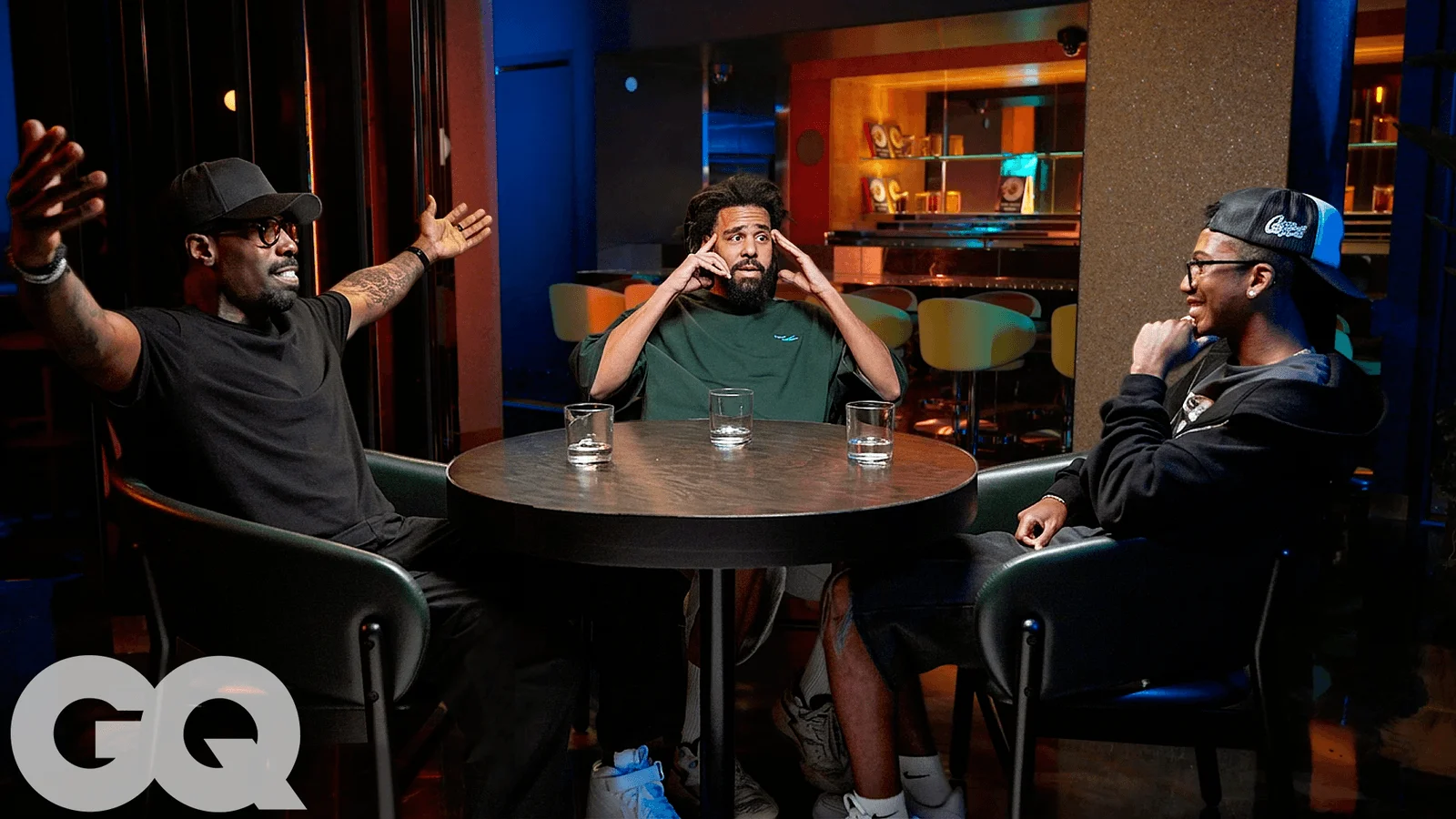
Listening when the answer is already there
Cole says he often keeps his stress to himself, working things out internally rather than telling Pitts or Hamad directly. Pitts sometimes picked up on the frustration through Cole’s music. Cole recalls wanting Jay-Z to hear a verse over a Salaam Remi beat; the lyrics carried his irritation with label politics. Pitts says those more personal calls are when Cole reaches out with a “I need your thoughts” conversation. A call between them can stretch to three hours. Cole’s second rap name was Therapist, and he says the role eventually became personal. During a conversation with Pitts around the *Forest Hills Drive* era, Cole got off the phone and decided he was ready to get married. He says he could take in the advice because he was clear enough to receive it. Pitts’s support, Cole adds, had helped him reach that point. The conversation also turns to *The Fall-Off*. Cole corrects the suggestion that he’d lost faith in the album before making its second disc: he was tired, had worked on it for a long time, and told Pitts he thought he’d be done afterward. Pitts didn’t believe him. Cole says the experience helped him realize he may never be done making music; he wants to keep loving it. He describes listening without judgment when Pitts has felt discouraged, giving him the same room to find his own way. Cole calls that role a sounding board. Pitts says a good therapist asks questions that help someone reach answers they already have. Their friendship, Cole says, gives both men somewhere to talk honestly. He adds that men often have few places to vent, and that trust is what makes those conversations possible.For J. Cole, the lasting lesson from the 2024 fallout is that friendship means making room for the truth—even when he wasn’t ready to share it. He says he and Mark Pitts listen to each other without judgment or an urge to fix things. “Listening is an act of love,” Cole says. In hindsight, he wishes he’d let Pitts hear more of what he was carrying.
Pitts had checked in while the controversy was unfolding. Cole told him he had it handled, though he was wrestling with having a Drake song on his album, how to respond without responding, and the feeling that he was finished with music. Pitts waited until Cole apologized before calling. He was proud of the decision, he told him, even as a fan frustrated by it. The apology would bring a month of backlash, Pitts predicted, but it was still the right—and harder—thing to do.
Knowing yourself, and learning to show it
Cole says he had a sense of who he was early on; what he lacked was confidence in presenting that self publicly. He points to choices such as a Versace sweater and a leather jacket as signs of that gap. Industry people, he recalls, questioned whether he looked like a star because he dressed like an ordinary person. He understands now that finding his own way through those expectations was part of the process.
On tour, he isn’t thinking about reclaiming a place in hip-hop. He’s thinking about the work that got him there: the nights in the studio, Dreamville co-founder Ib, and the first time he visited Pitts’s office, when he couldn’t sell a ticket. Seeing the crowd now feels less like a victory lap than a chance to take in what they built. The Mark Pitts polo brings the memory back, too.
The people and pressure behind the records
Cole asks Pitts about Confessions, the Usher album that listeners and people involved in its making have described as drawing on their own lives. Pitts says Jermaine Dupri wrote “Confessions,” while the song’s wider story came together through studio conversations, personal experiences, and the people around Usher. Pitts says he pushed Usher to write about his relationships so he’d sound less like someone studying life from a distance. The track, “Real Talk,” and the album’s other contributions gathered those experiences into something that felt shared.
Cole also credits Jay-Z with giving him room to grow at Roc Nation while applying pressure he now believes he needed. With age, he says, he stopped seeing that pressure as blame and began to understand it as support. Jay had faced his own doubts after Reasonable Doubt and the response to “Sunshine,” Cole argues; an artist has to be tested to learn how to handle success, setbacks, and the next record. He wonders how different his career might have looked if Friday Night Lights had carried more of his best material—or if early success had arrived before he’d learned how to withstand the hard parts.
That perspective makes his next steps sound deliberately modest. He’d like to produce more, but for now he’s focused on the tour and spending time with his family more consistently. For someone reflecting on the people who helped him find his footing, that’s a fitting place to end: still making plans, but clear about what deserves his attention.
Jay-Z discussed giving Cole space to develop in an interview with GQ earlier this year.