Cornell Students Debate Accountability and Silence After Chi Phi Allegations
A campus debating, and a campus falling quiet
At Cornell, the striking divide after the Chi Phi sexual assault allegations wasn’t simply between people who spoke up and those who didn’t. It was between younger men trying to work out what accountability asks of them and older men who, by and large, declined to discuss the case. That silence is more significant than it looks: the people with the most authority to shape campus culture were largely absent from the conversation.

Early one October morning, activists broke a glass door at Day Hall, where Cornell president Michael Kotlikoff has his office. They painted “Smash the patriarchy” and “At Cornell rapists are protected, protesters are expelled” on the building’s façade. The following day, thousands of students and faculty rallied at Ho Plaza. When I arrived at Day Hall about 36 hours after the damage, the university had replaced the shattered panels with boards, redirected visitors to another entrance, and washed the graffiti down to gray smears. Around campus, prelims were underway and students moved between classes on electric scooters. The place had resumed its routines.
I came to Ithaca to hear how men were making sense of a civil suit filed in September by an anonymous accuser identified in court papers and news reports as Jane Doe. She alleges that, in 2024, seven Chi Phi fraternity members plied her with ketamine and sexually assaulted her. All seven men deny wrongdoing. Her suit also alleges that Cornell failed to protect her from sexual assault; university administrators have said they “fallen short and [are] taking meaningful action.”
According to The New York Times, which obtained summaries of the university’s punishments, Cornell’s Title IX investigation expelled two fraternity members and suspended two more. The Tompkins County District Attorney’s Office declined to bring criminal charges. New York governor Kathy Hochul criticized both Cornell police and the county district attorney’s handling of the allegations, then appointed attorney general Letitia James as a special prosecutor.
The lawsuit also includes a photograph of a phone showing a Chi Phi group chat with, reportedly, more than 50 members. In it, one man advertised Jane Doe’s “free pussy.” Some participants cheered; another asked whether “the shop” was still open. No one in the screenshot objected. That detail gives the question at the center of this story its force: when a woman is reduced to a joke in a room full of men, why do so many stay silent?
Men’s experiences and responses have often received less attention during sexual assault crises, perhaps because people want to center women’s accounts. But understanding how men respond matters too, especially when the failure to speak up helps set the boundaries of what a group will tolerate.
Oscar, a 21-year-old student I met on the Arts Quad, had just left a Sexual Assault Prevention and Safety Club meeting for fraternity and sorority members. He said he joined a fraternity to make friends. At the meeting, students discussed ways the Greek system could strengthen safeguards, including asking prominent fraternity members to speak openly about sexual assault. Oscar said confronting a friend can be “a scary and really hard conversation,” particularly when you believe the person wouldn’t do something like that. The aim, he said, was to make those conversations more normal and open. He was thoughtful about the idea, but more guarded when I asked about fraternity culture.
Others were frank about the gap between knowing what someone should do and knowing what you’d do yourself. On Libe Slope, recent graduate Hudson Tumey said people in the group chat should have objected. “You absolutely should have.” But when he imagined himself in their place, he admitted he could only hope he’d speak up. Tumey and his friend William Canlis, a sophomore, said their Christian faith gives them a model in Jesus. Without a standard to follow, Canlis argued, men are left to look to a broken world for one.
I looked for other men in positions that might give them a public voice. Two visiting clergymen near Sage Chapel hadn’t heard of the case until that morning; one preferred not to discuss it. An associate basketball coach outside Schoellkopf Field asked me to email. A master sergeant at the ROTC offices in Barton Hall checked with his superior before saying he couldn’t speak until the matter had gone through the chain of command. A campus police officer directed me to Eric Stickel, the recently appointed Cornell police chief, as the department’s press contact. I approached nearly two dozen non-student men connected to Cornell or Ithaca. Only one spoke on the record.

The exterior of Cornell’s Chi Phi chapter house, closed since late 2024.
At Morrison Dining Hall, students held a seven-hour sit-in, about as long as Jane Doe is alleged to have spent in the Chi Phi house before losing consciousness. John Hartnett, a 19-year-old sophomore and press contact for Students for a Democratic Cornell, helped organize it. He was proud of the turnout—among the largest Cornell protests since the Vietnam War—and angry at what he saw as a double standard: the university had suspended students for taking part in other protests.
Hartnett was also asking what men owe one another. Some of his own past actions, he said, had helped perpetuate the conditions around sexual assault, even if they weren’t sexual assault themselves. “What am I not doing in terms of not holding the people around me accountable?” As he spoke, a Cornell media relations representative called to say the university knew I was on campus and no administrators were available for comment.
Reporters from Telemundo, The Ithaca Voice, and Reuters soon gathered around Hartnett. The crowd of journalists made the contrast hard to miss: students were being asked to speak for themselves while the older men with institutional authority stayed out of view. Some young men seemed to be wrestling sincerely with the case, even as others defended fraternities or attacked Jane Doe. The reasons for the older men’s silence aren’t clear. I was left with the pattern itself: their absence persisted.
Read the rest of GQ’s special report on Cornell here and here.
A public argument, with real consequences
Ithaca’s debate over sexual assault and fraternity life had moved from campus into City Hall. More than 50 people crowded into a room designed for about half that number as Mayor Robert G. Cantelmo chaired a Common Council meeting. Students sat on the floor; local television cameras recorded the discussion. The agenda ranged from a shuttered parking garage to snow clearing before reaching a proposed pause on some Cornell event and noise permits, intended to curb Greek life activity. Public comment was limited to people who had submitted slips. “I think sacrificing some of the fun is more than justified by protecting people from these heinous crimes until the university gets off its rear,” Ithaca resident John King said in support. Sam Poole, a Cornell freshman when Jane Doe first reported her assault to campus police, said his co-op had decided to stop hosting parties while the moratorium remained in effect. Nearly a week later, Cornell banned fraternity parties for the academic year. The city proposal and the university ban were separate actions, but both showed how quickly a dispute over safety could reshape student life. The meeting also exposed the limits of the public forum. Independent journalist Michael Tracey repeatedly called out for recognition, but Cantelmo said his name wasn’t on the slips the clerk had provided. Tracey claimed his slip had been discarded and objected to what he saw as officials treating an accusation as established fact. He left before speaking through the usual process. I gave him my number.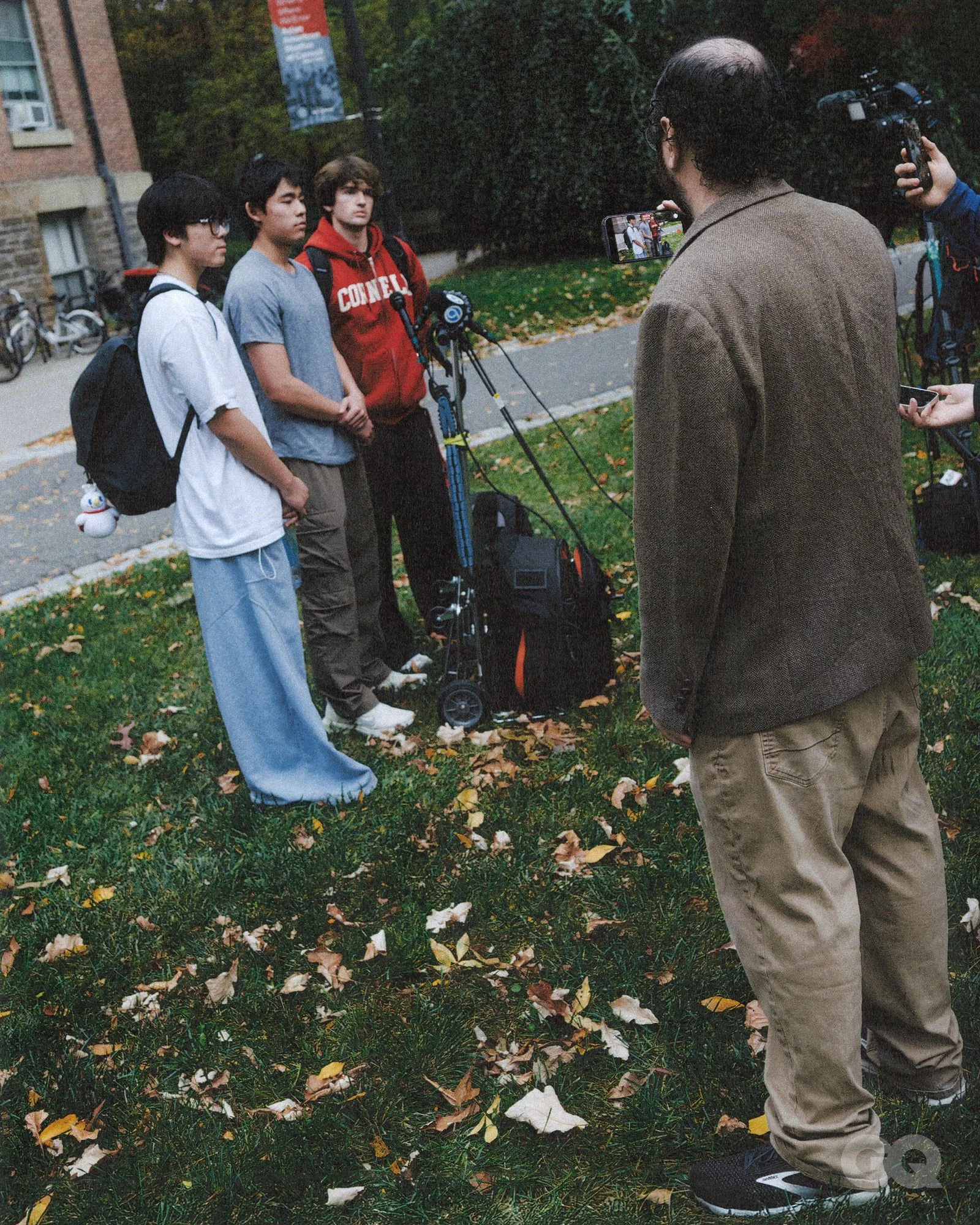
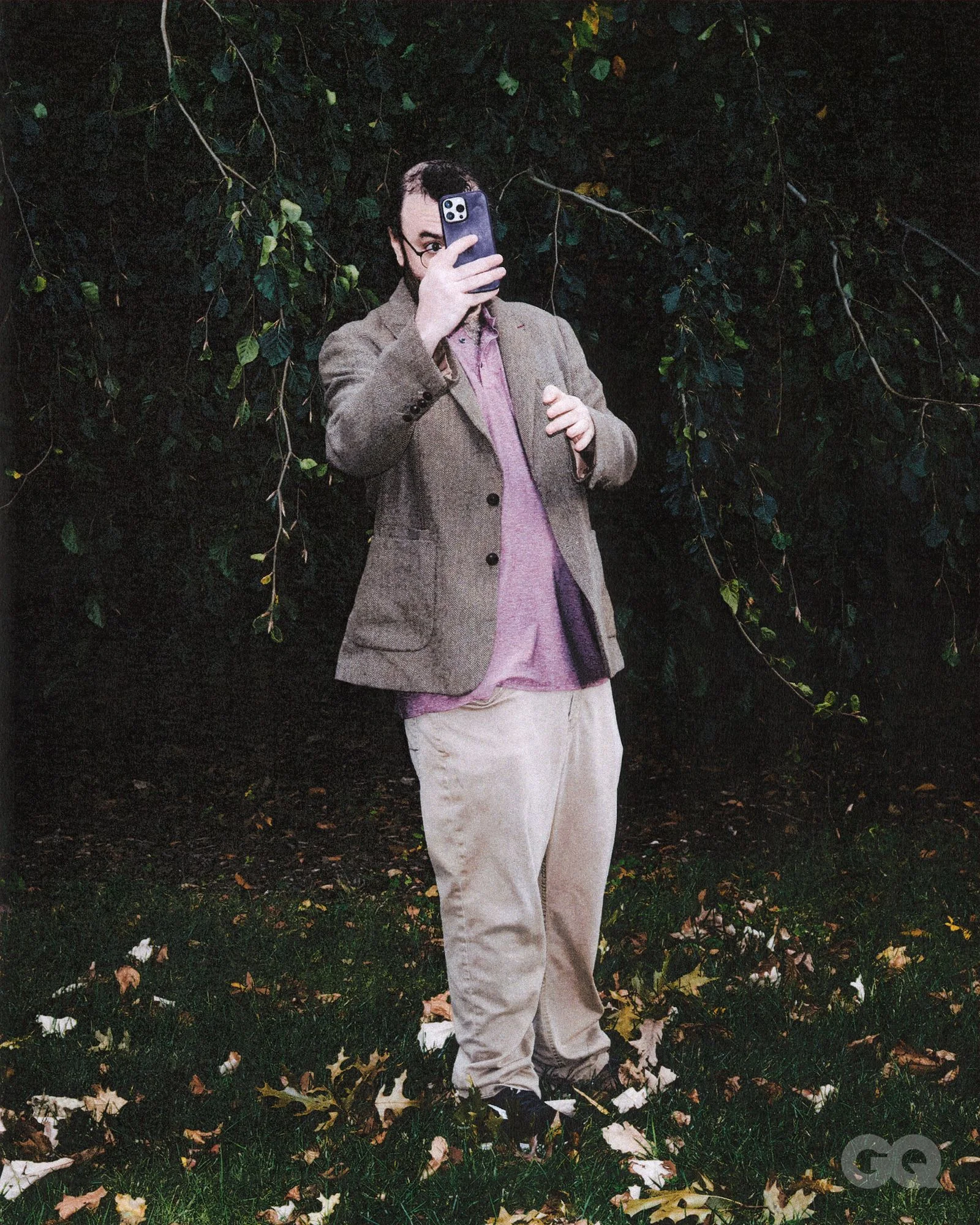 Tracey met me in the Canopy Hotel lobby. He’s a contrarian Substack journalist known for provocative social media posts; in a recent argument, he said parts of the Jeffrey Epstein case had been overblown. He told me he’d driven from Jersey City to report on the Cornell case because he believes Jane Doe’s identity should be made public. The week before, he posted her name on Twitter, then deleted it. Online sleuths published her address.
According to Jane Doe’s lawyer, Thomas Giuffra, someone called police the night before the council meeting with a false report of violence at her home, triggering a large police response. That tactic is known as swatting. Giuffra told CNN his client was “terrified.” The available account doesn’t establish who was responsible for the swatting.
Tracey described plaintiff anonymity as a way to “manipulate the court system and thereby the public as a PR tactic to create pressure.” He added, “I have nothing against Jane Doe. She seems kind of cool, actually.” He showed me a text he said he’d sent to a number belonging to her, arguing that her identity was in the public interest because settlement funds were being sought and criminal investigations had begun. When I said anonymity can help sexual assault victims avoid vitriol and death threats, he turned to the threats he’d received himself. That exchange captured the imbalance in the debate: a man pressing to identify a woman who had reported an assault, while treating his own experience of threats as a reason to be heard.