Four Standout Luxury Watches: Moser, A. Lange & Söhne, Biver and Breitling
Watch Guy Watches is GQ’s monthly selection of high-end watches for enthusiasts. This month brings four different kinds of appeal: H. Moser & Cie puts a lively seconds display in its Streamliner, A. Lange & Söhne revives a platinum bracelet, Biver introduces its first hand-wound three-hand watch, and Breitling adds vintage-inspired models to its regular lineup.
H. Moser makes the seconds hand the show
Moser has built a reputation for mixing serious watchmaking with a sense of humor and a willingness to experiment. Its catalog has included a mechanical watch that evokes a familiar smartwatch and an integrated-bracelet sports watch that stands out in a crowded category. The point is more than novelty: Moser keeps finding ways to make traditional mechanics feel fresh.
Two years after the Pioneer Retrograde Seconds Midnight Blue, Moser has added three retrograde-seconds watches across the Pioneer, Endeavour, and Streamliner lines. The Streamliner is the most convincing match for the display: a small hand sweeps across an arc for 30 seconds, then snaps back to begin again. It’s a showy complication, and that’s precisely its appeal.
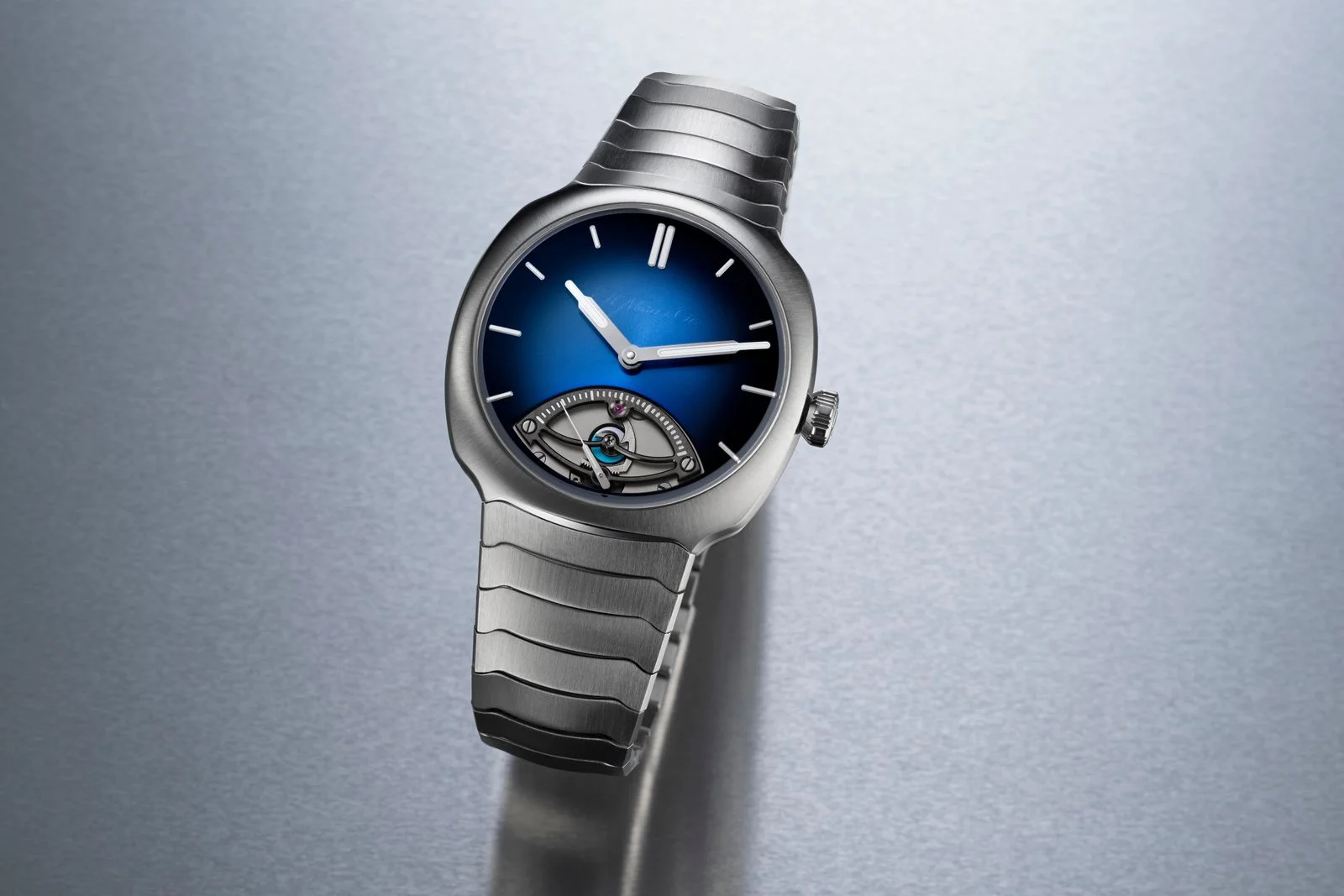
The 40mm brushed-steel case has a cushion shape and a serpentine integrated bracelet, giving the watch a look that nods to Streamline Moderne while feeling decidedly futuristic. On the dial, midnight-blue fumé enamel sits beneath applied indices and Moser’s modified syringe hands. The brand name is printed discreetly in white below 12 o’clock; the lower dial is reserved for the retrograde seconds scale.
Agenhor-developed calibre HMC 252 drives the hand’s smooth sweep and return. Turn the watch over and a sapphire caseback reveals the movement’s tungsten rotor. Courtesy of Moser

Here’s the thing: the Streamliner’s complications and high-end finish don’t make it a fragile display piece. Moser gives it a steel construction, automatic winding, 120 meters of water resistance, and 72 hours of power reserve. At 29,900 CHF, you may hesitate before taking it up a mountain, but the specifications make clear that it’s designed to be worn.
Retrograde seconds won’t tell you the date or help you track another time zone the way a GMT does. The case for the display is simpler: it shows off the watchmaker’s skill, and it’s a pleasure to watch. If you’re collecting watches for the enjoyment of them, that counts for something. Moser’s retrograde seconds make that argument with every jump back to zero.
A. Lange & Söhne brings back platinum
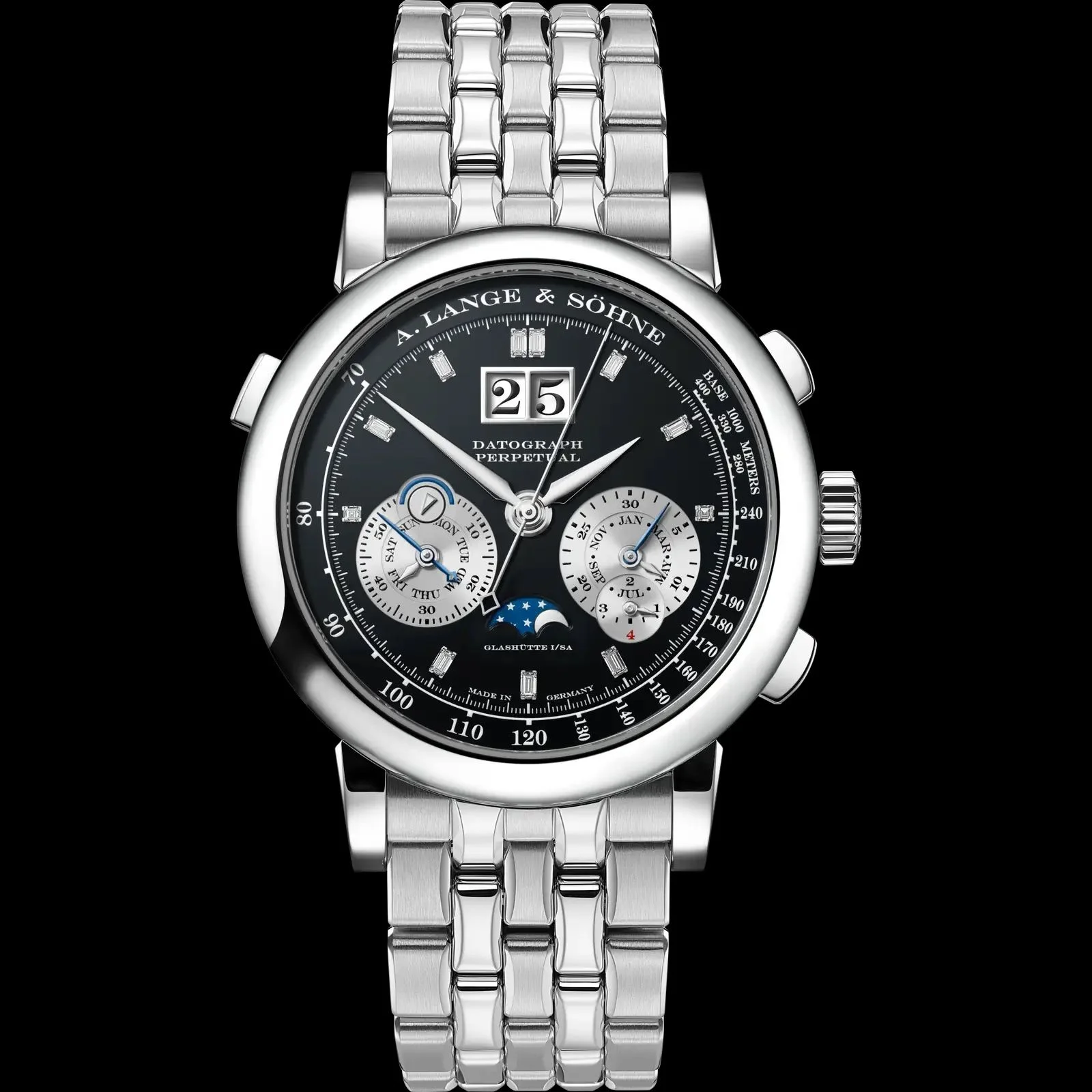
For the Datograph Perpetual’s 20th anniversary, A. Lange & Söhne has brought back a platinum bracelet option. The anniversary model pairs that bracelet with a black dial set with diamonds and the manually wound manufacture calibre L952.1. Production is limited to 50 watches.
The bracelet may be the bigger story for longtime fans. Earlier versions from the early 2000s, made by German jeweler Wellendorff, used seven links; this new bracelet has five. That small design shift gives the anniversary edition a distinct identity while restoring an option collectors have waited years to see return.
Biver’s first hand-wound three-hander
Jean-Claude Biver and his son Pierre started their namesake company in 2022 with a half-million-dollar automatic tourbillon and minute repeater. Since then, the brand has added the automatic three-hand Automatique. Now it’s moving into hand-wound territory with the AB, its first manually wound three-hander.
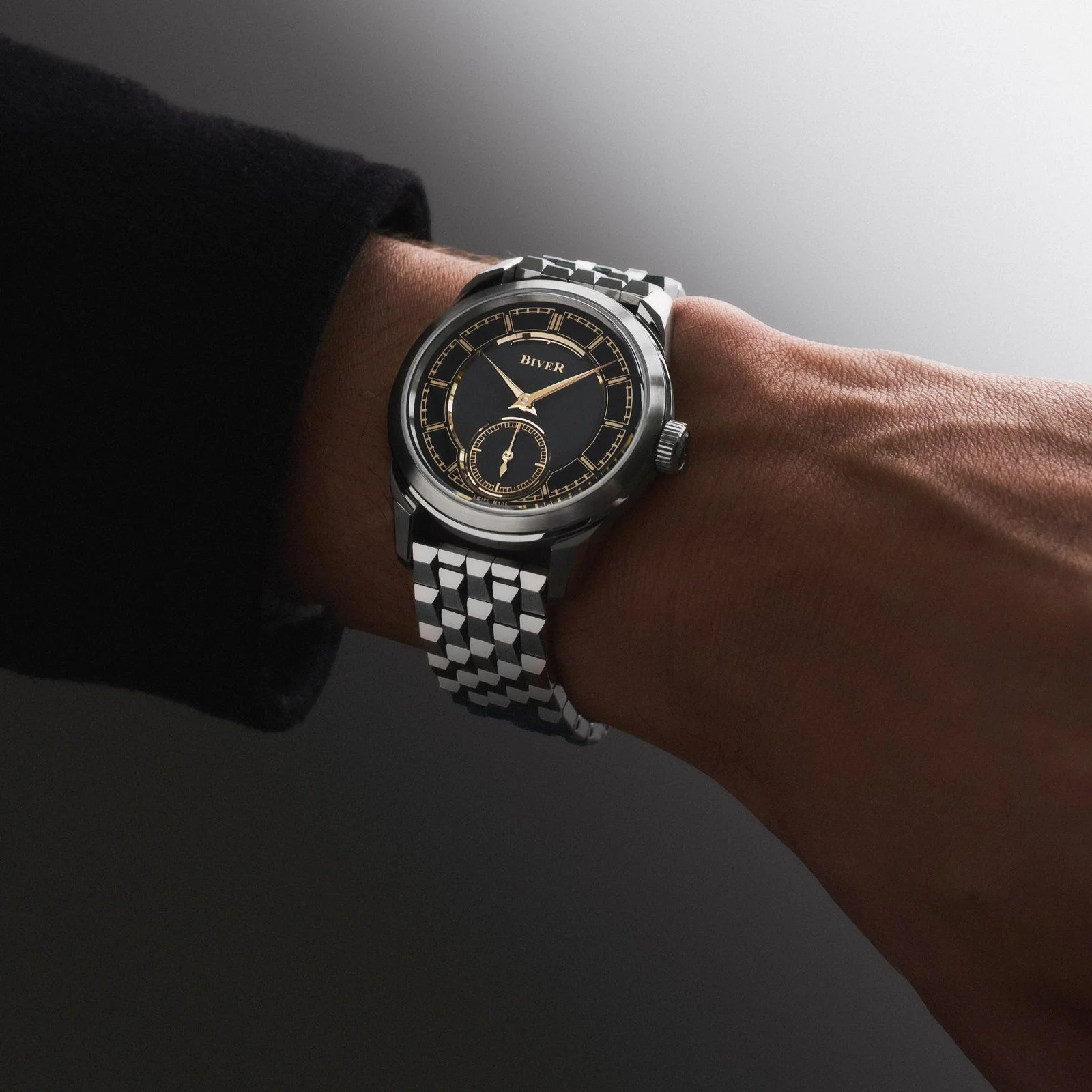
The steel watch measures 38mm across and 9.8mm thick. Its black onyx dial has multiple levels and gold accents, while the angular five-link bracelet includes a patented micro-adjustment system. A new calibre, JCB-004, was developed with Le Cercle des Horlogers. Biver calls it an entry-level model, though the price is roughly that of a BMW M3—and it has already sold out. “Entry-level” is doing a lot of work there.
Breitling takes a vintage design out of limited release
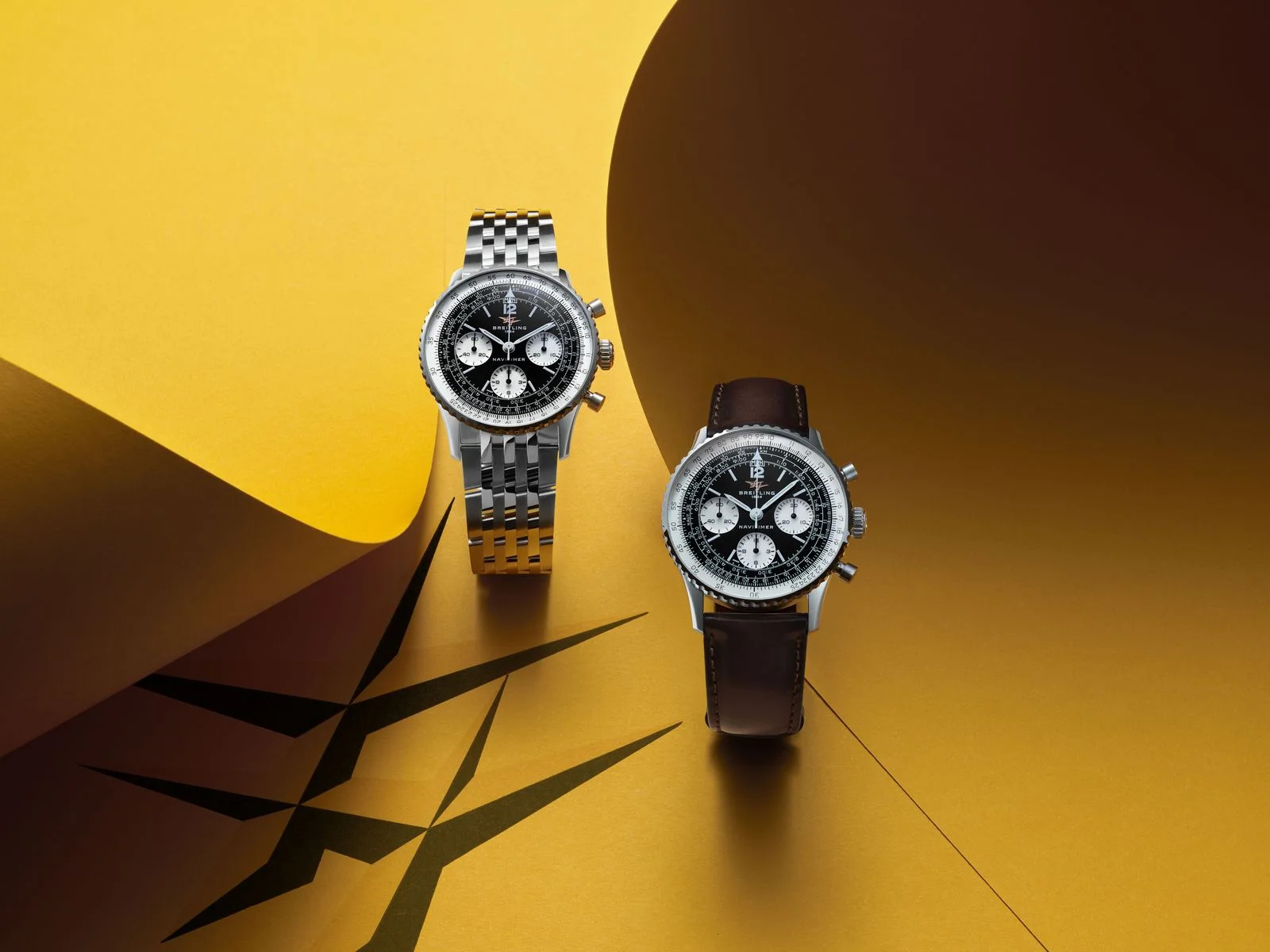
The new Breitling Navitimer B09 Chronograph 41 takes its cues from the 1960s ref. 806 “Twin Jet” logo chronograph. The meaningful change is availability: this is a non-limited model, which should appeal to collectors who want the vintage look without chasing a restricted run. It has a 41mm stainless-steel case and a manually wound movement, like its historical inspiration.
Breitling offers it on brown leather for $7,900 or on a steel bracelet for $8,400. There’s also a more unusual option: a non-limited, hand-wound Cosmonaute, the Navitimer variant with a 24-hour dial worn by astronaut Scott Carpenter in 1962. It costs between $10,600 and $11,000. For anyone who likes the Navitimer’s history but wants a less familiar version, that may be the more interesting release.
The ref. 806-inspired Breitling brings a celebrated design into the standard catalog. That’s a modest move on paper, but it changes who can realistically buy one.