The son preference is starting to turn
A gender reveal used to promise pink or blue and a burst of celebration. Now, some viral clips hinge on the opposite reaction: parents scream, cry, or collapse when the reveal is blue. One compilation drew 33 million views and three million likes on TikTok. It’s easy to dismiss that as online theater. The broader shift behind it is harder to ignore.
The ritual itself began with a cake. In 2008, American blogger Jenna Karvunidis cut into one at a party and found pink inside, announcing the sex of her unborn baby. She wrote about it online; the post spread, and the format caught on. Since then, the reveal has grown into an elaborate internet spectacle, complete with ultrasound companies selling dedicated experiences in pink or blue rooms, teddy bears that play an unborn baby’s heartbeat, smoke bombs, pyrotechnics, choreographed dances, and even skydivers. One pyrotechnic reveal started a wildfire in Southern California in 2020. In Louisiana, an alligator named Sally once bit through a blue jelly watermelon.
[Gender reveals have their own history of spectacle and danger](https://www.gq.com/story/gender-reveal-plane-crash). But the newer videos suggest that the color itself can be the spectacle: blue, and therefore a boy, has become a source of visible disappointment for some parents.
The data points to a change beyond social media. [The Economist reported](https://www.economist.com/leaders/2025/06/05/the-stunning-decline-of-the-preference-for-having-boys) that the longstanding preference for sons is weakening in many higher-income countries. In Denmark, Norway, Sweden, Portugal, and the Czech Republic, evidence now points to a preference for daughters.
The American figures are striking. The National Bureau of Economic Research found that prospective adoptive parents were willing to pay, on average, $16,000 more for a girl than for a boy. In the US, where sex selection through IVF is legal—unlike in the UK—leading clinics say 75 to 80 percent of their patients want a girl.
That reversal matters. For generations, sons were often favored because they inherited family names and property, earned income, and carried the family line forward. Daughters were more often expected to marry into another family or care for relatives. In China, the government’s 35-year one-child policy, combined with son preference, contributed to sex-selective abortion and the killing or abandonment of girls. In India, similar practices also helped produce generations with many more boys than girls. In 1990, Nobel Prize–winning economist Amartya Sen estimated that more than 100 million women were “missing” from the world’s population. Researchers have since challenged the figure’s precision and methodology, but the scale of discrimination it was meant to capture remains clear.
Here’s the complication: a preference for girls doesn’t necessarily mean girls are finally being valued on equal terms. More than 20,000 comments beneath one viral gender-reveal video offer a glimpse of something else—a growing willingness to describe boys as inherently undesirable or harmful. The shift from favoring sons to rejecting them deserves scrutiny in its own right.
When having a boy becomes a warning
Ruth Whippman, a mother of three boys, has seen that attitude up close. She grew up in England and now lives in what she calls a “progressive area” of the US, with “very progressive school districts.” In her 2024 book,
BoyMom, she recalls friends and neighbors telling her, in one version or another, “I hope for your sake this one is a girl.”
Whippman connects those remarks to the political climate of the first Trump presidency, when she says news coverage of incels and a backlash against toxic masculinity shaped how people talked about boys. “It wasn’t even just a sense of, ‘Oh, boys, their clothes aren’t as nice; you don’t get to play Barbies.’ It was this sense that boys are actively toxic and harmful.”
[Whippman shares more about her work and writing](https://www.instagram.com/ruthwhippman/?hl=en). The question her experience raises is straightforward: when concern about harmful masculinity turns into suspicion of boys as a group, what does that teach parents—and children?
[Read: I Didn’t Circumcise My Son. Did I Make the Right Choice?](/story/americas-new-circumcision-decision) — Kevin Lincoln examines the debate over circumcision and his own decision as a new father.
[Read: My IVF Years](/story/my-ivf-years) — Zach Baron writes about the distance he feared might never close between himself and his son.


Why the prospect of a son can feel so loaded
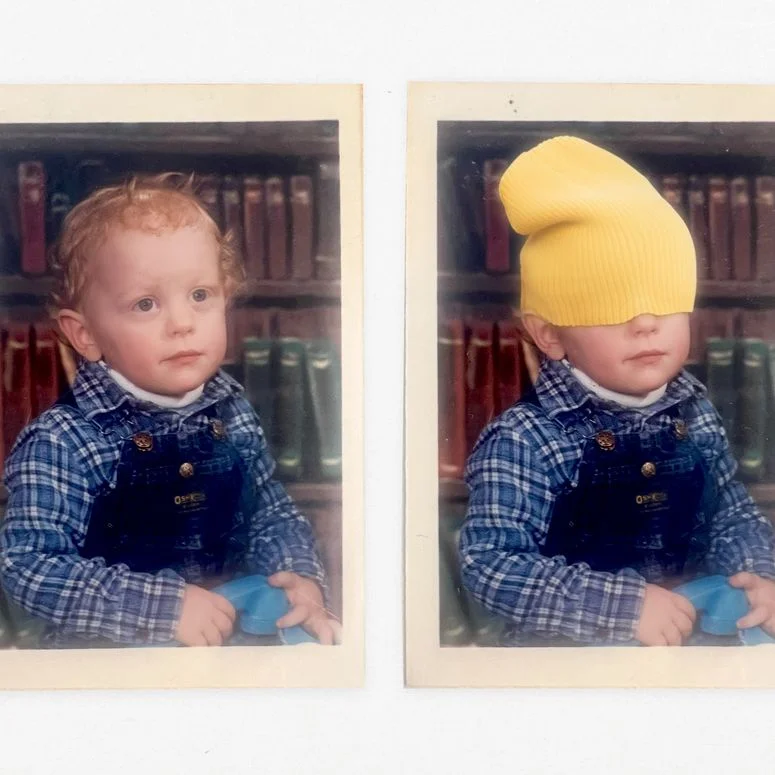
The unease some parents feel about having boys isn’t just about diapers, sleepless nights or different play habits. It can carry the weight of old family wounds, cultural judgment and fears about what boys might become. The most revealing point here is that those anxieties often say as much about the adults as they do about the children.
Before learning my baby’s sex, I was afraid of having a son. A colleague expecting a boy told me he’d felt the same, though he was now delighted. We both traced that fear to difficult relationships with our fathers and the possibility of repeating their mistakes. For me, there was something more personal: I was uneasy about having a son because I had a fractured relationship with myself.
Parents today have plenty of language for examining their past. We know that childhood experiences can follow us into adulthood, and that the way we were raised can shape how we raise our own children. That awareness can help. It can also leave us with more to worry about. As psychiatrist [Dr. Chrissy Jayarajah](https://drchrissyjayarajah.com/), who wrote the only academic paper on “gender disappointment,” explains, the term isn’t a clinical diagnosis, though the feelings it describes are familiar—and widely discussed on TikTok.
Jayarajah says parents may try to recreate the childhood they loved, or panic at the thought of becoming like their own parents. For some women who experienced abuse, the prospect of a daughter brings fears that she could suffer the same harm. Others don’t want a son because he might remind them of the person who abused them. A baby’s sex can become a container for fears that began long before that baby existed.
When culture turns a child into a verdict
Those private feelings sit inside a public argument about gender. Jayarajah thinks we’ve become more fixated on gender, with reveal parties and online announcements making it harder to ignore. In her view, old ideas about what men and women are supposed to be are shaping what parents expect from their children.
That pressure helps explain why some parents may feel that having a girl earns them approval, while having a boy brings suspicion. As one parent put it, the image of the progressive feminist raising a confident daughter can feel socially rewarded; the “girl dads” who paint their daughters’ nails get affectionate attention on TikTok. Parents of boys don’t receive the same easy praise. I’d be lying if I said that thought hadn’t crossed my mind when I learned I was having a daughter.
Writer Whippman has heard more fathers say they would prefer daughters. She argues that raising a son is increasingly framed as “harm reduction” rather than an invitation to help a child thrive. In the US and UK, she says, defending boys and men can be mistaken for taking a right-wing position, which leaves progressive parents in an uncomfortable bind.
The fears aren’t purely symbolic. Alex Trippier, a children’s club leader behind [Be A Happier Parent](https://www.instagram.com/beahappierparent/?hl=en), says he sees boys’ energy spike around age two, when testosterone surges. Parents who prefer a quieter home can find that difficult. He sees development and socialization working together, rather than either one explaining everything.
Trippier, who has two sons and a daughter, says parents now worry about boys’ exposure to porn, gaming addiction, school performance and algorithms. The list feeds what he calls a moral anxiety about whether it’s possible to raise good men. Whippman describes a similar shift: boys are too often pictured either as struggling students who won’t launch or as future recruits to the manosphere, with its misogyny and even AI girlfriend fantasies. Treating children like consumer products, she says, makes girls seem like the safer choice—a dehumanizing way to think about either sex.
The practical worries have their own history
There may be more ordinary reasons some parents feel daunted by sons. People are having fewer children, later in life, and may be less willing to upend routines they’ve built over years. Lara Miller, a midwife for more than two decades, says older parents can be more controlling about the details of parenting. She says that without judgment: she was an older mother herself.
Miller, now the happy mother of two boys, also thinks schools often suit girls better. She says boys can receive worse reports and that one school even sets aside particular days when boys are allowed to kick a football. After her son made a gun shape with his fingers, she was called in to see the headmaster. She recalls teachers comparing girls’ reading totals with her sons’ and suggesting a football magazine might get them to read. Her response was blunt: “Oh, fuck off. Just fuck off.”
None of this means every girl will happily color while every boy tears through the house. But it helps explain why parents may anticipate a harder job with boys, especially when school expectations, energy levels and social fears all pile up at once.
The demographic context makes that preference harder to shrug off. Global fertility has fallen from about 3.3 children per woman in 1990 to roughly 2.2 or 2.3 today, and more than half of countries are below replacement level. The implications include labor shortages, pressure on pensions, higher social and health care costs, and less of the innovation often associated with younger populations. Against that backdrop, favoring one sex over the other seems especially counterproductive. For more on the fertility question, see [The great British sperm deficit](https://www.gq-magazine.co.uk/article/the-great-british-sperm-deficit).
A child is more than the story we tell ourselves
The best answer to all this anxiety may be to notice how quickly we turn a child into a symbol. I saw myself doing it at a soft-play session with my 19-month-old daughter. A boy in the ball pit screamed at his reflection and hammered the mirror until its frame shook. My first thoughts were judgmental: Why weren’t his parents watching more closely? Was he dangerous? I made a mental note to keep him away from my daughter.
Then I turned back to check on her. The boy had stopped screaming. He was shyly offering her a dumper truck with a missing wheel. She took it in both hands, grinning.
That small moment didn’t answer every question about gender or parenting. It did expose how readily I’d mistaken one loud scene for the whole child—and how quickly my fears had filled in the rest.
*This story originally appeared in the November 2026 issue of British GQ under the title “For Centuries, Everyone Wanted Boys. Now, Not So Much.” Food styling by Sarah Hardy. Prop styling by Eve Itsuki Asami.*