Will Van Zee Brings Hand-Painted Signs to New York City Restaurants
The Artist Behind New York City’s Most Iconic Restaurant Signs
Will Van Zee’s signs make a case for human hands at a moment when AI generated imagery is spreading through food and restaurant marketing. The Brooklyn sign painter builds his business with centuries old techniques, while Instagram videos of his brushwork draw millions of views. That combination says something: digital platforms can help people find craft, even as automation makes the craft feel more distinct.
Culture · By Emma Jacobson · October 29, 2026

Photograph by Nash Studio
Person of Interest profiles people whose work has caught our attention. Here, Van Zee talks about painting restaurant signs, the role Instagram has played in renewed interest in the trade, and why handmade design still has a place in an AI saturated era.
A familiar hand on New York storefronts
There’s a good chance you’ve passed a Van Zee sign without knowing who painted it. His Brooklyn studio, Van Zee Sign Co., makes hand-painted and gilded signs for restaurants, bakeries, and shops around the city. The work appears at places including Elbow Bread, S&P Lunch, and Levain Bakery, among dozens of other New York businesses.
The appeal is easy to see in Van Zee’s Instagram Reels: careful brushwork, fine gold leaf, and decorative details made one stroke at a time. His videos regularly reach millions of viewers. Instagram may be a thoroughly modern route to an old trade, but the attention seems to be feeding real interest in the work. I’ve found restaurants and bakeries through his posts that went straight onto my list of places to visit.
There’s also a useful signal for customers. When a business spends on custom signage, it suggests someone has thought carefully about how the place should feel. That doesn’t guarantee the food or service will match. Still, amid AI generated food imagery, a sign made by an artist can communicate a kind of care that a stock graphic can’t.
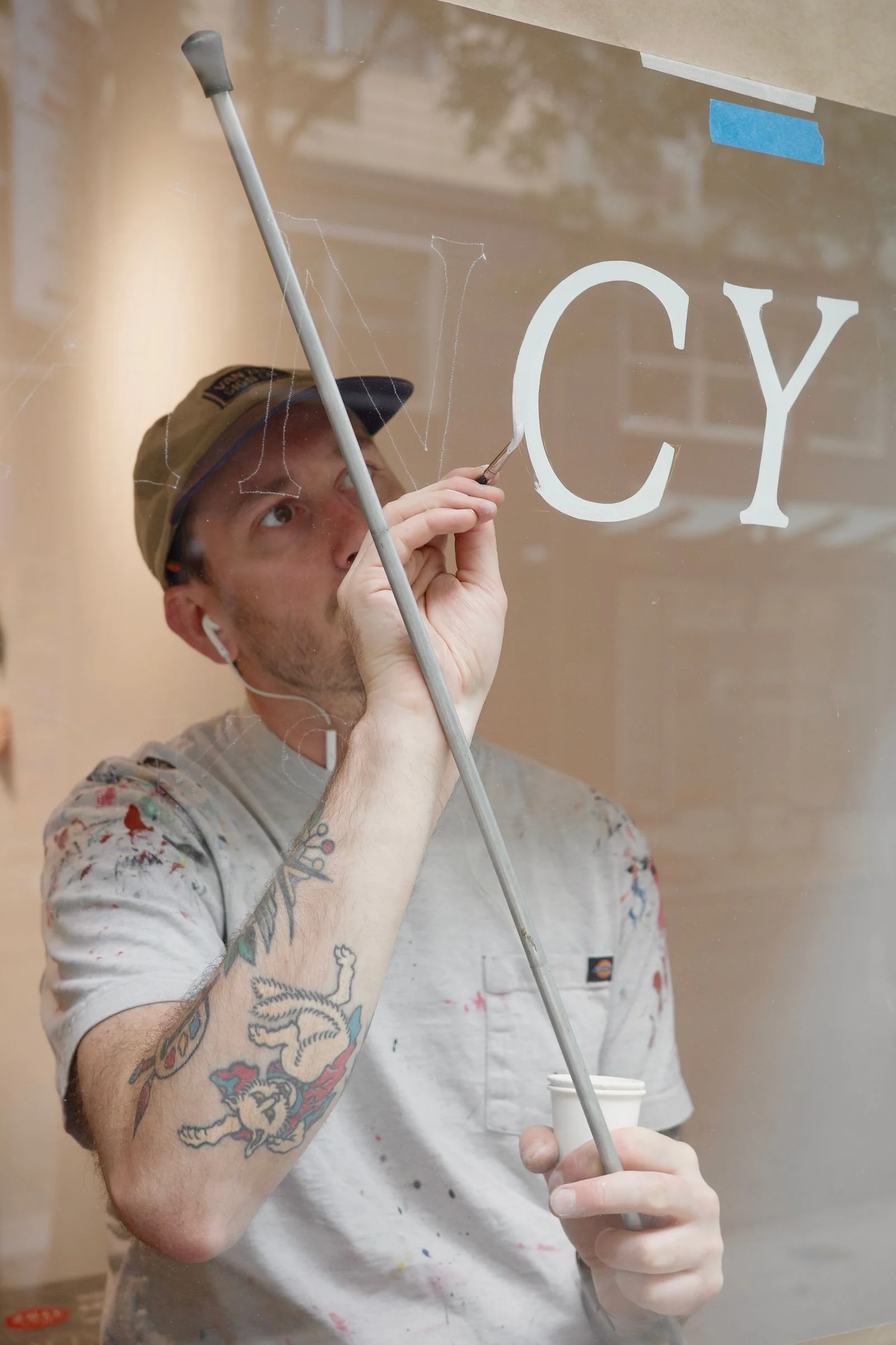
Photograph by Costa Damaskos
Van Zee spoke with us about the value of handmade signs, the part social media has played in bringing attention back to sign painting, and what he’s learned from helping restaurants shape their identity.
From house painting to restaurant work
How did you get into sign painting?
“I moved to New York in 2008 to study product design. Within about a year of graduating, I started sign-painting professionally but my introduction to this work started much earlier. Growing up, I worked as a house painter. My dad would find jobs for me painting fences, trim, and siding around the neighborhood. It was hard work, but it helped me develop brush control at a young age.
“I also fell in love with the restaurant industry. Around age 16, I started as a dishwasher and porter, then became a prep cook and eventually worked closely with the chef and owner. There’s something special about being part of a team, getting through a busy service, and feeling exhausted but proud at the end of the night.
“Part of building this business was creating a career that allowed me to spend more time around restaurants and the people who run them. New York is a city where people come to eat, and it’s exciting to play a small role in helping restaurant owners realize their dreams.”
What do you enjoy most about being part of restaurant projects?
“I’ve been in this industry for about 13 or 14 years, so it’s common to run into people I’ve worked with before. A contractor, chef, owner, or designer on a new project is often someone connected to a previous one. My business relies heavily on word of mouth, so those relationships are incredibly important.
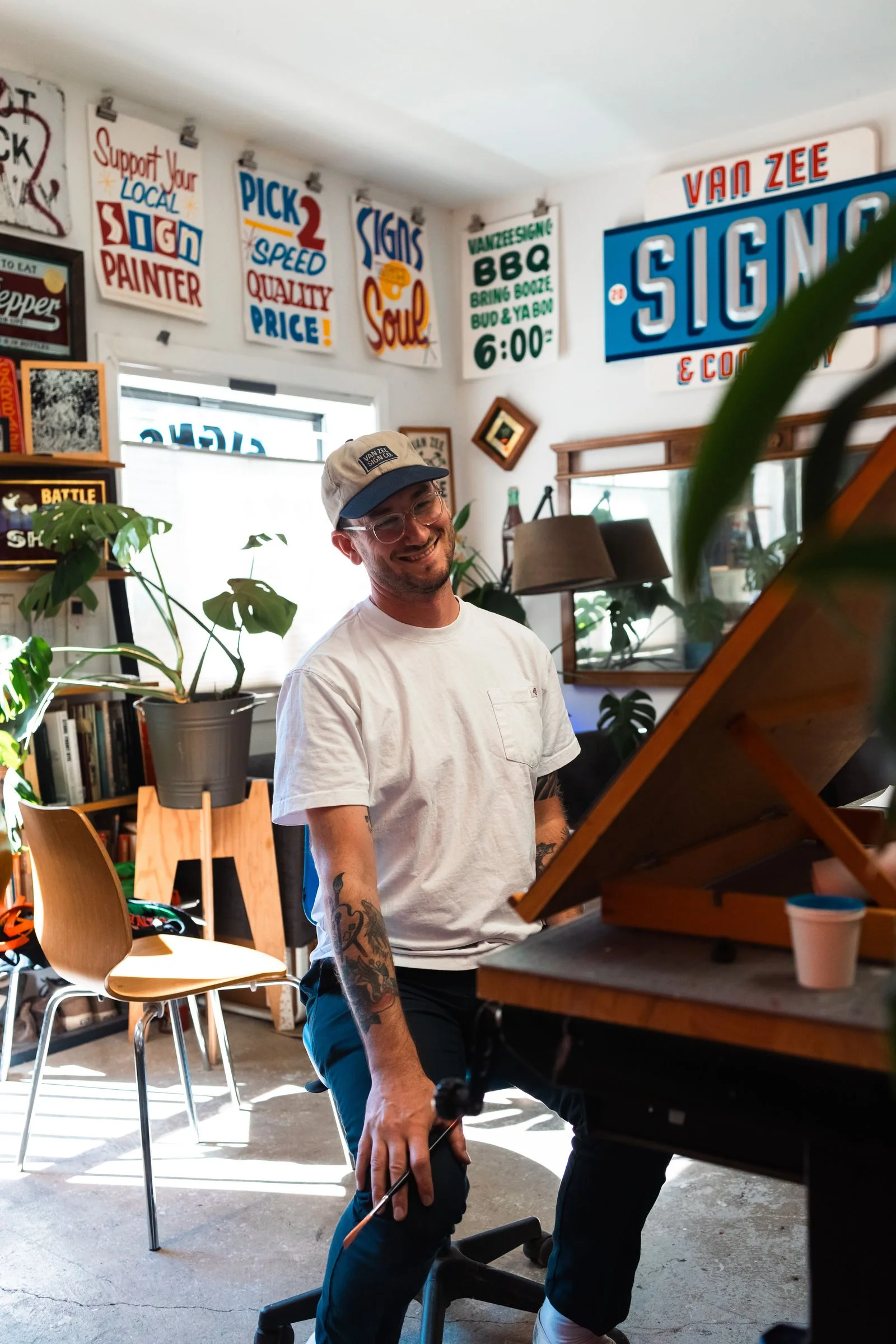
Photograph by Nash Studio
“One of my favorite parts of the job is attending friends-and-family nights. Most of the time, I see restaurants while they’re still under construction, so those events are often my first chance to experience the finished space, try the food, and see everything come together. It’s rewarding to celebrate alongside everyone who helped bring the restaurant to life and see the project finally open its doors.”
Keeping the city’s visual history alive
How would you describe your design style?
“I try to recreate and preserve the visual character of the city. I spend a lot of time looking at historic photographs and documentation, and as a sign painter, I feel a responsibility to help maintain the visual language that makes New York feel like New York. At the same time, every project is a partnership. The goal is to create something I’m proud of while also making sure it properly represents the business.
“I encourage clients to look at historic photos of their building and neighborhood. New York has incredible archives that show what these places looked like decades prior, and those images often provide inspiration for signage today. Sometimes the best solution is simply adapting something that already worked fifty years ago and giving it new life.”
Restaurants Are Using Unsettling AI-Generated Photos of Food
Plus the rise of Loonen water, and Keith Lee steps in during a crisis
How do you position your work in the age of AI-generated design and inexpensive digital graphics?
“What makes sign painting special is that it’s deeply human. Almost everything I do is made by hand, and that creates a natural connection to restaurants, where chefs are also making things by hand every day. Hand-painted signs have soul. They’re not perfect, and that’s exactly what makes them special. The same is true of a great meal. You can tell that a real person made it.
“Many of my clients want to communicate that they value things made by people. Even if it costs more or takes longer, a hand-painted sign demonstrates care and craftsmanship. That’s especially important in fine dining, where every detail matters. Hiring real artisans signals that level of attention to customers.”
Finding an audience online
How did you get started on social media? Did you ever expect your audience to grow the way it has?
Social media has become part of the craft for this sign painter, though it took a nudge from his wife to get there. He started out resistant and didn’t even have a personal Instagram account. Now, documenting the work has made him a better documentarian—and helped an audience notice a trade that often goes overlooked. Signs shape how people experience shops and neighborhoods; showing how they’re made has helped his business while building appreciation for the work itself.
Restaurant signs that stay with you
Among the restaurant projects he singles out are Rezdôra, Sailor, Levain Bakery, S&P Lunch, and Baby Blues Luncheonette, where he designed the logo. Sailor meant something different: it opened in his neighborhood, in a space occupied by a restaurant he’d visited many times. Working on the new place felt personal.
Here’s the thing: the projects that matter most aren’t necessarily the flashiest. New York restaurants often disappear, so a sign connected to a business that’s still thriving ten years later carries its own weight. Rezdôra is his example. Its signage is relatively simple, but the restaurant has become beloved. He sees his contribution as small, yet helping shape that identity—and being part of a place that endured—is what makes the work rewarding.