October’s Best-Reviewed Books: Kingsolver, Li, Garmus and More

October’s strongest critical reception spans fiction about private longing, artistic lives and isolation, alongside nonfiction that takes on grief, faith and literary legacy. Barbara Kingsolver’s Partita leads the fiction list with 14 rave reviews; Sarah Perry’s Death of an Ordinary Man tops nonfiction with seven. The figures offer a useful snapshot of critical enthusiasm, though they don’t measure the depth of agreement or predict which books readers will carry with them. Here's the thing: this month’s selections share an interest in how people make sense of their inner lives, whether through stories, belief, memory or art.
Fiction: Kingsolver leads a varied field
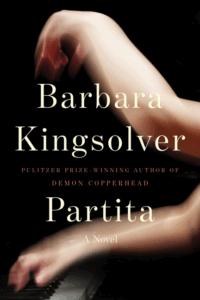
1. Partita by Barbara Kingsolver (Harper)
14 rave, 4 positive, 1 mixed, 1 pan. Read an interview with Kingsolver.
Reviewers see Kingsolver drawing on the human insight that has marked her earlier work while finding fresh angles in a new story. Heather Scott Partington of The Los Angeles Times writes that the novel gives voice to “private longings and secret vulnerabilities,” while bringing discovery to familiar themes. That balance matters: a familiar emotional terrain can feel routine in less assured hands, while a fresh angle can make private conflict legible to a wider audience. The reviews suggest that critics found both qualities here. The numbers are emphatic, though the single pan reminds readers that a strong consensus still leaves room for disagreement.
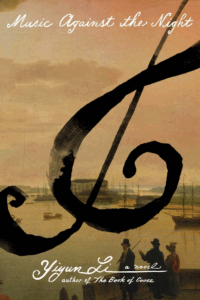
2. Music Against the Night by Yiyun Li (Farrar, Straus and Giroux)
9 rave, 1 positive, 2 mixed. Listen to an interview with Li.
Li’s intricate narrative about young virtuosos earned praise for its distinctive approach and control. Cory Oldweiler of The Boston Globe calls it “wonderful and bewitching,” and says novels of this kind are rare. The description points to a particular critical response: readers aren’t being offered a conventional account of artistic promise, but a book reviewers found singular in its execution. That kind of formal confidence can be a draw, though it also asks the reader to follow the novel on its own terms. Two mixed reviews show that distinction hasn’t persuaded everyone.
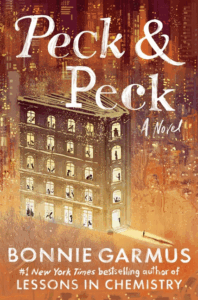
3. Peck & Peck by Bonnie Garmus (Scribner)
5 rave, 5 positive, 2 mixed. Read an interview with Garmus.
Garmus’s humor and energetic imagination won over critics, including Claire Clark of The Guardian. Clark singles out the jokes about typography and the novel’s insistence that words matter. Those details suggest a book that treats language as both subject and source of comedy, a useful fit for a story centered on poets and poetry. The split between rave and positive reviews is encouragingly broad: critics largely agree on its appeal, even if not all rank it at the same level. The humor has an argument behind it.
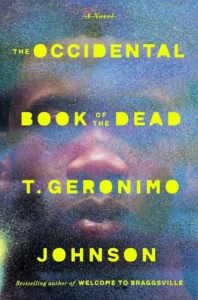
4. The Occidental Book of the Dead by T. Geronimo Johnson (William Morrow and Company)
8 rave. Listen to an interview with Johnson.
Johnson’s ambitious novel may not be built to please every reader, but its willingness to take risks is part of its appeal. In The New York Times Book Review, Jason Mott describes it as creative and unapologetic, even while acknowledging occasional misfires. That’s a more revealing endorsement than unqualified praise: the work’s reach and its unevenness appear linked, rather than separable. Eight rave reviews point to critics who valued its ambition, while the reported misfires make clear that risk carries a cost. If you're drawn to novels that take chances, this is the entry where critical enthusiasm comes with the clearest caveat.
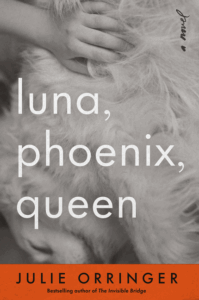
5. Luna, Phoenix, Queen by Julie Orringer (Knopf)
6 rave, 2 positive.
Meg Wolitzer, writing in The New York Times Book Review, praises Orringer’s treatment of isolation and the power of telling one’s own story. Those themes connect the novel to the broader fiction list, where private experience and the act of giving it form recur in very different ways. The review count signals a strong response, but the emphasis here is less on spectacle than on the means people use to make their lives understood. A story reclaimed in one’s own voice can itself be an answer to isolation.
Nonfiction: grief, belief and literary history
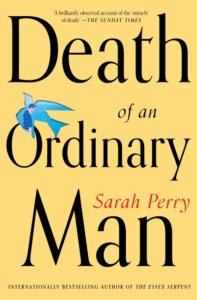
1. Death of an Ordinary Man by Sarah Perry (Mariner)
7 rave, 1 positive.
Perry’s account of death and life has drawn praise for its precision and graceful prose. Amy Bloom of The New York Times Book Review calls the book a gift to readers, whether they are grieving or not. The breadth of that description suggests the book’s reach extends beyond readers seeking direct consolation: writing about death can also sharpen attention to the life around it. Eight positive assessments make Perry’s the month’s clearest nonfiction consensus. And yet praise for graceful prose doesn’t erase the difficulty of its subject; it points to how carefully the book handles it.

=2. On Another Planet They Can Save Me by Lieke Marsman (Catapult)
6 rave, 1 positive.
Publishers Weekly describes Marsman’s book as cathartic and often wondrous, praising its engagement with broad questions through the lens of an altered mind. The phrasing captures a demanding balance: intimate experience becomes a route into larger ideas, without losing the perspective that makes those ideas personal. Its tied ranking places it alongside another book with the same number of rave reviews, but the subjects and approaches in this nonfiction list remain distinct. Here, the critical response centers on how a changed point of view can reshape the questions a reader thinks to ask.
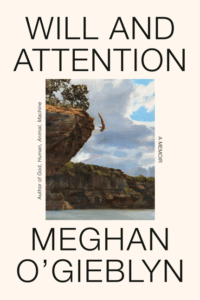
=2. Will and Attention: A Memoir by Meghan O’Gieblyn (Doubleday)
6 rave, 1 positive.
O’Gieblyn’s memoir stood out for its intellectual ambition and candidness. James Wood of The New Yorker calls it complex, surprising and unusually open in its questions and disclosures. That openness matters in memoir: the form depends not only on what an author reveals, but on how honestly the author examines the limits of their own understanding. The review count matches Marsman’s, while the descriptions point toward a different kind of inquiry. This is a book whose curiosity seems bound up with its willingness to leave difficult questions exposed.
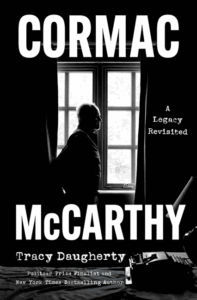
4. Cormac McCarthy: A Legacy Revisited by Tracy Daugherty (St. Martin’s Press)
6 rave, 2 mixed.
Daugherty traces McCarthy’s shift from Southern to Western writing while separating the author’s life from the mythology around him. Bill Heavy of The Wall Street Journal calls the biography engrossing and notes that it confronts difficult details as well as the writer’s evolution. That framing points to a familiar challenge in literary biography: the public image of a writer can become so dominant that it obscures the decisions and changes behind the work. The mixed reviews suggest that readers may differ on how successfully the book handles that material, even as the rave reviews attest to its hold. This is more significant than it looks: following an author’s evolution can complicate the tidy legends built around a literary career.
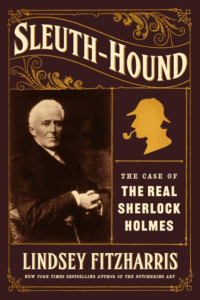
5. Sleuth-Hound: The Case of the Real Sherlock Holmes by Lindsey Fitzharris (Farrar, Straus and Giroux)
4 rave, 4 positive. Read an excerpt.
Fitzharris brings Joseph Bell back into focus as the doctor whose methods inspired Sherlock Holmes. David Pitt of Booklist says the book restores Bell to his central place in the detective’s origins. The appeal lies partly in the movement from familiar fiction to the real figure behind its methods: literary history becomes a way to examine how an influential character was shaped. Four rave and four positive reviews make this a notably consistent reception, even if the total count is smaller than for the books above. Readers get an account of origins, with the biographical subject kept in view.
What this month’s reviews suggest
The month’s selections reward readers looking for work with a strong point of view: from Kingsolver’s return to fiction to biographies and memoirs that examine how people make meaning from art, memory and loss. Across both lists, critical attention gravitates toward books that treat interior experience as a serious subject, whether that means private longing, grief, belief or the stories attached to a writer’s name. (and this is the part most people overlook) The rankings also show different kinds of agreement: some books earn broad approval, while others draw praise precisely for taking risks that won’t satisfy every critic.
Review counts are a guide to reception, not a substitute for reading the reviews themselves. A stack of rave notices can signal shared enthusiasm, but the brief descriptions here show why: a novel’s control, a memoir’s candor, or a biography’s attempt to look past mythology. That said, October’s strongest books seem linked less by genre than by their interest in how people interpret what happens to them. For readers choosing where to start, the range is the point. Plenty to argue with, and plenty to follow.