Elizabeth Glaessner’s Big Head Turns Fear Into a Painting About Release
Big Head began with a small figure emerging from a mouth. In Elizabeth Glaessner’s nearly seven-foot painting, that figure returns in the lower left, now painting the enormous head it once came from. The shift gives the work a different charge: an image rooted in fear and submission becomes one of release and reflection.
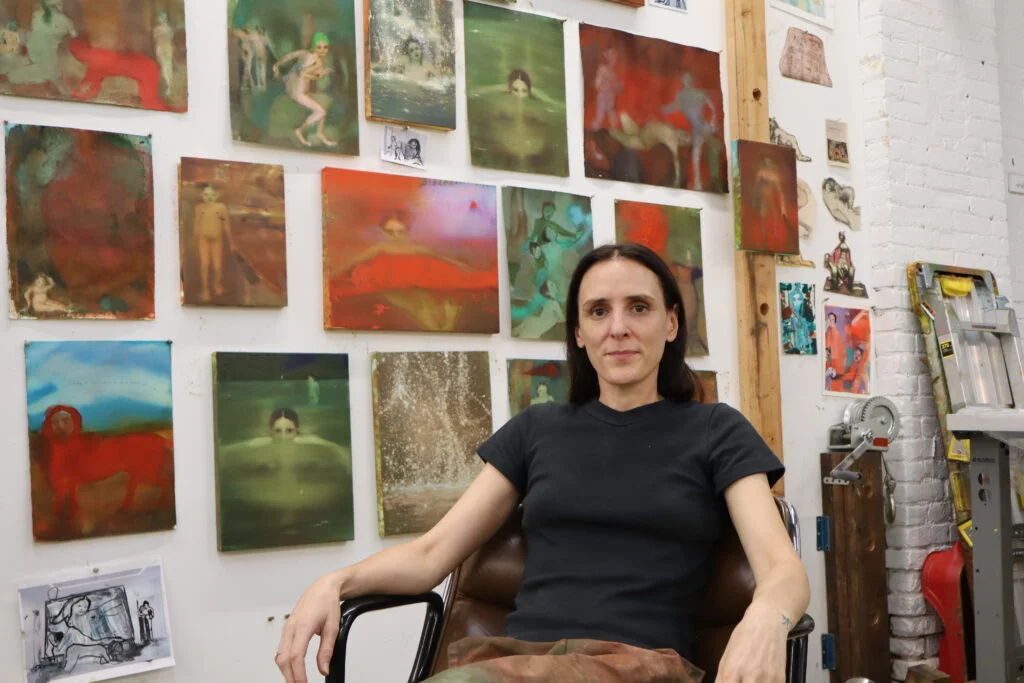
Elizabeth Glaessner in her studio in Brooklyn. Photograph by Hazel Byers.
Glaessner developed the painting from a drawing shaped by childhood experiences involving fear and religion. She looked at depictions of exorcisms and cleansing rituals in painting and film, then worked from those references, the original drawing and memory. The result doesn’t simply revisit the image of a figure being exorcised. It turns that figure into an agent, painting the mouth that produced it.
The work appeared on the cover of the Fall issue, no. 257, reduced to roughly six by five inches. In September, we visited Glaessner in her East Williamsburg studio, where large paintings stood beside smaller versions of the same motifs. She often returns to images across multiple works. As she paints, one hand braces against the wall, leaving colored prints alongside the canvases.
INTERVIEWER
Where did the idea for Big Head come from?
ELIZABETH GLAESSNER
Big Head grew out of a drawing of a small figure coming out of a mouth. The image drew on childhood experiences involving fear and religion, and I wanted to see whether painting could reframe some of it.
I studied exorcisms and cleansing rituals in paintings and films, and made work from those references, the first drawing and memory. In Big Head, the figure being exorcised reappears at the lower left, painting the mouth it came from. An image that began with control and submission became a painting about release and reflection.
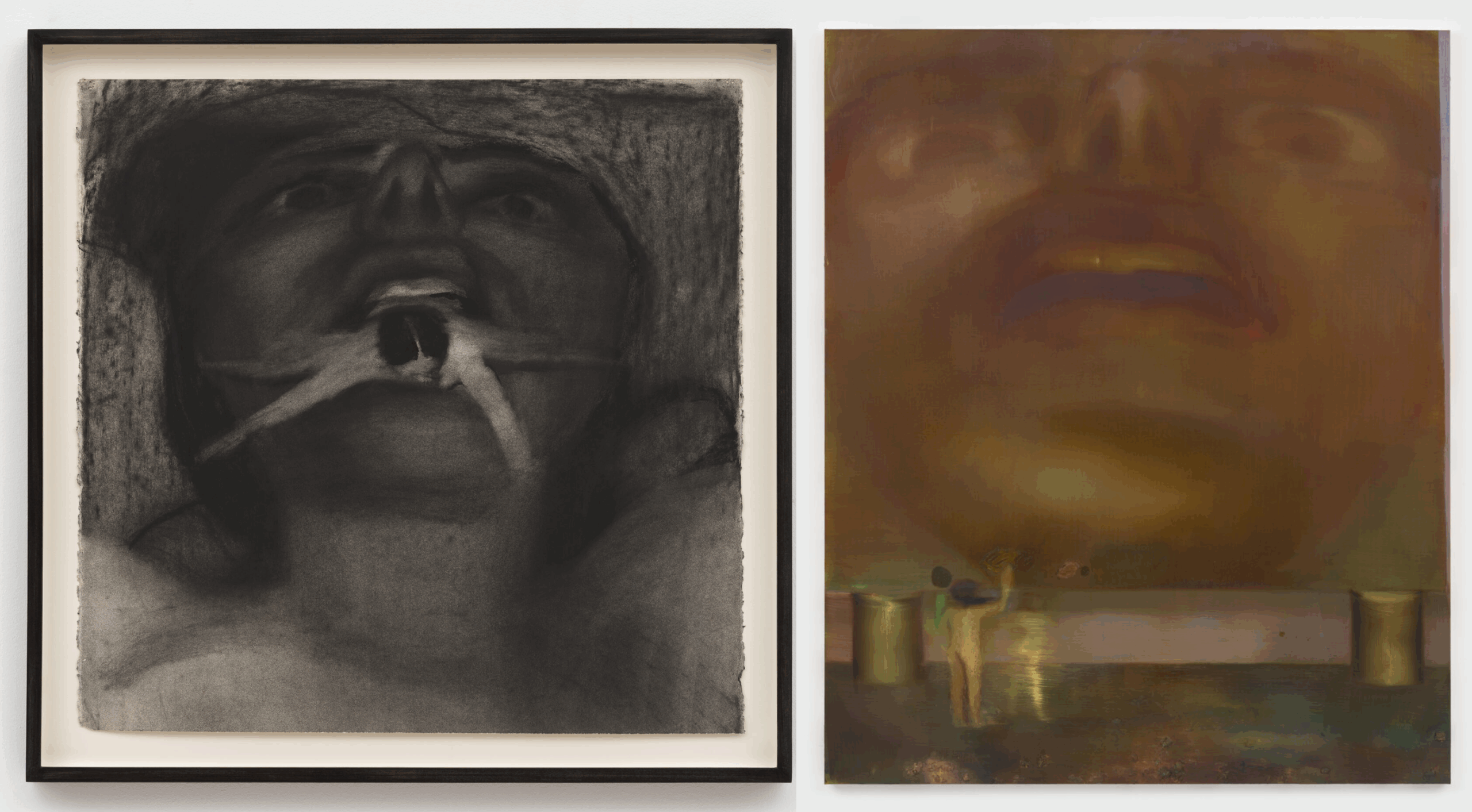
Elizabeth Glaessner, Spirit Rising study, 2025, charcoal on paper (LEFT). Elizabeth Glaessner, Big Head, 2025, oil on linen (RIGHT). © Elizabeth Glaessner. Both images courtesy of Elizabeth Glaessner and P·P·O·W, New York, photograph by JSP Art Photography.
Glaessner says the painting changed substantially as she worked. By the time she painted the head for the final time, she was thinking about fear, violence and control, but also about the strange humor of a figure painting a giant head in a studio. That mix of serious subject and absurd setup helped the painting become something she hadn’t planned.
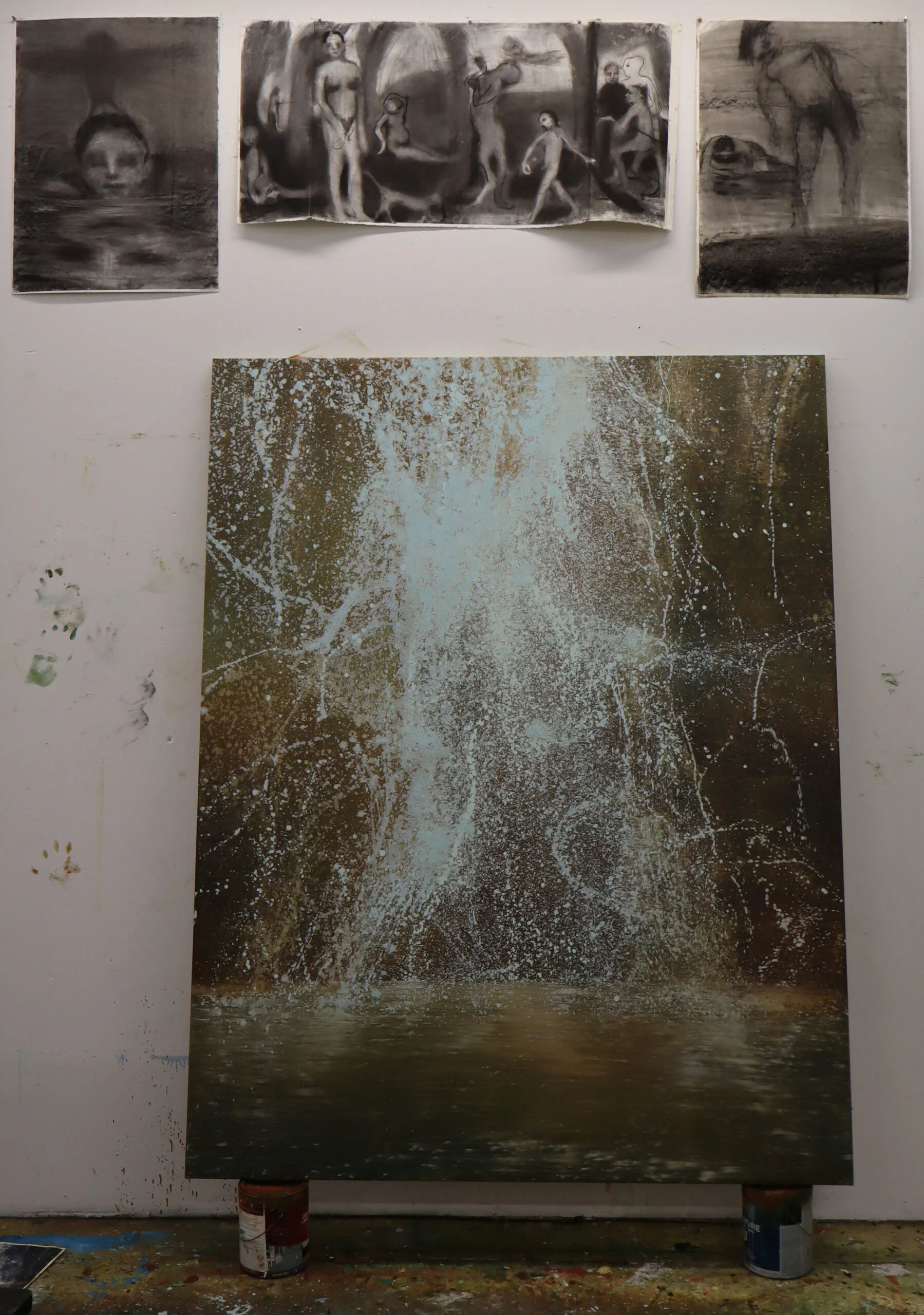
Photograph by Hazel Byers.
Bodies in motion
Water runs through the paintings in the exhibition that included Big Head, titled “Running Water.” The title came in part from a Daniel Johnston song Glaessner had been listening to while she worked: “Running water / Where are you running from? / You always seem to be on the run.” She heard in the lyric a sad, apt image of constant motion without escape.
That idea shaped how she approached the figures. Their bodies seem open to the environments around them, stretched or interrupted rather than held within firm boundaries. Glaessner describes the work as involving “a lot of leaking and expelling.” The bodies don’t stand apart from their surroundings; they appear to be altered by them.
INTERVIEWER
Why did you call it Big Head?
GLAESSNER
With an intense painting, I look for a little humor or lightness. A title can pull against the dominant mood and make that mood more vivid. The title gently teases the painting: a tiny person is painting an enormous head, which might suggest the ego. I wanted to poke at that.
Finding a studio rhythm
Music helps Glaessner settle into the work. Her listening shifts with the scale: ambient music suits drawings and smaller paintings, while larger canvases call for whatever sound fits their mood. When an album helps her find the right state, she plays it repeatedly until she moves on. The repetition can bring on what she calls a trance state.
INTERVIEWER
What else do you listen to while you’re working?
GLAESSNER
I go through phases. I used to put on audiobooks or news podcasts, but lately it’s been music in the studio. For drawings or small paintings, I choose ambient music so I can focus and hear myself think. With larger work, I listen to whatever gets me into the right mood. If an album works, I’ll repeat it until I move on. It can put me in a trance.
INTERVIEWER
What are you reading now?
GLAESSNER
I’ve just started No Longer Human by Osamu Dazai. I think it’s about alienation, or being human without feeling human. I’ll see.
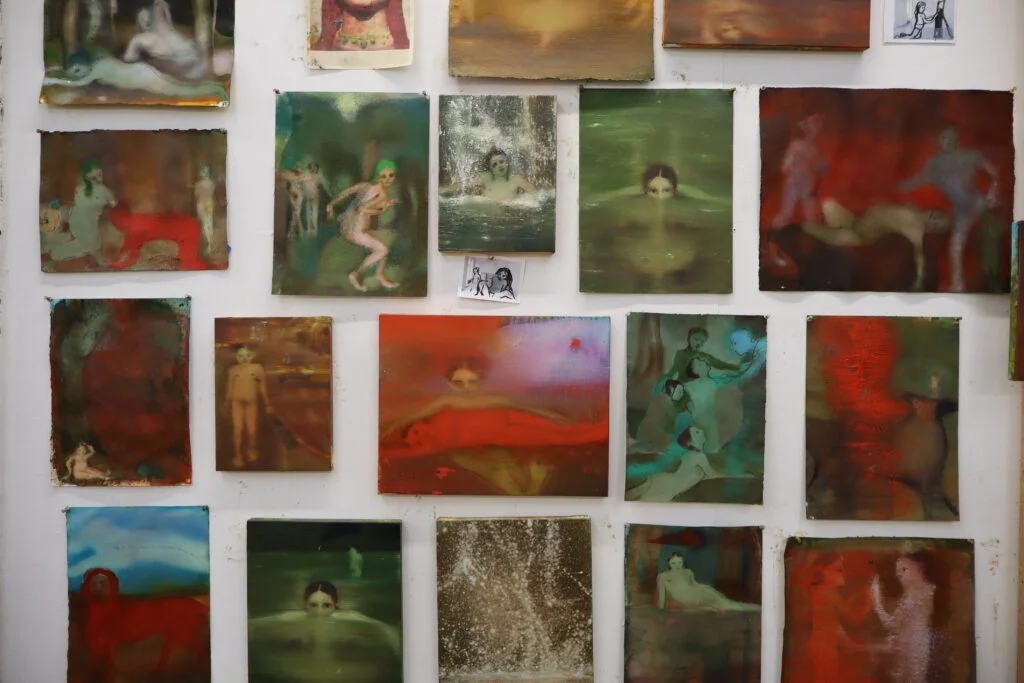
Photograph by Hazel Byers.
Hazel Byers is the Review’s engagement editor.
Izzy Casey is the Review’s business and events manager.
Elizabeth Glaessner is a visual artist.
===DONE===