Witchcraft Reading List: History, Memoir, Fiction and Modern Magic
Witchcraft books are most useful when they put spells and stories in context. Modern practice draws on traditions with different histories, and popular accounts have sometimes blurred documented persecution with later claims about ancient religions. This reading list brings together history, criticism, memoir and fiction to show how writers have approached magic, power and the figure of the witch.
Start with the history behind modern witchcraft
For Lindsay Merbaum, a kitchen witch and writer, the path into witchcraft began with a personal upheaval and a renewed sense of connection to magic. Her first books on the subject left her with questions: how did modern witchcraft take shape, and which parts of its popular history rest on shaky ground? Those questions matter to readers because practices that seem timeless can have identifiable modern sources.
One persistent story is the “Burning Times,” the claim that people executed in witch trials were witches killed by fire. Merbaum points out that most people sentenced to death were hanged. The story gained support from Margaret Murray’s The Witch Cult in Western Europe, published in 1921. Murray treated accused witches’ confessions as evidence of a surviving pre-Christian religion, despite the role of torture in producing those confessions.
Murray’s ideas also shaped Gerald Gardner, who founded Wicca and described it as a revival of an ancient goddess religion that had survived underground through Christianization. Murray wrote the introduction to Gardner’s 1954 book Witchcraft Today. Gardner drew, in part, on Aleister Crowley, whose treatment of women and use of cultural material have drawn criticism. Crowley founded Thelema in the early 1900s; its central text, The Book of the Law, contains the line “Do what thou wilt shall be the whole of the law.” Merbaum also credits Crowley with adding the “k” to “magick.”
These origins don’t settle what witchcraft means to practitioners today. They do give readers a reason to ask who shaped the stories and whose experiences those stories leave out. The books below take up that question from different angles.
History, power and the record of women’s work
The Conjuring of America by Lindsey Stewart
Stewart examines how enslaved conjure women combined ancestral beliefs, herbal knowledge and local remedies. Their work included helping with childbirth and treating illness, while passing knowledge across generations. Drawing on research, mythology and firsthand accounts from enslaved people, the book traces the varied influences of conjure in America and connects that history to practices and cures still in use.
Witches, Midwives, and Nurses by Barbara Ehrenreich and Deirdre English
First published by the Feminist Press in 1973, this study argues that women healers were pushed aside as male practitioners gained authority over medicine and women’s bodies. Its account links the persecution of women labeled witches to the dismissal of female medical knowledge. The book’s continued resonance, as Merbaum sees it, comes from that focus on who gets to provide care and who gets to control it.
Witches, Sluts, Feminists by Kristen J Sollee
Sollee follows the witch’s image through art, popular culture, literature and politics, examining how people have been targeted for appearing witchlike and how resistance to that treatment has developed. Research and interviews take the book into questions of sex, sex work, queerness, pornography, pleasure and reproductive rights. It’s a cultural history with a clear interest in how the witch became a figure of both stigma and defiance.
The Manningtree Witches by AK Blakemore
Set amid civil war, hunger and community turmoil, Blakemore’s novel follows Rebecca and her mother after they’re accused of witchcraft by a village gripped by suspicion. The witch hunter Matthew Hopkins is based on a real person. Blakemore’s poetic style gives the historical setting an intimate edge, while the accusations show how readily fear can turn vulnerable women into convenient targets.
Memoir and the making of a practice
Waking the Witch by Pam Grossman
Grossman mixes memoir with a broad account of modern witchcraft and its cultural echoes. The book ranges across fairy tales, horror films and popular images of witches, with historical details along the way. Its subjects include Victoria Woodhull, the Spiritualists who communicated with ghosts, and the influence of The Wizard of Oz. It offers a way to read witchcraft as both a practice and a story repeatedly reshaped by culture.
Initiated by Amanda Yates Garcia
Garcia’s memoir charts a difficult, searching route through poverty, sex work, travel, relationships and magic. Its account of becoming the Oracle of LA treats transformation as something worked through experience rather than claimed in the abstract. One line captures the book’s approach: “Witches use magic to compost suffering into something nourishing, something that brings the world around us to life.”
We Were Witches by Ariel Gore
Gore blends personal narrative and genre-bending storytelling to follow a young mother trying to study, write, care for her daughter and manage her mental health. Money and identity press against the desire to build a creative life. The book also considers how shame works, offering the sharp observation: “Maybe what shame needs to stay alive is the consent of the shamed.” Its form suits a story that refuses tidy categories.
Witches of America by Alex Mar
Mar began studying occult groups while working on a documentary film, approaching paganism and witchcraft as a skeptic. The memoir follows her as she joins rituals and takes on an apprentice role, leaving readers to watch her assumptions shift—or hold. The book also drew controversy over what it revealed about its subjects and how it portrayed them. For newcomers who remain uncertain, that tension is part of its appeal.
Fiction that makes room for witches
Bunny by Mona Awad
Samatha Mackey is isolated in an elite MFA program, where a tight-knit group of wealthy classmates call one another “Bunny.” When they invite her into their circle, she’s pulled toward their glittering world even as the choice threatens her friendship with Ava, the person she trusts most. Awad’s novel turns that social setting into strange, unsettling territory and makes loneliness a central force. A sequel, We Love You, Bunny, continues the story.
Rootwork by Tracy Cross
The opening book in Cross’s The Conjure Series takes place in 1889, when three sisters spend the summer with their Aunt Teddy in Louisiana. As their aunt teaches them hoodoo and lessons drawn from hard experience, the girls enjoy newfound freedom—until tragedy changes the terms of their stay. Cross brings historical fiction, folklore and horror together in a story about love, revenge and magic.
She Would be King by Wayétu Moore
Moore brings three extraordinary characters together through a mysterious power: June, who is bulletproof and superhumanly strong; Norman, who can sometimes disappear; and Gbessa, a cursed “witch” who cannot die because she embodies life. Their journeys lead through Virginia and Jamaica to Monrovia, as Liberia is founded. The novel connects supernatural ability to questions of freedom in a racist, Christianized world, while showing how the witch can be both powerful and cast out.
Lolly Willowes by Sylvia Townsend Warner
Warner’s novel follows a middle-aged woman who leaves her demanding family in London for a remote village and answers the devil’s call. Its witchcraft comes with a pact, but the deeper joke is that the ordinary world has proved far more punishing than the supernatural one. The result is a playful satire about escape, independence and the expectations placed on women.
Reading across the collection
Merbaum’s work with the Study Coven, an independent study series for witchy women writers, helped shape this reading list. In classes on witches in literature, she paired texts that speak to one another about goddesses, assault, abuse, sex work and the search for personal power. For a session called Writing through Ritual, she created writing exercises alongside spells, most of them her own.
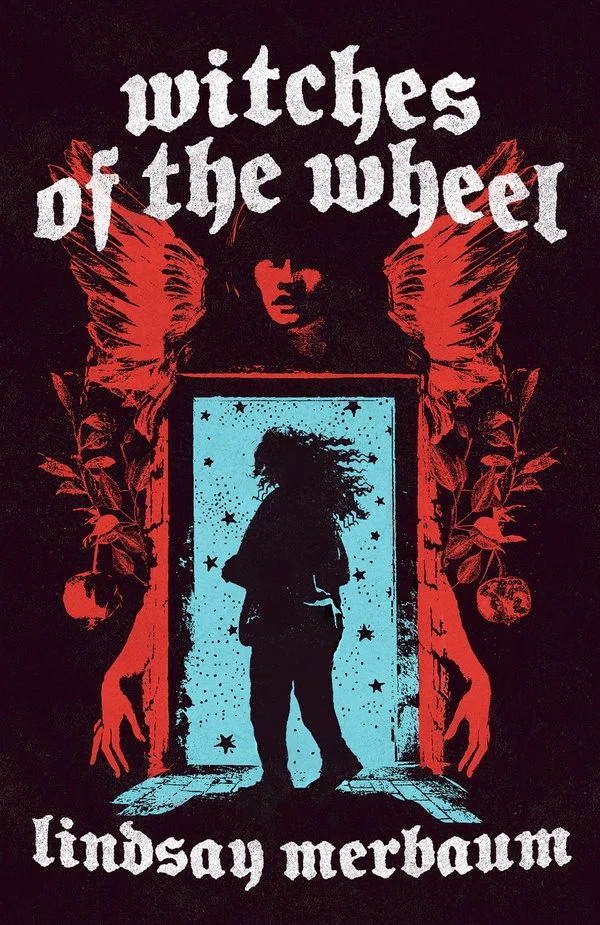
That mix of reading and practice carries into her fiction. It took Merbaum around eight years to complete Witches of the Wheel. She began with intuitive drafts, then reshaped the manuscript through repeated revision as she worked to convey magic and the weight of divine presence. The novel follows Gold, a young woman who sees spirits and flees home after her mother dies. She finds work at a secret queer bar where bottles refill themselves, then learns it’s also a meeting place for the coven she hopes to join. An ancient, volatile goddess stands in her way.
No single list can contain witchcraft’s many histories and meanings. Taken together, these books offer a grounded place to begin: follow the historical record, listen to practitioners’ accounts and notice how fiction remakes the witch for new readers. That range is the point—the stories keep changing, and reading them side by side makes the changes easier to see.