Creative Career Workbook: Lessons From Illenium on Craft, Belief and Long-Term Goals
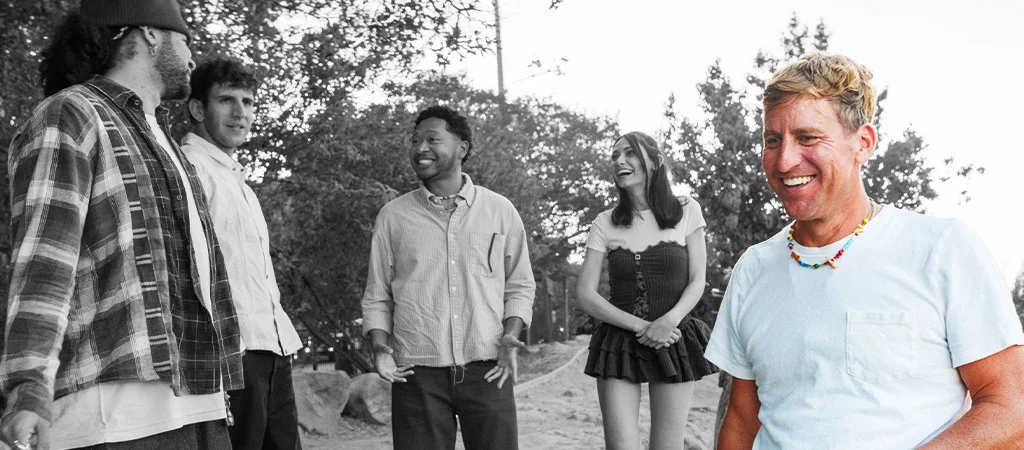
Creative careers depend on more than access to money or equipment. The harder resource to find is sound judgment: the kind that helps an artist choose what to pursue, understand an audience and keep faith with a distinctive point of view. That idea shaped The Next Gear, a series from Toyota and UPROXX that paired three emerging artists with Grammy-nominated DJ, producer and songwriter Illenium.
UPROXX creative director Stephen Bramucci developed the series and observed the conversations during filming. The participants were DJ and producer St. Mary, stylist and designer Toreno Winn, and singer, songwriter and producer Otis Kane. They rode in Toyota’s all-electric C-HR and discussed creative work, ambition and building careers that can last.

The workbook below turns Bramucci’s observations into exercises for creators at different stages. You don’t need a team, a release schedule or a touring career to use them. The prompts focus on decisions any creative can make with the work already in front of them.
Find the resource money can’t provide
Bramucci’s starting question was what a young creative needs most. His answer: wisdom. Money can pay for tools and services, but another person’s experience can help identify which choices matter and what mistakes to avoid. As he put it, “The only thing more valuable than money is wisdom.”
“It started with the idea of what is the most valuable resource a young creative can possibly have? The only thing more valuable than money is wisdom — and wisdom can help them make exponentially more, and support their careers exponentially more… Everyone made every second of the time they had with Illenium their own. Their own shift in the front seat.” — Stephen Bramucci
WORKSHEET 1.1 — WHAT MONEY CAN’T BUY
Write down the problems slowing you down. For each one, ask whether more money would solve it. If it wouldn’t, identify someone whose experience might help, then decide what you’d ask and what you could show them.
| What I'm stuck on | Would money fix it? (Y/N) | Who already knows this | Have I asked? (Y/N) |
|---|---|---|---|
The row I'd want to give an hour to
______________________________
The question I'd open with
______________________________
What I'd bring to show them
______________________________
What I'd want to ask them about themselves
______________________________
The smallest version of that access I could get this month — an email, a DM, a call, a comment
______________________________
Balance craft, audience and your own point of view
Strong creative work asks for three kinds of attention: sustained care for the craft, respect for the people encountering it, and commitment to a personal vision. Bramucci sees the balance among them as a practical measure of an artist’s direction. The exercises here make that balance visible through recent actions rather than good intentions.
“What really moves the needle for any artist is a balance of sincere care for your craft, care and high regard for your audience, and care for your own POV and your own vision.” — Stephen Bramucci
WORKSHEET 2.1 — SCORE THE THREE
Give each area a score from 1 to 5 for the past month. Back up every score with a specific thing you did.
| The care | What I did in the last month that proves it | 1–5 |
|---|---|---|
| Craft | ||
| Audience | ||
| My own POV |
The one that scored lowest, and why
______________________________
What happens if nothing changes for another year
______________________________
One change this week that improves it
______________________________
WORKSHEET 2.2 — YOUR OWN PRISM
Illenium spoke from what he had experienced, Bramucci says, sharing his perspective without claiming knowledge beyond it. That distinction offers a useful test for anyone giving advice or explaining their work: which parts come from firsthand experience, and what can only you contribute?
“Illenium never tried to share anything that was beyond him. He shared things as he sees them through his personal POV and prism, and hoped our three emerging talents would find resonance in it. I think they all really did.” — Stephen Bramucci
List the subjects people ask you about or hear you discuss. Mark whether you’ve lived through each one, then describe the angle that belongs to you.
| The topic | Have I lived this? (Y/N) | The part that's only mine to say |
|---|---|---|
The advice I repeat that isn't mine — I just heard it somewhere
______________________________
Where I've been performing expertise I don't have
______________________________
The part that's only mine to say
______________________________
Build belief into a plan
Illenium’s stories, as Bramucci recalls them, returned to self-belief and to the people who supported him early. Belief can start a career, but a clear record of goals and progress helps turn that conviction into choices. These prompts ask creators to examine both who backs their work and what they’re doing with that support.
“Illenium told stories throughout the day about how he always had to believe in himself very much first and foremost, and how he magnetized to people who believed in him, and how he has stuck with them in the years since.” — Stephen Bramucci
WORKSHEET 3.1 — THE BELIEF THAT COMES FIRST
Start with your own conviction before considering who else shares it.
What I believe about my work that I can't prove yet
______________________________
What would have to happen for me to stop believing it
______________________________
Who already believes it, and how they found me
______________________________
What I've done to keep the people who backed me early
______________________________
WORKSHEET 3.2 — THE GOALS LEDGER
Bramucci describes the artists as people with a clear sense of their goals and mission. A written ledger can reveal whether that clarity holds up: record current ambitions alongside goals you’ve abandoned, with the date and reason for each change. Some may have been set aside deliberately; others may have fallen away during a difficult stretch.
“These are people who have clear goals, who feel like they understand their mission.” — Stephen Bramucci
| The goal | When I set it | Live or dropped? | What's moved on it, or why I dropped it |
|---|---|---|---|
The goal I talk about the most and move on the least
______________________________
The goal on this list that's actually somebody else's
______________________________
The dropped one I'm bringing back, and the first move I'll make on it
______________________________
The dropped one I'm letting go on purpose, in writing, so it stops taking up space
______________________________
WORKSHEET 3.3 — THREE, FIVE, SEVEN
The final exercise asks you to picture your work and your place in it across three time horizons. Start with seven years and work backward, then identify what needs to begin this quarter to make the longest-range vision plausible. Bramucci describes the participants as hoping to reach a “next gear” or “next chamber” in their careers; the point is to make that ambition specific enough to act on.
“They felt like advice and wisdom from Illenium helped them get to that next gear, that next chamber they’re hoping to unlock. It feels like an opportunity that came to them as a way to amplify the next era of their careers.” — Stephen Bramucci
Complete the table from the longest horizon back to the nearest one. Then sum up each vision in a sentence.
| Horizon | Where the work is | Where I am | What I'm known for |
|---|---|---|---|
| 7 years | |||
| 5 years | |||
| 3 years |
The seven-year vision, in one sentence
______________________________
The five-year vision, in one sentence
______________________________
The three-year vision, in one sentence
______________________________
Which of the three I actually believe
______________________________
What I'd have to start this quarter for the seven-year vision to be possible
______________________________