Once upon a time, James Gunn’s Superman was going to be called Superman: Legacy. For one reason or another, that title got scrapped in a Social Network-esque move: “Drop the legacy,” you can imagine studio executives saying. “It’s cleaner.” That title, however, would have been more apt for Lanterns, especially after Sunday night’s season one finale, “Dirt and Stars.”
From the show’s closing moments, Lanterns has unraveled a series of Damon Lindelof-approved mysteries, none bigger than the question of who killed Hal Jordan. The season finale—there’s been no word of an official season two renewal, although superlative ratings and an already-in-progress season two writers’ room suggests it’s inevitable—finally answered the question.
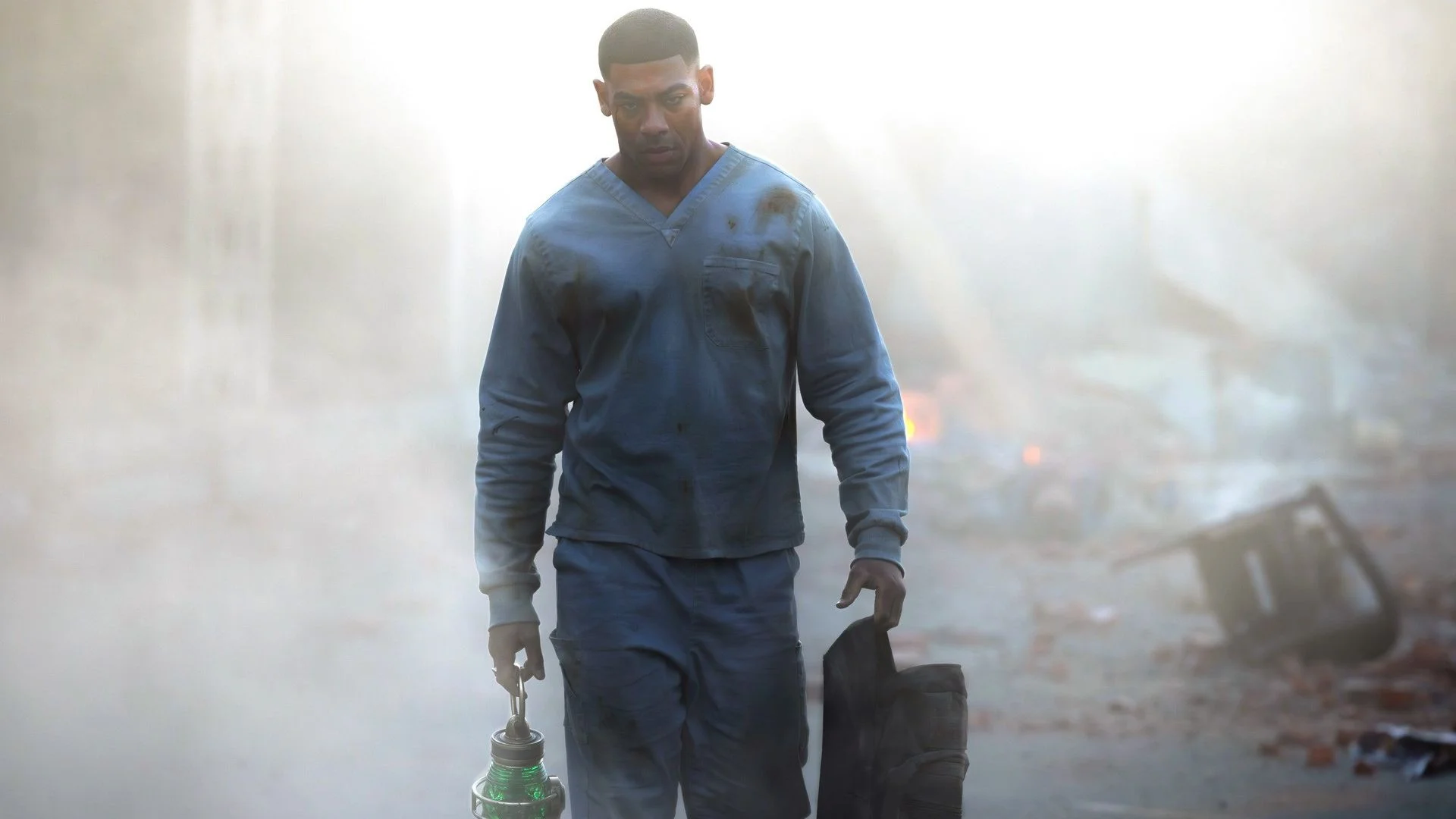
Kyle Chandler’s Hal discovers that Noah (Shea Pritchard) broke Sinestro (Ulrich Thomsen) out of space Azkaban and forced him to create a new lantern, one infused with the fears of the planet where the Manhunter previously killed Antaan (Paul Ben Victor) and his people. Upon telling Kerry (Kelly Macdonald) about the dangers that Noah might pose, Kerry shoots Hal out of fear and to ensure Noah stays protected, instantly regretting it once Hal confesses his love for her. As Aaron Pierre's John discovers all of this, he’s left with two choices: kill Noah himself or leave him alone and ensure that Kerry’s parenting skills will be enough. John picks the latter, though not without first developing a contingency plan.
As John tells Guy (Nathan Fillion), he’s going to be the new Green Lantern. Armed with Hal’s old ring and Sinestro’s newly forged fear-infused lantern, John will take Earth—the “dirt”—while Guy takes the stars. And to ensure the Guardians don’t futz with this new “independent contractor” arrangement, John tells Guy to make sure they remember he delivered Zoe’s heart to them all those years ago.
Adding a grace note to the contractor bit, John develops his own Lantern oath. This remixed version acknowledges that fear can be a powerful tool when wielded properly, hammered home by Halogram’s note that John shouldn’t “be afraid to be afraid.” It’s an elegant solution to the idea that, up to this point, the DCU has only allowed itself to have one Green Lantern. That’s true of comic book lore as well, but it hasn’t stopped creators from introducing up to four different Lanterns for Earth at various points throughout comic book history while also adding a veritable cherry on top of a savvy thematic arc.
Fans won’t have to wait long to see John (and Guy) in action; the pair will appear together in 2027’s Man of Tomorrow. The anticipated follow-up to Superman will feature the Man of Steel teaming up with Lex Luthor to fight the villainous Brainiac. The whys and wherefores around why both Green Lanterns will be needed are still as up in the air, like John is at the end of the episode. But it must be said that Brainiac is a foe who'd certainly threaten both the dirt and the stars.
More than anything else, Lanterns proved itself to be an unlikely hit. While I enjoyed the early episodes, the series proceeded to take over the timeline with unanticipated enthusiasm. It’s one thing for people to tune into a Sunday night HBO series. But even the biggest superhero skeptics seemed to love Lanterns, rallying new fans to the genre in a way we haven’t seen since WandaVision. That should bode well for Man of Tomorrow and for the inevitable season two, even if Kyle Chandler’s Hal won’t be a big part of it.
Lanterns’ success boils down to a pretty universal theme: legacy, explored with captivating introspection. The entire series was oriented around this idea: what do people believe, and what’s promised to them? Hal, at the end of the day, hoped he mattered. John obsessively trained for a deferred dream only to reject that legacy—at least until he reached a point where he could literally define it for himself, on his own terms. Green Lantern has posited itself as a “stars”-forward tale for decades of comic book readers. But sometimes a reimagining—or better yet, a remix—is needed to make something old feel fresh. By grounding itself in the “dirt” of legacy and self-reliance, Lanterns set the genre alight again.