
This is an edition of the newsletter Box + Papers, Cam Wolf’s weekly deep dive into the world of watches. Sign up here.
Way back at the turn of the 20th century, watches were often designed with highly specific end users in mind: marine chronometers that helped sailors calculate a ship’s longitude at sea; pulsometers that allowed doctors to quickly determine a patient’s heart rate. Today, though, with timepieces no longer the essential tools they once were, watchmakers are able to devise models aimed at even more wildly specialized enthusiasts. Like, say, serious coffee guys.
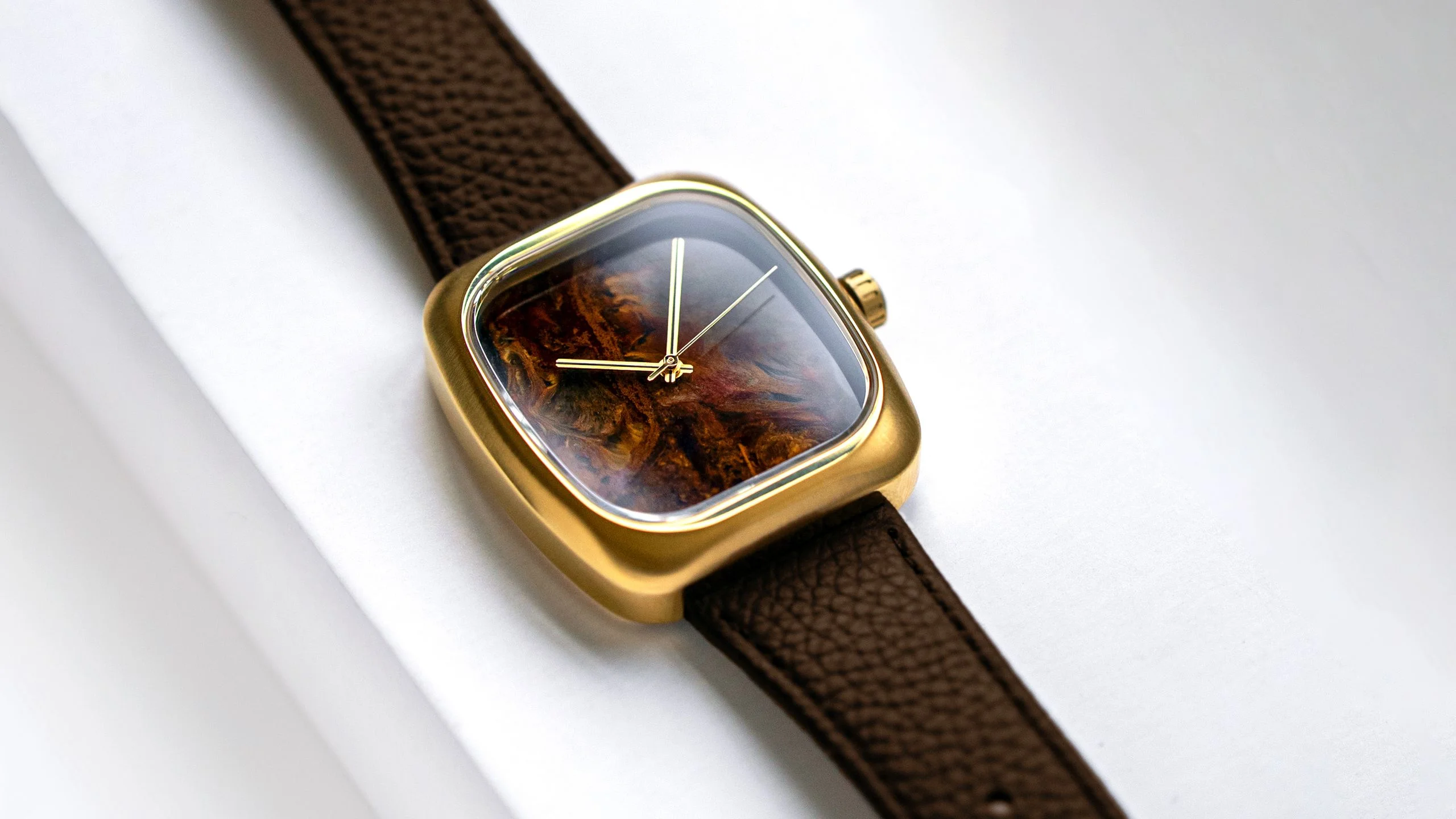
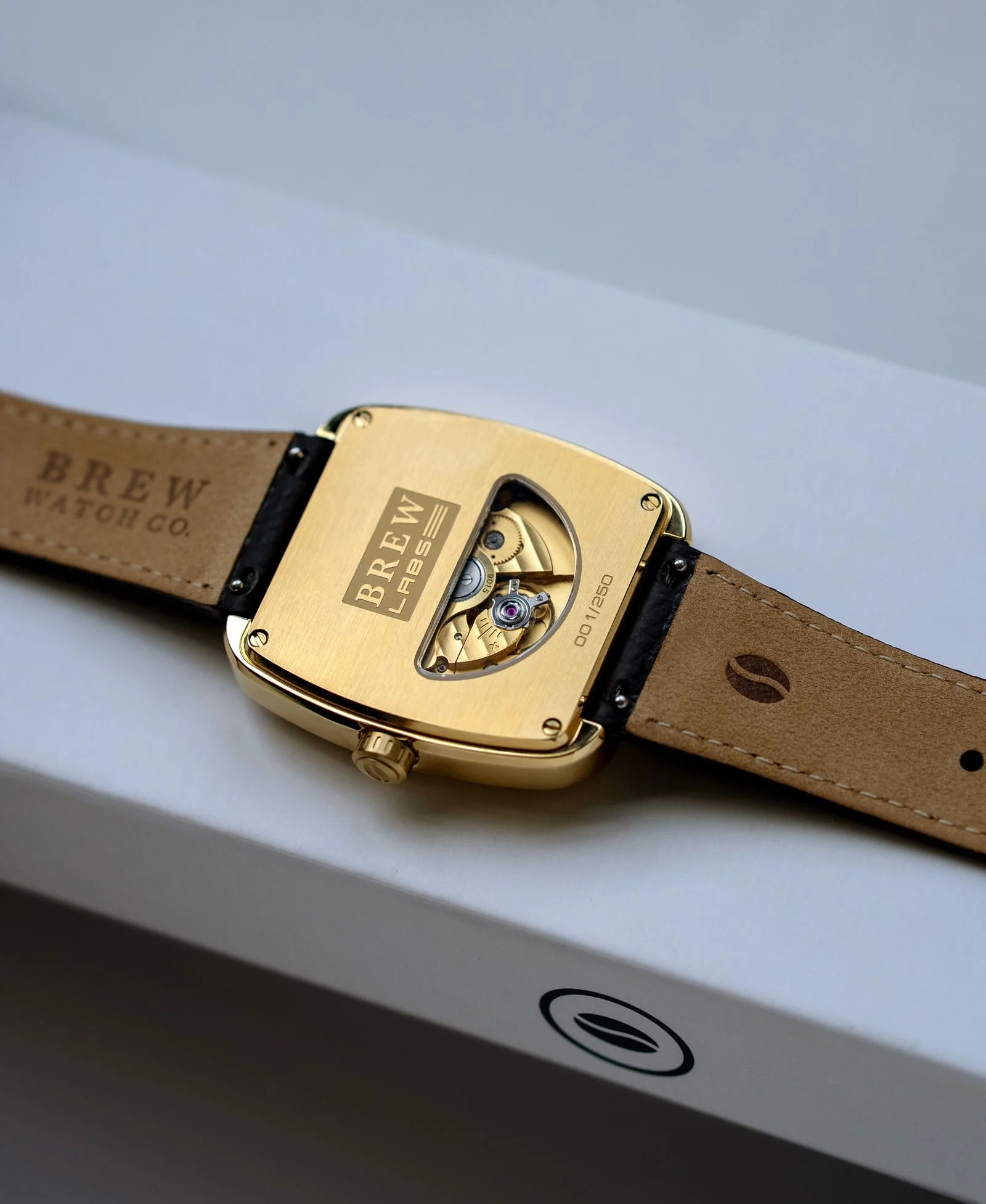
Johnathan Ferrer founded Brew Watches in 2015 to combine his love of tickers and java. “In a way, we’ve created our own segment, rather than competing with another racecar- or space-inspired watch,” he tells me. “We’re that brand that’s inspired by your time over coffee.” Eleven years on, Brew is still managing to flow out new pieces fusing these two disparate worlds together as steadily as hot liquid coming through the base of a Chemex. Last Thursday, the brand dropped a design that feels like the platonic ideal of its mission: the $775 Retrograph Stone Blend, which boasts a pietersite dial. Any watch brand could have used this pretty brown stone with shades of creamy tans running through it, but in Ferrer’s hands it’s a nod to the way milk—or as my wife prefers, half and half—twists into your morning cup of mud. This is how Brew has sustained a coffee-inspired brand for so long: by crafting reasonably priced watches that are great on their own, but especially desirable if you happen to have opinions on beans sourced from Ethiopia versus Colombia.
“I’m trying to be a little bit more Easter egg driven rather than too on the nose,” Ferrer says.
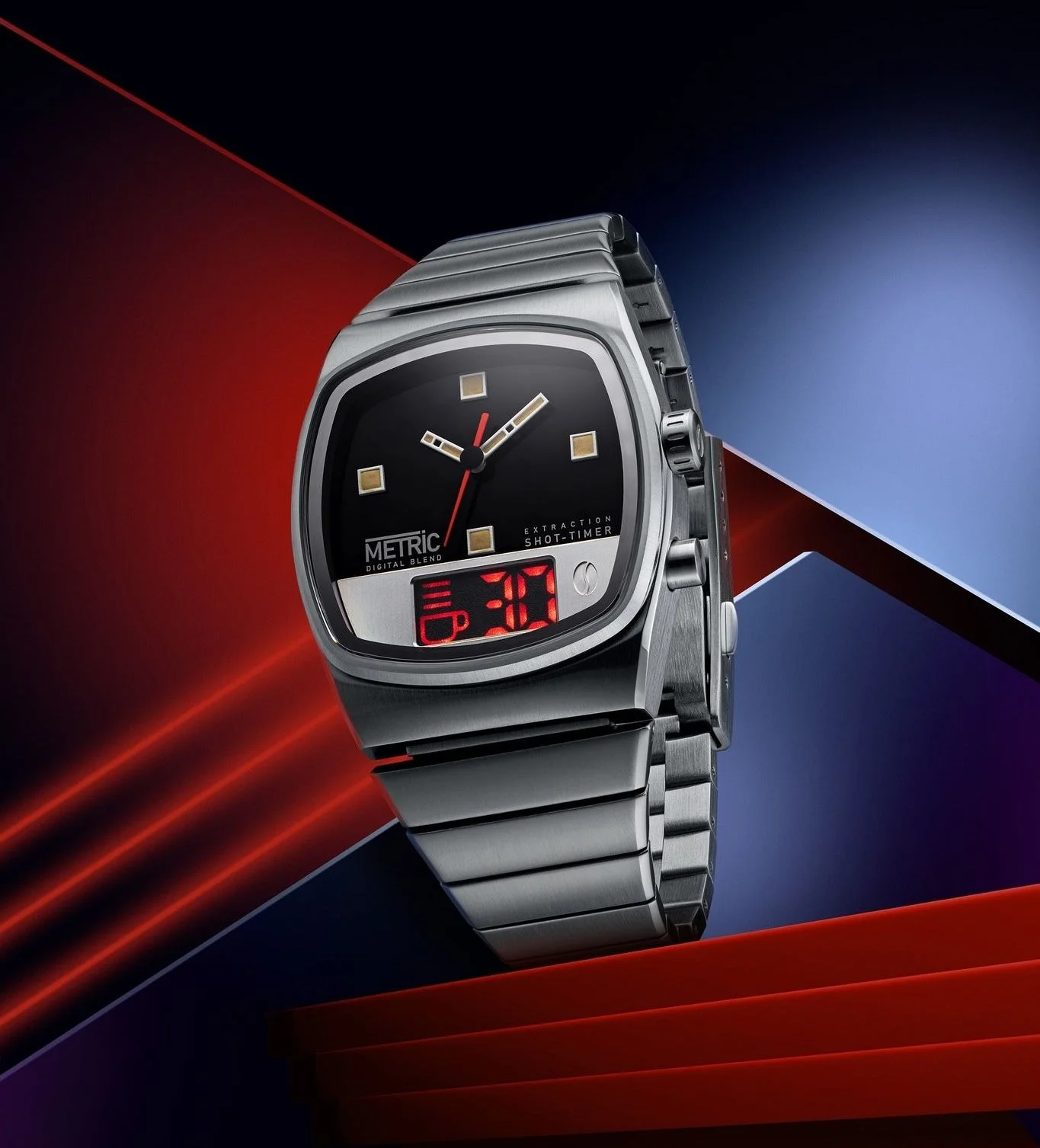
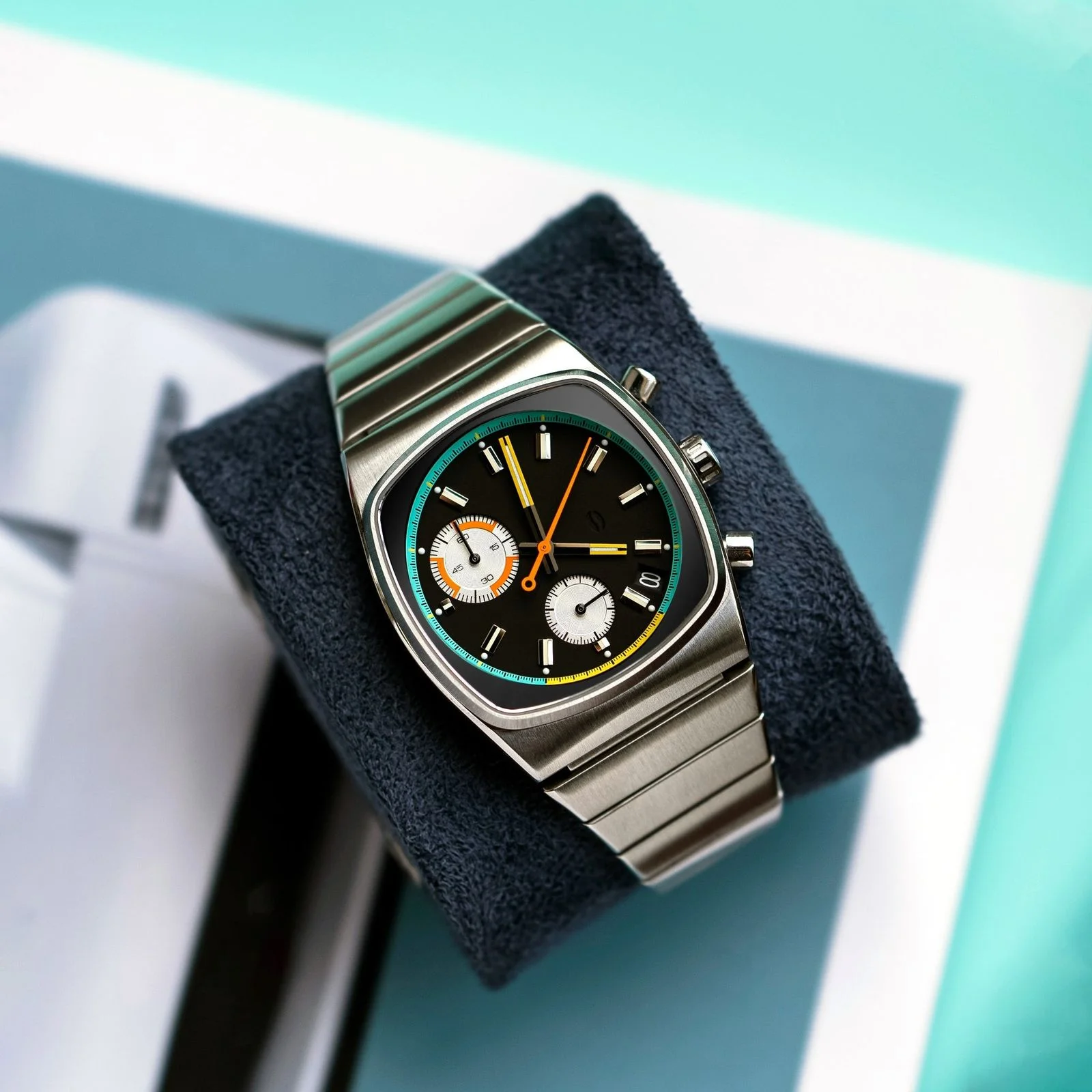
Brew and the new Retrograph model are poster children for the recent explosion of microbrands and the competitiveness of today’s sub-$1,000 watch market. Here, I caught up with Ferrer about his latest release, gaining a fan in Idris Elba, and his go-to café order.
Ferrer: That was the fear most people had. They essentially were saying you had a one-hit wonder, but what else can you string along that’s coffee-related that’s not cliché? That was the challenge upfront.
I try to keep it as classic and timeless as possible, while keeping the backstory that this is truly related to your time over coffee. I think people can appreciate the storytelling as long as it’s done in an authentic way. I know that word is used as a buzzword these days, but it’s true. You can see the one-to-one correlation with the latest stone dial, because we didn’t choose just a standard pietersite stone or just some brown tones. I truly went out to get a stone that was most correlated to that mixing, that randomization that you would see with the blending of two liquids.
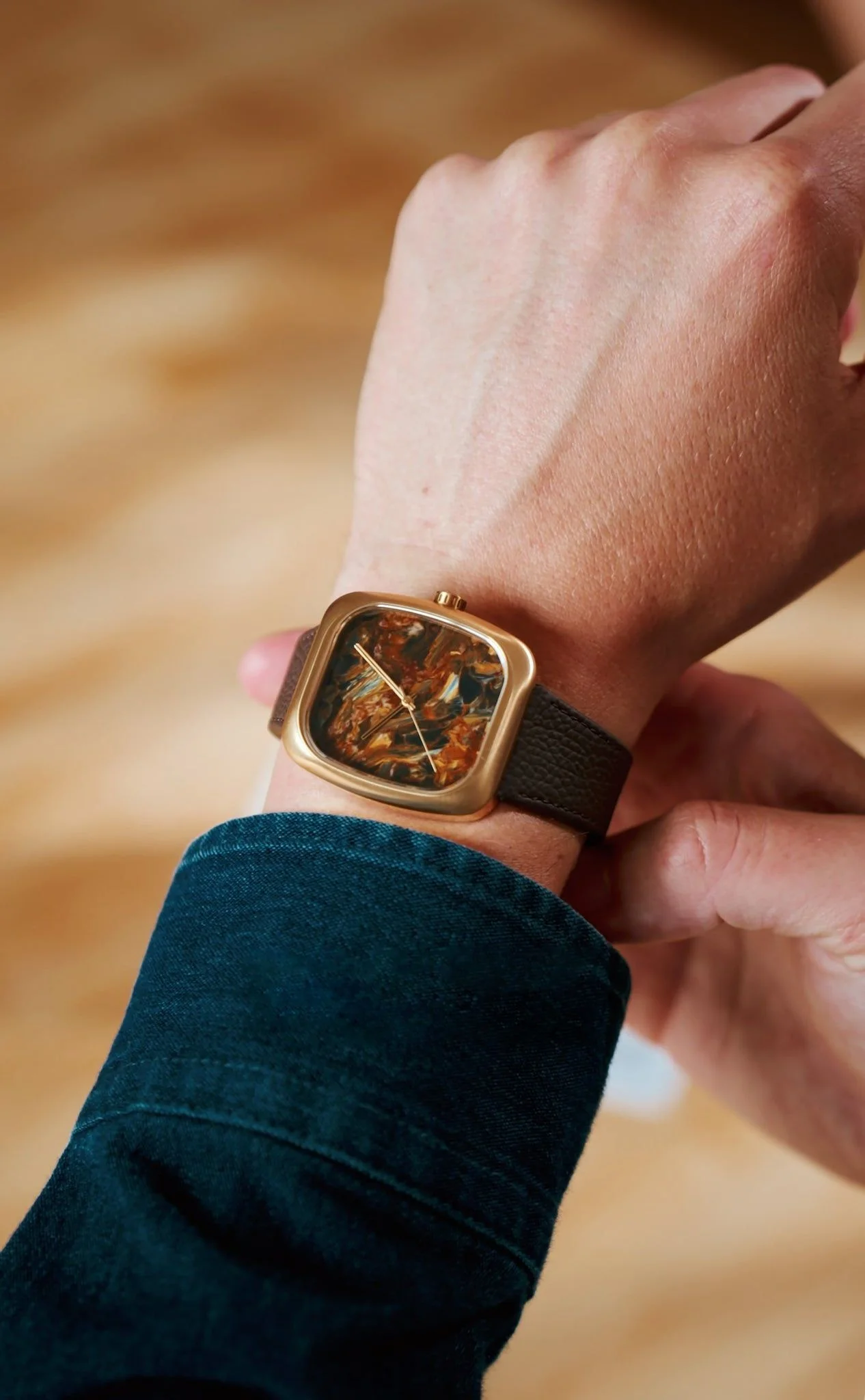
It’s definitely got to be an undertone because, as you alluded to, most people are not coffee enthusiasts, which is totally okay. And so I have to design it in a very intentional way where it’s not overly branded—the whole coffee tone can’t be so on the nose.
About four or five years ago, I got a DM on Instagram, and it was from Idris. I looked over at my partner, held up my phone, and went, “Do you think this is real?” And she looked at it with full confidence. She says, “Absolutely.”
I jumped on a call with him, and I said, “If I had seen your name, I would’ve thrown in a little special something. I had no idea.” And he essentially said his stylist had chosen Brew as something special and unique to show him. And then Idris kind of picked up on it and started a relationship with us over the years.
Yes and no. I would say, yeah, it’s easy to find suppliers and have the parts, especially with access to AI research these days. You could type in, I want a watch manufacturer that makes glass ceramic watches, X, Y, Z. And then you’ll find those results. But what I’ve learned the hard way is that just because we’ll find these suppliers easily doesn’t always mean that they’re going to serve you well.
I experienced this in years four and five of Brew, where I had multiple suppliers that absolutely dropped the ball and delivered really poor quality. Essentially, I was left with no product, and I had to start from scratch. And so I spoke to the large brands like Seiko and Miyota—they put me in good hands. But the thing that I learned was that there are many suppliers, but only the top select few can produce good products consistently over the years.
I was going to China about 15 years ago when I first started. The difference compared to when I visited earlier this year is that the whole operation has become tenfold, way more optimized. And what I mean by that is, 15 years ago, it looked like walking into a machine shop, a little bit more industrial.
Now, when you go to visit, it’s like a science lab. It’s like visiting these Swiss watch factories, because they’ve been studying the Swiss and other really high-end manufacturing suppliers, and they essentially duplicated the entire production line. So whether it’s the tech or how these suppliers build their facilities, it’s pretty high-end now.
Both. Especially after COVID, the increase in volume for all these different clients around the world was rapid. [Advancing the technology] was the only way they could keep up. In the past, a lot of watches—like your everyday fashion watches—were assembled by hand. They would hand-assemble the dial, the hands, the case. But now, if you go to visit, it’s all automated by robots picking it up and placing it. The only time there are human hands involved or physical labor will be quality control or testing now and then. But there’s a lot of robotics being used.
I use a multitude of suppliers based in Hong Kong, China, Switzerland, and Japan. Japan I’ll use a lot for our mechanical assembly, whether it’s a Swiss movement or a Japanese movement. I’ll work with our Hong Kong and China suppliers for more quartz-based movements. And I’ve noticed that different manufacturers or assembly houses are better for different purposes. So, the Japanese assembly house is excellent when it comes to mechanical watches. But in China and Hong Kong, they have full automation with robotics for quartz chronographs. So their assembly line is fully automated and very high-tech. And then I’ll work with [movement manufacturer] Selita in Switzerland to produce those movements.
Yeah. If you wanted to start a brand tonight, if we had a design that was even 50% complete, these suppliers now are so advanced they can help finish your design for you. They know what sells, and they’ll actually encourage you to improve your design because they know what the market wants.
They have enough data on what works and sells, and they’re willing to share that with current and new clients.
It’s a one-off, but you learn from every launch. So even though I have designs in the pipeline for the next year and a half, it still helps me react to how I work on future designs. This worked. What did I like about it? What would I improve? But more so for myself and these brands you mentioned, I think everyone’s getting more confident now with their success—meaning how well every product is accepted by the community. Everyone’s getting confident to sing to their own tune.
For me, I’m like, this is our DNA. This is what people recognize us for. Let’s go all in on this. No part of us needs to stay conservative. Naturally, any early company wants to be safe because you’re fighting the clock, you don’t have a big budget, and you need to make it work. Now I’m in year 12, but in years six to eight, you’re still playing it safe because you could fail at any moment. Financially you can go belly up in months.
Definitely a higher price point because of the evolution of the company and our customers. People are taking this journey with us, meaning they’ve come in at $250, then $450 watches. And so they’re climbing the price bracket as well as the complications, the details, and the specs of the watch. So if I came out with this [stone-dial watch] on day one, I don’t think people would know or appreciate the details as much.
If it’s a hot summer day, like today, I’ll get either cold brew or double espresso over ice. Fun fact: When we were in Japan, my fiancee asked for espresso over ice and they looked at her sideways like we were breaking the rules. There are different facts behind this, but putting espresso over ice typically hurts the flavor, but I like it because it’s refreshing. But if it’s wintertime, hot espresso.
Not typically. Every once in a while. I would say once every 10 visits I’ll throw milk in there just to kind of dilute it.
Well, luckily in my building, there’s this cute little cafe. It’s called Yuki’s. It’s downstairs. To be honest, I have a machine in my office within arm’s distance, but I still take the walk to the cafe.
We have your Nespresso for the everyday person because it’s faster and more efficient. And next to that, we have a little La Marzocco Linea. So, if we have time or we want to entertain guests, we could pull a shot on that for someone.
Action Bronson came to the office one time. He goes, “Make me a shot of espresso.” I’m like, “Oh boy, here we go. No pressure.” And then I made him one. He was happy with it.
I’ll typically do pour-over or espresso at home.
Three to four.
Verve is a good one.