
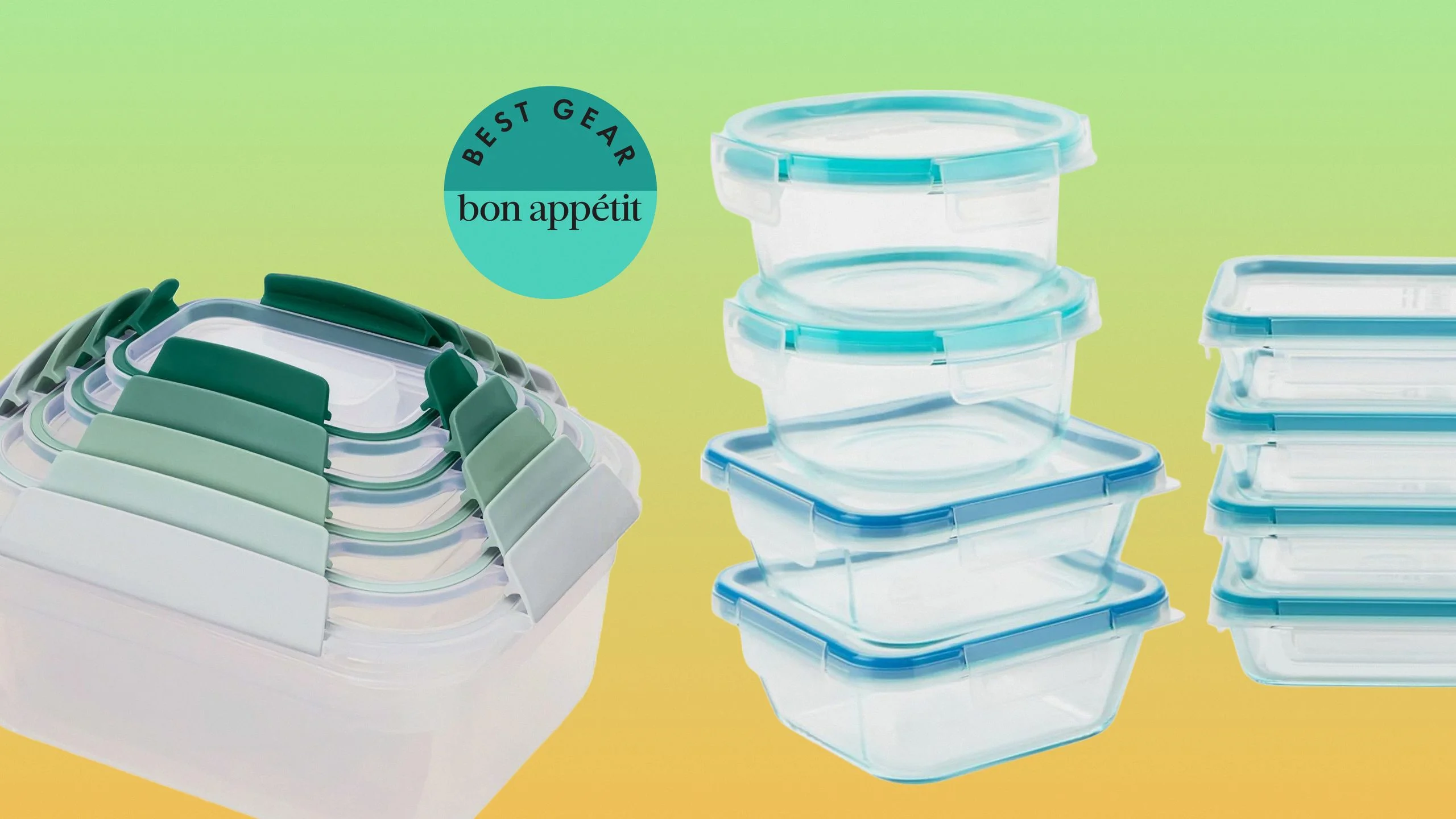
A word of advice from my team: If a food storage container claims to be either leakproof, stainproof, or shatterproof, take it with a grain of salt. We've tested over a dozen different plastic, glass, and silicone storage sets over the years and have found that many of these brands' boastful claims fall short of their promises when actually put to the test.
I'm not expecting invincibility here, but if something is gonna claim to be anything-proof, it should be able to withstand a modest amount of stress testing. While many failed to meet our expectations, my team has managed to find some genuinely resilient containers for storing leftovers, packing lunches, and batching meal prep.
Our top picks
- The best glass food storage containers: Snapware
- The best plastic food storage containers: Joseph Joseph Nest Lock
- The best silicone food storage containers: Anyday Anydeli Containers
Below you'll find our favorite food storage containers by category. We chose a plastic winner, a glass winner, and a silicone winner, since each material has its own strengths and weaknesses. Keep scrolling to learn more about our top picks and how we tested them.
New in this update: We added an additional category for silicone storage containers, and we removed older picks that have since been discontinued.
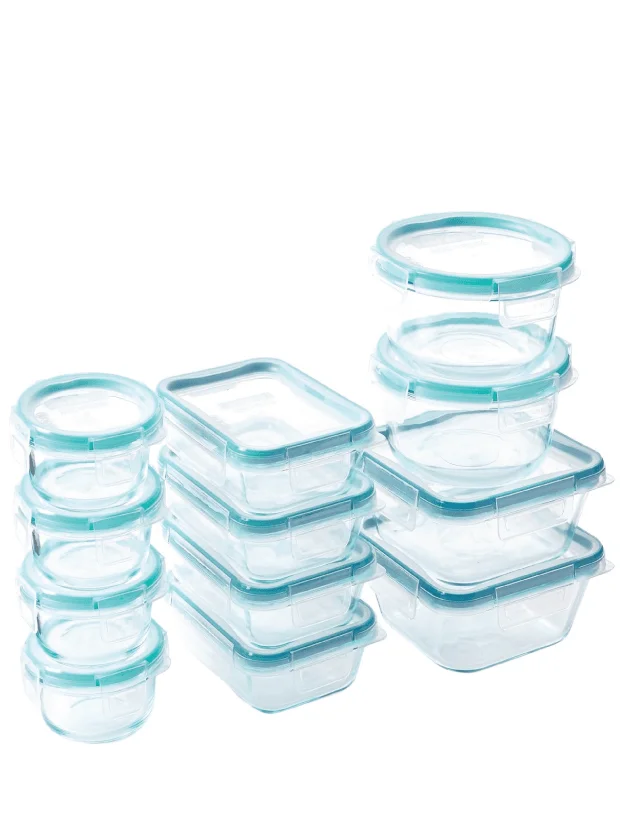
Best glass food storage containers: Pyrex Snapware
Pros and cons
Pros:
- exceptionally leakproof when properly sealed
- stack nicely
- clear plastic lid
- snaps easily
Cons:
- gasket can get funky
- Pyrex glass ain't what it used to be
Specs
Container material: Pyrex glass (soda lime glass, not borosilicate)
Lid material: Plastic
Lid closure style: Latches
Individual pieces available: Yes
Dishwasher safe: Yes
What I loved: The plastic latching lids are truly airtight; both the round and rectangular containers have four latches each and they don't allow any liquids to escape, even when shaken vigorously. A fixed silicone gasket on the lid makes them easy to hand-wash (though they’re dishwasher-safe too), they’re stackable when full, and they nest for easy storage when not in use.
What I'd leave: The plastic lids did absorb some color and aroma from our stain soup, but nothing persisted after a rub-a-dub-dub with a sponge and some dish soap. Many people might not know that the Pyrex glass manufactured today is not the same as the vintage stuff. Older Pyrex is made of borosilicate glass, while the Pyrex of today is soda lime glass. The latter is much less resistant to thermal shock, but is more resistant to impact force. Some people argue that the quality is lower, I'd say that since you aren't cooking in the food storage containers themselves, the need borosilicate isn't very strong. Still, something worth noting.
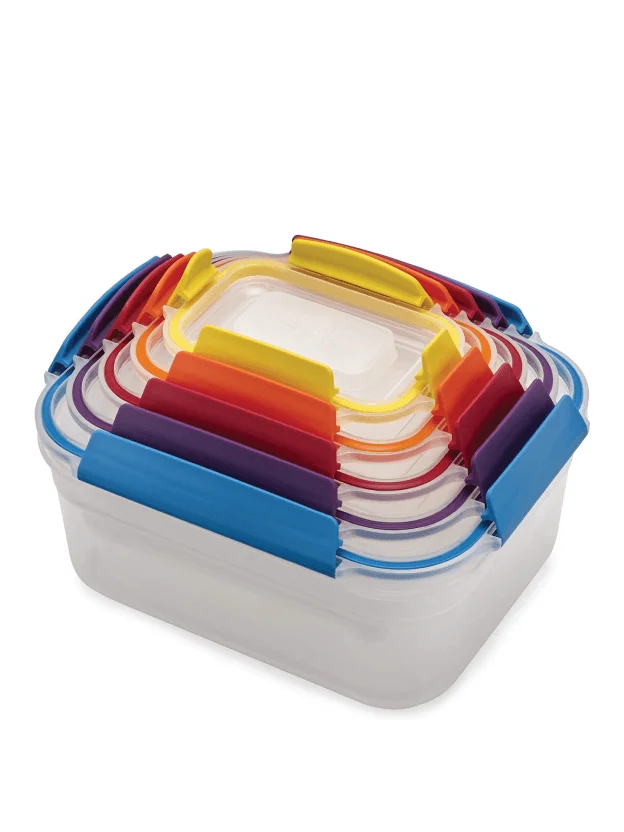
Best plastic food storage containers: Joseph Joseph Nest Lock
Pros and Cons
Pros:
- Clever nesting
- Withstands drops well
- Very resistant to leaking
Cons:
- The collection of sizes may not be the most practical for some
- Only one of each size
Specs
Container material: Plastic
Lid material: Plastic
Lid closure style: Latches
Individual pieces available: No
Dishwasher safe: Yes
What I loved: These colorful plastic lids did not leak, even when I dropped them repeatedly from counter height onto a tiled kitchen floor. In fact, these were the only plastic containers we tested that remained completely closed no matter how many times we dropped them. Over and over and over again. The containers themselves nest together nicely from largest to smallest on top, creating a lovely chromatic gradient. Overall, these are both nice-looking and tough.
What I'd leave: The plastic did seem to hold onto a tiny bit of discoloration from the stain soup we made for testing. And if you want multiple pieces in the same sizes, three 4-cup containers for example, this might not be the set for you.
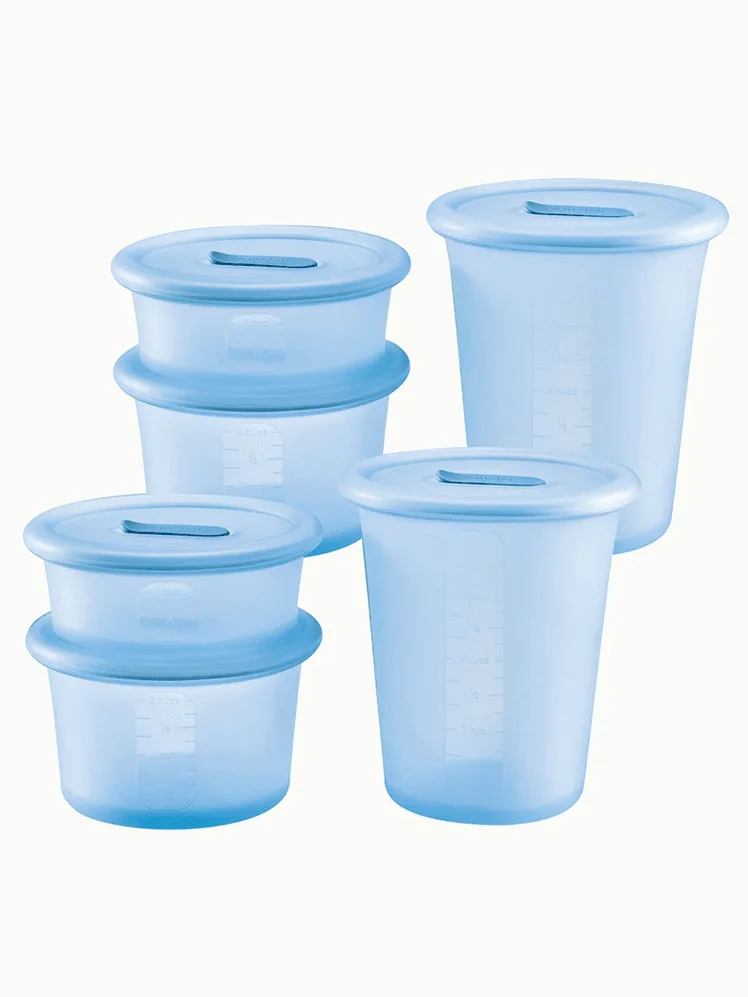
The best silicone storage containers: Anyday Anydeli
Pros and cons
Pros:
- Great in the dishwasher
- More durable than you think
- Highly practical shapes
Cons:
- Silicone stains and holds onto smells
- Don't store super well
Specs
Container material: Silicone and embedded stainless steel rim
Lid material: Silicone
Lid closure style: Press and seal lid
Individual pieces available: Yes
Dishwasher safe: Yes
What I loved: My team really fell in love with these containers because they copy the form factor of classic deli containers. However, instead of being made of cheap, flimsy plastic, they are resilient, dishwasher- and microwave-safe silicone. While silicone storage containers aren't known for their super tight seals, I was impressed by how much squeezing and shaking these could withstand without leaking. I wouldn't keep one in a bag full of stuff all day long, but they can easily handle a commute without making a mess. The internal stainless steel rim gives them a nice sturdy structure, and the volumetric measurements on the side make them great for meal prepping.
What I'd leave: Unlike conventional deli containers, these don't stack neatly inside each other, which means they take up more storage space when not in use. Silicone is also notorious for holding on to stains and smells, but that's a fundamental problem with the material, and not unique to these containers.
How we tested food storage containers
In addition to evaluating quality and other factors (more on that below), we performed a series of three tests on at least one piece from every food storage container set:
Drop test
This is exactly what it sounds like. I dropped the containers on the floor. For the glass containers, I dropped them empty from the counter to the BA Test Kitchen floor to see if they would shatter (or not). For the plastic containers, I filled them with water and dropped them multiple times from the counter to see how well the lids stayed on (or not). Yes, it did get messy.
Drip test
For this round of testing, I filled the containers with water and shook them vigorously over a dry paper towel and evaluated how much (if any) water dripped out of the sides—and yes, I made sure to wipe the rims before sealing them.
Stain test
For the final round of testing, I made a “stain soup” of garlic tomato sauce and ground turmeric. I filled each container with the bold creation and stored them—upside down—overnight in the fridge. The following day, I put each one in the microwave and then emptied and rinsed each one with water. I then ran each through the dishwasher and finally hand-washed each one with dish soap. At each stage, I made note of how much smell and color remained on the surface.
What we looked for in the best food storage containers
Functionality
Most often used for leftovers, food storage containers double as meal prep containers and lunch boxes. I also make a point of transferring any leftover takeout to an airtight food storage container so it doesn’t stink up everything else in the fridge. So I looked for containers that had leakproof, airtight seals.
Temperature tolerance
For the glass food storage containers, I looked for products that were oven-safe, freezer-safe, and microwave-safe. (We don’t recommend reheating any food in plastic containers, even if they’re marked as microwave-safe.)
Quality materials
I looked for plastic lids that felt durable, not flimsy, and if they had latches (the Rubbermaid and Pyrex containers we tested did not) I looked for latches that were easy to open and close. These days, it’s generally a given that if food storage containers have plastic parts, it’s BPA-free plastic, but I looked for that too.
Variety of sizes
I looked for product lines that came in many different sizes. And bonus points for any that offered both rectangular and round containers in different sizes.
Storage
Food storage containers are meant to store food, but how well do the containers themself store? Are they stackable when in use? Do they nest well when not in use? All of these factors mattered as well.
Other food storage containers we tested
Oxo is a brand that rarely disappoints, and these were no exception. However, because they’re made of borosilicate glass, they’re pricier than the Snapware set, which works just as well but costs less.
We like a lot of kitchen gear from Joseph Joseph, and we wanted to love these storage containers with colorful lids. Unfortunately, they were far from leakproof.
These looked nice and have great customer reviews. Unfortunately, in our testing, we noticed liquid leaking from the hinges of the lids.
Aesthetically and functionally speaking, we liked the design of these containers but they didn’t hold up. The glass didn’t pass our drop test and the lids held onto food stains.
These are very popular among consumers but in our testing, they weren’t quite leakproof. These Pyrex containers were also one of only a few sets we tested that didn’t have locking lids.
These are only brilliant for a minute because they hold onto stains like it's their job. When I dropped them from counter level, the locks snapped open too.
The Snapware Total Solution Plastic Food Storage Containers didn’t pass our drop test because the lid locks didn’t hold well.
These managed to keep a tight seal when we looked for leaks, but the lids required what felt like unnecessary effort to actually close.
These are another popular container, and in the past we recommended them as a runner-up pick. With long-term testing, we've grown less enthusiastic. The lids are still a pain to attach, and the edges of the glass sometimes chip. They also don't stack on top of each other easily, and we've found that the airtight seal from container to container really varies.
Rubbermaid Flex and Seal (discontinued)
This was a longtime reliable favorite, and our former plastic top pick. Unfortunately, it's been discontinued by the brand. R.I.P.!
Meet your reviewer
Wilder Davies: I've been testing gear for Bon Appétit and Epicurious for over 6 years, having used and evaluated hundreds upon hundreds of kitchen products. I've tried and failed many a meal-prepping venture, and have endured more than one mid-transit lunch leak.