
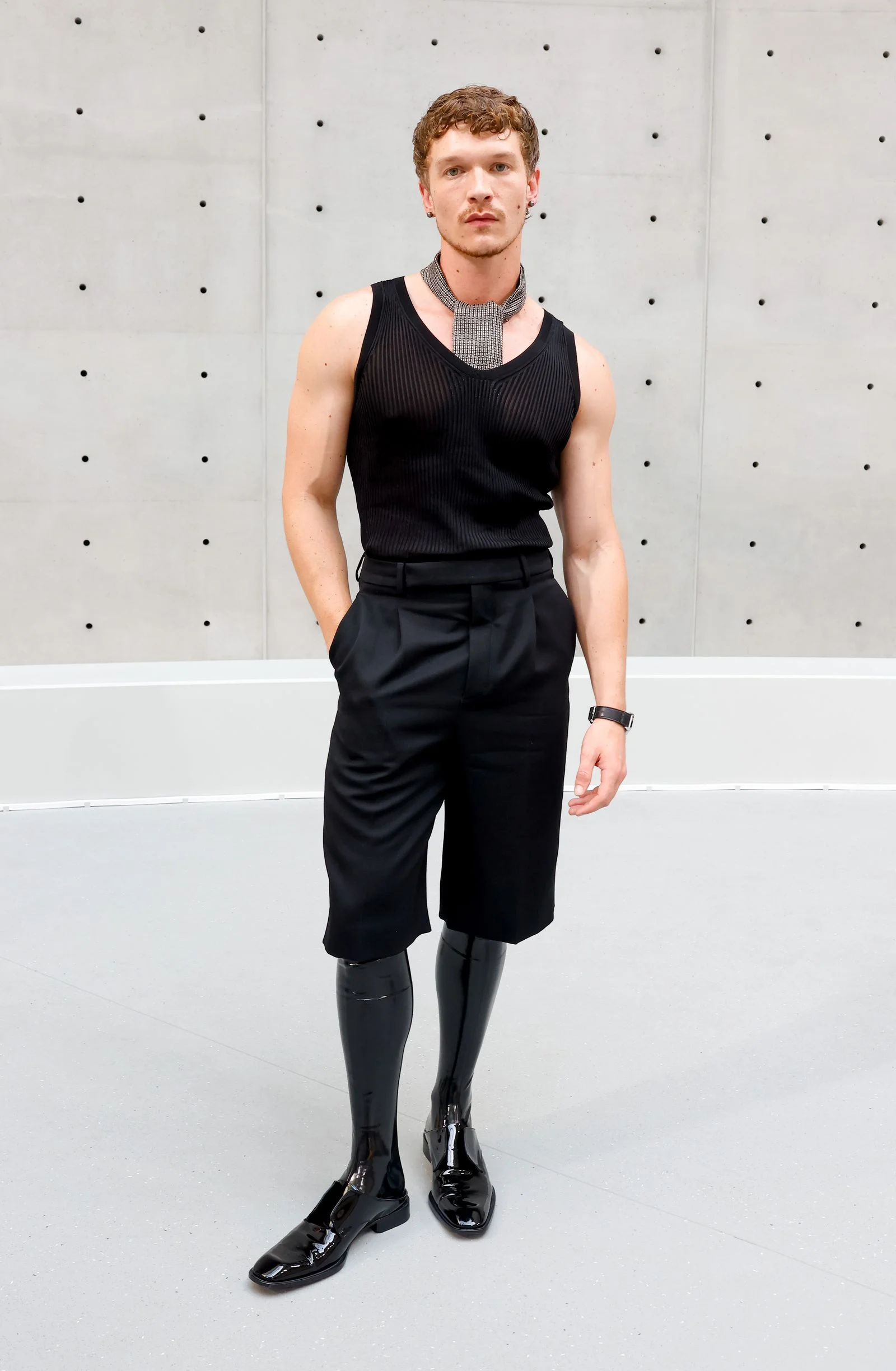
The latex look is having a moment. At Saint Laurent during Paris men’s, Connor Storrie rocked up in knee-high latex sock boots (on a scorching hot day, no less). Days later, Rosalìa stepped out in New York City in a custom latex-bodiced tutu, courtesy of London-based Yasmina.
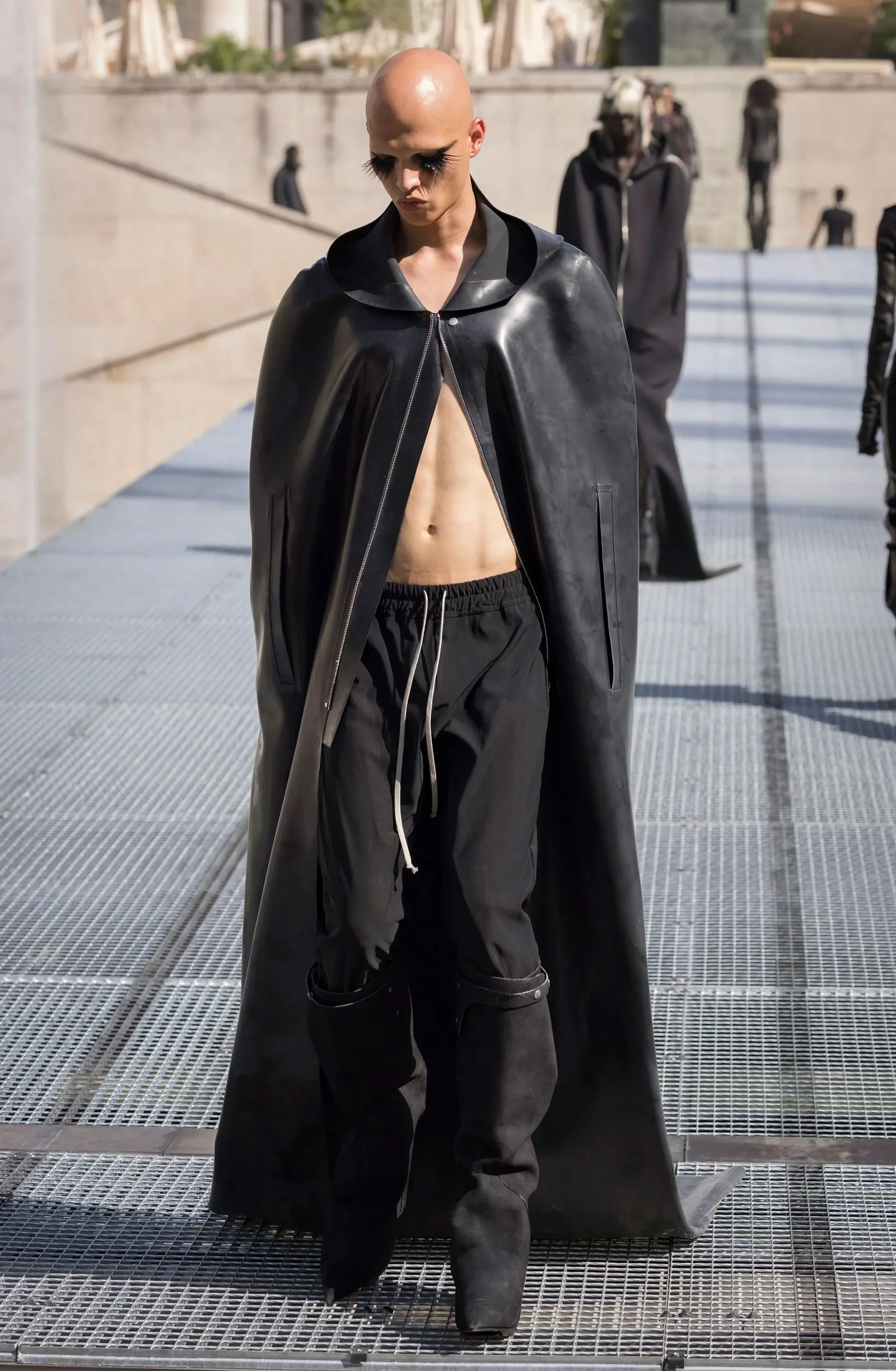
On the runways, both latex and latex-looking materials have dominated this summer — ironic, given it’s on track to be one of the hottest. This season, Vogue’s Tiziana Cardini observed the recent onslaught of “bodies vacuum-packed in latex” on the couture runways. At Rick Owens, models walked in the record-breaking heat in everything from sheer latex tanks, hand-piped by Paris rubber mistress Matisse Di Maggio, to thick latex capes, courtesy of Florence Druart of Torture Garden Latex in London. Loewe’s fall/winter 2026 show in March featured garments cast in latex, from 3D printed slip dresses to zip-front coats.
Earlier this week, the Schiaparelli couture runway was replete with models in latex-looking garb, moulded to the body. In reality, only the sculptural, tentacled look 10 was actually made of latex, save for latex socks on a number of models. The rest were made of poured liquid silicone. And though there was no latex in sight at the Dior couture show, where designs were much more flowy (as were Chanel’s), Jonathan Anderson’s starting point for the collection was the work of American sculptor Lynda Benglis, who is known for her poured latex sculptures.

Latex has made its mark in pop culture, too. Last year, Margot Robbie’s much-discussed red “latex dress” wasn’t actually latex at all, costume designer Jacqueline Durran told Vogue, but “an ultra shiny, synthetic, plasticized contemporary fabric”. On stage at Coachella, Addison Rae pranced around in a red latex bikini. Back in 2003, Monica Bellucci made waves as Persephone in two iconic latex looks, in both The Matrix Reloaded and The Matrix Revolutions.
“Latex has long been associated with sensuality and confidence, making it a powerful material for designers looking to create impactful, high-fashion moments,” says Tiffany Hsu, Mytheresa chief buying and group fashion venture officer. “Its visual strength ensures it continues to resurface as an expressive statement.”
Its history, though, is specific and underground, flags Agus Panzoni, culture researcher at Death To Stock. “It was a uniform of punks, goths, fetish scenes — people using shine and tightness as a way to rebel against mainstream fashion and gender norms,” she says. “Latex, and latex-like finishes seems to be coming back now as tools for authoring the body. That connects to the current fixation on contouring, optimization, and extreme silhouette control, but also to a broader desire to make the body feel more self-designed.”
This is especially notable when stars like Rosalìa and Storrie experiment with the look, Panzoni says. “When artists use latex, they make the construction of the body completely explicit. Pop stars have long been expected to turn their bodies into consumable images, and latex makes that pressure visible: restrictive, glossy, sculptural, synthetic.”
Latex may make for a striking runway (or media) moment, but whether or not shoppers will be into latex and latex-like materials — from brands who haven’t traditionally sold these — for the everyday is another question.


The commercial question
Latex is hard to buy, and even harder to wear. The measurements need to be exactly right to be comfortable and look good, experts say. This is why couture is, perhaps, better suited to produce latex garments than ready-to-wear, as the pieces are made-to-measure when produced for couture clients. Even still, latex garments can be hard to get on, given how tight they often sit on the skin. This is made all the more difficult when it’s hot. But really, it’s a challenging material regardless of the season, Hsu says. “It is inherently less breathable, which limits its everyday wearability despite its undeniable visual appeal. For Net-a-Porter chief buying and merchandising officer Brigitte Chartrand agrees, practicality isn’t the point. “These looks are less about practicality and more about looking fabulous,” she says.
In ready-to-wear, latex remains a harder sell. “Some ideas feel more directional and potentially harder to translate commercially — notably the exploration of latex and rubber, which appeared in several collections but remains a more niche proposition,” Simon Longland, director of fashion buying at Harrods, said at the close of Paris Fashion Week in March.
Where brands may incorporate it, Hsu says, is in single pieces and accessories — rather than full looks. “Our customers are most receptive to latex when it is interpreted in a wearable way,” she says. “We see demand for smaller, fashion-led pieces such as pencil skirts, leggings, gloves, corsets and bras, rather than full latex looks.” Consumers want pieces they can incorporate into their existing wardrobes, she adds. Chartrand agrees: “We expect these styles to resonate strongly with our customers at Net-a-Porter, particularly standout styles such as Saint Laurent’s blue latex lace dress from FW26, along with lace latex skirts from the same collection — it is a polished, wearable take on the trend.”
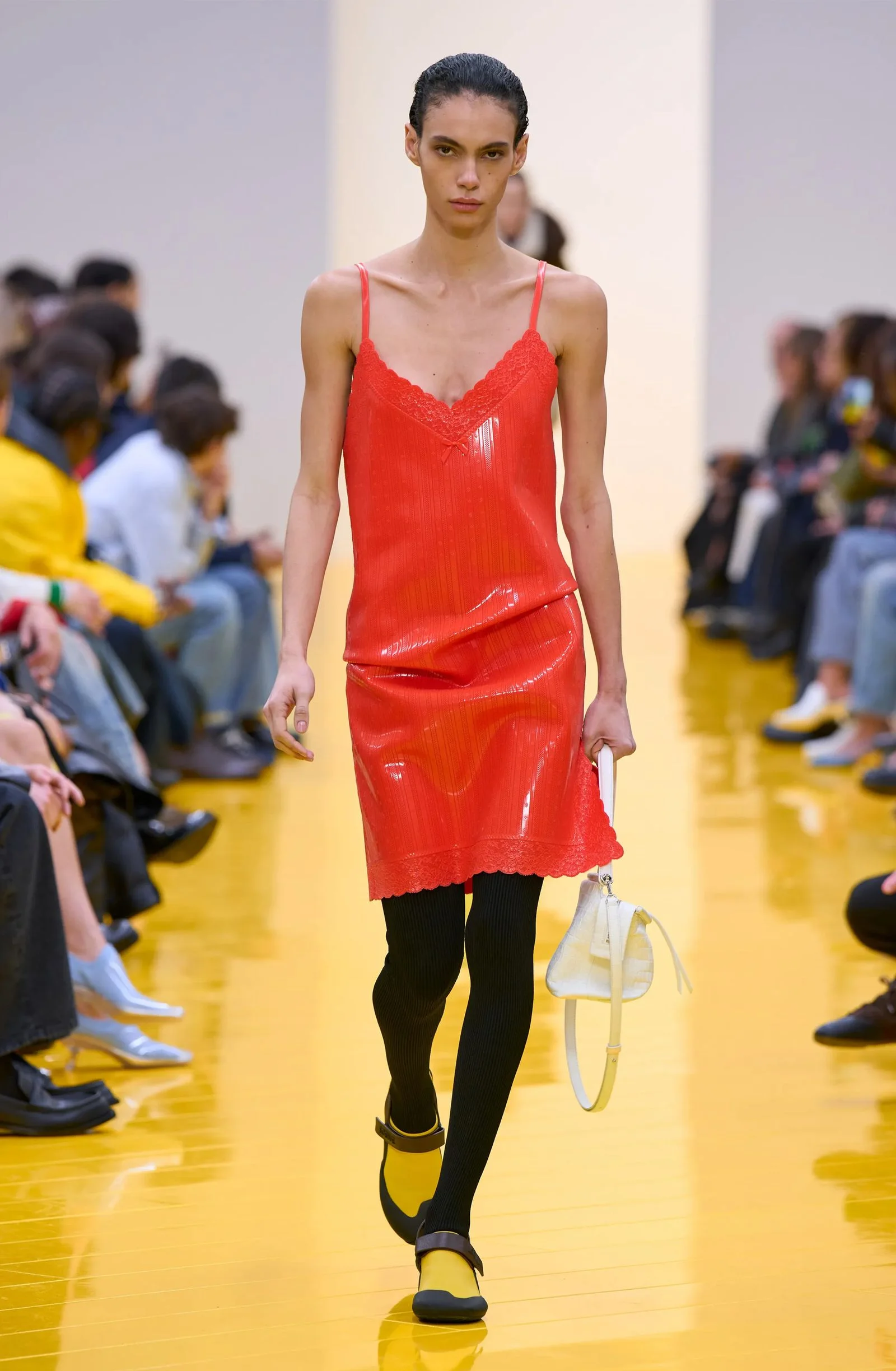
Latex can play a role in the pushback against plastics, too, Panzoni says. “It can be renewable, it doesn’t shed microfibres in the same way, and it visually distances itself from the flimsy synthetics people are wary of.” That said, whether it’s actually ‘better for your body’ depends on how it’s processed and finished, she flags. “What fascinates me is that it has a similar slick shine as the low‑quality plastics we’re discarding, but when it resembles latex it is suddenly read as thicker, more luxurious, more expensive — and therefore more permissible.”
Still, more permissible doesn’t necessarily mean more sellable. And for some brands, selling these materials commercially isn’t the point. Loewe, for instance, isn’t producing the latex pieces from its FW26 show. Instead, the brand will produce a commercial, non-latex version of some of the latex tops from the runway, Loewe confirmed.
Hsu expects that this showmanship will be the prevailing trend. “I expect latex will remain more of a runway expression than a significant retail trend. We’ve already seen elements of it emerge in couture, but its artisanal production process and the complexity of working with the material naturally limit its broader adoption.”
More from this author:
It’s Hot Out Here. Brands, It’s Time for Fans