
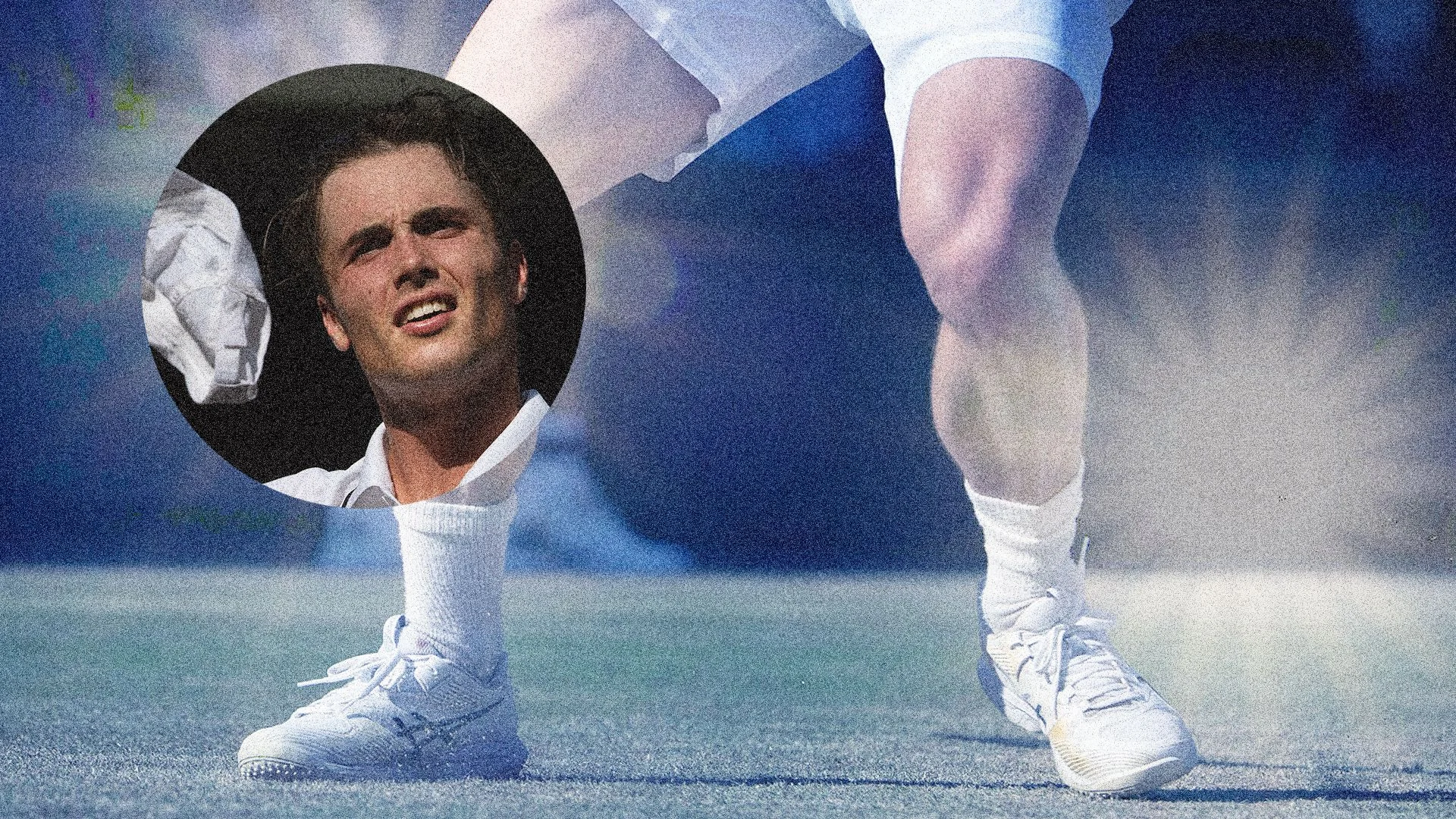
Arthur Fery, the 23-year-old British wildcard, unknown to anyone outside tennis clubs two weeks ago, now finds himself on first name terms with the queen and regular on Centre Court after blitzing his way to the Wimbledon semi-finals.
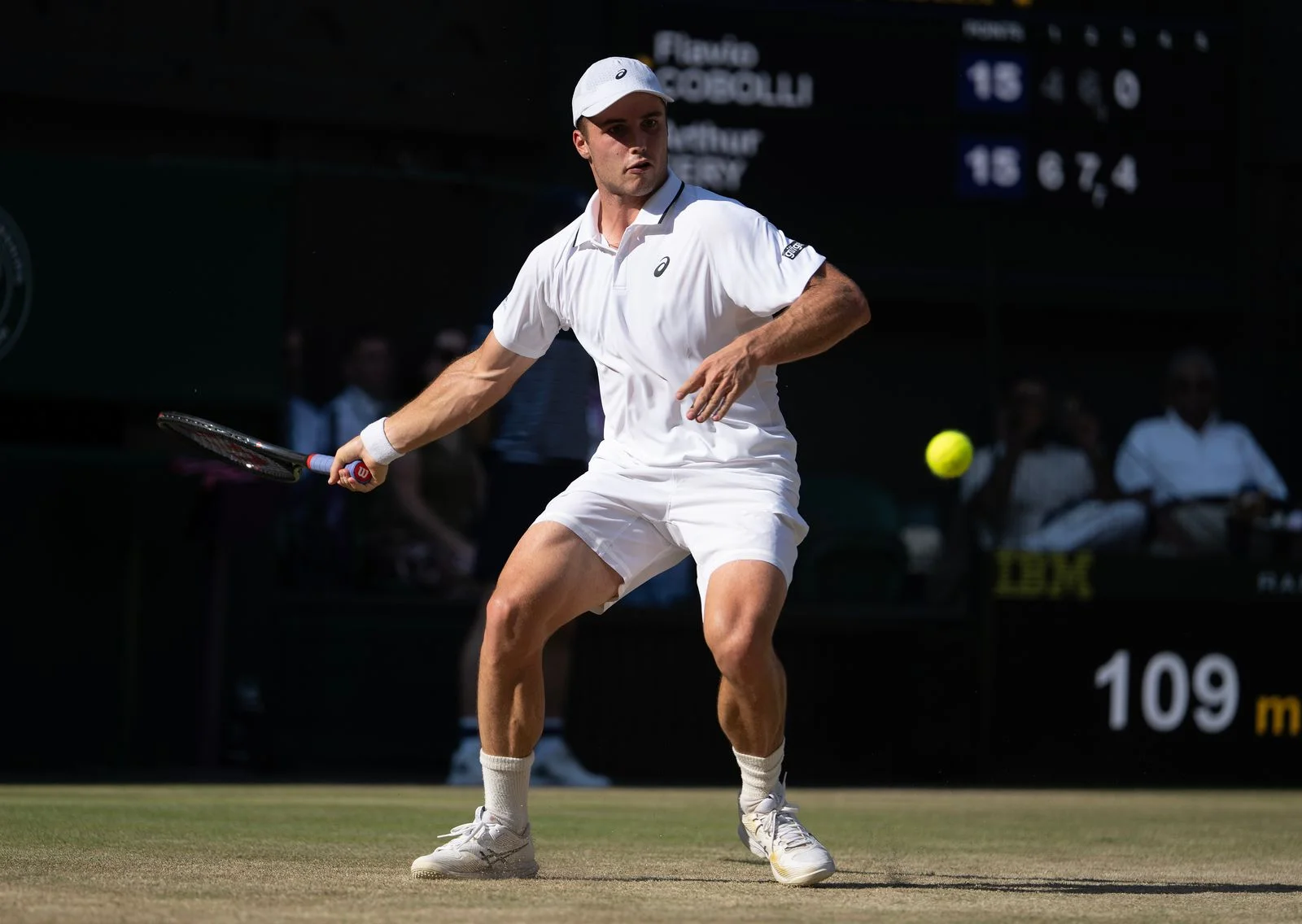
As we'’ve watched Fery win again, then again, then again, one thing in particular has stood out: Those impressive legs. He’s five-foot-seven—one of the shortest players in the tournament—yet he generates a lot of power from the baseline. Could it have anything to do with those thigh muscles?
Despite a career high ATP singles ranking of world No. 114, the current British number three is set to rise into the top 40 in the world, and over the course of two weeks he’s become the nation’s most promising hope since Andy Murray succumbed to all those hip injuries.
Ahead of Fery staring down Alexander Zverev on Centre Court in front of a rowdy SW19 crowd, we asked a couple of Britain’s tennis coaches just how much of an advantage Fery’s bulging quad muscles might be, and how you can get the look yourself.

“The thighs are made up primarily of the quadriceps at the front of the leg, the hamstrings at the back, and the adductors on the inside of the thigh,” says Sam Jones, the men’s number two padel player in the UK, and ambassador for Seed. “I’ve grown up playing with a lot of tennis players, and in all racket sports, these muscle groups are incredibly important because they generate power, stability, and movement.”
Breaking it down further: the quadriceps help players accelerate, decelerate, and drive upwards during serves and groundstrokes. The hamstrings play a key role in sprinting, changing direction, and protecting the knee joint, while the adductors are vital for lateral movement when covering the court.
“Tennis is essentially a series of explosive movements in multiple directions, so strong legs allow players to move more efficiently, stay balanced, and maintain power throughout long matches,” says Jones.
“I once heard an ex-player saying 90% of the power in a serve comes from your legs,” adds Christopher Marshall, the first coach to current British No. 5 Francesca Jones. Marshall also runs the Young Champs UK charity, which aims to get kids from all backgrounds swinging a racket. While Marshall guesses the real number is more likely 50%, the point still stands—especially at Wimbledon.
“Athletes need good quadriceps and hamstrings to get around the court at speed, especially on a surface as slippery as the grass courts at Wimbledon,” agrees Keiran Loveder, a tennis coach at PDH Sports with over 20 years of experience on the court. His previous clients include Marcus Willis, Billy Harris, and Felix Gill, all of whom played in this year’s Wimbledon Championships.
As a professional tennis player, Fery will have been hitting thousands of balls a week from an early age, meaning he’s had the best part of his 23 years to develop his legs.
“He can load lower on his groundstrokes, ensuring that he’s taking the ball earlier, more aggressively, and he’s more able to transfer his body weight through the groundstrokes before he uses the explosive ability he has developed to recover,” says Loveder.
In many ways, this playing style is born of necessity. “He’s not as tall as a lot of players in the men’s game [he’s 5’9”], and he loves getting into the net and having a very solid base,” notes Marshall. “A low center of gravity will be a reason for his success, especially on grass.”
Being so bottom heavy with those thighs means that Fery has an advantage when the ball stays low as he approaches the net. “Having strong legs will really help him to stay balanced when he’s dragged out wide,” says Marshall. “Those thighs are definitely a factor in why he makes so many balls, and is so consistent. It’s also why he's punching somewhat above his weight compared to most players who are a lot taller.”
Loveder has had the privilege of watching Fery work in person. “I recently saw Arthur Fery play at the Lexus Birmingham Championships,” he says. “Close up, you can see he’s been working hard and focussing on his intensity on his lateral movements. On the grass courts, this is a real weapon, and coming across players like Zverev in the semi-finals he’ll need to continue to keep up the hard work.”
“100 squats a day!” jokes Marshall. Loveder’s (slightly) less punishing workout is as follows: “This is a short and simple super set to help you develop your thighs,” he promises. “It hits both muscle groups, and will make you ache the next day, but you’ll see the benefits on court when your hitting partner tries to pass you down the line.”
Warm up with a light row, ski-erg, or jog, then begin as many rounds as you can stomach of the below, with one minute’s rest at the end of each run-through.
- 10 x Barbell deadlifts (“Around [55 to 65 pounds] to start”).
- 10 x Barbell squats (“Really hits the quads”).
- 10 x Leg extensions on a seated leg extension machine.
Now move quickly onto a bike or row for two minutes to lower the heart rate.
A version of this story originally appeared in British GQ.