Xi Jinping's Perspective: China as Athens and the US as Sparta in Global Relations
The recent discussions surrounding the concept of the "Thucydides Trap" indicate a deepening tension in international relations, particularly between the U.S. and China. Xi Jinping's invocation of this historical framework has implications that extend beyond mere rhetoric; it shapes the discourse around power, fear, and geopolitical strategy in a way that could influence future actions on both sides. This isn't just a philosophical debate—it's a critical lens through which to understand how current leaders frame their nations' identities and intentions.
Thucydides Trap: A Closer Look
Popularized by political scientist Graham T. Allison, the "Thucydides Trap" suggests that a rising power will inevitably clash with an already established power. This theory, rooted in Thucydides’ observations of the Peloponnesian War, implies that the fear of a declining power will drive conflict. Allison’s premise is backed by a selection of historical case studies that present a compelling narrative connecting emerging and declining powers. However, one must consider the quality and relevance of these examples. Notably, four instances cited by Allison did not culminate in war, raising questions about generalizability.
Xi's frequent references to this theory, especially in high-stakes meetings, play into a broader strategy that seeks to both acknowledge historical narratives while simultaneously redefining the roles of his nation and the U.S. in the modern context. The Chinese leader's assertion that “the Thucydides Trap is not a historical inevitability” serves as an olive branch of sorts—an indication that he is open to dialogue and conflict avoidance, provided that China’s rising status and aspirations are recognized.
The Historical Misalignment
Intriguingly, there is a historical inconsistency in the application of the Thucydides analogy that merits scrutiny. The notion that contemporary China equates itself with Athens, a center for democracy and intellectual freedom, while the U.S. is cast as the declining Sparta raises significant questions. As Andrew Bayliss points out, this comparison disregards the actual dynamics at play during the historical conflict between the two city-states. Athens, a maritime power with a dynamic economy, was thriving and expanding its influence while Sparta represented a more insular, militarized society.
Furthermore, Bayliss contends that Thucydides himself does not proclaim conflict as an inevitability; rather, he outlines the complex motivations and contextual factors leading to war. This indicates that the historical narrative is more nuanced than the binary interpretation of rising versus declining powers might suggest. If political leaders are relying on a simplistic reading of ancient history to inform current policy, they risk not only misunderstanding the past but also miscalculating their strategic responses in the present.
Power Dynamics and Global Implications
One of the striking dimensions of Xi Jinping’s comments is the way they frame the existing power dynamics. By seeking to forge a “new paradigm for major-power relations,” he acknowledges globalization’s departure from mere bilateral relations to a complex web of interdependencies that requires cooperative solutions. This is particularly pertinent as both nations navigate challenges such as trade imbalances, technological competition, and global health crises.
However, the dialogue also veils significant disparities in military and economic capabilities. The historical context of Athens and Sparta diminishes in relevance when evaluating the global landscape today, which features multiple players with varying degrees of influence—none more significant than the U.S. and China. The landscape today is no longer a local confrontation but one that involves global supply chains, cyber capabilities, and ecological concerns. In lieu of the simplistic triumph of one over the other, the focus must shift to how collaboration can yield benefits significant enough to avert potential conflict.
Looking Ahead: Strategic Considerations
The instinct might be to reflect on Xi’s statements as purely political maneuvering, yet this perspective simplifies the complexities of modern diplomacy. If Xi Jinping's appeal to avoid the Thucydides Trap means potential engagement, then industry professionals must carefully weigh how these discussions evolve. The geopolitical climate is marked by uncertainty, and every exchange carries the potential to shift narratives and alliances.
For those in the tech and international relations sectors, this unfolding narrative is crucial. The competition in fields ranging from artificial intelligence to telecommunications isn't merely about market share; it’s about national prestige and influence. Decisions made in Washington and Beijing are likely to reverberate through the commercial sphere, shifting priorities and partnerships accordingly. Understanding these historical contexts provides a richer tapestry against which today’s choices can be made.
In conclusion, while the theoretical framework established by the Thucydides Trap offers valuable insights, confronting it with the realities of contemporary power structures and diplomatic relationships is essential. Whether or not future conflicts arise may depend on the ability of leaders to engage with these complexities rather than falling into historical traps, mirroring the leadership of Athens and Sparta. The dialogue is evolving, and so must the approaches to diplomacy. What remains constant is the goal: avoiding conflict at all costs, driven not by fear, but by a mutual understanding of shared goals.
________________________
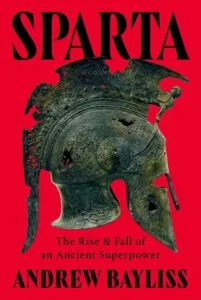
Andrew Bayliss’ Sparta: the Rise and Fall of an Ancient Superpower is available now from W. W. Norton.